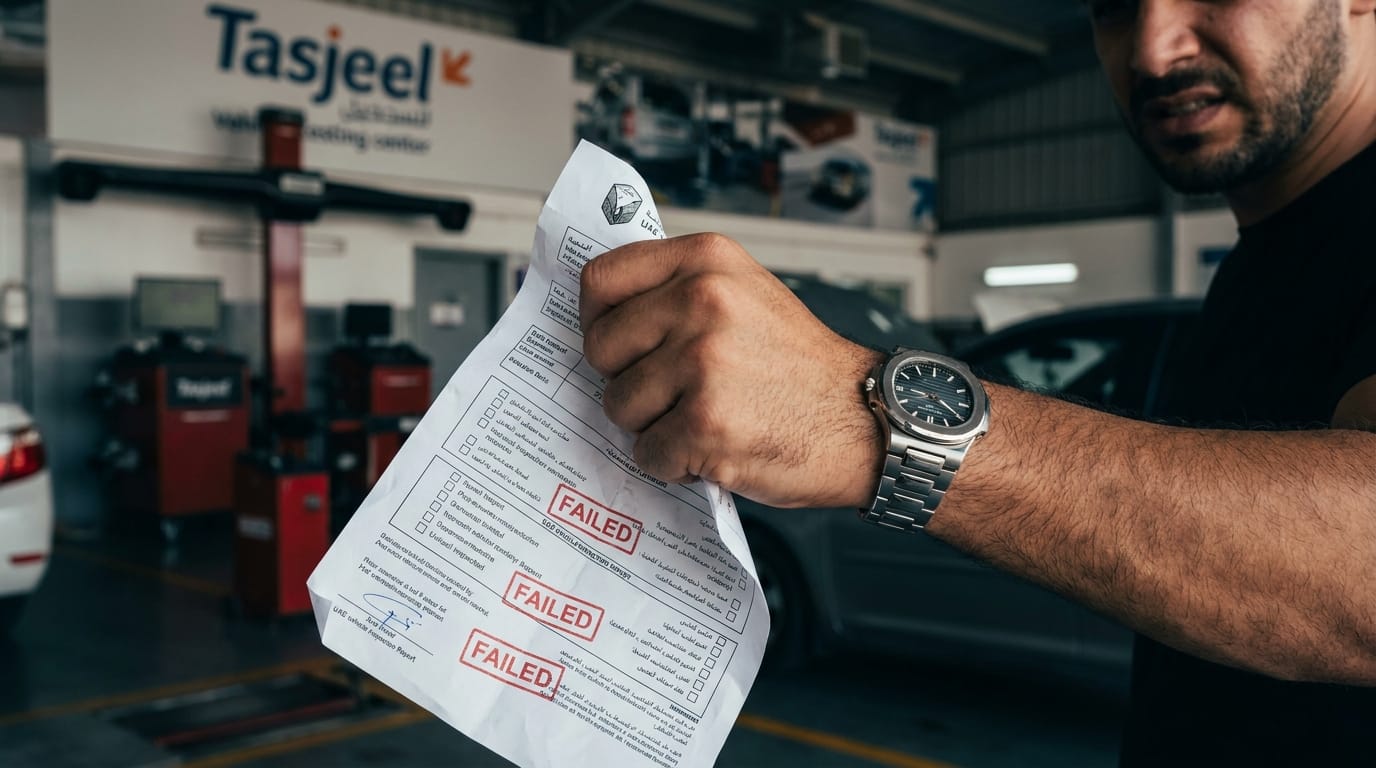
Tasjeel comprehensive test fail scenarios often cause massive panic for used car buyers and sellers across Dubai. Understanding the exact mechanical reasons and the strict 30-day repair window is critical to protect your investment.
Decoding the Rejection Report
A Tasjeel comprehensive test fail occurs when the testing center detects faults compromising vehicle safety or environmental standards. The official printed report will highlight the exact areas that failed the inspection in red text. You must not guess the problem; the report is your exact repair map.
Mechanics at the testing center are not allowed to fix your car or recommend specific garages. Their job is strictly diagnostic. You must take the printed paper and independently find a workshop capable of resolving the specific highlighted faults.
Never pay the seller the remaining vehicle balance until all major mechanical faults are fully cleared.
Understanding Major vs. Minor Faults
Minor visual defects might pass with a warning, but major faults trigger an instant failure. Worn brake pads, leaking steering fluid, and bald tires are the most common reasons for rejection. Emissions testing is also highly strict, and any tampering with the catalytic converter guarantees a failed result.
If the report highlights structural chassis damage from a previous accident, reconsider the purchase entirely. Chassis failures are incredibly expensive to fix and often permanently ruin the car’s driving stability.
The 30-Day Repair Window
Handling a Tasjeel comprehensive test fail requires strict time management. The Roads and Transport Authority (RTA) grants you exactly 30 days to fix the highlighted issues and return the vehicle for a retest. You only pay a reduced retesting fee during this specific timeframe.
If you miss the 30-day deadline, the initial test file is completely canceled. You will be forced to pay the full comprehensive inspection fee again, and the entire car will be re-examined from scratch.
Verify testing procedures at .
Driving Legally During Repairs
The 30-day window is for mechanical repairs, not a license to drive a broken car freely. If the vehicle’s registration has already expired, you cannot drive it on public roads safely. You must transport it via a recovery truck to the garage.
Traffic police will issue heavy fines if they catch you driving a vehicle with an expired registration, even if you are within the 30-day testing grace period.

Choosing the Right Repair Workshop
Recovering from a Tasjeel comprehensive test fail means choosing a professional garage over a cheap roadside mechanic. Show the official rejection paper to the garage manager before they touch the car. Ask for a clear, written quotation guaranteeing that their repairs will pass the RTA inspection.
Avoiding Cheap Part Scams
Do not use counterfeit spare parts to pass the test cheaply. RTA inspectors use advanced laser alignment tools and brake dynamometers that easily detect fake components. Installing cheap brake pads will likely result in a second failure, costing you more money and time.
Insist on original equipment manufacturer (OEM) parts, especially for safety-critical systems like steering, suspension, and brakes.
Preparing for the Final Retest
Once the garage finishes the work, test drive the vehicle yourself before returning to the testing center. Ensure there are no warning lights on the dashboard. Even a simple check engine light will cause an automatic failure regardless of the mechanical repairs performed.
Take the original failed report and the garage repair invoices with you. The inspector will specifically check the items that failed previously. If the repairs are solid, you will receive the passing certificate instantly, allowing you to proceed with the legal ownership transfer.
Calculate transfer costs reading .
