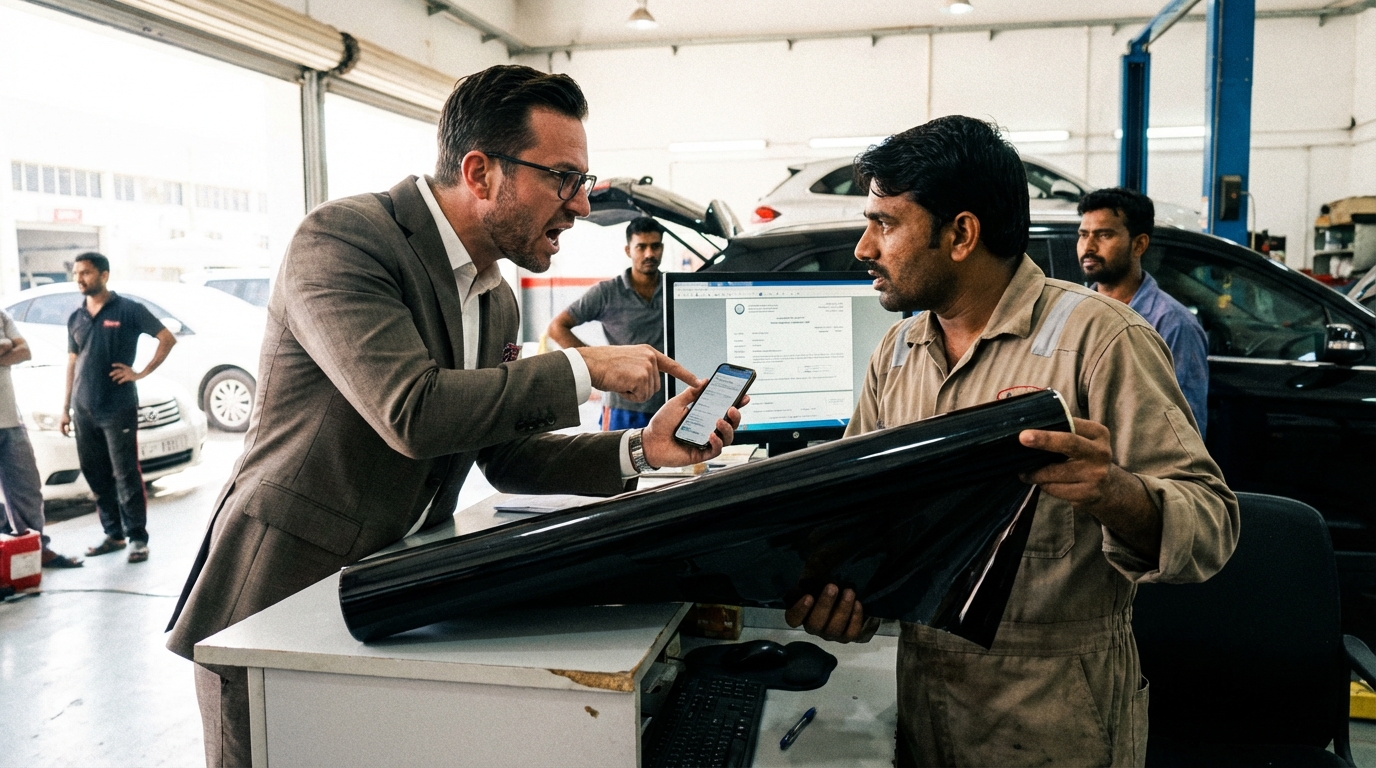
You secured your electrical core following our strict audit on Dubai car battery replacement. The engine runs perfectly. But now, you face the wrath of the Gulf sun from inside the cabin. The interior temperature of a parked car in July can easily exceed 75 degrees Celsius. The steering wheel becomes too hot to touch. The dashboard plastics literally bake and emit toxic fumes. Driving without heavy thermal rejection films is absolute torture. However, before you rush to the nearest accessory shop in Satwa and demand the darkest film available, you must halt.
The police do not care about your comfort. If you violate the incredibly strict Dubai car window tinting laws, you will not just pay a minor administrative fee. You will face immediate, severe fines, and the patrol officer will force you to peel the illegal film off your glass with your bare hands on the side of the highway.
The 50% Absolute Limit in Dubai car window tinting laws
In the past, the legal limit for visual darkness was capped at 30%. The government eventually increased this to 50% for private vehicles, providing massive relief to expats. Do not misinterpret this concession. This 50% limit is absolute. It is not a suggestion. It applies strictly to the side windows and the rear windshield. You are completely forbidden from applying any tint whatsoever to the front windshield, except for a maximum 10-centimeter strip at the very top edge to block direct sun glare.
Accessory shops will constantly lie to you. They will try to sell you 70% or pitch-black films, confidently claiming that the police never pull over family SUVs. Do not listen to them. They want your money and bear zero liability for your fines. Dubai Police deploy smart cameras equipped with artificial intelligence across all major highways.
These cameras do not just detect speeding; they analyze the opacity of your windows at 140 km/h. There is no escaping the system. The moment you cross the threshold, the flash goes off. The financial penalty is brutal. You instantly incur a 1,500 AED fine. Furthermore, if the officer deems the tint dangerously dark, they have the legal authority to confiscate the vehicle on the spot.
Thermal Rejection vs. Visual Darkness
You do not need pitch-black windows to survive the heat. This is a massive, highly profitable misconception pushed by cheap garages. Cheap dyed films block your vision but allow infrared heat to pour directly into the cabin. They turn purple and bubble within six months, destroying your visibility at night.
High-end ceramic films operate on entirely different physics. They use microscopic non-conductive particles. They provide up to 90% infrared heat rejection while remaining visually light and completely transparent from the inside. When evaluating Dubai car window tinting laws, your priority must be advanced nanotechnology, not aesthetic darkness. Ceramic films block the heat without turning your car into a dangerous, rolling cave, and they do not block your electronic Salik tags or GPS signals.

The Certification Protocol
Always demand a stamped, official certificate from the installation center stating the exact percentage of the applied film. Keep this physical paper in your glovebox at all times. If an officer questions your tint at a checkpoint, handing them an official compliance certificate immediately de-escalates the situation.
Furthermore, you must ensure the workshop is properly licensed to perform modifications. Operating with unauthorized modifiers can trigger unwanted legal scrutiny. You can verify licensed automotive service centers and pay any incurred fines directly through the Dubai Police official services portal . Do not argue with a patrol officer about needing 70% tint for a medical skin condition unless you have a highly specific, officially stamped medical exemption from the Dubai Health Authority. The law is the law.
The Commercial Vehicle Trap
The 50% rule strictly applies to privately registered family vehicles. If you drive a company car registered under a commercial license, the rules change violently. Commercial vehicles, delivery vans, and fleet sedans are completely prohibited from tinting their windows. If you drive a company-owned sedan with 50% tint, the police will heavily fine the driver and potentially impound the asset, causing massive corporate disruptions. Understand exactly how your car is registered before applying a single modification.
Conclusion
Securing your cabin from the Gulf heat requires precision and discipline. You must reject illegal darkness, invest in high-end thermal rejection technology, and aggressively adhere to Dubai car window tinting laws. Doing so protects your skin, keeps your cabin freezing cold, and ensures your traffic file remains completely clean. Now that your interior is secured, the sun is still violently attacking your exterior paint. A pristine car will fade to a dull matte finish in months. To lock in the value of your asset and create a permanent, legal shield against the elements, you must immediately master the strict protocols of car ceramic coating in Dubai.