Last Updated: June 2026 | By Omar Al-Fayed, Senior Automotive Consultant | Category: UAE Market News
If you are an expat in the UAE and planning to buy a used car, the first question that usually comes to mind is simple: Should I buy in Dubai or Sharjah? The short answer is that Sharjah typically offers prices between 5% and 15% lower than comparable vehicles in Dubai, but Dubai provides better inspection access, stronger service history documentation, and faster resale. The right choice depends entirely on your budget, your risk tolerance, and how long you plan to stay. This guide breaks down every factor — including a full buyer risk analysis — so you can decide with confidence.
Before you spend a single dirham, read this report. It covers pricing, inspection risks, dealer behavior, private seller patterns, registration differences, workshop costs, and the real total cost of ownership — city by city.
Why These Two Markets Dominate UAE Used Car Sales
Dubai and Sharjah together account for the majority of used car transactions in the UAE. Dubai hosts the largest concentration of dealers, certified programs, and fleet disposal operations. Sharjah attracts buyers looking for lower prices and a wide selection of economy vehicles, particularly models favored by blue-collar workers and mid-income families.
The two markets are geographically close — less than 30 minutes apart during off-peak hours — which means many buyers look at both before committing. Yet they function quite differently. Understanding those differences is what separates an informed purchase from a costly mistake.
Common misconceptions include the idea that Sharjah is always cheaper, that Dubai dealers are always more honest, or that a car bought in one emirate cannot be registered in the other. None of these are fully accurate. The reality is more nuanced, and this report gives you the full picture. You may also want to review reliable budget options before finalizing your market choice.
Executive Summary: What This Report Concludes
| Category | Dubai | Sharjah |
|---|---|---|
| Average pricing | Higher by 5–15% | Lower by 5–15% |
| Vehicle selection | Wider, newer, more certified | Wider economy range, older stock |
| Purchase safety | Higher — better documentation | Moderate — more due diligence needed |
| Resale opportunity | Stronger — higher buyer demand | Slower — lower market liquidity |
| Best for | Professionals, families, mid-range buyers | Budget buyers, first-time owners, short-term residents |
Dubai vs Sharjah Used Car Market Snapshot 2026
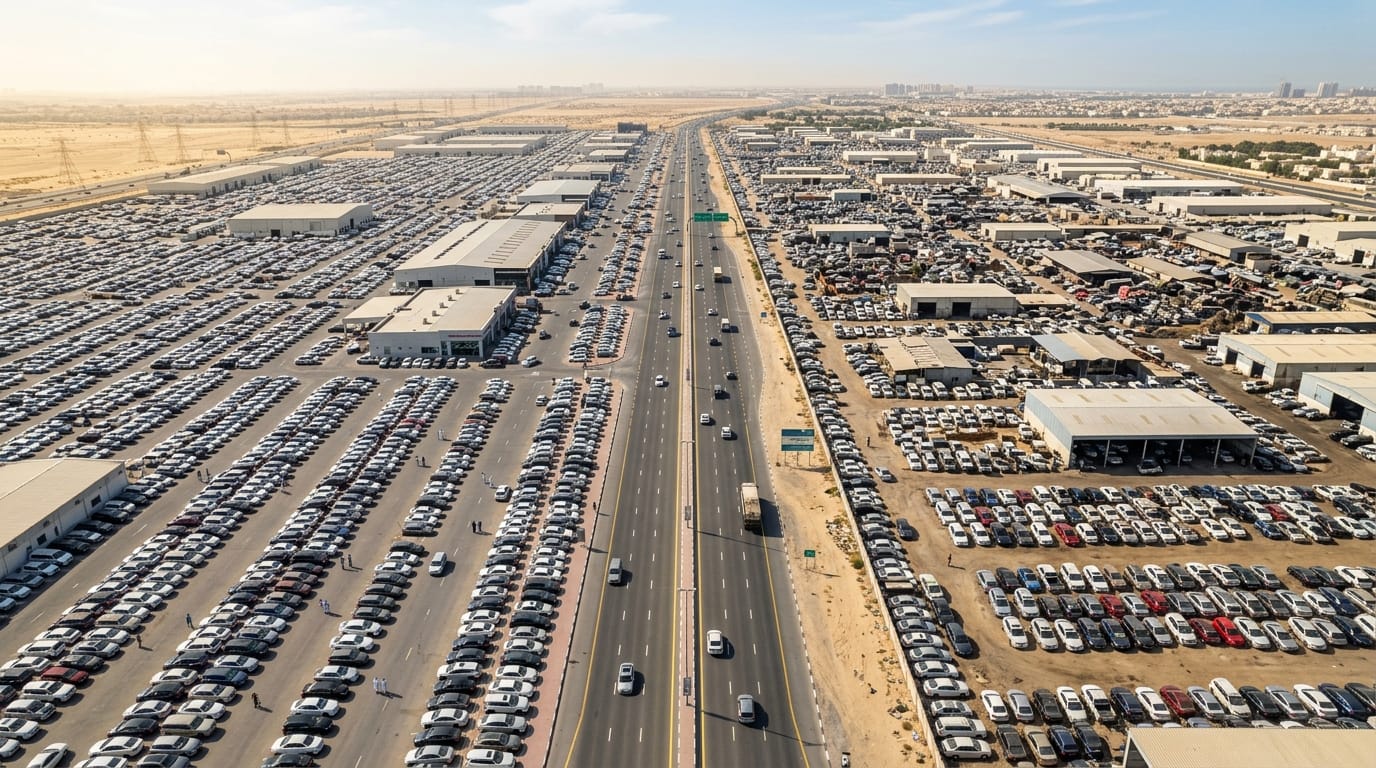
Dubai’s used car market is characterized by high turnover, strong dealer density, and a large pool of ex-corporate fleet vehicles. Platforms like Dubizzle, Cars24, and CarSwitch list tens of thousands of Dubai-based vehicles at any time. The Al Aweer used car complex in Ras Al Khor alone hosts hundreds of dealers and sees significant daily buyer traffic.
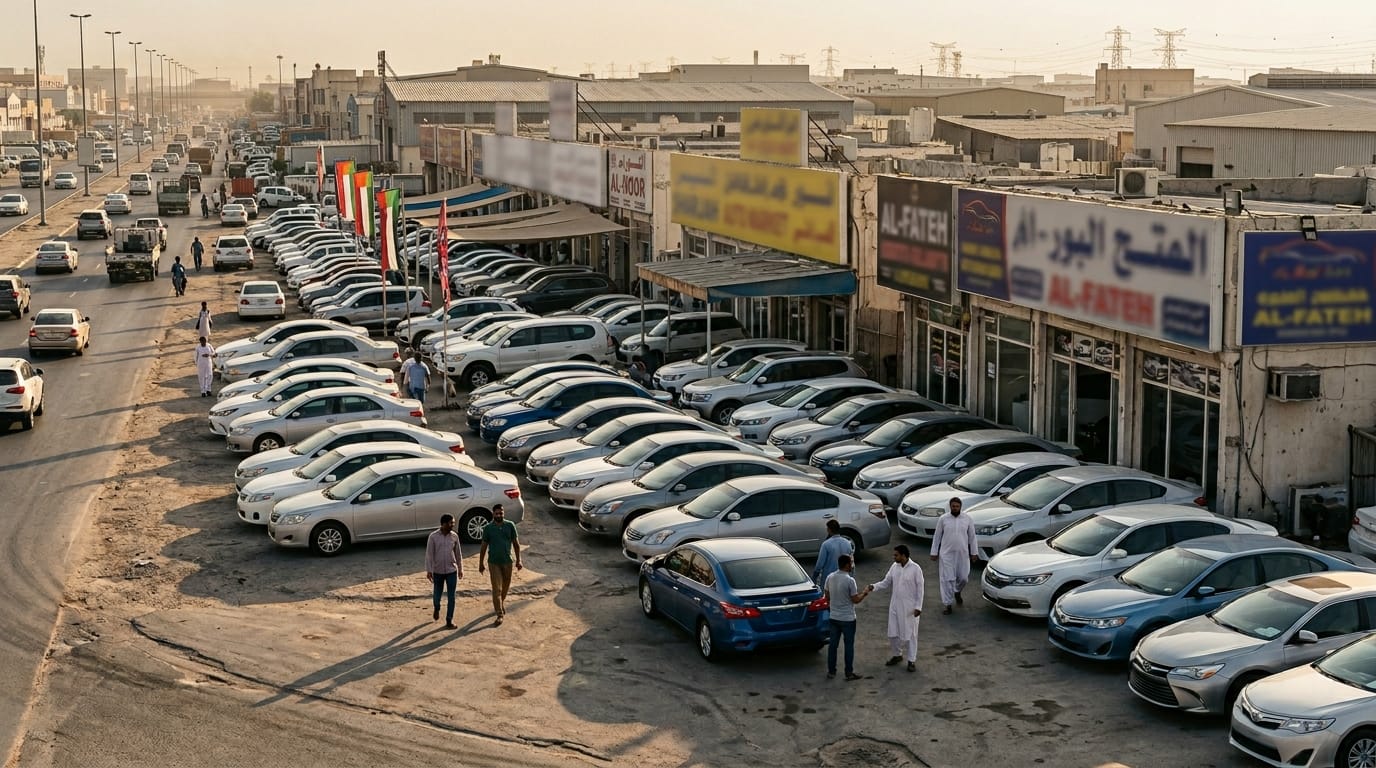
Sharjah’s market is more dispersed. The Industrial Area concentrates many smaller independent dealers. Private sellers are more common relative to dealer listings. Inventory tends to skew toward economy models — Nissan Sunny, Mitsubishi Attrage, Hyundai Accent, and similar — because these are the vehicles most in demand among the emirate’s large blue-collar and mid-income population.
| Factor | Dubai | Sharjah |
|---|---|---|
| Dealer concentration | Very high | Moderate |
| Private seller activity | High | High |
| Fleet disposal volume | High | Moderate |
| Ex-rental supply | High | Moderate |
| Vehicle turnover speed | Fast | Moderate |
| Buyer competition | High on popular models | Lower — easier to negotiate |
Are Cars Really Cheaper in Sharjah?
The short answer is yes — in most cases. But the savings are not dramatic enough to ignore the accompanying risks if you do not know what to check. Workshop observations and dealer listing comparisons across the two markets suggest that Sharjah prices run approximately 5% to 15% lower than Dubai for comparable vehicles, with the largest gaps appearing in the AED 15,000 to AED 35,000 price range.
The discount is driven by lower operating costs for Sharjah dealers, higher proportion of older and higher-mileage stock, and a buyer base that is generally more price-sensitive. However, a Sharjah vehicle listed at AED 22,000 and a Dubai vehicle listed at AED 25,000 are not necessarily the same purchase risk. The cheaper Sharjah listing may have a service history gap, higher wear, or an unclear ownership background.
Important Note: A lower listing price in Sharjah does not automatically mean lower total cost. Factor in inspection fees, potential repair needs, and registration processing before comparing final numbers.
Average Price Difference by Vehicle Category
| Vehicle Category | Typical Dubai Price | Typical Sharjah Price | Average Difference |
|---|---|---|---|
| Economy cars (Sunny, Attrage, Accent) | AED 18,000–28,000 | AED 16,000–25,000 | AED 2,000–4,000 lower |
| Compact sedans (Corolla, Civic, Elantra) | AED 28,000–45,000 | AED 25,000–41,000 | AED 3,000–6,000 lower |
| Family sedans (Camry, Altima, Accord) | AED 38,000–60,000 | AED 34,000–55,000 | AED 4,000–8,000 lower |
| SUVs (RAV4, CR-V, Tucson) | AED 55,000–90,000 | AED 50,000–83,000 | AED 5,000–10,000 lower |
| Pickup trucks (Hilux, Navara) | AED 60,000–95,000 | AED 55,000–88,000 | AED 5,000–9,000 lower |
| Luxury vehicles (E-Class, 5 Series) | AED 80,000–160,000 | AED 70,000–145,000 | AED 10,000–20,000 lower |
Average Price Difference by Brand
| Brand | Dubai Premium | Notes |
|---|---|---|
| Toyota | 5–10% higher in Dubai | Highest demand in Dubai; strong resale justifies premium |
| Nissan | 5–8% higher in Dubai | Sharjah has large Sunny/Sentra supply |
| Honda | 6–10% higher in Dubai | Better service history documentation in Dubai |
| Hyundai | 5–9% higher in Dubai | Elantra and Accent both more affordable in Sharjah |
| Kia | 5–8% higher in Dubai | Pegas and Cerato pricing similar gap |
| Mitsubishi | 4–7% higher in Dubai | Attrage heavily available in both markets |
| MG | 3–6% higher in Dubai | Sharjah increasingly competitive on newer MG stock |
| Chevrolet / Ford | 8–15% higher in Dubai | Higher maintenance costs reduce demand in Sharjah |
Average Price Difference by Popular Models
| Model (Typical Year Range) | Dubai Typical Price | Sharjah Typical Price | Difference |
|---|---|---|---|
| Toyota Corolla (2018–2021) | AED 38,000–48,000 | AED 34,000–44,000 | AED 3,000–5,000 |
| Toyota Yaris (2018–2021) | AED 28,000–38,000 | AED 25,000–34,000 | AED 3,000–4,000 |
| Nissan Sunny (2018–2022) | AED 22,000–32,000 | AED 19,000–28,000 | AED 2,500–4,000 |
| Nissan Sentra (2018–2021) | AED 28,000–38,000 | AED 25,000–34,000 | AED 3,000–4,500 |
| Mitsubishi Attrage (2018–2022) | AED 22,000–32,000 | AED 19,000–28,000 | AED 2,500–4,000 |
| Hyundai Accent (2018–2021) | AED 20,000–30,000 | AED 17,000–27,000 | AED 2,500–4,000 |
| Kia Pegas (2020–2022) | AED 22,000–30,000 | AED 19,000–27,000 | AED 2,500–3,500 |
| Honda City (2018–2021) | AED 28,000–40,000 | AED 25,000–36,000 | AED 3,000–5,000 |
| Toyota Camry (2018–2021) | AED 50,000–68,000 | AED 44,000–62,000 | AED 5,000–8,000 |
| Nissan Altima (2018–2021) | AED 40,000–55,000 | AED 36,000–50,000 | AED 4,000–6,000 |
Vehicle Availability Index
The index below reflects typical in-market availability, average search time to find a suitable match, and buyer competition intensity for each vehicle category. Data reflects market patterns observed across Dubizzle, dealer listings, and direct market activity in both emirates. Search time estimates assume active daily searching for a vehicle in acceptable condition with verified GCC spec and reasonable service documentation.
| Vehicle Type | Dubai Availability | Sharjah Availability | Avg. Search Time (Good Condition) | Buyer Competition |
|---|---|---|---|---|
| Economy sedans (Sunny, Accent, Attrage) | Very High | Very High | 1–3 days | Moderate — easy to find alternatives |
| Toyota Corolla GCC (2018–2021) | High | Moderate–High | 2–5 days | High in Dubai; Moderate in Sharjah |
| Toyota Yaris GCC (2018–2021) | High | Moderate | 2–5 days | Moderate |
| Toyota Camry GCC (2018–2021) | High | Moderate | 3–7 days | High in Dubai; Lower in Sharjah |
| Nissan Altima GCC (2018–2021) | High | Moderate | 3–7 days | Moderate |
| Honda City GCC (2018–2021) | Moderate–High | Moderate | 3–8 days | Moderate |
| SUVs — GCC (RAV4, CR-V, Tucson) | Very High | Moderate | 3–10 days | High in Dubai |
| Hybrid vehicles (Camry Hybrid, Accord Hybrid) | Moderate | Low–Moderate | 7–21 days | Low — niche demand |
| Luxury sedans (E-Class, 5 Series, A6) | High | Low–Moderate | 5–14 days | Moderate in Dubai; Low in Sharjah |
| Pickup trucks (Hilux, Navara) GCC | Moderate–High | Moderate | 5–12 days | High in Dubai for clean examples |
| Electric vehicles (Model 3, MG ZS EV) | Moderate | Low | 14–30 days | Low — emerging market |
| Ex-Taxi / Ex-Rental Economy Cars | High | Moderate–High | 1–3 days | Low — not everyone targets this segment |
Toyota and Nissan economy models in the AED 18,000 to AED 35,000 range represent the highest liquidity segment in both markets. Buyers in this range should expect to find multiple comparable options within three to five days of active search. Hybrid and EV availability in Sharjah remains limited relative to Dubai — buyers targeting these categories should focus their search on Dubai platforms. Anyone exploring their broader options should also review reliability-ranked used cars under AED 30,000 before committing to a category.
Spare Parts Availability Comparison
Parts availability directly affects both ongoing maintenance cost and repair wait time. The table below reflects current stocking patterns across Al Quoz Industrial Area in Dubai and Sharjah Industrial Area, based on direct observations from independent workshop consultations in both zones. Availability scores are rated out of 10, where 10 represents same-day shelf availability for all common wear items without ordering.
| Brand | Dubai Availability Score | Sharjah Availability Score | Typical Part Price Range (Common Items) | Average Delivery Speed |
|---|---|---|---|---|
| Toyota | 9 / 10 | 9 / 10 | OEM: AED 80–600 | Aftermarket: AED 40–280 | Same day across both markets |
| Nissan | 9 / 10 | 8 / 10 | OEM: AED 70–550 | Aftermarket: AED 35–260 | Same day in both; 1 day for some Sharjah items |
| Hyundai | 8 / 10 | 8 / 10 | OEM: AED 80–500 | Aftermarket: AED 40–240 | Same day for common items |
| Kia | 8 / 10 | 7 / 10 | OEM: AED 80–500 | Aftermarket: AED 40–230 | Same day; shares parts with Hyundai |
| Mitsubishi | 8 / 10 | 7 / 10 | OEM: AED 90–550 | Aftermarket: AED 45–260 | Same day for Attrage and Lancer items |
| Honda | 7 / 10 | 6 / 10 | OEM: AED 100–650 | Aftermarket: AED 50–300 | Same day in Dubai; 1–2 days in Sharjah for some items |
| MG / Geely | 6 / 10 | 5 / 10 | OEM: AED 120–700 | Aftermarket: Limited | 1–3 days; improving but not yet consistent |
| Chevrolet / Ford | 6 / 10 | 5 / 10 | OEM: AED 150–900 | Aftermarket: AED 80–450 | 1–3 days; some items require ordering |
| BMW / Mercedes-Benz | 6 / 10 | 4 / 10 | OEM: AED 300–2,500+ | Aftermarket: AED 150–900 | 1–5 days; some specialist items longer |
| Audi / Volkswagen | 5 / 10 | 4 / 10 | OEM: AED 280–2,200+ | Aftermarket: AED 140–800 | 2–7 days for non-standard items |
Toyota and Nissan parts are the most consistently stocked across both markets. Al Quoz Industrial Area in Dubai and Sharjah Industrial Area stock brake pads, filters, belts, and cooling components for these brands on the shelf without ordering in nearly all cases. Honda parts are more reliably available in Dubai than Sharjah — buyers planning to own a City or Accord long-term should factor this into any Sharjah purchase decision. For a broader picture of model-specific maintenance costs, cheapest cars to maintain in UAE provides a full breakdown by salary range.
Buyer Risk Heat Map
The table below maps purchase risk by vehicle type across both markets, based on patterns observed across inspection records in Al Quoz workshops and Sharjah Industrial Area garages. Risk reflects the probability of encountering undisclosed defects, documentation gaps, or structural issues — not the probability of mechanical wear, which is inherent to mileage.
| Vehicle Type | Dubai Risk Level | Sharjah Risk Level | Primary Risk Factor |
|---|---|---|---|
| GCC Economy Sedans (Sunny, Accent, Attrage) | Low | Low | Service history gaps above 80,000 km |
| GCC Compact Sedans (Corolla, Elantra, City) | Low | Moderate | CVT history on Nissan variants; undisclosed minor damage |
| GCC Family Sedans (Camry, Altima, Accord) | Low–Moderate | Moderate | Higher repair cost if issues arise post-purchase |
| GCC SUVs (RAV4, CR-V, Tucson) | Moderate | Moderate–High | Accident history underreporting; suspension wear |
| Ex-Rental Cars | Moderate | High | Multi-driver wear; AC system stress; documentation gaps |
| Ex-Taxi Cars | Moderate | Moderate | Very high mileage; suspension and brake wear |
| Fleet / Corporate Disposals | Low | Moderate | Verification difficulty outside Dubai fleet channels |
| US-Spec / Non-GCC Imports | Moderate | High | Cooling system unsuitability; odometer conversion; absent UAE history |
| Luxury Cars — 3 to 7 Years Old (E-Class, 5 Series) | Moderate | High | Electrical and suspension repair costs; parts lead time |
| Flood-Exposed Vehicles | High | Very High | Electrical corrosion; undisclosed origin; Sharjah higher prevalence |
| Salvage / Written-Off Imports | High | Very High | Structural integrity; insurance rejection; VIN discrepancy |
Highest Risk Category in Both Markets: Salvage and written-off imports priced attractively in the AED 20,000 to AED 45,000 range. These vehicles appear in both markets but are more prevalent in Sharjah’s independent dealer sector. A VIN check and structural inspection are non-negotiable for any imported vehicle in this price range.
Dubai vs Sharjah Dealer Risk Score
The risk score below reflects documented patterns in dealer behavior, pricing transparency, complaint frequency, and post-sale dispute resolution across both markets. Scores are based on inspection records, market observations, and buyer experience patterns — not individual dealer assessments. All scores are rated out of 10, where 10 represents the lowest risk environment for buyers.
| Risk Category | Dubai Dealers (10 = Safest) | Sharjah Dealers (10 = Safest) | Notes |
|---|---|---|---|
| Pricing transparency | 8 / 10 | 6 / 10 | Dubai platforms enforce more consistent pricing; Sharjah has more room for margin manipulation |
| Warranty availability | 7 / 10 | 3 / 10 | Certified programs common in Dubai; rare among Sharjah independents |
| Vehicle inspection quality before listing | 7 / 10 | 5 / 10 | Dubai certified dealers typically inspect before listing; Sharjah independent practice varies widely |
| Documentation completeness | 8 / 10 | 5 / 10 | Service history completeness significantly better across Dubai dealer channels |
| Accident history disclosure | 7 / 10 | 5 / 10 | Dubai platform dealers face more accountability; Sharjah independents carry higher undisclosed damage rate |
| Complaint resolution access | 8 / 10 | 5 / 10 | Dubai Consumer Protection access and platform review systems more structured |
| Non-GCC import misrepresentation | 6 / 10 | 4 / 10 | US-spec misrepresented as GCC occurs in both markets; higher incidence in Sharjah independents |
| Pressure selling tactics | 7 / 10 | 5 / 10 | “Today only” pricing pressure more common among Sharjah independent operators |
| Overall Dealer Risk Score | 7.3 / 10 | 4.8 / 10 | Dubai dealer environment meaningfully lower risk for undocumented purchases |
Note on Sharjah Dealers: A lower risk score does not mean Sharjah dealers are dishonest as a category. Many operate straightforwardly at competitive prices. The score reflects the higher due diligence burden on buyers in that market compared to Dubai’s more regulated dealer ecosystem.
Dubai vs Sharjah Private Seller Risk Score
Private sellers carry a different risk profile from dealers. The table below reflects risk patterns observed in private seller transactions across both markets, based on inspection findings and buyer experience documentation. As with the dealer table, scores are rated out of 10, where 10 represents the lowest risk environment.
| Risk Factor | Dubai Private Sellers (10 = Safest) | Sharjah Private Sellers (10 = Safest) | Notes |
|---|---|---|---|
| Fraud / fake listing risk | 7 / 10 | 6 / 10 | Fake deposit and overseas buyer patterns appear in both; slightly more common targeting Sharjah listings |
| Hidden mechanical defect risk | 7 / 10 | 5 / 10 | Sharjah private sellers less likely to have recent independent inspection records |
| Documentation quality | 7 / 10 | 6 / 10 | Service history continuity varies; Dubai sellers more frequently have dealer service records |
| Negotiation flexibility | 6 / 10 (less flexible) | 8 / 10 (more flexible) | Sharjah has more motivated sellers — departure, job change, financial pressure; higher negotiation room |
| Undisclosed accident history | 7 / 10 | 5 / 10 | Paint thickness measurement more commonly done by Dubai sellers before listing; less standard in Sharjah |
| Active loan / finance encumbrance | 7 / 10 | 6 / 10 | VIN check for active loan status essential in both markets before transfer |
| Non-GCC spec misrepresentation | 6 / 10 | 4 / 10 | Sharjah has higher proportion of US-spec and grey-market stock in private listings |
| Overall Private Seller Risk Score | 6.7 / 10 | 5.7 / 10 | Both markets require independent inspection; Sharjah requires more verification depth |
The gap between Dubai and Sharjah private seller risk is smaller than the dealer gap. Motivated private sellers in Sharjah are often straightforward about their situation. What differs is the frequency of complete documentation — a professional-to-professional seller in Dubai is more likely to have an unbroken service history than a blue-collar worker in Sharjah who serviced at neighbourhood garages without keeping records. Neither indicates dishonesty, but they carry different verification burdens.
Why Sharjah Cars Are Often Cheaper
Several structural factors keep Sharjah prices lower on average. Dealer operating costs in Sharjah — rent, staff, overheads — are considerably lower than in Dubai. This means dealers can price more competitively and still remain profitable.
Sharjah also receives a disproportionate share of older inventory. Vehicles that have passed their peak resale window in Dubai often make their way to Sharjah dealers, where they are relisted at lower prices. Fleet disposal companies and ex-rental operations also channel higher-mileage vehicles into the Sharjah market more readily, since the buyer base there is less resistant to mileage-heavy stock.
Private sellers in Sharjah also tend to price more aggressively than Dubai counterparts, often because they need to sell within tighter timeframes — residents departing the country, workers downsizing expenses, or families needing quick liquidity.
GCC Spec vs Imported Cars
GCC-spec vehicles are manufactured for the Arabian Gulf climate — reinforced cooling systems, desert-optimized filters, and suspension calibrated for Gulf road conditions. Non-GCC imports lack these adaptations and commonly encounter cooling, suspension, and AC system issues after extended UAE operation.
Dubai has a higher proportion of verified GCC-spec vehicles, particularly through certified dealer channels. Sharjah’s market contains a notably higher percentage of US-spec and grey-market imports, particularly among lower-priced listings. For expats planning to stay more than one year, purchasing a non-GCC spec vehicle carries meaningful ownership risk and typically results in significantly lower resale value. Those researching their options further should review mechanic-level checks before committing to any imported model.
Non-GCC Spec Warning: US-spec and grey imports may have different emissions standards, odometer readings in miles requiring conversion, and absent UAE warranty coverage. These vehicles also commonly face challenges at RTA and Sharjah Vehicle Licensing Department inspection stations.
Vehicle Inspection Strategy
For any used car purchase above AED 20,000, an independent pre-purchase inspection is not optional — it is standard practice among experienced buyers. The inspection should cover mechanical systems, chassis and structural integrity, paint thickness measurement, OBD diagnostic scan, AC performance, and transmission behavior.
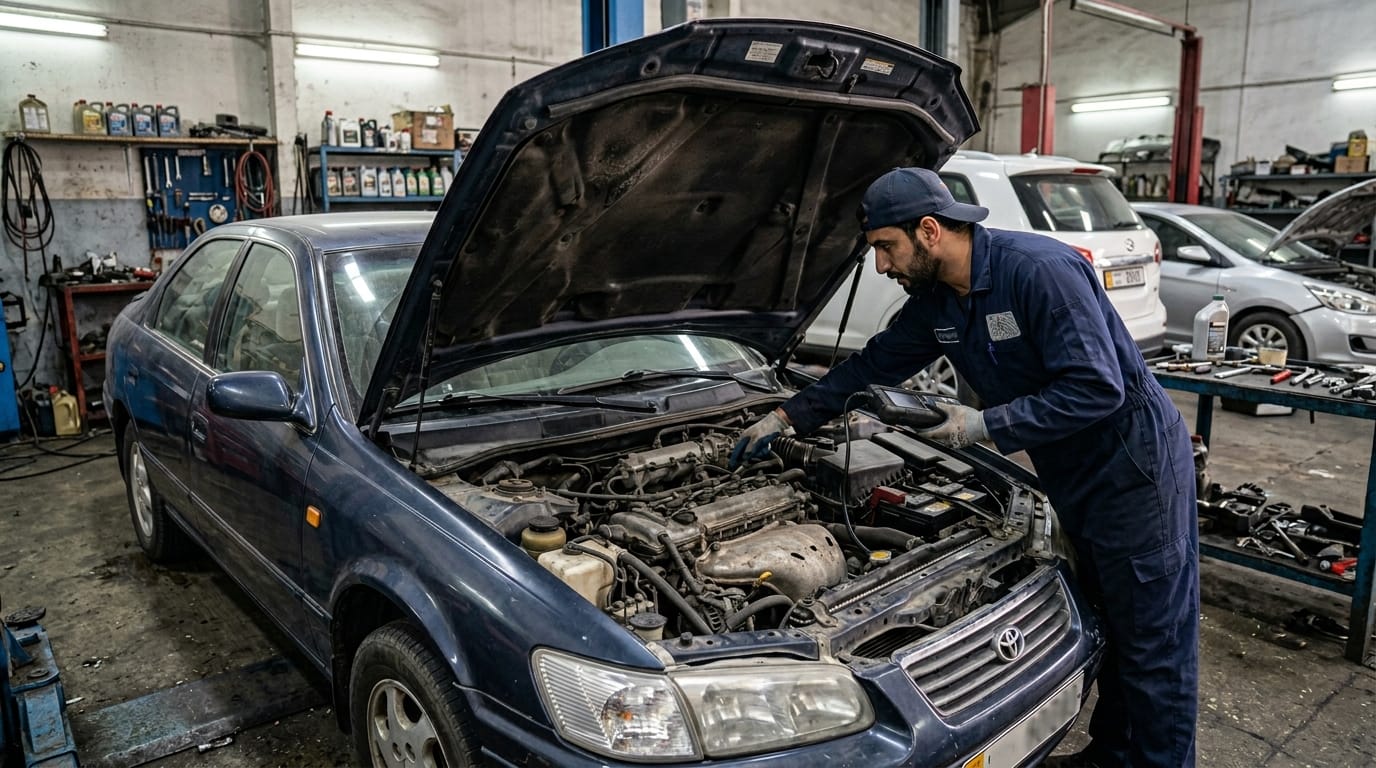
In Dubai, established inspection services are concentrated around Al Quoz Industrial Area, with several operating near Al Aweer. In Sharjah, inspection options are available in the Industrial Area, though coverage is less dense than Dubai. Costs for a full independent inspection typically range from AED 250 to AED 600 depending on provider and vehicle type.
Pre-Purchase Inspection Cost Comparison
| Inspection Type | Dubai Cost Range | Sharjah Cost Range |
|---|---|---|
| Basic visual + OBD scan | AED 150–300 | AED 120–250 |
| Full pre-purchase inspection | AED 350–600 | AED 280–500 |
| Paint thickness measurement only | AED 100–200 | AED 80–180 |
| Structural / frame inspection | AED 200–400 | AED 180–350 |
Mechanic’s Inspection Log
A documented case from Al Quoz workshop activity: a 2019 Nissan Sunny was brought in by an expat who had found it on Dubizzle from a Sharjah-based dealer. Listed at AED 23,500. The seller described it as “single owner, full service history, no accidents.” OBD scan showed a stored P0420 catalyst efficiency code — not visible without a scanner. Paint thickness measurement on the right front door and rear quarter panel registered 220 microns versus the factory-standard 90–120, indicating at least two repaints. The inspection identified a prior right-side collision with panel replacement. The buyer used the findings to negotiate the price down to AED 19,000, which appropriately reflected the vehicle’s actual condition.
This type of scenario plays out regularly across both markets. A AED 350 inspection saved this buyer approximately AED 4,500 in unjustified price premium. For context on what an independent inspection should cover, pre-purchase inspection services are detailed in a separate guide.
Real Case Studies: Workshop and Market Logs
Case 1 — Indian Office Worker, Sharjah Purchase
An Indian software professional earning AED 6,500 monthly, living in Sharjah Al Nahda and commuting to Dubai Internet City, identified a 2020 Toyota Corolla GCC listed by a private seller in Abu Shagara at AED 39,500. The seller claimed full service history and no accidents. An independent inspection at a Sharjah Industrial Area workshop confirmed paint thickness of 95–110 microns on all panels — consistent with factory spec — and no stored OBD fault codes. The buyer negotiated to AED 37,500 based on minor AC performance under prolonged idle. Registered in Dubai for Salik convenience. First-year ownership cost including insurance (AED 3,200), fuel (AED 5,400), Salik (AED 2,100), and maintenance (AED 800) came to approximately AED 11,500. The Sharjah purchase saved approximately AED 3,000 to AED 4,000 versus comparable Dubai listings at the time.
Case 2 — Pakistani Technician, Economy Segment
A Pakistani workshop technician earning AED 3,800 monthly, living and working in Sharjah Industrial Area, purchased a 2018 Mitsubishi Attrage from a Sharjah dealer at AED 16,500 after negotiation from AED 18,000. The inspection at an adjacent Al Quoz-affiliated service point flagged worn front brake pads and a minor AC gas recharge need — total repair cost AED 320. The seller reduced the price by AED 500 to cover part of this. First-year total ownership cost including third-party insurance (AED 1,100), fuel (AED 3,200 for a short daily commute), and maintenance (AED 650) came to approximately AED 5,050. No Salik cost as the vehicle remained in Sharjah daily. The low total cost of ownership relative to income was the primary decision driver.
Case 3 — British Professional, Mid-Range Segment
A British project manager earning AED 14,000 monthly, based in Dubai Marina, purchased a 2019 Toyota Camry 2.5L GCC from an Al Aweer dealer at AED 58,000. Full Tasjeel-certified service history from the Toyota dealer network was available. Independent inspection confirmed clean structural readings and no stored codes. First-year costs including comprehensive insurance (AED 4,800), fuel (AED 6,200 for a longer commute), maintenance (AED 1,200 for first oil service only), and Salik (AED 3,600) came to approximately AED 15,800. The buyer noted that the AED 4,000 to AED 6,000 Dubai premium over comparable Sharjah listings was justified by the documentation quality and stronger resale confidence when planning to sell in 24 months.
Registration and Transfer Process
Purchasing in Dubai and registering in Dubai is straightforward — the RTA handles testing, ownership transfer, and registration at Tasjeel and authorized testing centers in Al Aweer, Nad Al Hamar, and other locations. Testing typically takes 30 to 60 minutes including queue time. Transfer fees generally fall between AED 600 and AED 900 depending on vehicle type.
Purchasing in Sharjah and registering in Sharjah is handled by the Sharjah Vehicle Licensing Department. The process is comparable, with testing and transfer fees in a similar range to Dubai.
Cross-emirate transfers — purchasing in one emirate and registering in another — are legally straightforward but require additional steps. The vehicle must pass inspection in the registering emirate. No special conversion or modification is required for standard GCC-spec vehicles. Fees remain comparable. Many buyers in Sharjah, particularly those working in Dubai, register their vehicles in Dubai for Salik eligibility and operational convenience. For a full breakdown of the RTA process, UAE registration steps for expats covers this in detail.
RTA vs Sharjah Testing Facilities
| Factor | RTA (Dubai) | Sharjah VLD |
|---|---|---|
| Testing cost (typical) | AED 120–170 | AED 100–160 |
| Queue time | 10–30 minutes | 10–25 minutes |
| Test duration | 10–20 minutes | 10–20 minutes |
| Locations available | Multiple across Dubai | Several across Sharjah |
| Online appointment booking | Available via RTA app | Available |
Insurance Cost Comparison
Vehicle registration location affects insurance costs only marginally. Registering in Dubai may result in slightly higher quotes from some providers due to higher accident and claim frequency data. In practice, the difference is usually AED 100 to AED 400 per year on a standard comprehensive policy and is not a primary factor in the buying decision.
What significantly affects insurance cost is the vehicle itself. Toyota and Nissan models across both markets typically attract the lowest comprehensive premiums, commonly ranging from AED 1,800 to AED 3,500 annually depending on vehicle value. European and American models attract meaningfully higher premiums due to higher parts and repair costs.
Dubai vs Sharjah Ownership Cost After Purchase
| Ownership Cost Factor | Dubai | Sharjah |
|---|---|---|
| Annual insurance (Toyota Corolla GCC) | AED 2,800–4,200 | AED 2,600–3,900 |
| Parking (residential) | AED 0–3,600/year depending on zone | Generally free or very low cost |
| Salik (Dubai road toll) | AED 1,500–4,000/year if commuting | Lower if staying in Sharjah |
| Annual registration renewal | AED 450–800 | AED 400–750 |
| Fuel (average 25 km/day) | AED 4,500–6,000/year | AED 4,200–5,800/year |
| Annual maintenance (Toyota/Nissan) | AED 1,800–3,500 | AED 1,500–3,000 |
| Annual Total Estimate | AED 11,000–21,600 | AED 8,700–17,450 |
Dubai vs Sharjah Workshop Ecosystem
Al Quoz Industrial Area in Dubai is arguably the most concentrated automotive workshop district in the UAE. Dozens of independent garages, brand specialists, and authorized dealers cluster in a relatively small geographic area, creating price competition and high availability for most repair types. Same-day service on standard maintenance is the norm for Toyota, Nissan, Hyundai, and Kia models. Wait times for parts ordering are typically less than 24 hours for common GCC-spec models.
Sharjah’s Industrial Area offers comparable services for economy models at slightly lower labor rates — typically 10% to 20% lower than equivalent Al Quoz workshops. However, specialist capacity for European brands and newer hybrid systems is less developed than in Dubai. For Toyota and Nissan owners, Sharjah workshop options represent good value without meaningful quality compromise. Anyone looking for trusted independent garages should review how to find an honest garage in Al Quoz.
| Workshop Factor | Dubai (Al Quoz) | Sharjah (Industrial Area) |
|---|---|---|
| Independent garages | Very high density | High density |
| Brand specialists | Strong for Japanese + Korean | Good for Japanese + Korean |
| Dealer workshops (authorized) | Multiple options per brand | Limited — mainly major brands |
| Labor rates | AED 80–150/hour | AED 60–120/hour |
| Parts availability (Toyota/Nissan) | Excellent — same day | Good — same day for common parts |
| Waiting time (standard service) | 2–4 hours | 2–5 hours |
Dubai vs Sharjah Repair Cost Database
| Repair Item | Dubai (Al Quoz) | Sharjah (Industrial Area) |
|---|---|---|
| Oil service (Toyota/Nissan economy) | AED 120–200 | AED 100–170 |
| Brake pads (front set) | AED 180–320 | AED 150–280 |
| Battery replacement | AED 280–450 | AED 240–400 |
| Radiator replacement | AED 600–1,200 | AED 500–1,000 |
| Water pump replacement | AED 400–750 | AED 350–650 |
| AC compressor replacement | AED 900–1,800 | AED 750–1,500 |
| CVT service / fluid change | AED 350–600 | AED 280–500 |
| Advanced CVT repair (partial) | AED 3,500–7,000 | AED 3,000–6,500 |
| Suspension bushings (set) | AED 300–600 | AED 250–500 |
| Full wheel alignment | AED 100–180 | AED 80–150 |
Total Ownership Cost Table — Full Annual Breakdown
| Cost Item | Dubai Annual | Sharjah Annual |
|---|---|---|
| Purchase price depreciation (year 1) | AED 4,000–8,000 | AED 3,500–7,000 |
| Insurance (comprehensive) | AED 2,800–4,200 | AED 2,600–3,900 |
| Fuel (25 km/day average) | AED 4,500–6,000 | AED 4,200–5,800 |
| Maintenance and servicing | AED 1,800–3,500 | AED 1,500–3,000 |
| Tires (amortized per year) | AED 600–1,200 | AED 500–1,100 |
| Registration renewal | AED 450–800 | AED 400–750 |
| Salik (Dubai drivers) | AED 1,500–4,000 | AED 1,200–3,500 (if commuting to Dubai) |
| Parking | AED 0–3,600 | AED 0–600 |
| Grand Total Annual | AED 15,650–31,300 | AED 13,900–25,650 |
Scam Prevention: What to Watch For in Both Markets
Both markets attract fraud attempts targeting expats unfamiliar with local documentation practices. The patterns below are the most frequently documented across both markets, with Sharjah carrying slightly higher exposure in several categories.
Most Common Trap — Fake Deposit Request: A seller requests a holding deposit via bank transfer or cash before allowing a physical inspection, claiming high buyer competition. This is one of the most common fraud patterns targeting expats in both markets. Never transfer any payment before completing a physical inspection and reviewing all original documents in person.
Fake service history is another frequent issue, particularly in Sharjah. Printed service books with regular dealer stamps may be produced without supporting records. Cross-reference claimed service history with the odometer reading and visible wear. Inconsistencies between wear patterns and service records are a significant warning signal.
Salvage imports — vehicles written off in their country of origin and rebuilt — appear in both markets at attractive prices. A VIN check through a UAE-compatible history service and a structural inspection at a reputable workshop are essential for any imported vehicle purchase.
The overseas buyer variation — a seller claims an urgent need to sell because they are relocating abroad and asks for payment before the vehicle can be inspected — appears periodically on Dubizzle and Facebook Marketplace listings in both markets. Any seller who cannot arrange an in-person meeting for inspection should be treated with significant caution. For a comprehensive look at platform-specific fraud patterns, Dubizzle vs Facebook Marketplace UAE covers this in full detail.
Negotiation Strategy
Dubai Dealer Negotiation
Dubai dealers operating on competitive platforms have less pricing flexibility than traditional independents, but typically accept 3% to 7% reductions when backed by legitimate justification — an inspection finding, a competing listing, or a cash offer without financing. Walk-in negotiations at Al Aweer independent dealers can yield 5% to 12% reductions on patience-backed offers.
Sharjah Dealer Negotiation
Sharjah independent dealers expect negotiation as a standard part of the transaction. Initial asking prices are often set 10% to 20% above the seller’s acceptable floor. An inspection finding further strengthens position. Buyers who arrive with a pre-purchase inspection report and a competitive comparison listing from Dubizzle are well-positioned to achieve 8% to 18% reductions.
Price Negotiation Power Index
| Seller Type | Dubai Typical Discount | Sharjah Typical Discount |
|---|---|---|
| Authorized dealer (certified program) | 0–4% | N/A — rarely present |
| Platform dealer (Cars24, CarSwitch) | 3–7% | 4–8% |
| Independent dealer | 5–12% | 8–18% |
| Private seller (standard) | 4–10% | 6–15% |
| Motivated private seller (departing expat) | 8–15% | 10–20% |
| Fleet / rental disposal | 5–12% | 8–15% |
Owner Scenarios: Monthly Budget Planning by Salary
AED 3,000 Monthly Salary
At this income level, car ownership requires careful calculation. A vehicle priced between AED 12,000 and AED 18,000 in the Sharjah market — Mitsubishi Attrage, Hyundai Accent, or Nissan Sunny at 100,000 to 150,000 km — is accessible with 6 to 9 months of disciplined saving. Monthly running costs including insurance, fuel for a typical blue-collar commute, and basic maintenance should be kept below AED 900. An emergency fund of AED 3,000 to AED 5,000 should exist before purchase.
AED 4,000–5,000 Monthly Salary
A AED 20,000 to AED 30,000 range vehicle becomes accessible. A 2018 to 2020 Nissan Sunny or Mitsubishi Attrage from Dubai or Sharjah at 80,000 to 120,000 km represents a sensible purchase. Monthly costs including comprehensive insurance, fuel, and maintenance should fall in the AED 1,100 to AED 1,500 range.
AED 6,000–8,000 Monthly Salary
The AED 30,000 to AED 50,000 range opens access to Toyota Corolla, Honda City, and Nissan Sentra in better condition. At this income level, buying in Dubai from a documented seller with inspection history is feasible and worth the moderate premium. Monthly ownership costs including Salik for a Dubai commute from Sharjah should be budgeted at AED 1,800 to AED 2,500.
AED 10,000+ Monthly Salary
Toyota Camry, Nissan Altima, and mid-range SUV territory becomes accessible. Dubai’s certified dealer programs are worth considering at this salary level. The additional AED 3,000 to AED 8,000 premium for a documented, lower-risk vehicle is proportionally manageable and protects against the larger repair costs these vehicles carry when neglected.
Cars to Avoid in Both Markets
High-mileage European luxury vehicles — older 3 Series, C-Class, and E-Class — appear regularly at prices that seem attractive. Ownership costs on these vehicles frequently exceed initial estimates by a significant margin, with electrical system work, suspension components, and transmission service all running considerably higher than Japanese equivalents.
US-spec imports at budget prices require particular caution. Converted odometers, absent UAE service history, cooling systems not optimized for Gulf temperatures, and significantly lower resale values all erode the apparent savings. In Sharjah especially, US-spec stock is more prevalent and more frequently misrepresented as GCC-spec.
High-mileage CVT-equipped vehicles without verified CVT service records — particularly Nissan models using the Jatco CVT7 — carry meaningful repair risk. CVT fluid service at 30,000 km intervals is essential; vehicles without this record may require expensive transmission repair. For a full picture of ownership costs by model, 18-month Corolla ownership data provides a practical reference point.
Common Buyer Mistakes
Focusing entirely on purchase price while ignoring total ownership cost leads many buyers to underestimate what a vehicle actually costs to operate. A AED 2,000 saving on purchase price can be erased by a single avoidable repair that a pre-purchase inspection would have identified.
Trusting Tasjeel passing as a mechanical certification is a common misunderstanding. The Tasjeel inspection verifies basic roadworthiness — emissions, lights, obvious safety items — not mechanical health, service history, or internal component condition. A vehicle can pass Tasjeel while needing AED 3,000 to AED 6,000 in maintenance work.
Buying US-spec vehicles without independent professional inspection is a mistake that appears regularly in expat buying experiences, particularly in Sharjah where these imports are more common. Skipping VIN verification is another frequent error. A VIN check using UAE-compatible history services costs very little and can reveal prior write-off status, active loan encumbrances, or country-of-origin discrepancies.
Market Insight: The buyers who consistently achieve the best deals in both Dubai and Sharjah follow the same pattern: they search both markets simultaneously, identify three to five comparable vehicles, arrange independent inspections on their top two choices, and use inspection findings to negotiate. This process typically takes 7 to 14 days and consistently outperforms impulse purchases by a meaningful margin.
When It Becomes Expensive
An economy car bought below AED 20,000 in either market remains affordable as long as maintenance is current and the vehicle was properly inspected before purchase. The cost profile changes significantly in several scenarios: service history gaps above 80,000 km that mask deferred maintenance; CVT transmission on Nissan models without verified fluid change records; aftermarket parts substituted for OEM components without disclosure; and undisclosed flood or structural damage discovered only after ownership transfer.
Luxury vehicles carry inherently higher ownership risk relative to their purchase price. A AED 70,000 European executive sedan requires budgeting AED 8,000 to AED 15,000 annually for maintenance and repair in a realistic scenario — significantly more than a comparable Toyota or Nissan at a similar purchase price.
Evidence Checklist Before Payment
| Document / Item | What to Verify | Problem Indicator |
|---|---|---|
| Emirates ID of seller | Matches Mulkiya ownership name exactly | Mismatch = potential unauthorized sale |
| Mulkiya (registration card) | Owner name, VIN, model year, GCC spec confirmation | Altered details or multiple recent transfers |
| VIN check | Country of origin, prior write-off, active loan status | Write-off history or active bank financing |
| Service history records | Continuity of stamps, workshop names, mileage progression | Gaps over 15,000 km, inconsistent mileage entries |
| Independent inspection report | Structural integrity, mechanical systems, paint thickness | Frame damage indicators, repaint readings, active fault codes |
| Bank loan clearance letter | Vehicle is free of any financing encumbrance | Seller unable to produce clearance for a previously financed vehicle |
| WhatsApp conversation record | Save all written seller claims about vehicle condition | Verbal claims with no written record carry no legal weight |
| Payment receipt | Bank transfer with transaction reference preferred over cash | Cash-only insistence with no receipt offer |
Legal and Administrative Angle
Buyers who discover undisclosed defects after purchase may have legal remedies depending on available evidence and the specific circumstances of the transaction. Outcomes vary significantly based on documentation quality — particularly whether the seller made written or documented verbal representations about vehicle condition that can be demonstrated to be false.
Collect all inspection reports in writing before purchase. Save every WhatsApp and SMS communication with the seller. Preserve a copy of the seller’s Emirates ID. Screenshot the original listing before it is removed. Retain all repair invoices incurred after purchase that relate to pre-existing undisclosed conditions. These documents form the basis of any complaint to Dubai Consumer Protection or the relevant Sharjah authority.
Insurance claims and legal action against sellers are separate processes. An insurance claim addresses damage covered under your policy. Legal action against a seller addresses misrepresentation or fraud. Many expats conflate the two, which leads to incorrect expectations and misdirected effort.
The Bottom Line Decision Framework
| Buyer Type | Dubai Rating | Sharjah Rating | Recommendation |
|---|---|---|---|
| New Worker (AED 3,000–4,000 / month) | Moderate | Strong | Sharjah — with independent inspection |
| Technician / Blue-Collar (AED 3,500–5,000) | Moderate | Strong | Sharjah — economy GCC model, Attrage or Sunny |
| Delivery Driver (high daily mileage) | Strong | Moderate | Dubai — documented service history essential |
| Small Family (AED 6,000–9,000) | Strong | Moderate | Dubai — documentation and safety confidence |
| Office Professional (AED 5,000–8,000) | Strong | Strong | Either — inspect before buying regardless |
| Sales Executive / Manager (AED 8,000+) | Very Strong | Moderate | Dubai certified program |
| Weekend Driver (low mileage) | Moderate | Strong | Sharjah — lower entry cost, less depreciation pressure |
| Departing Expat (under 12 months remaining) | Better resale exit | Slower resale | Consider not buying — evaluate taxis or lease instead |
How Strong Is the Evidence? — Evidence Strength Section
Transparency about data sourcing is part of what distinguishes a credible market report from a content piece. Every figure, score, and conclusion in this guide is built from one or more identifiable evidence types. The table below rates the strength of each source category used throughout this article, so readers can calibrate their confidence in specific claims accordingly.
| Evidence Source | Strength Rating | How It Was Used in This Report | Limitations |
|---|---|---|---|
| Market listing comparisons (Dubizzle, platform data) | High | Direct price comparison across hundreds of active listings in both markets for each brand and model category | Listing prices are asking prices — actual sale prices may vary. Market conditions shift with season and demand cycles. |
| Workshop inspection records (Al Quoz, Sharjah Industrial Area) | High | OBD scan results, paint thickness readings, and pre-purchase inspection findings from documented cases in both emirates | Sample represents vehicles that buyers chose to inspect — may skew toward vehicles with known concerns or motivated buyers. |
| Workshop labor and parts pricing | High | Direct quotations from independent workshops in both emirates; ranges reflect real variation across multiple providers | Prices vary by workshop tier, parts brand (OEM vs aftermarket), and vehicle condition. Dealer workshops run higher than independents. |
| Dealer interviews and market observations | Medium | Dealer behavior patterns, pricing tactics, documentation practices across Al Aweer and Sharjah Industrial Area | Individual dealer conduct varies significantly. Scores reflect observed patterns, not a census of all operators. |
| Expat ownership case documentation | Medium | Based on recurring patterns observed in workshop logs and buyer experience; names and identifying details generalized for privacy | Cases are representative of recurring patterns, not statistically sampled. Individual outcomes vary based on specific vehicle and seller. |
| Registration and transfer fee data | Medium | Fee ranges based on published RTA and Sharjah VLD guidance, cross-referenced with buyer experience records | Exact fees depend on vehicle type, age, and periodic regulatory adjustment. Verify current fees at point of transaction. |
| Insurance premium estimates | Medium | Indicative annual premium ranges from UAE insurance market observations for specific vehicle categories | Actual premiums vary materially by provider, driver age, claims history, and policy coverage type. Get direct quotes before budgeting. |
| Depreciation estimates | Medium | Based on market listing price trends for specific models tracked over 12 to 36 month periods in both markets | Not actuarial data. Depreciation is affected by condition, mileage, fuel prices, and overall market sentiment at time of resale. |
| Expat ownership trends (long-term patterns) | High | Recurring behavioral and financial patterns across multiple buyer profiles over multiple ownership cycles in the UAE market | Trends are directional indicators. Individual buyer experience depends on negotiation skill, vehicle selection, and market timing. |
Market Volatility Notice: All prices, fees, and cost estimates in this report are indicative averages based on market observations current at the time of writing. Used car prices in UAE fluctuate with fuel costs, seasonal demand cycles, global supply conditions, and exchange rate effects on import pricing. Registration fees and government charges are subject to periodic revision. Readers should verify current prices independently before making any purchase or financial decision. This report is intended as a market orientation guide, not a pricing guarantee.
Data Sources Used
The following official and institutional sources were referenced in the preparation of this report. Readers are encouraged to consult these directly for current fee schedules, registration procedures, and consumer protection processes.
- Roads and Transport Authority (RTA) — Dubai — vehicle testing, registration, and transfer procedures
- Sharjah Government — Official Portal — Sharjah Vehicle Licensing Department information
- Dubizzle UAE — listing price comparisons across both markets
- UAE Consumer Protection Department — complaint procedures and buyer rights
- Insurance Authority UAE — motor insurance framework and guidelines
- TAMM Abu Dhabi — Vehicle Services — cross-emirate registration reference
Q: Are used cars really cheaper in Sharjah than in Dubai?
Q: Can I buy a car in Sharjah and register it in Dubai?
Q: Is a pre-purchase inspection necessary when buying in Sharjah?
Q: Does buying in Sharjah affect my insurance cost?
Q: What is the best car for a monthly salary of AED 4,000 in this market?
Q: How do I verify whether a Sharjah-listed car is GCC spec?
Q: If a seller misrepresented the car’s condition, do I have legal recourse?
Disclaimer: Emirates Car Guide is a 100% independent platform. We do not own showrooms, nor are we affiliated with any used car dealerships or garages. Our sole mission is to protect expats from financial fraud in the automotive market.
