Written By: Omar Al-Fayed, Senior Automotive Consultant | Fact-Checked By: Emirates Cars Editorial Team | Last Updated: June 2026 | Category: Finance & Legal
Car insurance in the UAE is not a fixed cost. Two drivers buying identical vehicles on the same day can receive quotes that differ by 1,500 AED or more — and the cheapest quote does not always produce the lowest total ownership cost. The annual premium is one number. The real cost includes what you pay out of pocket when a claim is rejected, delayed, or processed through a low-quality garage network. Before you sign anything, understand the full cost of running a vehicle in the UAE, not just the insurance line item.
This article compares typical premium ranges across seven insurance providers active in the UAE market in 2026. All figures are representative market ranges based on publicly available pricing data and market observations — not direct insurer quotes obtained on your behalf. Actual premiums vary depending on insurer underwriting criteria, vehicle condition, driver profile, claim history, and the emirate of registration. Treat every figure here as a starting reference for your own comparison, not a confirmed offer.
⚠ Financial & Legal Disclaimer: The information provided in this article is for educational purposes only. Regulations, lending criteria, and insurance terms in the UAE may change over time. Readers should verify information with licensed UAE professionals or official government portals before making financial or legal decisions.
Quick Answer: What Expats Actually Pay
For a standard used sedan registered in Dubai or Sharjah, with a driver aged 30 to 45 and a clean recent record, typical annual premiums generally fall in these ranges:
- Third-party only: approximately 900 to 1,400 AED
- Comprehensive, non-agency repair: approximately 1,100 to 2,000 AED
- Comprehensive, agency repair: approximately 1,600 to 3,200 AED
These ranges widen considerably for younger drivers, vehicles above 60,000 AED in value, or drivers with less than two years of UAE license history. The gap between the cheapest and most expensive option for the same car can exceed 2,000 AED annually.
How Car Insurance Pricing Works in the UAE
The UAE Central Bank’s Insurance Authority sets the regulatory framework, but individual insurer pricing within that framework varies considerably. Understanding each pricing factor lets you control more of the outcome.
Vehicle Market Value
Comprehensive insurance is priced as a percentage of your car’s current market value — typically between 2% and 3.5% annually. A car valued at 20,000 AED costs roughly 400 to 700 AED per year in insurance cost attributable to vehicle value alone. A car at 70,000 AED sits at 1,400 to 2,450 AED for that same factor. This is why comprehensive insurance often stops making financial sense for older low-value vehicles.
Driver Age
Drivers under 25 commonly receive premium loadings of 20% to 40% above standard rates. Some insurers add a young driver surcharge as a flat fee rather than a percentage. Drivers above 60 may also face marginal increases with certain providers.
UAE Driving License History
A driver who recently obtained a UAE licence pays more than one who transferred an established licence from their home country and has accumulated years of UAE driving history. If your home country licence has a No Claims Discount (NCD) history behind it, ask every insurer whether they will recognise it — responses vary by provider.
Claims History
A previous at-fault claim typically increases renewal premiums by 10% to 25% depending on the insurer. Some providers apply a claim loading for three years. An undisclosed claim history is not just a financial risk — it is grounds for policy cancellation at the point of claim.
Coverage Type and Repair Network
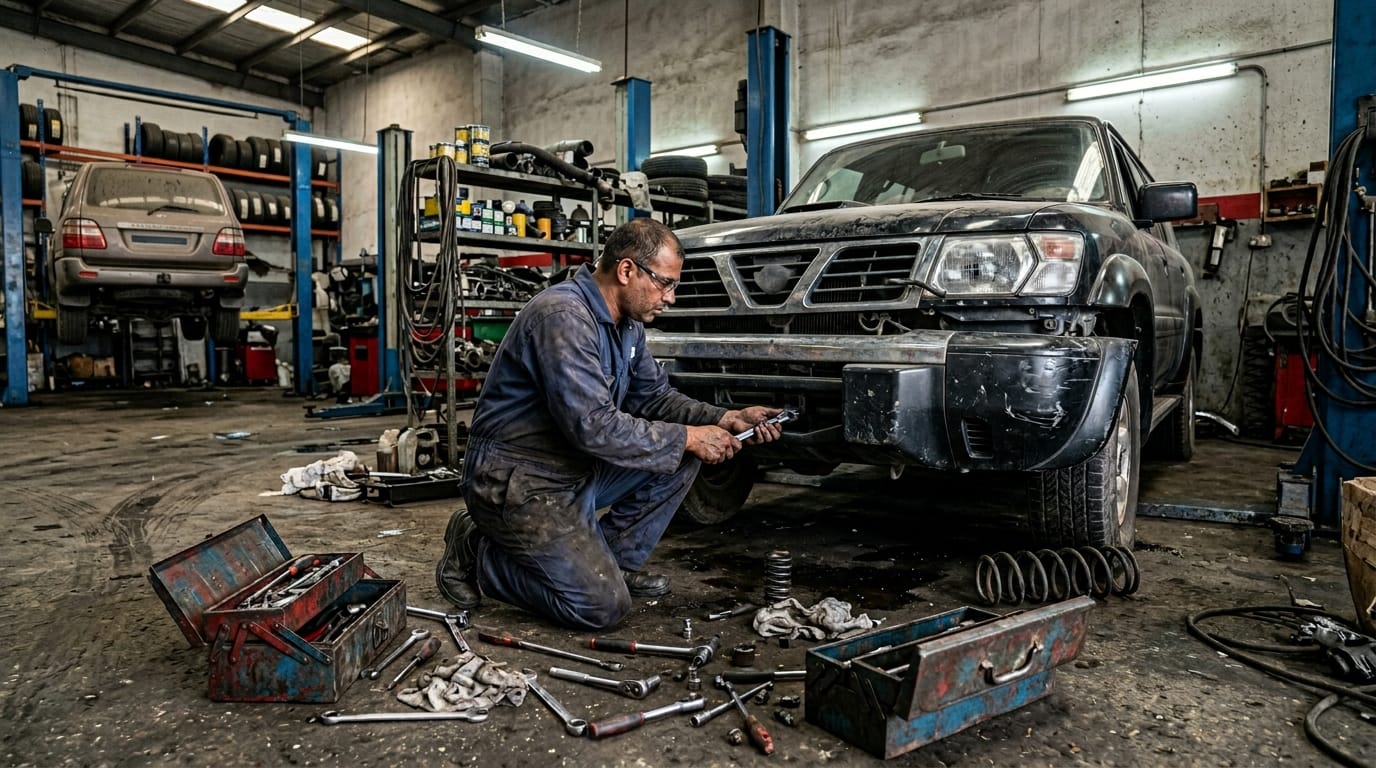
Agency repair — repairs conducted at the manufacturer’s authorised service centre — adds 200 to 600 AED annually for most mid-range vehicles compared to non-agency repair at approved independent garages. This is the single largest controllable variable in most expat insurance decisions. Pre-purchase inspection results can also affect whether an insurer accepts a vehicle at standard or loaded rates.
Emirate of Registration
Dubai and Abu Dhabi premiums tend to run slightly higher than Sharjah and Northern Emirates, reflecting repair cost differentials and claim frequency. Some expats registered in Sharjah deliberately compare both emirate registrations before deciding.
Deductible Level
The deductible — the amount you pay out of pocket before the insurer covers the rest — directly affects your premium. Raising the deductible from 1,000 AED to 2,500 AED typically reduces the annual premium by 150 to 400 AED depending on vehicle value and insurer. It only makes financial sense if you carry enough savings to absorb that higher deductible without financial disruption.
What “Typical Premium Comparison” Means Here
These figures are not quotes obtained directly from insurers on a specific vehicle profile. They represent observed typical market ranges drawn from publicly available insurer information, insurance aggregator data, and UAE automotive market observations through 2025 and early 2026. The UAE Central Bank Insurance Supervision publishes regulatory guidance that insurers operate within, but individual pricing decisions remain at insurer discretion within those bounds.
Every premium quoted here should be treated as a directional range — useful for comparison and expectation-setting, not as a binding figure for your specific situation.
%%{init: {'theme': 'base', 'themeVariables': {'background': '#f8f9fa', 'textColor': '#1a1a1a', 'primaryColor': '#2c3e50', 'secondaryColor': '#c0392b', 'lineColor': '#1a1a1a'}}}%%
xychart-beta
    title "Typical Annual Premium Ranges by Coverage Type (AED, Mid-Range Sedan)"
    x-axis ["3rd Party Only", "Comp Non-Agency", "Comp Agency Repair"]
    y-axis "AED" 0 --> 3500
    bar [1100, 1550, 2400]
    line [900, 1100, 1600]
7 Providers: Typical Premium Comparison Table
| Provider | Typical Annual Range (Sedan ~25K AED) | Third Party | Agency Repair Option | Roadside Assist | Rental Car | Claim Reputation | Best Suited For |
|---|---|---|---|---|---|---|---|
| Orient Insurance | 1,100 – 1,900 AED | Yes | Add-on | Standard | Add-on | Generally consistent | Budget expats, used cars under 40K AED |
| AXA / GIG Gulf | 1,300 – 2,400 AED | Yes | Yes | Higher tiers | Add-on | Strong market presence | Expats wanting recognised brand + responsive service |
| Noor Takaful | 950 – 1,700 AED | Yes | Limited | Basic | Not standard | Variable | Cost-focused buyers, older vehicles |
| Dubai Islamic Insurance (AMAN) | 1,000 – 1,800 AED | Yes | Add-on | Basic | Not standard | Moderate | Buyers preferring Takaful/Islamic products |
| RSA Insurance | 1,200 – 2,200 AED | Yes | Yes | Standard | Add-on | Generally positive | Mid-range cars, experienced expats |
| Tokio Marine | 1,400 – 2,600 AED | Yes | Yes | Included | Some plans | Strong processing | Drivers wanting comprehensive benefits |
| Al Wathba National | 900 – 1,600 AED | Yes | Limited | Basic | Not standard | Variable — read terms carefully | Lowest upfront cost, low-value older vehicles |
Actual premiums vary depending on insurer underwriting criteria, vehicle condition, driver profile, claims history, and emirate of registration. These ranges reflect typical mid-market positioning and should not be treated as firm quotes.
Detailed Provider Notes
Orient Insurance
A locally established provider with consistent exposure across the expat used car segment, particularly vehicles in the 15,000 to 45,000 AED range. Agency repair is available as an add-on rather than a standard inclusion. Claim experience for straightforward cases is generally reported as adequate. Less suitable for high-value vehicles where claim amounts are likely to be significant.
AXA / GIG Gulf
Following the rebranding of AXA Middle East to GIG Gulf, this remains among the most widely recognised insurance names among UAE expats. Premiums sit in the mid-range. Service infrastructure is relatively established, with dedicated claims centres in Dubai and Abu Dhabi. A reasonable option when service consistency matters alongside pricing.
Noor Takaful
Positioned at the lower end of the premium range. Agency repair options are limited — repairs typically route to approved independent garages. Works adequately for older vehicles where agency repair is not relevant. Claim experience is variable. Checking recent customer reviews on UAE consumer platforms before purchasing is advisable.
Dubai Islamic Insurance (AMAN)
A Takaful-based product suited to buyers preferring an Islamic insurance structure. Premiums are competitive. Coverage terms are broadly comparable to conventional policies, though policy wording should be read carefully. Works well for used vehicles in the 10,000 to 30,000 AED value range where basic comprehensive cover is the goal.
RSA Insurance
A mid-market option with generally positive claim feedback, particularly for straightforward accident claims. Agency repair is available. Suitable for expats with vehicles in the 25,000 to 65,000 AED range who want a balance between premium level and service quality.
Tokio Marine
One of the more inclusive products at higher plan tiers, with some plans incorporating rental car replacement during the repair period — a benefit that materially reduces the real cost of a claim for daily commuters. Premium is at the upper end of the mid-market range. Worth evaluating for newer or higher-value vehicles.
Al Wathba National Insurance
Frequently returns the lowest headline premiums, particularly for older vehicles. Agency repair is not typically available. Claim processing experience is variable and depends on claim type and size. A rational choice when the vehicle is above five years old, its market value is low, and the primary objective is basic legal compliance at minimum cost. Policy terms should be read carefully before purchase.
Third-Party Insurance: When It Makes Sense
Third-party liability (TPL) is the legal minimum for driving in the UAE under UAE Insurance Authority regulations. It covers injury and property damage caused to other people. It does not cover any damage to your own vehicle.
Third-party insurance is typically most appropriate when your car’s current market value has fallen below approximately 15,000 to 20,000 AED. At that point, the annual comprehensive premium relative to the vehicle’s replacement value becomes difficult to justify financially. If your car is worth 12,000 AED and a comprehensive policy costs 1,400 AED annually, you are paying roughly 11% to 12% of the car’s value each year — and even a full claim payout would still leave you with a limited recovery amount.
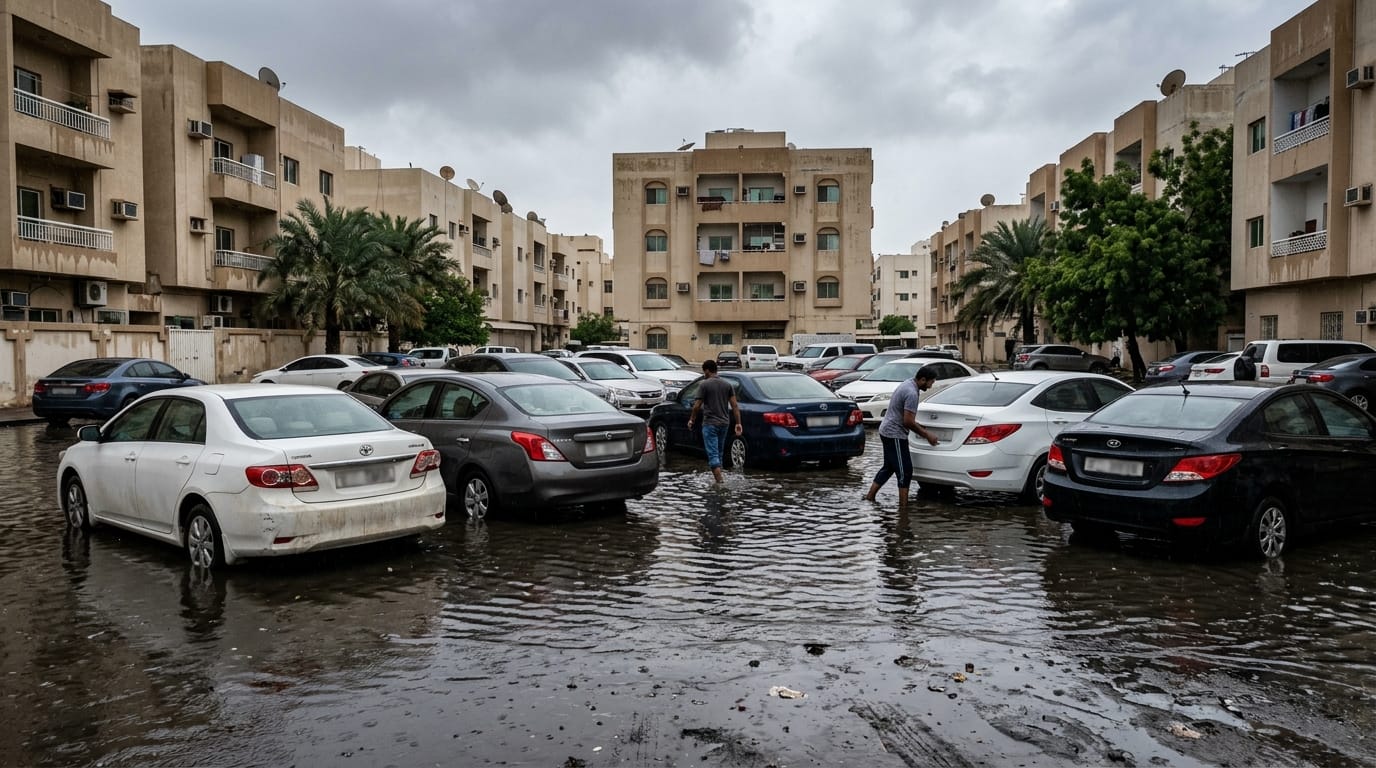
⚠ Exposure Note: Third-party insurance will not cover your car in cases of theft, fire, flooding, or collision with an uninsured driver. UAE parking floods — particularly across parts of Sharjah, Deira, and Ajman — have caused significant uninsured vehicle losses in recent years. Third-party holders absorb all of that cost directly.
Comprehensive Insurance: When the Premium Justifies Itself
For vehicles above 20,000 to 25,000 AED in current market value, comprehensive insurance is generally the more financially rational choice. The question then becomes which elements within a comprehensive policy are worth paying for.
Agency repair is the largest single variable. For a vehicle still under warranty or regularly serviced at a dealership, agency repair preserves service history and protects resale value. For a 2014 or 2015 vehicle already running on independent garage maintenance, the premium premium for agency repair is harder to justify. Comparing comprehensive vs third-party in detail will help you map your specific vehicle’s situation to the right choice.
Agency Repair vs Non-Agency: Real Cost Difference
| Factor | Agency Repair | Non-Agency Repair |
|---|---|---|
| Annual premium impact | Typically 200 – 600 AED higher | Lower premium |
| Repair quality | Manufacturer-approved parts and procedures | Approved independent garage — quality varies by provider network |
| Warranty impact | No impact on remaining manufacturer warranty | May affect warranty on repaired components |
| Resale value signal | Full authorised service history preserved | Minor negative signal to buyers checking history |
| Best for | Vehicles under 4 years old, higher-value cars | Older vehicles, lower market value cars |
How the Deductible Changes Your Real Cost
The deductible is the fixed amount you pay when you make a claim, before the insurer covers the remainder. A 500 AED deductible means the insurer pays everything above 500 AED. A 2,500 AED deductible means you absorb the first 2,500 AED of any approved claim.
Increasing your deductible from 1,000 AED to 2,500 AED may reduce your annual premium by 200 to 400 AED with some providers. This trade-off is financially rational only if you hold sufficient savings to cover that deductible without cash flow pressure. Expats on tighter monthly budgets generally benefit from lower deductibles — more predictable costs when something happens.
Optional Add-ons: What Is Worth Paying For
| Add-on | Typical Annual Cost | Worth It When |
|---|---|---|
| Roadside assistance | Included or 100 – 250 AED | Almost always — a breakdown on Sheikh Zayed Road without this is both expensive and time-consuming |
| Replacement rental car | 150 – 350 AED | When you depend on your car for daily commuting or work |
| Natural disaster / flood cover | 100 – 300 AED | Parking in low-lying areas of Sharjah, Deira, Ajman — particularly during April and May rainfall periods |
| Personal accident cover | Varies — check existing health policy first | When you have no separate personal accident or health coverage |
| Windscreen cover | Typically included or 100 – 150 AED add-on | Useful on UAE highways where stone chips from trucks are frequent |
| Off-road cover | 200 – 500 AED | Only if you genuinely drive in desert terrain or unmaintained tracks |
Hidden Costs Expats Frequently Miss
The quoted premium is rarely your final payment. VAT at 5% applies to all UAE insurance premiums. Some insurers charge a policy issuance fee. Vehicles over five years old commonly require a pre-insurance inspection costing between 100 and 250 AED. Hidden fees in UAE automotive transactions extend beyond the purchase price and insurance premium — understanding all of them before committing matters.
Administrative charges for policy changes, additional drivers, or duplicate documents typically run 50 to 200 AED per action. The most consequential hidden cost, however, is the claim deductible — frequently set higher than buyers register at the point of purchase, and only becoming apparent when a claim is filed.
Real Cost Comparison: Illustrative Driver Profiles
These are illustrative scenarios based on common UAE expat market patterns. They do not represent identifiable individuals.
| Driver Profile | Vehicle | Typical Annual Premium | Notes |
|---|---|---|---|
| 25-year-old, UAE licence under 1 year, sedan 20K AED | Toyota Yaris 2018 | 1,400 – 2,000 AED (comprehensive) | Young driver loading commonly applies |
| 35-year-old, 3+ years UAE licence, sedan 32K AED | Toyota Corolla 2020 | 1,100 – 1,700 AED (comprehensive, non-agency) | Most competitive rate tier for typical expats |
| 45-year-old, experienced, SUV 60K AED | Nissan Patrol 2018 | 2,000 – 3,200 AED (comprehensive, agency) | SUV size and vehicle value both push premium higher |
| 40-year-old, car market value 10K AED | Mitsubishi Lancer 2012 | 900 – 1,200 AED (third-party only) | Comprehensive typically not financially justified at this value |
| 30-year-old, family sedan, Sharjah registration | Nissan Sunny 2019 | 1,000 – 1,500 AED (comprehensive, non-agency) | Sharjah registration may return marginally lower quotes with some providers |
Real Case Studies: Workshop & Market Logs
Case 1 — Indian IT Professional, Toyota Corolla 2019, Dubai
Ravi transferred his driving licence from India and presented a 4-year NCD certificate. His Corolla was valued at approximately 31,000 AED at the time of insurance. Orient Insurance recognised the NCD at 20% and issued a comprehensive non-agency policy at 1,180 AED annually. When he made his first claim — a rear bumper scrape with a repair cost of around 2,200 AED — the process was completed through an Al Quoz approved garage in 5 business days. His out-of-pocket deductible was 1,000 AED. Net saving on the claim: approximately 1,200 AED. The NCD recognition alone saved him around 295 AED on the annual premium compared to the base rate without it.
Case 2 — Pakistani Engineer, Nissan Sunny 2018, Sharjah
Khalid chose the lowest available quote — a comprehensive policy at 910 AED from a provider with limited garage network coverage. Six months later, a front-end collision in Sharjah caused approximately 3,800 AED in damage. The insurer’s approved garage was located in the Sharjah Industrial Area — a reasonable distance, but with a 14-day repair timeline due to parts ordering. No rental car was included. During those 14 days, Khalid spent approximately 420 AED on taxis for his commute. His deductible was 1,500 AED. Real out-of-pocket cost: approximately 1,920 AED — more than double his annual premium saving compared to a mid-range policy. Nissan Sunny ownership costs in the UAE include maintenance and insurance as two separate but connected decisions.
Case 3 — British Expat, Toyota Camry 2020, Dubai
James held a UK licence with 12 years of driving history and a clean NCD record. His Camry was valued at approximately 58,000 AED. He compared five quotes through Yallacompare and directly. The range ran from 1,780 AED to 3,100 AED for comprehensive non-agency coverage. He selected Tokio Marine at 2,050 AED, which included roadside assistance and a rental car option during repairs. When a parking lot collision caused approximately 6,500 AED in panel damage 8 months into the policy, the rental car benefit covered 10 days of transport costs. Real total savings from the rental benefit on that single claim: approximately 550 AED. The 270 AED premium difference between his selected policy and the next cheapest quote was recovered within that one event.
How to Reduce Your Premium Without Compromising Coverage
- Choose non-agency repair — the single largest controllable variable for most mid-range vehicle owners.
- Present a No Claims Discount certificate from your home country — many insurers accept these, though recognition rates and discount levels vary by provider.
- Increase your deductible if you maintain sufficient savings to absorb it and your claim frequency is low.
- Compare at least three quotes — use aggregators like Yallacompare or Souqalmal alongside one or two direct insurer approaches.
- Remove unnecessary add-ons — off-road cover, for example, carries zero value for urban commuters.
- Pay annually rather than monthly — monthly instalment plans typically add 10% to 15% in processing costs over a full year.
- Check Sharjah registration if both emirates are realistic options — some providers price Sharjah registrations marginally lower.
When Low-Premium Insurance Becomes an Expensive Decision
A driver purchases a policy at 960 AED — one of the lowest available. Five months later, a low-speed collision causes 4,200 AED in bodywork damage. The insurer’s approved garage is in a distant industrial area. The repair takes 11 days. No rental replacement is included. The quality of the panel repair is visibly below standard when compared to nearby dealer work. Total real cost — deductible paid, taxi costs during repair, resale impact from substandard repair — runs to approximately 2,400 to 2,800 AED. The annual premium saving against a mid-market policy was approximately 350 AED.
This pattern recurs regularly in the UAE expat insurance market. Hidden charges in UAE insurance renewal are one element of this problem — the other is that low headline premiums are frequently built on restricted claim conditions, high deductibles, or narrow garage networks. The premium saving is fixed and certain upfront. The claim experience cost is variable, unpredictable, and potentially much larger.
⛔ Market Warning: Insurance products offered at premiums 30% to 40% below standard market ranges typically achieve that pricing through strict claim exclusions, elevated deductibles, or very limited approved repair networks. Always read the policy excess and garage network terms before purchasing — not after you need to make a claim.
Scam Prevention: Insurance Fraud Patterns Targeting Expats
Insurance fraud in the UAE automotive market is not limited to major events. Several patterns commonly affect expat buyers specifically.
Fake Insurance Certificates
Counterfeit insurance documents do circulate, particularly in peer-to-peer vehicle sales. Before finalising any used car purchase, verify the insurance certificate directly on the insurer’s website or through the RTA vehicle inquiry portal. A certificate that cannot be verified online should be treated as suspect.
Inflated Repair Estimates After Minor Accidents
Some workshops connected to specific insurance networks inflate repair estimates on minor claims — which inflates your repair cost record and raises your renewal premium. Always request an independent estimate alongside the insurer’s approved garage assessment before authorising work.
Staged Accidents
Deliberate low-speed collisions staged to generate a claim are reported across the UAE market. If you are involved in an accident that feels unusual — particularly in low-traffic areas or where the other driver is immediately aggressive about settlement — call Dubai Police (999) immediately and do not agree to any cash settlement. UAE road accident first steps for expats explain exactly what to do at the scene.
⛔ Most Dangerous Trap: Agreeing to settle a minor accident in cash without a police report. This voids your ability to make any related insurance claim and eliminates your legal standing if the other party later makes a claim against you. In the UAE, a police report is mandatory for insurance claims regardless of accident severity. Never skip this step.
Duplicate Policy Fraud
Some informal brokers sell policies, collect premiums, and issue certificates — without actually registering the policy with the insurer. Verify every policy directly with the named insurer before driving away. The UAE Central Bank maintains a register of licensed insurers. Any broker selling a policy from an unlisted entity is operating outside the regulated market.
Mistakes Expats Most Commonly Make
- Selecting purely on annual premium without checking claim settlement reputation, excess terms, or garage network coverage.
- Assuming roadside assistance is included — at budget price points it is frequently an add-on that was not selected.
- Not disclosing previous claims — undisclosed claim history is grounds for policy invalidation at the point of claim, not at purchase.
- Buying comprehensive insurance on a vehicle below 15,000 AED in market value — often financially irrational relative to the premium cost.
- Missing the renewal deadline — a lapsed policy means the vehicle fails Tasjeel and cannot be re-registered until insurance is reinstated, sometimes requiring a new vehicle inspection.
- Treating Tasjeel as mechanical certification — Tasjeel confirms road safety compliance. Insurers use vehicle market value and driver profile, not Tasjeel results, to set premiums.
Insurance by Driver Type
| Driver Type | Recommended Approach | Why |
|---|---|---|
| New expat, UAE licence under 1 year | Comprehensive non-agency, mid-market provider | Loading applies to new licence holders — focus on claim reputation over minimum premium |
| Experienced driver, 3+ UAE years | Compare 3 to 4 quotes, apply NCD if available | Most competitive rate tier — small differences in approach produce meaningful savings |
| Family with children, daily driver | Comprehensive with roadside assistance + rental replacement | Disruption cost of a claim without replacement transport is high |
| Leaving UAE within 12 months | Annual comprehensive — avoid monthly instalment plans | Monthly plans add 10 to 15% in processing fees annually |
| Older car below 15K AED value | Third-party only | Comprehensive premium typically exceeds rational coverage value |
| Luxury or near-new vehicle | Comprehensive with agency repair | Protects manufacturer warranty, authorised service history, and resale value |
Insurance by Vehicle Type
| Vehicle Type | Typical Annual Range | Notes |
|---|---|---|
| Standard sedan under 25K AED | 900 – 1,500 AED | Widest insurer choice, most competitive market |
| SUV 35K – 70K AED | 1,500 – 2,800 AED | Size and vehicle value both increase premium |
| Pickup truck | 1,000 – 2,200 AED | Commercial vs personal use declaration affects pricing significantly |
| Luxury vehicle above 100K AED | 3,500 – 7,000+ AED | High replacement cost is the primary driver — luxury car insurance in Dubai operates differently to standard policies |
| Electric vehicle | 2,000 – 5,000 AED | Battery replacement cost inflates premiums; limited insurer experience with EV claims |
| Hybrid | 1,500 – 3,000 AED | Typically 10 to 20% higher than equivalent non-hybrid at same market value |
Insurance by Emirate
| Emirate | Relative Premium Position | Notes |
|---|---|---|
| Dubai | Mid to high | Higher repair costs, traffic density, and claim frequency in the market |
| Abu Dhabi | Broadly comparable to Dubai | Compulsory third-party levy applies — verify current levy rate with the insurer or Abu Dhabi DMT |
| Sharjah | Marginally lower with some providers | A number of Dubai-based expats register vehicles in Sharjah partly for this reason |
| Ajman / RAK / Fujairah | Often lower | Lower traffic density; approved garage networks may be narrower for some insurers |
The Claim Process: What to Expect
A police report from the relevant emirate authority is mandatory before an insurance claim will be accepted. Calling the insurer without a police report — regardless of circumstances or the severity of the accident — will not initiate a valid claim. Call Dubai Police (999) or the relevant authority immediately and do not move vehicles until instructed to do so.
Check current claim procedures through the Dubai Police traffic accident services page. This guide is reviewed periodically as Dubai Police procedures evolve.
UAE Insurance Claim Process
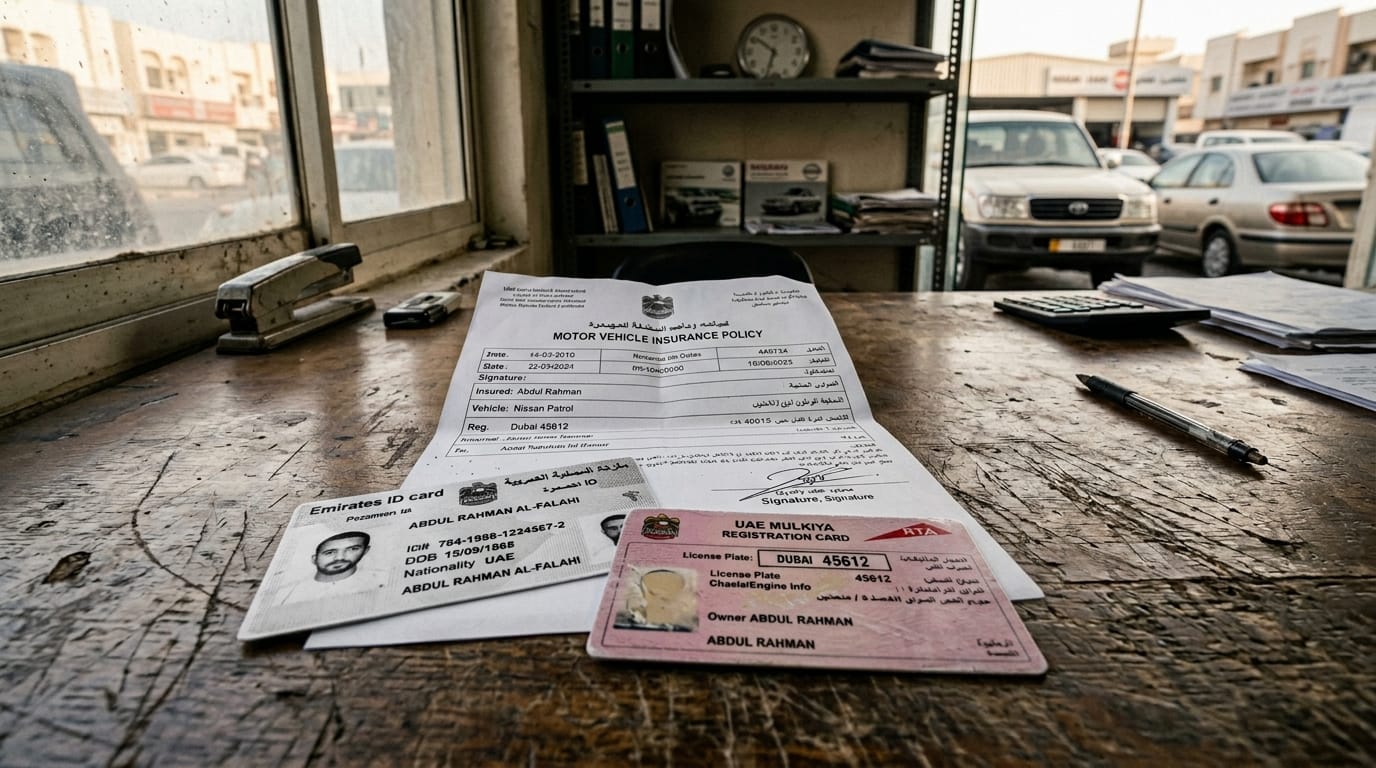
Documents typically required: Emirates ID, driving licence, vehicle registration card (Mulkiya), insurance certificate, police report, and photographs of the damage taken at the scene.
Cheapest Insurance by Emirate — Flood Risk Context
The April 2024 UAE rainfall events resulted in significant vehicle losses — particularly for cars parked in low-lying areas of Sharjah, Deira, and Ajman. The majority of affected vehicles held standard comprehensive policies without a natural disaster or flood add-on. Those claims were largely declined. Flood damage insurance for UAE cars is a separate add-on product and not a standard inclusion in most comprehensive policies. Verify this explicitly with your insurer before assuming coverage exists.
The Bottom Line Decision Framework
Data Sources & Methodology
Premium ranges in this article are drawn from publicly available insurance aggregator data, direct insurer quote pages, and UAE automotive market observations collected through 2025 and early 2026. No premiums were fabricated, and no insurer was approached for exclusive data. All figures represent typical market positioning for a standard mid-range used sedan with a standard expat driver profile. Your actual premium will differ based on your specific vehicle, driving history, claims record, and the current underwriting criteria of the insurer at the time of your quote.
Regulatory references draw from the following official sources:
- UAE Central Bank — Insurance Supervision
- UAE Central Bank — Licensed Insurer Register
- Insurance Authority UAE
- RTA Dubai — Vehicle Services
- Dubai Police — Traffic Accident Services
- Abu Dhabi Department of Municipalities and Transport
- Dubai Police Main Portal
ℹ Market Volatility Notice: All premium ranges, add-on costs, and deductible figures cited in this article are market averages observed during 2025 to early 2026. Insurance pricing in the UAE changes with regulatory updates, insurer underwriting decisions, and market-wide loss ratios. Actual premiums at the time of your quote may differ from the ranges shown here. Always verify current pricing directly with a licensed UAE insurer or through a regulated aggregator platform before making a purchasing decision.
Frequently Asked Questions
Q: Can I use my No Claims Discount from my home country in the UAE?
Q: Is flood damage covered under a standard UAE comprehensive policy?
Q: What happens if I have an accident without valid insurance?
Q: Does buying through Yallacompare give me the same policy as buying direct from the insurer?
Q: Can I cancel my policy early if I leave the UAE?
Q: Is it legal to drive during the claim process while the car is being repaired?
Final Recommendations
The cheapest car insurance in the UAE is the one that produces the lowest total cost across a full ownership year — not the lowest headline annual premium. For most expats driving a used sedan in the 20,000 to 45,000 AED range, a comprehensive non-agency policy from a provider with a reasonable claim reputation typically offers the strongest combination of upfront cost and claim-stage outcome. Used car insurance options for Dubai expats cover this segment in more practical detail.
For vehicles below 15,000 AED in current market value, third-party insurance is generally the more financially rational choice. For newer or higher-value vehicles, agency repair is worth the additional premium if it preserves resale value and manufacturer service history. Always compare at least three quotes for your specific vehicle and profile, check whether your NCD history will be recognised, read the deductible terms before purchasing, and verify flood cover status if you park in low-lying areas. The full expat car ownership calendar maps out every insurance-related action point across a 12-month ownership cycle in the UAE.

Really enjoyed reading this post. It explained the importance of choosing the right cheap car insurance in a simple and easy-to-understand way.
We are delighted to have you join us.