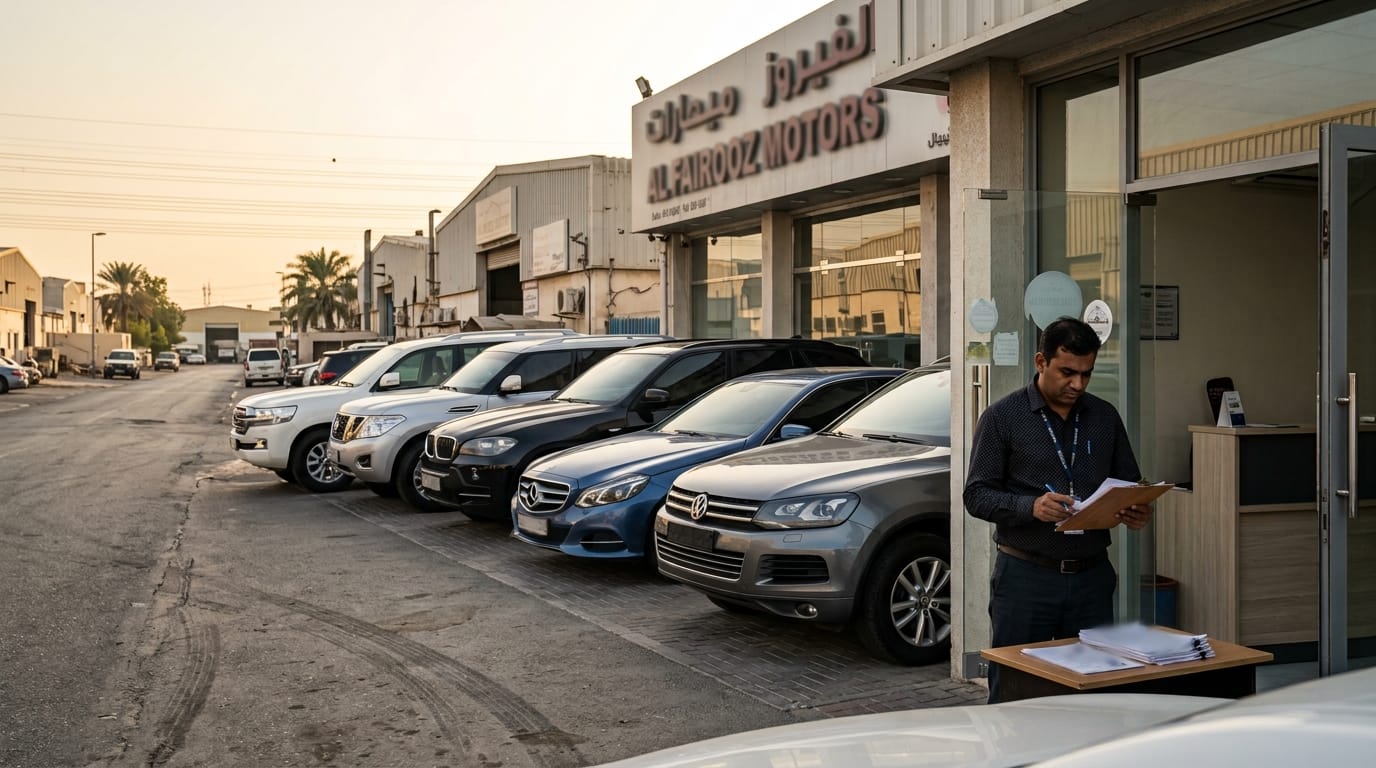
Written By: Omar Al-Fayed, Senior Automotive Consultant | Fact-Checked By: Emirates Cars Editorial Team | Last Updated: June 2026 | Category: Finance & Legal
The UAE Golden Visa has become one of the most discussed residency pathways among expatriates considering long-term business investment in the country.
For those with capital tied to the automotive sector — car dealerships, fleet operations, vehicle import businesses, or rental companies — a specific and practical question emerges: can UAE Golden Visa automotive investment requirements expats face actually be met through a car-related business? The answer depends entirely on how the business is structured, capitalized, and documented.
This guide cuts through the noise and gives you the factual framework. Luxury car rental feasibility in Dubai is one of the most relevant business models covered in detail below.
⚠ Financial & Legal Disclaimer: The information provided in this article is for educational purposes only. Regulations, lending criteria, VAT rules, and corporate tax guidance in the UAE may change over time. Readers should verify information with licensed UAE professionals or official government portals before making financial or legal decisions. This guide is reviewed periodically as UAE Federal Tax Authority procedures and corporate tax regulations evolve.
Can You Get a UAE Golden Visa Through Automotive Investment?
There is no dedicated “automotive investor” Golden Visa category. The UAE Golden Visa operates through broad eligibility tracks — investors, entrepreneurs, business owners, and exceptional talent — and an automotive business can qualify under these tracks if it meets the defined criteria. Buying a car, even an expensive one, does not qualify. Running a licensed, commercially active automotive company with documented revenue and audited accounts puts you in a different position entirely.
The distinction matters: personal vehicle ownership is a consumption decision. A properly licensed UAE company in the automotive sector that demonstrates capital investment, economic contribution, and operational history is a business investment. Only the latter can support a residency application.
Can Automotive Investment Alone Guarantee a Golden Visa?
No.
Business success improves your application profile. It does not guarantee approval. Final decisions rest with UAE authorities — the Federal Authority for Identity, Citizenship, Customs and Port Security (ICP) and the General Directorate of Residency and Foreigners Affairs (GDRFA). Every application is assessed individually. The business you build creates the eligibility foundation; the outcome is determined by those authorities against the criteria in force at the time of submission.
How the UAE Golden Visa System Works
%%{init: {'theme': 'base', 'themeVariables': {'background': '#f8f9fa', 'textColor': '#1a1a1a', 'primaryColor': '#2c3e50', 'secondaryColor': '#c0392b', 'lineColor': '#1a1a1a'}}}%%
flowchart TD
    classDef default fill:#2c3e50,stroke:#1a1a1a,stroke-width:1px,color:#ffffff;

    A[Initial Focus: Select Viable Auto Niche] --> B(Stage 2: Setup Mainland DET / Free Zone Corporate Structure)
    B --> C(Stage 3: Deploy Minimum Verified Working Capital Reserve)
    C --> D[Stage 4: Launch Real Operations & Document Monthly Invoices]

    D --> E{Stage 5: Maintain Track Record 12-36 Months}
    E -->|Clean Audited Financial Accounts| F[File Official Investor/Entrepreneur Application]
    E -->|Gaps in VAT or Corporate Tax Filings| G[Application Disallowed - Audit Exposure]
The Golden Visa, introduced under UAE Federal Law on residency, offers long-term stays of five or ten years without requiring an employer sponsor. The categories most relevant to automotive business owners are:
- Investors — capital placed in UAE business or qualifying financial instruments
- Entrepreneurs — founders of UAE-registered startups or growing businesses meeting defined criteria
- Business owners — owners of UAE companies with substantial commercial activity and tax contributions
Eligibility thresholds, required documentation, and processing procedures are set by the UAE government and reviewed periodically. Always verify current requirements at icp.gov.ae before committing capital.
%%{init: {'theme': 'base', 'themeVariables': {'background': '#f8f9fa', 'textColor': '#1a1a1a', 'primaryColor': '#2c3e50', 'secondaryColor': '#c0392b', 'lineColor': '#1a1a1a'}}}%%
flowchart TD
    classDef default fill:#2c3e50,stroke:#1a1a1a,stroke-width:1px,color:#ffffff;
    A[Automotive Business Owner] --> B{Is business properly licensed?}
    B -- No --> C[Cannot Apply — Informal Operations Not Eligible]
    B -- Yes --> D{Audited accounts + tax compliance?}
    D -- No --> E[Strengthen Records First — 12 to 24 Months]
    D -- Yes --> F{Capital Investment Scale}
    F -- Small operation --> G[Explore Entrepreneur Pathway]
    F -- Substantial fleet or dealership --> H[Explore Investor Pathway]
    G --> I[Submit via ICP / GDRFA]
    H --> I
    I --> J[Authority Reviews — Outcome Not Guaranteed]
Who May Potentially Qualify Through Automotive Businesses?
Not every car-related activity creates a viable path. Profiles with consistently stronger applications share these characteristics: a registered UAE legal entity, meaningful capital deployment, documented monthly revenue, employment of staff, and full tax and VAT compliance.
- Licensed used or new car dealership owners with verifiable annual turnover
- Fleet operators leasing vehicles to corporations or government entities on multi-year contracts
- Vehicle rental company owners with owned fleet assets above a meaningful threshold
- Automotive technology founders (EV infrastructure, fleet management platforms) with incubator backing
- Vehicle import/export operators with documented trade history
Profiles that routinely face difficulty: informal traders with no licensed entity, passive minority shareholders in small companies, hobbyist car collectors without commercial operations, and sole proprietors with no audited financial history.
Automotive Business Types: Eligibility Comparison
| Business Type | Typical Capital (AED) | Complexity | Relevant Pathway | Key Eligibility Risk |
|---|---|---|---|---|
| Used car dealership | 200,000 – 1,000,000+ | Moderate | Investor / Business Owner | Informal records, low revenue |
| New car dealership | 1,000,000+ | High | Investor | Franchise complexity |
| Luxury car dealership | 2,000,000+ | High | Investor | Irregular revenue patterns |
| Fleet company | 500,000 – 2,000,000+ | Moderate–High | Investor / Business Owner | Undercapitalization |
| Vehicle rental company | 300,000 – 1,500,000+ | Moderate | Investor / Business Owner | Market saturation |
| Vehicle import/export | 500,000+ | High | Investor | Regulatory compliance gaps |
| Automotive repair center | 200,000 – 800,000 | Moderate | Business Owner | Revenue scale too small |
| EV / mobility tech startup | Varies widely | High | Entrepreneur | Needs incubator endorsement |
Capital figures are illustrative market estimates only. They are not official Golden Visa investment thresholds. These figures should not be interpreted as official Golden Visa investment thresholds. Always verify current eligibility criteria directly with UAE authorities before making financial commitments.
Fleet depreciation and corporate tax considerations in the UAE are directly relevant to how fleet-based businesses are valued for eligibility purposes.
✅ High-Credibility Structured Portfolios
Activities: Registered Dealerships, Commercial Fleet Leases, Inspected Rental Hubs.
SUI Profile: Tangible asset base, audited fiscal reports, registered corporate tax numbers, and active headcount payroll records verified by local authorities.
❌ Non-Qualifying Personal Asset Ownership
Activities: Individual Supercar Purchases, Private Collections, Home-Based Flipping.
SUI Profile: Zero corporate presence. Treated by UAE immigration frameworks as standard consumer expenditures or personal luxury assets rather than business expansions.
Business Activities That Do NOT Qualify Alone
🚨 Common Misconception Alert: Buying one or more luxury cars — regardless of total value — does not constitute a qualifying business investment under any known UAE Golden Visa pathway. Personal vehicle purchases are consumption, not investment. Do not invest capital you cannot absorb as a loss if residency is the only goal.
- Personal luxury vehicle ownership — no commercial entity, no qualifying activity
- Classic or rare car collecting — collecting without a licensed trading operation does not constitute business investment
- Nominal shareholding — holding 5–10% in a company primarily owned by others, without active management, rarely meets criteria
- Informal used car trading — buying and selling through personal bank accounts without a licensed entity creates no auditable business record
- Small repair side businesses — workshops with minimal documented turnover typically fall below the scale authorities assess
Investment Levels and Business Scale: What Authorities Actually Assess
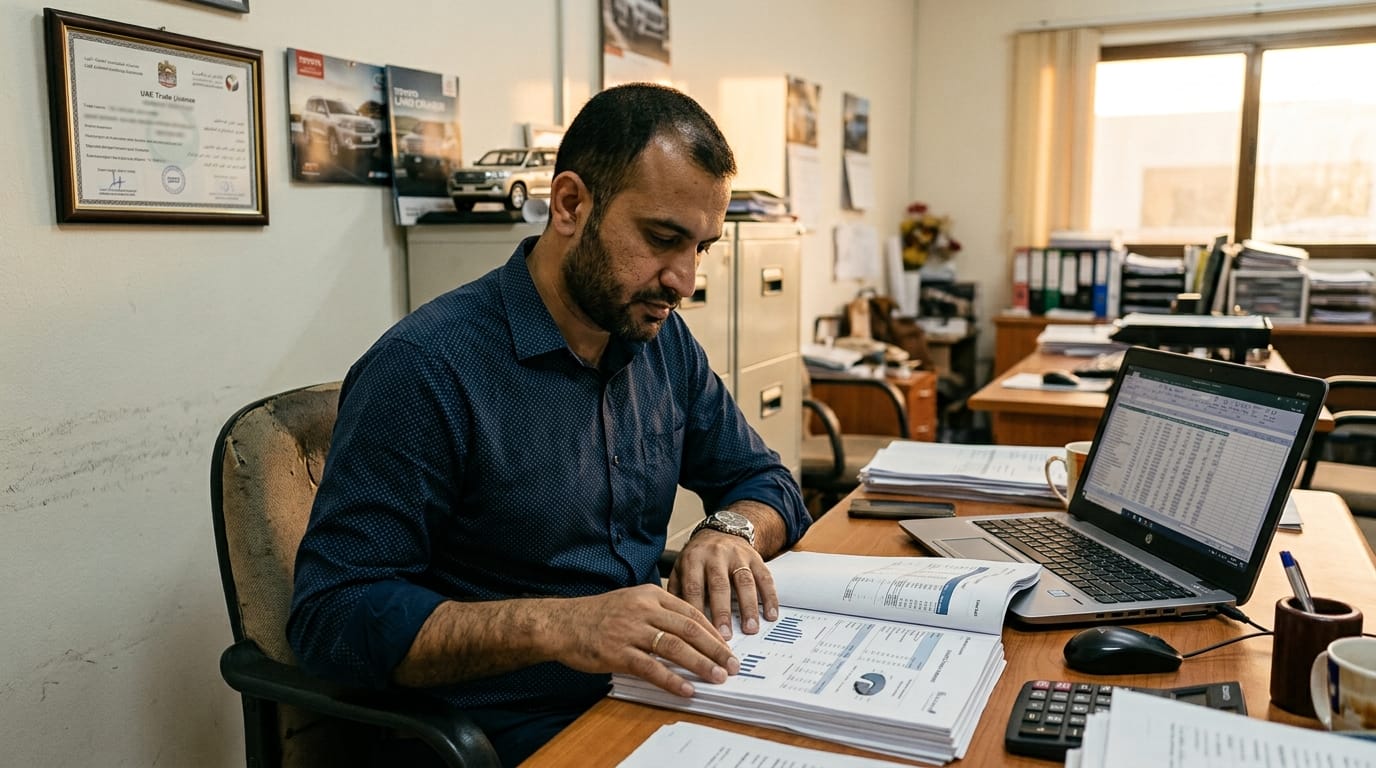
The question “how much do I need to invest?” misses the point. UAE Golden Visa assessments for business pathways evaluate a combination of factors — not a single number. According to UAE Ministry of Economy guidance on investor residency pathways, the assessment framework typically includes:
- Total paid-up capital in the UAE entity
- Annual taxable revenue and growth trajectory
- Payroll and employee headcount
- Corporate tax registration and payment history under Federal Decree-Law No. 47 of 2022
- Business valuation supported by certified audited accounts
- Trade license validity and continuity of commercial operations
Smaller operations may qualify under entrepreneur pathways if supported by an accredited UAE business incubator. Larger fleet or dealership businesses typically pursue the investor pathway based on total asset value and documented annual revenue.
Financing vs. cash purchase strategy for your fleet acquisition affects how capital appears on your balance sheet — relevant to how authorities assess your investment position.
Company Formation: Mainland vs. Free Zone
Mainland Company — Standard Structure for UAE Golden Visa Automotive Investment Requirements Expats Face
A mainland trade license from the Department of Economy and Tourism (DET) in Dubai, or equivalent authorities in other emirates, allows unrestricted operation across the UAE market. Most dealerships and service businesses operate on mainland licenses. The activity listed must precisely match actual business operations — mismatches create problems at renewal and during residency application review.
Free Zone Company
Free zones offer simplified setup and 100% foreign ownership. However, most free zone licenses restrict direct sales to UAE mainland customers without additional arrangements. For automotive retail businesses dependent on local walk-in customers, a free zone structure alone creates operational limitations that affect revenue — and therefore the strength of any residency application based on commercial scale.
Formation Checklist
- Business activity on license must match actual operations exactly
- Shareholding structure documented accurately in memorandum of association
- Annual license renewals maintained without gaps — lapses raise flags
- Corporate tax registration completed on schedule with Federal Tax Authority
- VAT registration completed if annual taxable supplies exceed AED 375,000
Corporate vehicle registration and VAT recovery rules apply to business-owned vehicles and affect the real cost of fleet acquisition.
Typical Startup Costs: Illustrative Estimates
The figures below are general market estimates to support planning. They are not official investment thresholds for Golden Visa eligibility, and they should not be interpreted as official Golden Visa investment thresholds. Actual costs vary significantly by emirate, business activity, and setup approach.
| Cost Item | Estimated Range (AED) | Notes |
|---|---|---|
| Trade license — automotive trading | 10,000 – 25,000 | Annual renewal required |
| Company registration fees | 5,000 – 15,000 | Varies by structure and emirate |
| Office / showroom lease (annual) | 40,000 – 200,000+ | Location and size dependent |
| Initial vehicle inventory | 150,000 – 1,000,000+ | Depends on segment and volume |
| Insurance — business and vehicles | 10,000 – 50,000+ | Annual; fleet-rated |
| Signage, fit-out, equipment | 20,000 – 100,000 | One-time setup cost |
| Working capital reserve | 100,000 – 300,000+ | Minimum recommended buffer |
| Estimated first-year total | 335,000 – 1,690,000+ | Highly variable by business type |
%%{init: {'theme': 'base', 'themeVariables': {'background': '#f8f9fa', 'textColor': '#1a1a1a', 'primaryColor': '#2c3e50', 'secondaryColor': '#c0392b', 'lineColor': '#1a1a1a'}}}%%
xychart-beta
    title "Estimated First-Year Cost Ranges by Business Type (AED)"
    x-axis ["Used Dealership", "Fleet Company", "Rental Co.", "Luxury Dealer", "EV Startup"]
    y-axis "AED (thousands)" 0 --> 2000
    bar [500, 1000, 600, 1690, 900]
Business Risks to Evaluate Before Investing
Anyone entering the automotive sector primarily to pursue residency — rather than because they have a genuine market opportunity — tends to systematically underestimate these risks.
Market Competition
The UAE used car market is active but saturated at the lower end. Dubizzle carries tens of thousands of listings at any time. Al Aweer Auto Market alone has hundreds of licensed dealers. Standing out requires a niche, pricing discipline, or a service quality that generates repeat customers.
Inventory Risk
Vehicles depreciate from the moment they are purchased. A car that sits unsold for 60 days accumulates insurance, parking, and registration carrying costs with zero revenue contribution. Used car trading requires genuine pricing knowledge to move inventory at profitable margins consistently.
Cash Flow Management
Fleet and rental businesses require substantial upfront capital before any revenue begins. Maintenance costs are recurring and sometimes unpredictable. Businesses that expand fleet size faster than their revenue base can sustain face cash flow pressure within the first 18 months.
Regulatory Changes
Automotive import regulations, vehicle standards, RTA technical requirements, and emissions rules change. Monitor RTA official channels for updates that affect your fleet or stock. Eligibility rules for residency pathways can also change. Investment thresholds may be revised. Residency policies evolve. What qualifies today may differ from the criteria in force when you actually apply. Always verify current requirements directly with ICP or GDRFA before making investment decisions based on residency expectations.
Residency Outcome Is Not Guaranteed
Building a legitimate automotive business puts you in a credible position to apply. It does not guarantee approval. This point requires emphasis: do not invest capital you cannot afford to lose in an automotive business if the sole motivation is a Golden Visa outcome.
Documents Typically Required for Business-Based Applications
- Valid trade license with matching business activities — no gaps in renewal history
- Certificate of incorporation and memorandum of association
- Audited financial statements for the most recent 1–3 years
- Business bank account statements showing consistent cash flow
- Proof of capital investment — paid-up share capital documentation
- Proof of ownership percentage — shareholding certificates
- Emirates ID and current visa documentation
- Corporate tax registration certificate from FTA
- VAT registration certificate (if applicable)
Specific Business Types: Honest Assessment
Used Car Trading
A used car trading business can support a Golden Visa application — but only at genuine commercial scale. Al Aweer in Dubai, Abu Shagara in Sharjah, and the Deira/Al Quoz corridor represent real markets with active commercial operators. A dealership with a mainland showroom license, 8–15 vehicles sold monthly, and clean audited accounts is a real business. A trader moving 5 cars per year through personal accounts is not.
Luxury Car Dealerships
Higher-value transactions mean larger capital exposure but also irregular revenue patterns — one month with three sales, the next with none. Authorities reviewing business-based applications look at revenue consistency. Clean, audited annual accounts that reflect real trading activity are more valuable than high single-transaction values.
Fleet Companies

Commercial fleet operators — leasing vehicles to logistics companies, corporate clients, or government entities on multi-year contracts — present well for investor pathway applications. Recurring contracted revenue, tangible asset bases, and documented payroll make the application profile strong. A fleet of 25–50 commercial vehicles on active 24-month leases is a credible business.
Lease versus buy cost analysis is worth reviewing before committing to fleet acquisition strategy.
Vehicle Rental Companies
The rental sector is competitive and heavily regulated. Operators need specific RTA licensing, fleet insurance, and maintenance infrastructure. A rental company with 20+ owned vehicles, consistent booking history, and documented annual revenue can present a strong investor pathway application.
Luxury car insurance with agency repair coverage is a mandatory cost consideration for any rental fleet operating premium vehicles.
Automotive Technology and EV Startups
The UAE actively supports EV and mobility technology investment. Startups in fleet management software, EV charging infrastructure, or mobility platforms may qualify under entrepreneur pathways — particularly if backed by an accredited UAE incubator such as Hub71 in Abu Dhabi. Incubator endorsement can strengthen an entrepreneur pathway application significantly.
Best resale value cars in UAE 2026 — relevant for any operator planning an exit from fleet assets within the business lifecycle.
Corporate Tax and VAT: What Automotive Business Owners Must Know
The UAE introduced corporate tax under Federal Decree-Law No. 47 of 2022, effective for financial years starting June 2023. Automotive businesses operating on the UAE mainland are subject to the standard 9% corporate tax rate on taxable income above AED 375,000. Free zone entities may qualify for a 0% rate on qualifying income if they meet substance and activity requirements.
Tax compliance records are now directly relevant to residency applications. A business with consistent, on-time corporate tax filings and clean FTA records presents a stronger profile than one with late filings or unresolved assessments. Register and file correctly from day one. Consult a licensed UAE tax advisor — this article does not constitute tax advice.
VAT at 5% applies to most automotive transactions. Register with the Federal Tax Authority when annual taxable supplies reach the AED 375,000 threshold. Clean VAT filing history adds credibility to financial documentation submitted with any residency application.
How to Build an Automotive Business That Supports Eligibility
Step 1 — Start With the Business Case, Not the Visa Case
What market opportunity have you identified? What automotive sector do you have actual knowledge of? What capital can you deploy without putting your family’s finances at risk? If you cannot answer these questions clearly, the business will likely fail before it produces a strong application profile.
Step 2 — Choose the Right Legal Structure
Mainland for retail-facing businesses. Free zone only if your customer base is primarily outside the UAE or you are operating a B2B technology business. Get the correct activity on your license from the first day — changing it later adds cost and creates gaps in your operational record.
Step 3 — Capitalize Adequately
Undercapitalized automotive businesses fail within the first year. Budget for at least 12 months of operating expenses beyond your initial inventory or fleet investment. Businesses that run out of working capital before they can demonstrate revenue history cannot produce the audited accounts an application requires.
Step 4 — Build Clean Financial Records From Day One
Separate business bank account. Every transaction recorded properly. VAT and corporate tax registered on schedule. Licensed accountant engaged from month one. Annual audited financial statements prepared — not just bookkeeping records. This documentation is the core of any future application.
Step 5 — Operate for a Meaningful Track Record Period
Most investor pathway assessments benefit from at least 24–36 months of documented business history. Entrepreneur pathways may move faster with incubator support, but even there, operational credibility matters.
Step 6 — Consult a Licensed UAE Immigration Consultant Before Filing
No online guide — including this one — substitutes for professional review of your specific documents against the current eligibility criteria. Engage a licensed UAE immigration consultant or legal advisor before submitting any application.
Estimated Timeline: Business Setup to Residency Application
| Phase | Estimated Duration | Key Milestones |
|---|---|---|
| Research and planning | 1 – 3 months | Business model validation, capital planning, legal consultation |
| Company formation and licensing | 2 – 6 weeks | Trade license, bank account, tax registration |
| Early operations | 3 – 6 months | First revenue, inventory/fleet buildup, staff hiring |
| Establishing track record | 18 – 36 months | Audited accounts, consistent revenue, tax compliance |
| Application preparation | 2 – 4 months | Document compilation, professional review, submission |
| Processing by ICP/GDRFA | Variable | Authority assessment — outcome not predetermined |
Car depreciation in UAE affects the balance sheet value of any vehicle-based business and should be modelled before committing to fleet scale.
Real Case Studies: Workshop & Market Logs
The following scenarios are based on recurring patterns observed across UAE market interactions. Names and identifying details are changed for privacy. Figures represent documented market ranges.
Case Study 1 — Indian Expat, Used Car Dealership, Al Quoz (Dubai)
A 42-year-old Indian national with 12 years in UAE automotive retail obtained a mainland trade license for used car trading in 2022. Setup costs: AED 18,500 for the license, AED 85,000 for a small Al Quoz showroom deposit and fit-out, AED 320,000 initial inventory of 6 vehicles. By month 18, the business was turning over an average of AED 380,000 monthly with 9–12 vehicles sold per month. After 30 months of clean audited accounts and consistent VAT filings, he initiated a consultation with a licensed immigration advisor regarding the investor pathway. His application profile was considered credible given audited revenue, tax registration, and two full years of operational history. The application outcome was pending at the time of this log.
Case Study 2 — Pakistani Engineer, Fleet Operations, Sharjah Industrial Area
A 38-year-old Pakistani engineer with logistics sector experience formed a fleet leasing company in Sharjah’s Industrial Area in 2021. Initial fleet: 18 light commercial vehicles purchased at a total of AED 1.1 million. Vehicles were placed on 24-month leases with three logistics companies at an average AED 3,200 per vehicle per month. By year two, the business showed consistent monthly revenue of AED 57,600 with zero lease payment defaults. Audited accounts for years 1 and 2 showed a net profit after maintenance and depreciation of approximately AED 210,000 annually. After 36 months, this profile was assessed by an immigration consultant as having a strong investor pathway presentation. Application process was initiated.
Case Study 3 — British National, Automotive Tech Startup, Dubai
A 35-year-old British national founded a fleet management SaaS platform targeting UAE logistics operators in 2023. The company was incorporated in a Dubai free zone at a setup cost of AED 22,000. The startup was accepted into a UAE-recognised business accelerator programme in 2024. By early 2026, the company had 14 paying corporate clients and AED 890,000 in annual recurring revenue. The accelerator endorsement positioned this founder to explore the entrepreneur Golden Visa pathway. An immigration consultant confirmed the profile met the known published criteria for that pathway as of the consultation date. Application submitted mid-2026; outcome pending.
Scam Prevention: Protecting Your Investment and Residency Application
The intersection of visa applications and financial investment attracts a specific type of operator in the UAE market. The following patterns are regularly documented.
🚨 Most Dangerous Trap: Unlicensed “visa consultants” who guarantee Golden Visa approval in exchange for upfront fees ranging from AED 15,000 to AED 50,000, often accompanied by a requirement to invest in a vehicle trading company they control or recommend. The guarantee is worthless. No private party can guarantee UAE government residency approval. If you pay an upfront fee for a “guaranteed” visa outcome, you will lose the money and have no legal recourse.
Other Common Scam Patterns in This Sector
- Fake automotive business partnerships — an operator offers you a “partnership stake” in an existing dealership or fleet company, collects your capital, issues no proper share certificates, and the business either does not exist or you hold no legal stake in it
- Inflated business valuations — a consultant presents a business valuation significantly above actual market value to meet perceived investment thresholds; auditors and authorities often identify these during the review process
- Fake RTA / license documentation — investors are shown falsified trade licenses or RTA approvals to create the appearance of an established business; always verify any license directly at DET’s official portal
- WhatsApp investment groups — groups promoting collective investment in automotive businesses promising Golden Visa qualification; collective informal investments create no individual legal stake and no auditable record
How to Protect Yourself
- Verify all trade licenses directly through DET or the relevant emirate authority — not from documents provided by the operator
- Engage your own independent auditor to review any business you are investing in, not the one recommended by the seller
- Never transfer capital without receiving properly executed share transfer documents notarised through a UAE notary public
- All verbal representations about visa outcomes must be obtained in writing — they are meaningless otherwise
- Report suspected fraud to the UAE Consumer Protection portal or Dubai Economic Security Centre
Common Myths: Answered Directly
| Myth | Reality |
|---|---|
| “I bought a Lamborghini — that qualifies as investment” | Personal vehicle ownership is consumption. No pathway treats it as qualifying investment. |
| “I own 10 cars so I have a fleet business” | Owning vehicles without a licensed fleet company, contracts, and documented revenue is vehicle ownership, not a commercial fleet operation. |
| “My friend got a visa through his showroom so I can too” | Criteria change. What applied two years ago may not apply now. Verify current requirements directly. |
| “I just need to register a company and invest some money” | Company registration is the starting point. Audited commercial activity over time is what builds an application profile. |
| “A consultant guaranteed my approval for AED 30,000” | No private party can guarantee government approval. Upfront guarantee fees are a known fraud pattern in this market. |
The Bottom Line Decision Framework
| Your Profile | Single Recommendation |
|---|---|
| You have genuine automotive business experience and AED 500,000+ to deploy | Form a properly licensed UAE entity, build 24–36 months of audited operating history, then consult a licensed immigration advisor about investor pathway eligibility |
| You are founding an automotive tech startup with early traction | Seek accredited UAE incubator support first — accelerator endorsement significantly strengthens the entrepreneur pathway application |
| You want to invest passively in someone else’s automotive business | Get independent legal and financial advice before committing capital; passive minority stakes rarely support a credible Golden Visa application |
| You are considering buying expensive personal vehicles as “investment” | Stop. This path leads nowhere for residency purposes. Personal vehicle ownership is not qualifying investment under any known pathway. |
| You have been offered a “guaranteed” visa package by a consultant | Decline immediately. No consultant can guarantee government approval. Report if fees were demanded upfront. |
| You run an existing UAE automotive business but have no audited accounts | Engage a licensed UAE auditor now. Build 2 years of clean audited records before attempting any residency application. |
Data Sources & Methodology
Cost figures in this article are derived from market observation across UAE automotive business setups, cross-referenced with publicly available pricing from licensed business setup consultants in Dubai and Sharjah. Fleet revenue estimates reflect documented leasing rates from UAE logistics sector interactions. No figures represent guaranteed outcomes or official government thresholds.
Regulatory information was sourced from the following official UAE government portals:
- Federal Authority for Identity, Citizenship, Customs and Port Security (ICP)
- General Directorate of Residency and Foreigners Affairs — Dubai (GDRFA)
- UAE Government — Official Golden Visa Information Portal
- UAE Ministry of Economy
- Department of Economy and Tourism Dubai (DET)
- Federal Tax Authority (FTA) — Corporate Tax and VAT
- Roads and Transport Authority (RTA) — Vehicle Standards
- UAE Consumer Protection — Complaint Portal
📊 Market Volatility Notice: All cost estimates, investment ranges, and revenue figures referenced in this article represent market averages observed up to the publication date. UAE business setup costs, automotive market pricing, fleet leasing rates, and government fee structures are subject to continuous change based on market conditions, regulatory updates, and economic factors. Readers must verify all current figures directly with licensed UAE professionals and official government portals before making any financial or investment decision.
Frequently Asked Questions
⚠ Financial & Legal Disclaimer: The information provided in this article is for educational purposes only. Regulations, lending criteria, and insurance terms in the UAE may change over time. Readers should verify information with licensed UAE professionals or official government portals before making financial or legal decisions.
Official Sources to Verify Before Investing
- ICP — Federal residency authority
- GDRFA Dubai — Dubai residency processing
- Ministry of Economy — Investor residency programmes
- Federal Tax Authority — Corporate tax and VAT registration
Do not rely on social media groups, WhatsApp channels, or business setup company marketing materials for residency eligibility information. These sources are not authoritative and are frequently outdated or inaccurate.
Final Practical Advice
The UAE automotive sector offers genuine commercial opportunities. Used car trading in Al Aweer and Abu Shagara, fleet leasing across Sharjah and Dubai’s logistics corridors, and vehicle rental in tourist-heavy areas all represent active markets with viable business models. Whether any of these businesses supports a successful Golden Visa application depends on how well it is built, documented, and presented against the criteria in force at the time of application.
Build the business because the opportunity is real. Maintain clean records because that is simply good business practice. Never invest capital you cannot sustain losing if the sole objective is a residency outcome. And verify current eligibility requirements directly with UAE authorities — not through this or any other secondary source — before making financial commitments.
Full Golden Visa automotive guide on the Emirates Cars platform covers the complete eligibility framework for expats exploring this path.
Disclaimer: Emirates Cars is a 100% independent platform. We do not own showrooms, nor are we affiliated with any used car dealerships or garages. Our sole mission is to protect expats from financial fraud in the automotive market.
