Last Updated: May 2026 | By Omar Al-Fayed, Senior Automotive Consultant | Category: Buying & Selling
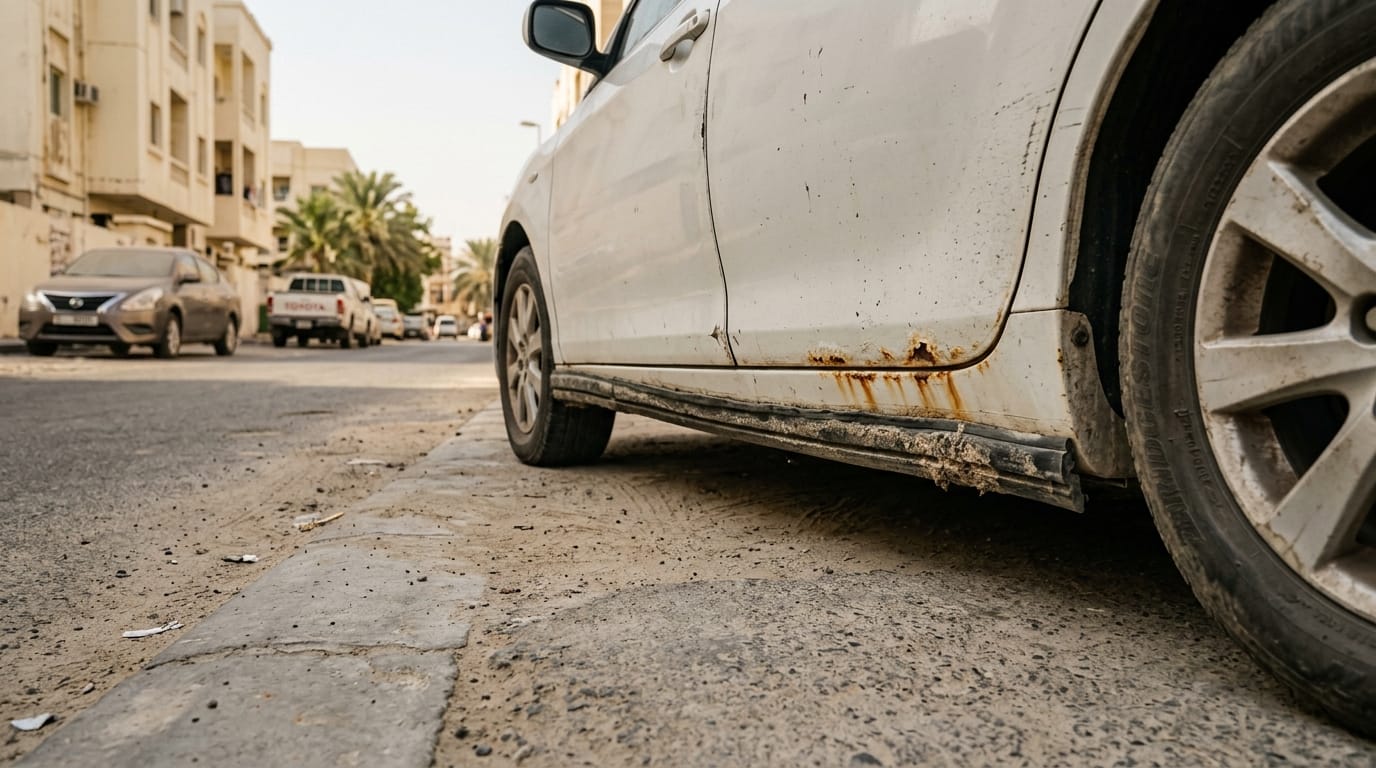
A flood-damaged car in Dubai typically sells for 8,000–18,000 AED below its true market value — and the buyer rarely knows why until the repair bills arrive. This article documents a real purchase case: a 2019 Toyota Camry bought through a private listing on Dubizzle for 42,500 AED, later confirmed flood-damaged after an Al Quoz workshop inspection.
If you are actively searching for affordable options, our guide on best used cars in Dubai under 30,000 AED for expats outlines which models carry lower water-exposure risk in the current secondhand market.
How the Purchase Happened — The Timeline
The Listing and First Impressions
The car was listed privately in late October — roughly five months after the April 2024 rainfall event that affected parts of Dubai and Sharjah. The photos were taken from flattering angles. The interior looked clean. The seller, based in Abu Shagara, described the car as “agency maintained, single owner, no accidents.”
The price was 42,500 AED. The market rate for a 2019 Camry 2.5L GCC in similar stated condition is 50,000–54,000 AED. The gap looked like a motivated seller. It was not.
What the Buyer Did — and Did Not Do
A visual inspection was done at the seller’s location. The buyer checked the engine bay, tested the AC, and drove around the block. No OBD scan. No independent mechanic. No Tasjeel check beyond the standard ownership transfer query.
The transfer was completed at a typing center near Deira. Total paid: 42,500 AED + 370 AED transfer fees.
When the Problems Started — Week by Week
Week 1 to 2: Small Signs
The AC produced a faint musty smell during the first few days, particularly on fan speeds 1 and 2. The dashboard had occasional flickering on the instrument cluster — one or two seconds, then normal. Neither issue seemed significant at the time.
Week 3: The Electrical Issues Begin
The power window on the rear-left stopped responding. Two days later, the infotainment screen froze during startup and required a manual reset. An OBD scan at an Al Quoz garage returned multiple stored codes: U0100 (Lost Communication with ECM/PCM), B1479 (body control module fault), and a separate HVAC-related code.
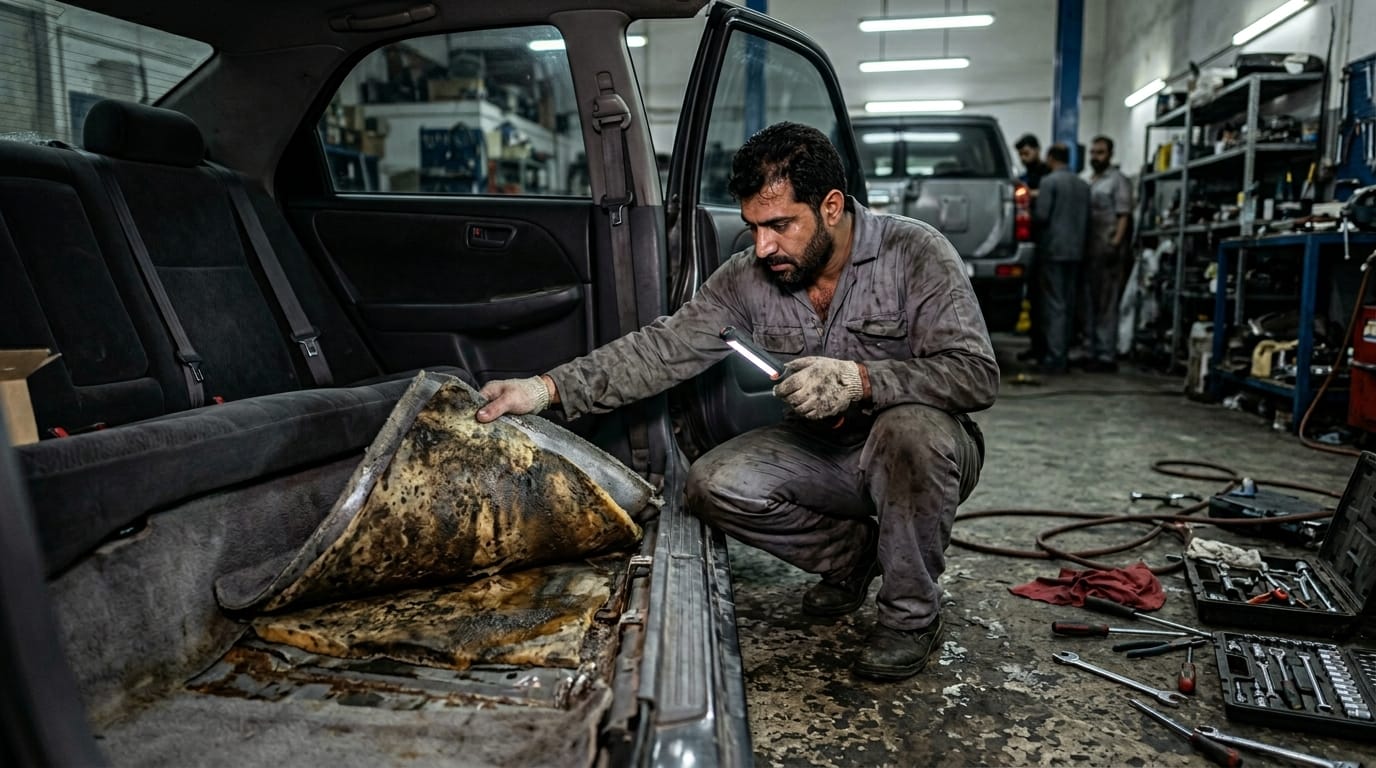
The mechanic — a senior technician with over a decade of Toyota experience — lifted the rear carpet. The underlayer padding was discolored, with visible mineral deposits consistent with prolonged water exposure. The seat rail bolts showed early oxidation.
His assessment: “This car sat in water. Not deep, but long enough to reach the carpet line.”
Week 5 to 6: The Full Inspection Report
A full inspection at a specialized workshop in Al Quoz produced the following findings:
| Component | Condition Found | Estimated Repair Cost (AED) |
|---|---|---|
| BCM (Body Control Module) | Corroded connectors — partial failure | 1,800 – 2,400 |
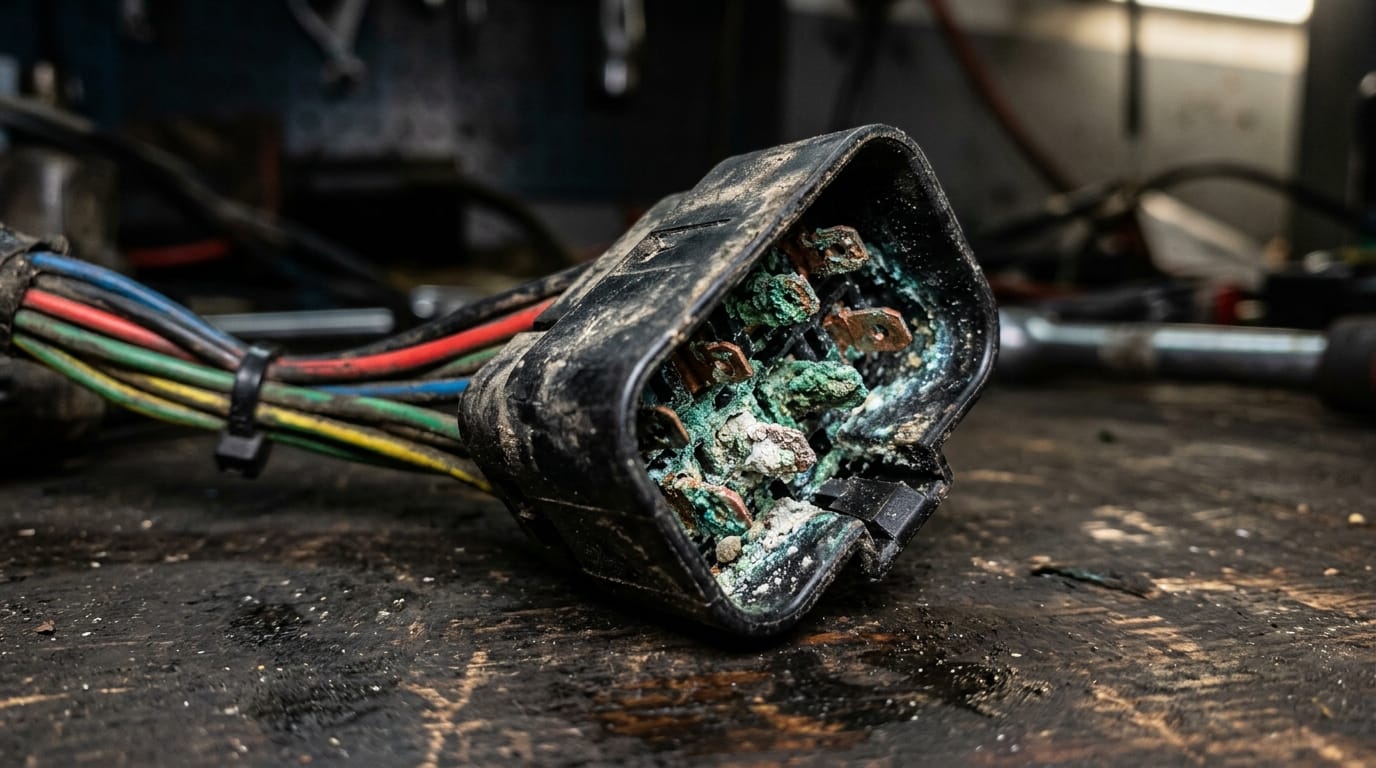
| Rear wiring harness | Oxidation on multiple terminals | 900 – 1,400 |
| HVAC blower motor | Bearing noise, reduced output | 550 – 750 |
| Floor insulation and carpet | Mold presence — full replacement needed | 1,200 – 1,600 |
| Seat rail hardware | Surface rust — functional for now | Monitor only |
| Fuel pump connector | Minor corrosion — cleaned on site | 150 (cleaning) |
| Rear power window regulator | Motor failure — water ingress | 420 – 550 |
| Grand Total (mid estimate) | 7,170 AED |
The Real Financial Picture
Total Cost When Settled
| Item | Amount (AED) |
|---|---|
| Purchase price paid | 42,500 |
| Transfer and typing fees | 370 |
| Pre-purchase inspection (not done) | 0 |
| Al Quoz full inspection fee | 350 |
| BCM replacement and labor | 2,200 |
| Wiring harness repair | 1,100 |
| Carpet and insulation replacement | 1,400 |
| HVAC blower motor | 680 |
| Window regulator motor | 490 |
| Resale value (post-repair estimate) | −44,000 (estimated) |
| Net Loss (total spend vs resale) | ~5,090 AED |
The net loss figure of approximately 5,000 AED looks manageable on paper. What the table does not capture: four months of weekend time spent on inspections, garage visits, and negotiating with parts suppliers — plus the ongoing uncertainty about which electrical component might develop a fault next.
Owner Scenarios — How This Plays Out Differently
If you drive 80+ km daily (delivery or field sales role): Electrical faults in a flood-exposed car become more likely to surface faster under continuous use. Budget for an additional 2,000–3,500 AED in unplanned repairs within the first year.
If your visa or contract ends in 12–18 months: Resale becomes the main concern. A flood-history car, even with repairs completed, typically sells 15–22 percent below comparable clean-history units in the UAE private market. On a 42,500 AED car, that is a 6,300–9,350 AED discount you pass to the next buyer.
If you financed the purchase: Some banks in the UAE have flagged flood-damaged vehicles in post-2024 loan reviews. In a small number of documented cases, buyers faced early loan recall notices when flood history was discovered during insurance renewal. This is not guaranteed, but worth noting before committing to a financed unit.
How to Identify Flood Damage Before Purchase
The 7-Point Physical Check
Based on inspection patterns across multiple Al Quoz and Sharjah workshops, the following checks cover the most commonly affected areas:
ℹ️ Inspection Checklist (Do This Before Any Used Car Purchase Post-2024):
- Lift the rear seat base and smell the carpet underneath — a musty or chemical odor is a consistent indicator.
- Check seat rail bolts for surface rust inconsistent with vehicle age.
- Inspect the spare tire well for waterline marks or silt residue.
- Look at all door sill rubber seals for mineral deposit lines.
- Run an OBD scan — multiple unrelated stored codes across different modules frequently suggest water exposure.
- Open the fuse box (engine and cabin) and look for corrosion on terminals.
- Test all power windows, mirrors, and rear AC vents for responsiveness.
What an Independent Pre-Purchase Inspection Costs
A standard pre-purchase inspection at a reputable Al Quoz or Al Qusais workshop runs 250–400 AED. Some Tasjeel centers offer basic checks, though their scope does not typically include flood-history assessment. Several mobile inspection services operate across Dubai for 350–500 AED and will produce a written report.
In this case, a 350 AED inspection before purchase would have surfaced the carpet findings and prompted the OBD scan — likely preventing the purchase entirely, or at minimum enabling a price negotiation of 6,000–8,000 AED.
Dangerous Mistakes Buyers Make With Flood-Exposed Cars
Mistake 1 — Trusting a Clean Visual Inspection
Flood-damaged cars can look presentable after basic cleaning. Interior detailing removes surface dirt. Sprays mask odor temporarily. The damage in most cases is inside wiring looms, under carpet layers, and within electronic modules — none of which are visible from the driver’s seat.
Mistake 2 — Relying on Tasjeel History Alone
Tasjeel records capture ownership transfers, fines, and some accident reports. They do not systematically capture flood exposure. A car that sat in 25 cm of water for 36 hours may show a completely clean Tasjeel record if it was never reported to an insurance company.
Mistake 3 — Dismissing Small Electrical Faults at Purchase
“The window sometimes doesn’t work — it just needs a reset” is a phrase that appeared in this case’s purchase conversation. Any unexplained electrical fault in a used car should prompt an OBD scan before signing anything. A single stored code costs 50–80 AED to read. Ignoring it can result in significantly higher repair bills later.
Mistake 4 — Assuming Low Price Means a Good Deal
In many documented expat buyer cases across Dubai and Sharjah, the first signal of a flood-damaged unit is an unusually competitive price. Workshop records from Al Quoz specialists suggest approximately 60–70 percent of flood-affected cars reviewed post-2024 were priced 10–20 percent below market at the time of purchase. A price that stands out should prompt additional scrutiny, not faster commitment.
Prevention Framework — Ongoing Vehicle Protection
| Action | Frequency | Approximate Cost (AED) |
|---|---|---|
| Pre-purchase independent inspection | Before every used car purchase | 250 – 400 |
| OBD diagnostic scan | Every 6 months or at any fault sign | 50 – 100 |
| Carpet and underbody moisture check | Annually, especially post-rain season | 0 (DIY) / 80 (workshop) |
| Insurance comprehensive review | At renewal | Part of premium |
| Fuse box inspection | Annually | 0 (DIY visual check) |
Signs This Car Was Worth Considering — The Positive Side
In the interest of accuracy, the 2019 Camry 2.5L in this case did have several genuine positives — and not every flood-exposed vehicle becomes a total loss.
- Engine performance remained unaffected: The 2AR-FE engine showed no abnormal readings on oil, compression, or coolant systems. Water did not reach engine bay components in a meaningful way.
- Transmission function was normal: No CVT or automatic gearbox fault codes were stored. Gear shifts were smooth across all tested ranges.
- Body structure was sound: No rust on chassis rails, floor pan, or suspension subframe — the water exposure was limited in depth and duration.
- Tires and brakes were recently replaced: Brake pads showed 70 percent remaining. Tires were 2023-dated with consistent tread depth.
- After full repair, the car became reliable: Eight months post-repair, no new electrical faults have appeared. The repairs, once completed properly, held up under daily use.
Market Comparison — Flood Risk by Segment
| Model | Flood Risk Level (Post-2024 Market) | Avg Price Gap (Flood vs Clean) | Typical Repair Cost if Affected |
|---|---|---|---|
| Toyota Camry 2019–2021 | Moderate — high volume in affected areas | 6,000 – 10,000 AED | 5,000 – 12,000 AED |
| Nissan Altima 2019–2022 | Moderate — CVT sensitivity increases cost | 5,000 – 9,000 AED | 7,000 – 18,000 AED |
| Honda Accord 2018–2021 | Lower — fewer units in flooded zones | 4,000 – 7,000 AED | 4,500 – 10,000 AED |
| Hyundai Elantra 2019–2022 | Lower — smaller cabin, less wiring complexity | 3,000 – 6,000 AED | 3,000 – 8,000 AED |
| Toyota Corolla 2018–2021 | Moderate — widely sold, check carefully | 4,000 – 8,000 AED | 4,000 – 9,500 AED |
The Safe Alternative
If you are working with a budget of 40,000–50,000 AED and want to avoid the flood-history risk entirely, the two most reliable paths in the current Dubai market are:
✅ Recommended Approach:
- Option 1 — Buy from a registered dealer with a written 3-month warranty. The price will be 3,000–6,000 AED higher than equivalent private listings, but the unit has typically gone through basic workshop clearance. Ask for the inspection report in writing before committing.
- Option 2 — Target a 2020–2022 Toyota Corolla or Hyundai Elantra under 50,000 AED. Both models have simpler electrical architectures than the Camry or Altima, and based on workshop observations across Al Quoz and Al Qusais, they appear less frequently in post-flood inspection caseloads. Budget 350 AED for an independent check regardless.
The Mechanic’s Inspection Log
Workshop: Al Quoz Independent Garage (general automotive, not brand-specific).
Technician experience: 11 years on Japanese and Korean makes.
Inspection date: approximately 5 weeks after purchase.
OBD codes retrieved on first scan: U0100, B1479, C1241 (ABS module communication fault — later resolved after BCM repair).
Technician’s verbal summary: “The water line based on the carpet staining was around 15–20 cm inside the cabin. The engine bay was clean. The main exposure was the rear cabin floor — this is where most of the electrical routing runs in this generation of Camry.”
Total workshop bill for the repair session: 4,870 AED. Additional parts sourced separately: approximately 1,100 AED.
The technician noted: “If you had come here before buying, I would have told you to offer 35,000 AED maximum — or walk away.”
Analytical Conclusion
The financial loss in this case — approximately 5,000 AED net, plus time — sits at the lower end of what flood-related purchases typically cost in the UAE used car market. Cases involving deeper water exposure (engine bay or transmission affected) can result in losses of 15,000–35,000 AED or more on a mid-range sedan.
The April 2024 rainfall introduced a supply of affected vehicles into the UAE secondhand market that, based on workshop observations, continues to circulate. Some units have been repaired properly. Many have not.
The 350 AED pre-purchase inspection is the single most cost-effective action available to a used car buyer in Dubai today. It is not a guarantee — no inspection is — but it surfaces the visible indicators that a casual buyer will miss.
For buyers planning around long-term ownership costs by income and usage pattern, the next detailed guide covers cheapest cars to maintain in UAE 2025 with a full cost breakdown by salary range — including which models show the lowest unexpected repair frequency in Al Quoz and Abu Shagara workshop records.
FAQ
Disclaimer: Emirates Car Guide is a 100% independent platform. We do not own showrooms, nor are we affiliated with any used car dealerships or garages. Our sole mission is to protect expats from financial fraud in the automotive market.
