Last Updated: May 2026 | By Omar Al-Fayed, Senior Automotive Consultant | Category: Buying & Selling
If you discover flood damage after purchasing a used car in Dubai, your legal options depend on whether you obtained a pre-purchase inspection and what the RTA title record shows. In most cases, you have between 30 to 60 days from purchase to claim against the seller under UAE consumer protection law — but only if you can prove the damage existed before your purchase and was concealed. Workshop repair costs for moderate flood damage (water line at door sill) range from 8,500 to 14,200 AED.
Severe flood damage (interior electrical systems compromised) often costs 15,000 to 25,000 AED or more — frequently exceeding the vehicle’s market value, making repair economically irrational. This guide explains what happens after discovery, how to document the damage, and what your realistic financial and legal recovery options actually are.
If you followed our guide on how to buy a used car in Dubai as an expat without getting cheated, you understand the critical importance of the pre-purchase inspection at Tasjeel or Al Aweer. That inspection is your primary legal protection. If you skipped it to save 400 AED, you are now in the difficult position described in this article. This guide walks through the actual sequence of events that happens after flood damage discovery — what conversations take place, what documentation matters, what repair shops will tell you, and what your realistic recovery options are under UAE law and in UAE civil courts.
The Discovery Moment — What You Are Actually Looking At
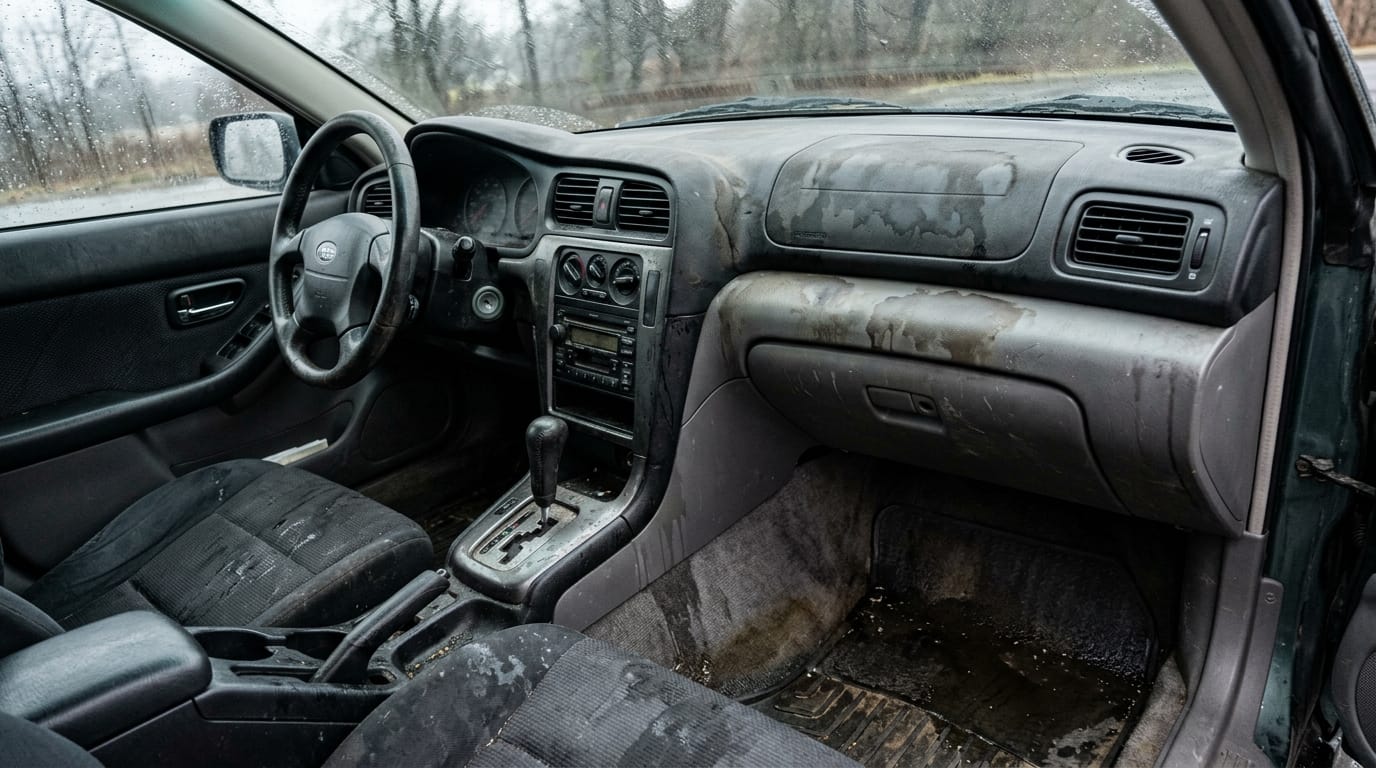
Flood damage does not always reveal itself on the first day of ownership. Many expats discover it weeks later, after a heavy rain, when water begins pooling under the carpets or the electrical system starts showing intermittent faults.
The most common discovery point: the owner takes the car to an independent workshop for routine service and the mechanic notices water stains on the underside of the carpet, rust formation inside the door panels, or corrosion on electrical connectors underneath the dashboard.
Some buyers discover it earlier — within 24 to 72 hours of purchase — when they notice musty odors, dampness under the seats, or visible water lines on the interior trim panels.
The worst discovery scenario: the vehicle passes your initial visual inspection because the flood damage is hidden in the door cavities, under the carpet padding, or inside the HVAC ducting. You drive the car normally for 3 to 4 weeks. Then sudden electrical faults appear — windows stop working, the infotainment screen glitches, the climate control becomes erratic. You take the car to a workshop, and the mechanic discovers water damage in the electrical harnesses behind the dashboard.
🔧 Mechanic’s Inspection Log — The 2019 Corolla Sold “Without Accident History”
Documented workshop case review, March 2025, Al Quoz independent workshop, Dubai.
Vehicle: 2019 Toyota Corolla 1.6L GCC, 64,000 km
Owner: Marketing professional from Kerala, Dubai, purchased 18 days prior
Purchase Price: 42,500 AED from private seller on Dubizzle
Reason for Visit: “Air conditioning not cooling properly, windows making grinding noise”
The owner had purchased the Corolla from a private seller who claimed it was “accident-free, full service history, single owner.” The RTA title showed no recorded major accidents. The vehicle appeared immaculate — fresh exterior wash, interior vacuumed, mats cleaned.
Within the first week, the owner noticed a faint musty odor that intensified when the air conditioning was running. By day 14, the driver’s side window began making a grinding noise midway through the down cycle. On day 18, the AC compressor appeared to be struggling — cool air turned tepid.
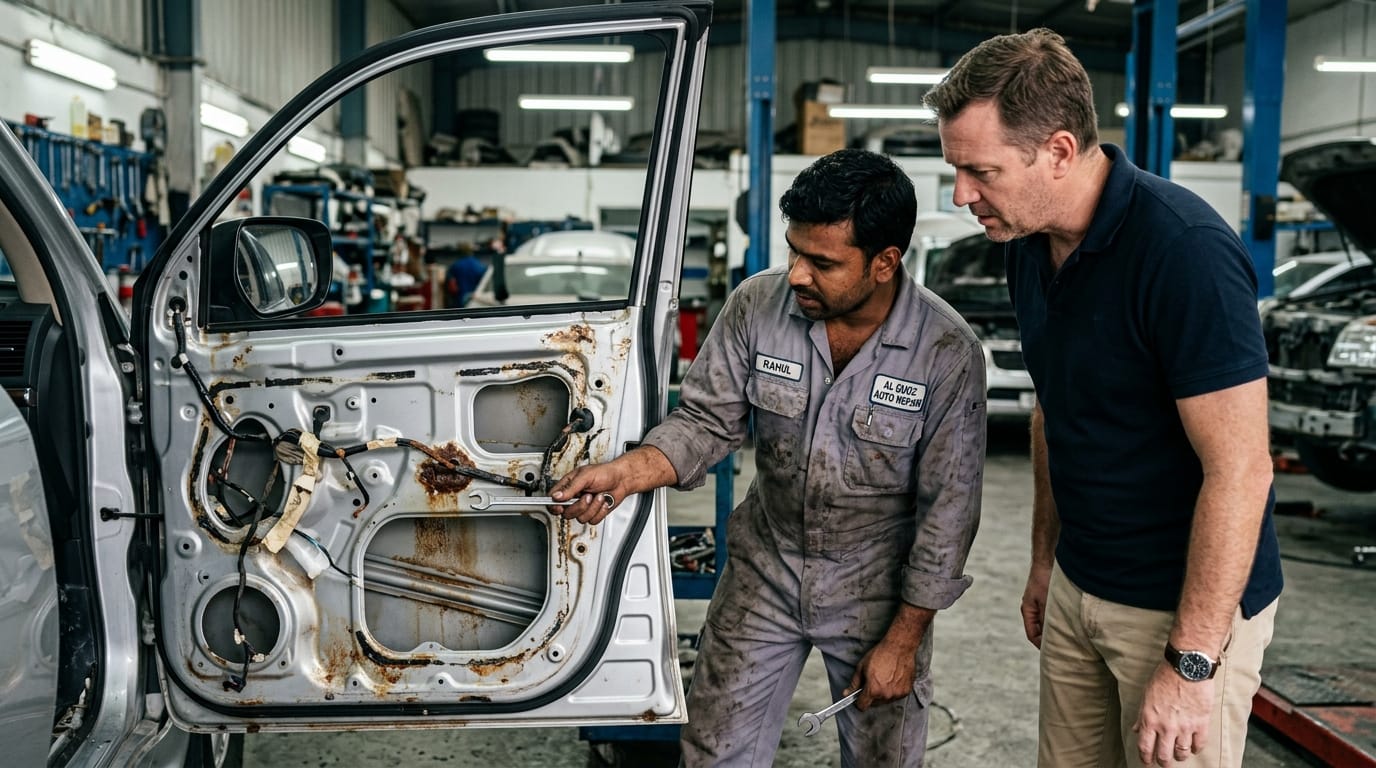
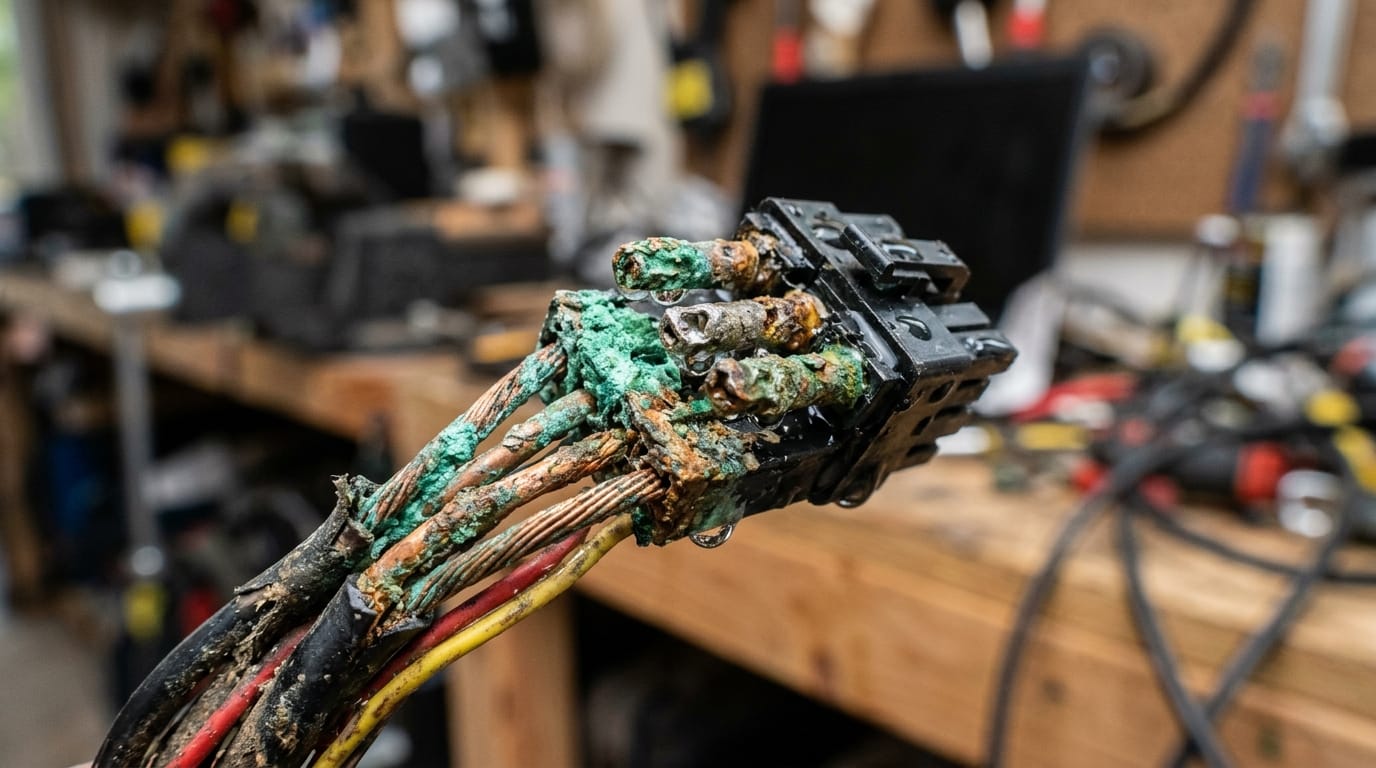
The workshop inspection revealed the source: water saturation in the door cavity on the driver’s side, corrosion on the window motor electrical connector, and water trapped in the AC condensate line. The odor was coming from mold growth in the HVAC ducting.
Inspection findings:
The door panel was removed. Underneath the cosmetic door panel, the structural door cavity held approximately 1.5 to 2 liters of residual water. The water had been sitting long enough to create rust spots on the interior door frame. The window motor connector showed green corrosion indicating prolonged water contact — not recent dampness, but weeks-old saturation.
The AC system condensate line — which normally drains water from the cooling coil — showed water trapped inside the ducting with visible algae and bacterial growth (the source of the musty odor).
The RTA records showed no accident history, which initially seemed to confirm the seller’s claim. However, flood damage does not require an accident. Heavy rainfall and poor drainage around the vehicle’s parking location can saturate it over time. The RTA records only show insurance claims and major accidents — not weather-related flooding.
Repair estimate from the workshop:
Door panel removal and water extraction: 800 AED. Interior door frame rust treatment and protective coating: 1,200 AED. Window motor replacement: 1,800 AED. AC condensate line cleaning and mold treatment: 950 AED. HVAC duct cleaning and sanitization: 1,400 AED. Parts and labor total: 6,150 AED.
However, the workshop noted: “We cannot guarantee that water saturation in the door cavity hasn’t also affected the door latch mechanism or the electrical harness running through the door. If those components have water damage, the full repair cost could reach 9,500 to 11,000 AED.”
The owner faced a decision: invest 6,150 AED in documented repairs and hope no additional hidden water damage emerged later, or pursue legal action against the seller to recover the repair cost.
The owner chose to contact the seller, inform him of the workshop findings, and request a refund of 6,150 AED. The seller’s response: “The car was fine when you bought it. Water damage after purchase is your responsibility. I am not responsible for how you park or maintain the vehicle.”
The owner then filed a complaint with the Dubai Municipality Consumer Protection Department. Under UAE Law No. 24 of 2006 (Consumer Protection Law), a seller cannot knowingly conceal product defects. If the vehicle had flood damage before sale, and the seller was aware of it or should have been aware of it, the consumer has a claim.
The legal process took 4 months. The workshop provided detailed photographic evidence of the water saturation, rust formation timeline, and corrosion patterns proving the damage predated the sale by several weeks. The seller eventually agreed to a settlement of 4,200 AED — 68 percent of the claimed repair cost — to avoid formal civil proceedings.
The owner’s net loss: 1,950 AED plus 4 months of vehicle stress and legal consultation costs.
How Sellers Conceal Flood Damage — The Techniques Used
Technique 1: Carpet Replacement and Deep Drying
If a vehicle has been flooded, sellers frequently replace the floor mats and have the carpets removed and dried or replaced entirely before sale. New carpets hide the water-saturated padding underneath. The buyer sees clean, fresh-looking carpets and does not realize that the padding and the underlying vehicle floor may still be damp or showing early rust formation.
Workshop detection: mechanics removing the carpet and checking the padding underneath and inspecting the vehicle floor for rust spots, water stains, or corrosion. A professional inspection includes lifting the carpet.
Technique 2: Odor Masking
Mold and bacterial growth from water saturation creates a distinctive musty odor. Sellers mask this through ozone treatment (a chemical process that eliminates odors), heavy use of air fresheners, or selling the vehicle immediately after “detailing” and before the mold smell can redevelop.
Workshop detection: mechanics checking the HVAC condensate drain line, AC ducting, and interior air filter for signs of algae, mold, or water accumulation. A musty smell that reappears within weeks of purchase is a red flag for hidden saturation.
Technique 3: Cosmetic Cleaning and Paint Touch-Up
Water stains on door panels, dashboard, and trim are cleaned with high-pressure washers and polishing compounds. Rust spots that have begun forming on door frames or under-body components are sanded and painted over. A casual buyer will not notice rust spots that have been freshly painted.
Workshop detection: mechanics using a moisture meter on door panels, checking under cosmetic trim for fresh paint or rust underneath, and examining the vehicle undercarriage for rust spots with different paint ages.
Technique 4: Selling Immediately After Event
The most effective concealment is speed. A vehicle flooded on a Wednesday can be cleaned and listed for sale by Friday. The initial water may still be wet or visibly dripping, but experienced sellers will tell prospective buyers the “wet look” is from a fresh wash. By the time water damage becomes obvious (electrical faults, mold smell, rust formation), the buyer has already transferred ownership and the seller is unreachable.
Workshop detection: No reliable method at purchase inspection can always detect recently flooded vehicles. However, a mechanic looking for water still present in door cavities, under carpeting, or in the engine bay can sometimes identify very recent flooding. This is why timing matters — inspect within 24 hours of purchase if you suspect recent flooding.
Cost of Flood Damage Repair by Severity Level
Minor Flooding (Water Line at Door Bottom / Foot Well Only)
Water entry limited to the footwell and lower door cavities. Interior carpeting is wet, padding underneath needs replacement. Door cavities show water stains but no deep rust. Electrical connectors near the floor show corrosion but no functional failure yet.
Repair scope: Carpet and padding removal and replacement, door cavity water extraction and rust treatment, electrical connector cleaning and corrosion protection, HVAC condensate line cleaning.
Typical cost: 4,500 to 7,200 AED at independent workshops. 6,500 to 10,200 AED at agency dealerships.
Moderate Flooding (Water Line at Door Handle / Mid-Door)
Water has penetrated door cavities significantly. Interior carpeting, door panels, and seat cushions show water saturation. Dashboard trim may show water stains. Door electrical systems (window motors, door locks) begin showing corrosion or intermittent faults.
Repair scope: Full carpet and padding replacement, door panel removal and interior water extraction, window motor and door lock electrical connector inspection and replacement if necessary, seat cushion replacement, dashboard air duct cleaning, HVAC system sanitization.
Typical cost: 8,500 to 14,200 AED at independent workshops. 12,000 to 18,500 AED at dealerships.
Severe Flooding (Water Line at Window Sill or Above)
Water has penetrated through door seals into the interior cabin extensively. Seats are saturated. Dashboard electrical harnesses show corrosion and electrical shorts. The steering column area shows water damage. Air bag system connectors may be compromised. The entire interior requires drying, treatment, and selective component replacement.
Repair scope: Complete interior removal (seats, carpeting, door panels, dashboard trim removal), electrical harness inspection and replacement where corroded, air bag system diagnostics and potential replacement, engine bay water intrusion assessment, undercarriage rust treatment, complete interior rebuild.
Typical cost: 15,000 to 25,000 AED minimum at independent workshops. 20,000 to 35,000 AED at dealerships. At this severity level, the repair cost often exceeds the vehicle’s market value. The vehicle becomes economically totaled.
Documentation You Need to Prove Pre-Purchase Flood Damage
1. Pre-Purchase Inspection Report (Most Critical)
If you obtained a professional inspection at Tasjeel or Al Aweer before purchase, that report is your strongest evidence. If the inspection noted water stains, moisture readings, or damage indicators, you have documented proof that the damage existed before your purchase. Without this document, the burden of proof shifts to you to demonstrate through other evidence that the damage predated your ownership.
2. Workshop Photographic Documentation
When you take the vehicle to a workshop after discovering damage, request that the mechanic photograph:
- Water stains on the underside of carpet padding
- Rust formation on interior door frames
- Corrosion patterns on electrical connectors
- Mold or algae growth in HVAC ducts
- Any paint or cosmetic work that appears fresh (suggesting concealment)
Request that the workshop provide written technical notes on the inspection, including observations about the age of the damage and whether it appears to predate the recent purchase.
3. Timeline Documentation
Document when you first noticed symptoms:
- Date you took delivery of the vehicle
- Date you first noticed musty odors, moisture, electrical issues, or other symptoms
- Messages or calls to the seller expressing the concern
- Workshop appointment dates and findings
A timeline showing symptoms appearing within days or weeks of purchase strengthens your claim that the damage was pre-existing.
4. Communication Records with the Seller
Preserve all messages (WhatsApp, SMS, email) with the seller. If you informed the seller of the damage and the seller made excuses, denied responsibility, or became unresponsive, that communication is evidence. Sellers who are aware of damage typically become defensive when confronted — that defensiveness is itself evidence that they knew about the problem.
5. RTA Title and Ownership Records
Request a full RTA history of the vehicle from the RTA website or a Tasjeel office. While the RTA records will not show flood damage directly, they will show previous ownership changes. If the vehicle changed hands multiple times in a short period, that pattern sometimes indicates a vehicle being sold quickly to offload damage liability.
Legal Process — What Actually Happens if You File a Complaint
Step 1: Informal Settlement Attempt (Days 1–14)
Contact the seller directly and present the workshop findings. Explain that you have photographic documentation of water damage that predates your purchase. Request a specific refund amount based on the repair estimate.
Many sellers at this stage will negotiate a partial settlement to avoid formal legal processes. The seller faces the prospect of 4 to 6 months of legal proceedings, court fees, and potential court orders to pay damages. A settlement of 50 to 70 percent of the claimed damage is often attractive to a seller who prefers immediate resolution.
Step 2: Formal Complaint with Consumer Protection Authority (Days 15–45)
If the seller refuses settlement, file a formal complaint with:
- Dubai: Dubai Municipality Consumer Protection Department (available online and at municipal offices)
- Abu Dhabi: Abu Dhabi Municipality Consumer Protection
- Sharjah: Sharjah Municipality Consumer Protection
The complaint must include:
- Proof of purchase (sales contract, payment receipt)
- Workshop inspection report with photographs
- Repair estimate from the workshop
- Communication records with the seller
- Copies of any pre-purchase inspection (if obtained)
The Consumer Protection Authority reviews the complaint and attempts mediation between you and the seller. This process typically takes 2 to 4 weeks.
Step 3: Civil Lawsuit if Mediation Fails (Months 2–6)
If the Consumer Protection Authority mediation is unsuccessful, you can file a civil lawsuit in the Dubai Court of First Instance or equivalent court in your emirate. You will need a lawyer — legal representation is strongly advisable in UAE court.
The court reviews evidence and determines whether:
- The seller knew or should have known about the flood damage
- The seller actively concealed the damage
- The damage predates your purchase
- You are entitled to compensation
Costs for civil litigation in UAE:
- Lawyer fees: 2,500 to 5,000 AED (typical)
- Court filing fees: 500 to 1,000 AED
- Expert witness fees (if required): 1,500 to 3,000 AED
Total legal cost: 4,500 to 9,000 AED before receiving any damages award.
The civil process takes 4 to 8 months typically. If you win, the court orders the seller to pay your repair costs. The seller is responsible for your legal fees in many cases — but enforcement of the court judgment against an individual seller is often problematic.
Prevention: What You Should Have Done Before Purchase
Rule 1: Professional Inspection is Non-Negotiable
Never purchase a used vehicle in UAE without a professional pre-purchase inspection at Tasjeel, Al Aweer, or an equivalent certified facility. The 400 AED inspection fee is insurance against a 6,000 to 25,000 AED loss. This is not optional negotiation — it is the single most important risk mitigation step.
Request that the inspection specifically include:
- Moisture meter readings on door panels and carpet
- Physical inspection under the carpet padding for water stains
- AC condensate line inspection for water or mold
- HVAC duct inspection for mold or algae
- Door and window electrical connector inspection
- Undercarriage and interior floor pan rust assessment
Rule 2: Inspect Within 24 Hours of Purchase if Possible
For vehicles recently flooded, water may still be present in cavities or the mold smell may not yet have redeveloped. An inspection within 24 hours catches active water presence that a 2-week-old inspection would miss. If you inspect after 3 to 4 weeks, hidden water damage may have already caused mold growth and electrical corrosion that requires more expensive repair.
Rule 3: Check RTA Title History for Patterns
Request the RTA ownership history. A vehicle that changed hands 4 times in 2 years suggests people were selling it quickly — sometimes a sign of undisclosed problems. A single-owner vehicle with consistent RTA records spanning years is lower risk (though not zero risk).
Rule 4: Walk-Around the Vehicle After Heavy Rain
If you are seriously considering purchase and heavy rain is in the forecast, take the vehicle to a car park during light rain and observe whether water begins collecting under the doors, near windows, or on the undercarriage. Recent flood damage sometimes causes temporary drainage blockages that become obvious during rainfall.
Rule 5: Negotiate Price Down for Older Vehicles
Vehicles older than 8 years in UAE have higher risk of flood damage exposure (due to accumulated years of monsoon season and occasional heavy rainfall). Factor in higher repair risk when negotiating purchase price. A vehicle at 15 years old should have a significant price discount to account for higher repair probability if damage is discovered.
Signs of Positive Side — When Flood Damage Is Properly Disclosed
Some sellers, aware of flood damage, choose to disclose it during sale and adjust the price accordingly. This is the ethical approach and it does happen in the UAE market.
If a vehicle has known flood damage history and the seller is transparent about the extent and repair done, you can:
- Negotiate a significant price discount (30 to 50 percent below market value for comparable undamaged vehicle)
- Request that the seller fund full professional repair before transfer of ownership
- Obtain warranties on the repair work performed
- Make an informed decision knowing the actual history and cost
A car with disclosed, professionally repaired flood damage at a heavily discounted price can be a reasonable purchase. A car with concealed flood damage discovered after purchase is a financial disaster.
Owner Scenarios — Real Cases and Outcomes
Scenario 1: Discovery Within 48 Hours, Pre-Purchase Inspection Obtained
A buyer purchased a 2018 Toyota Corolla for 39,500 AED from a Dubizzle seller. The pre-purchase inspection at Tasjeel noted water stains on the underside of the carpet and a moisture meter reading indicating saturation in the door cavities. The buyer immediately challenged the seller with the inspection report.
The seller, facing documented evidence, agreed to a 6,000 AED refund — approximately 15 percent of the purchase price.
Outcome: The buyer recovered significant value through early detection and documentation.
Scenario 2: Discovery After 4 Weeks, No Pre-Purchase Inspection, Formal Legal Action
A buyer purchased a 2017 Nissan Sunny for 28,000 AED without a pre-purchase inspection (to save the 400 AED fee). After 4 weeks, electrical faults appeared and a workshop discovered moderate flood damage. The estimated repair cost was 9,200 AED.
The seller refused any responsibility. The buyer filed a Consumer Protection complaint. After 4 months of mediation and communication, the Consumer Protection Authority facilitated a settlement of 5,500 AED — approximately 60 percent of the claimed damage.
The buyer’s net loss: 3,700 AED plus 4 months of stress and legal consultation.
Outcome: Partial recovery, but significant loss due to lack of initial inspection and delayed detection.
Scenario 3: Discovery After 8 Weeks, No Evidence of Pre-Purchase Documentation, No Recovery
A buyer purchased a 2016 Honda Accord for 35,000 AED without inspection. After 8 weeks, the buyer noticed mold smell and electrical glitches. A workshop inspection revealed severe flood damage with repair cost estimated at 15,500 AED.
The buyer contacted the seller, who denied knowledge. Without a pre-purchase inspection report or other contemporaneous documentation of the damage’s existence at purchase time, the buyer could not prove the damage predated the sale. The seller claimed the buyer was careless with maintenance or parking.
The buyer filed a Consumer Protection complaint, but without objective evidence (pre-purchase inspection report) proving the damage existed before purchase, the complaint was unsuccessful. The seller was not required to pay.
The buyer’s net loss: 15,500 AED in repair costs with zero recovery.
Outcome: Complete financial loss due to lack of inspection and inability to prove pre-purchase damage.
Analytical Conclusion — The Math of Prevention vs. Recovery
The cost of a professional pre-purchase inspection: 400 AED.
The average flood damage repair cost if damage is discovered: 10,000 AED.
The percentage of buyers who successfully recover damages through legal action: 35 to 40 percent.
The average recovery through settlement or court judgment if you win: 60 to 75 percent of claimed damages.
Expected loss if you do not obtain an inspection and flood damage exists:
10,000 AED (repair cost) × 40% (recovery probability) × 70% (average recovery rate) = 2,800 AED average recovery.
Net loss: 10,000 AED − 2,800 AED = 7,200 AED.
Expected loss if you obtain the inspection:
400 AED (inspection cost) + 0 AED (damage prevented through early detection and negotiation) = 400 AED maximum loss.
The inspection is not optional. It is the simplest financial protection you can obtain in the UAE used car market.
If you have already followed the proper purchase procedure outlined in our step-by-step guide to buying a used car as an expat without getting cheated, you have this protection. If you discovered you did not follow that process after purchasing a vehicle, the next critical step is understanding your options. The next article in this series covers the RTA car test process and what it can and cannot reveal about a vehicle’s actual history.
Disclaimer: Emirates Car Guide is a 100% independent platform. We do not own showrooms, nor are we affiliated with any used car dealerships or garages. Our sole mission is to protect expats from financial fraud in the automotive market.
FAQ — Flood Damage Discovery After Purchase
