Last Updated: May 2026 | By Omar Al-Fayed, Senior Automotive Consultant | Category: UAE Market News
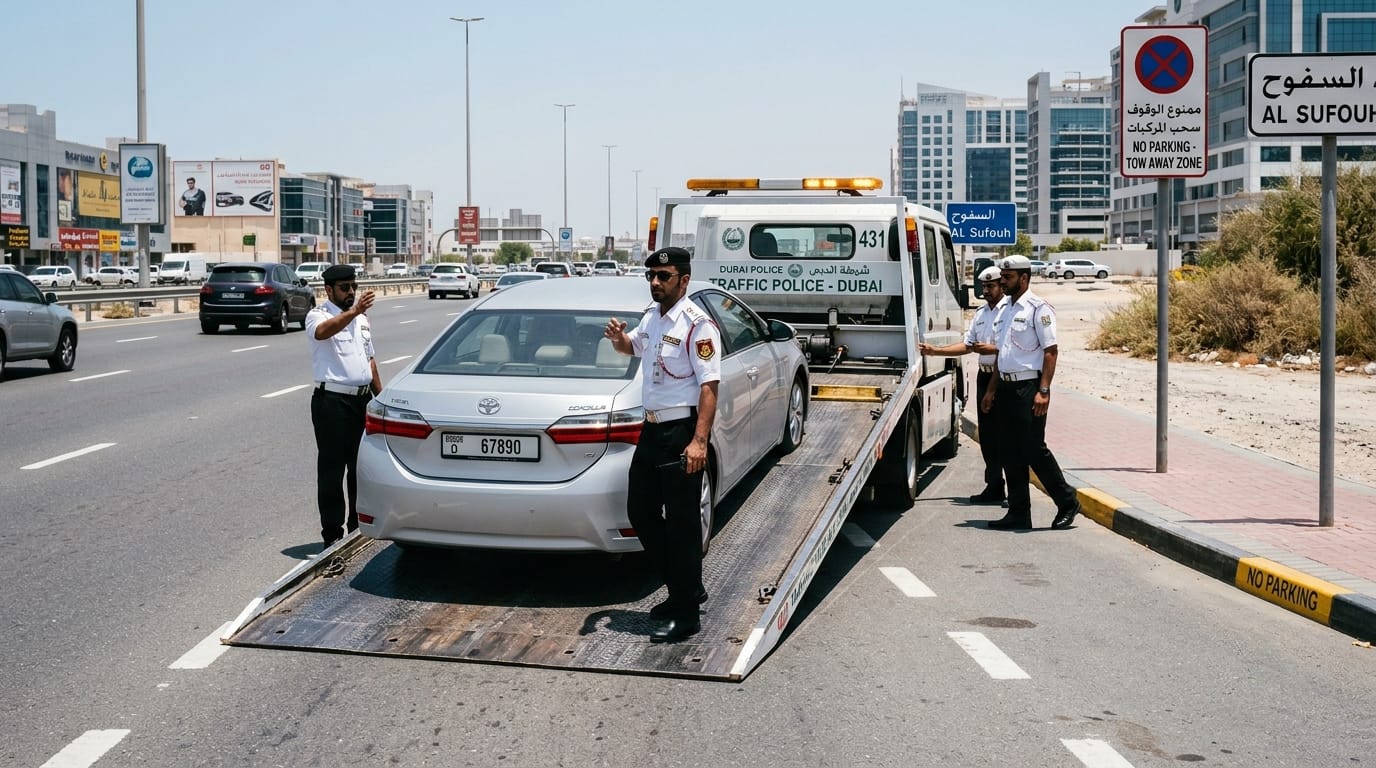
If your car has been impounded in the UAE, you have a defined process to follow and a clear timeline to work within. Acting in the first three hours reduces both the recovery cost and the administrative delay.
The average impoundment release cost in Dubai for a standard traffic violation ranges from 1,050 to 2,100 AED depending on the fine category, storage duration, and towing fee. This guide covers every step in order — from the moment you discover the car is gone to the moment you drive it out of the impound lot.
Before we get into the steps, if you came from our field report on Al Aweer Market 2026 and what we found after visiting 11 showrooms, this guide covers a different kind of post-purchase problem — one that has nothing to do with the car’s mechanical condition and everything to do with UAE traffic regulations that many expats learn about too late.
Why Cars Get Impounded in UAE — The Common Reasons
Understanding why the car was taken determines which department you contact first and which documents you need to bring. Impoundment in the UAE happens for several distinct reasons, each with a different release process.
Reason 1 — Accumulated traffic fines above a threshold.
In Dubai, a vehicle with unpaid traffic fines above 7,000 AED is eligible for impoundment under RTA regulations. In Abu Dhabi, the threshold operates differently — a single serious violation can trigger impoundment regardless of total fine value.
Reason 2 — Expired registration (Mulkiya).
A vehicle caught on the road with an expired Mulkiya is subject to immediate impoundment. The standard fine for driving with expired registration is 500 AED plus a 200 AED vehicle impoundment fee, with storage charges accruing daily at approximately 30 to 50 AED per day depending on the emirate.
Reason 3 — Serious traffic violations.
Reckless driving, driving under the influence, excessive speeding above 60 km/h over the limit, or using a mobile phone while driving can all result in immediate on-the-spot impoundment. These cases carry a mandatory impoundment period of 30 to 60 days that cannot be shortened by paying fines alone.
Reason 4 — Vehicle not registered in the driver’s name without authorization.
If you are driving a vehicle registered to someone else without a letter of authorization, and you are stopped, impoundment is possible in certain circumstances. This affects expats who borrow family members’ cars regularly.
Reason 5 — Outstanding bank loan or court order on the vehicle.
If a previous owner had a bank loan registered against the chassis that was not cleared before the sale, or if a court order has been issued against the vehicle, the car can be flagged and impounded at any traffic stop. This is one reason checking the chassis history on the UAE Federal Traffic Portal at evg.ae before purchasing any used vehicle is not optional.
🔧 Mechanic’s Inspection Log — The Hidden Fine That Cost 3,400 AED
Documented case from a client consultation in April 2026.
Driver: IT engineer from Kerala, working in Dubai on 8,500 AED salary
Vehicle: 2019 Toyota Corolla, registered in his name, valid Mulkiya
Location: Al Khail Road, Dubai — stopped at a routine traffic checkpoint
Situation: Car impounded on the spot
The driver had purchased the car eight months earlier from a small showroom in Al Rashidiya. The chassis check on evg.ae at the time of purchase showed the car as clean. What it did not show — because it had not yet been processed — was a Salik fine dispute from the previous owner that had escalated to a court-linked traffic file.
At the checkpoint, the traffic officer’s system flagged the vehicle plate as linked to an unresolved administrative file. The car was towed to the Al Khail impound facility within 20 minutes. The driver was told he needed to resolve the file at the traffic court before the car could be released.
Total cost to resolve:
Original disputed Salik-linked fines: 1,200 AED
Late payment surcharges accumulated: 600 AED
Towing fee: 350 AED
Three days storage at the impound lot: 150 AED
Administrative processing fee at traffic court: 100 AED
Total: 2,400 AED — for a problem created by the previous owner
The driver had no recourse against the previous showroom seller. The sale agreement had no warranty clause. The chassis was technically clean at the time of purchase. The file was processed after the transfer.
Time lost from work: two full days.
Step-by-Step: The First 3 Hours After Impoundment
Hour 1 — Confirm and Document
Step 1: Confirm the impoundment is official.
Ask the officer for a written impoundment notice. This document contains: the vehicle plate number, the reason for impoundment, the impound lot address, and the case reference number. Without this document, you cannot start the release process. Do not leave the scene without it.
Step 2: Photograph everything.
Before the car is loaded or driven away, photograph the vehicle from all four sides. Document any existing scratches, dents, or damage. Impound lots are not responsible for pre-existing damage, but documentation before entry prevents disputes about damage that may occur during towing or storage.
Step 3: Note the exact impound lot address and operating hours.
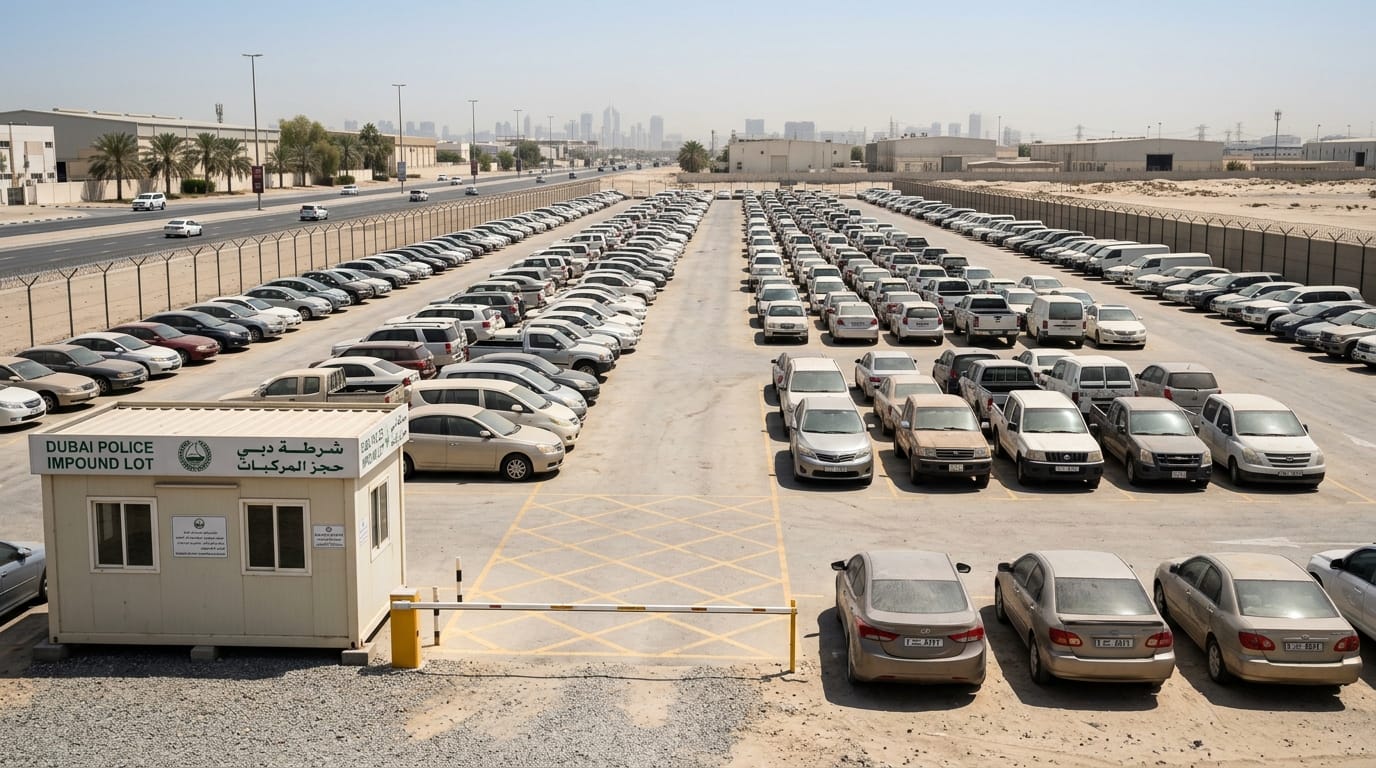
Dubai impound lots operated by the RTA and Dubai Police have specific operating hours. Most main facilities operate from 7:30am to 8:00pm, Sunday to Thursday, and 7:30am to 3:00pm on Friday. Arriving outside these hours means an additional day of storage charges. Saturday hours vary by location.
Step 4: Call your employer or a trusted contact.
If you are stranded, arrange alternative transport immediately. Do not wait at the impound location — the release process requires going to a separate payments office or traffic court first, not to the impound lot itself.
Hour 2 — Identify and Pay the Fines
Step 5: Check your fine status immediately.
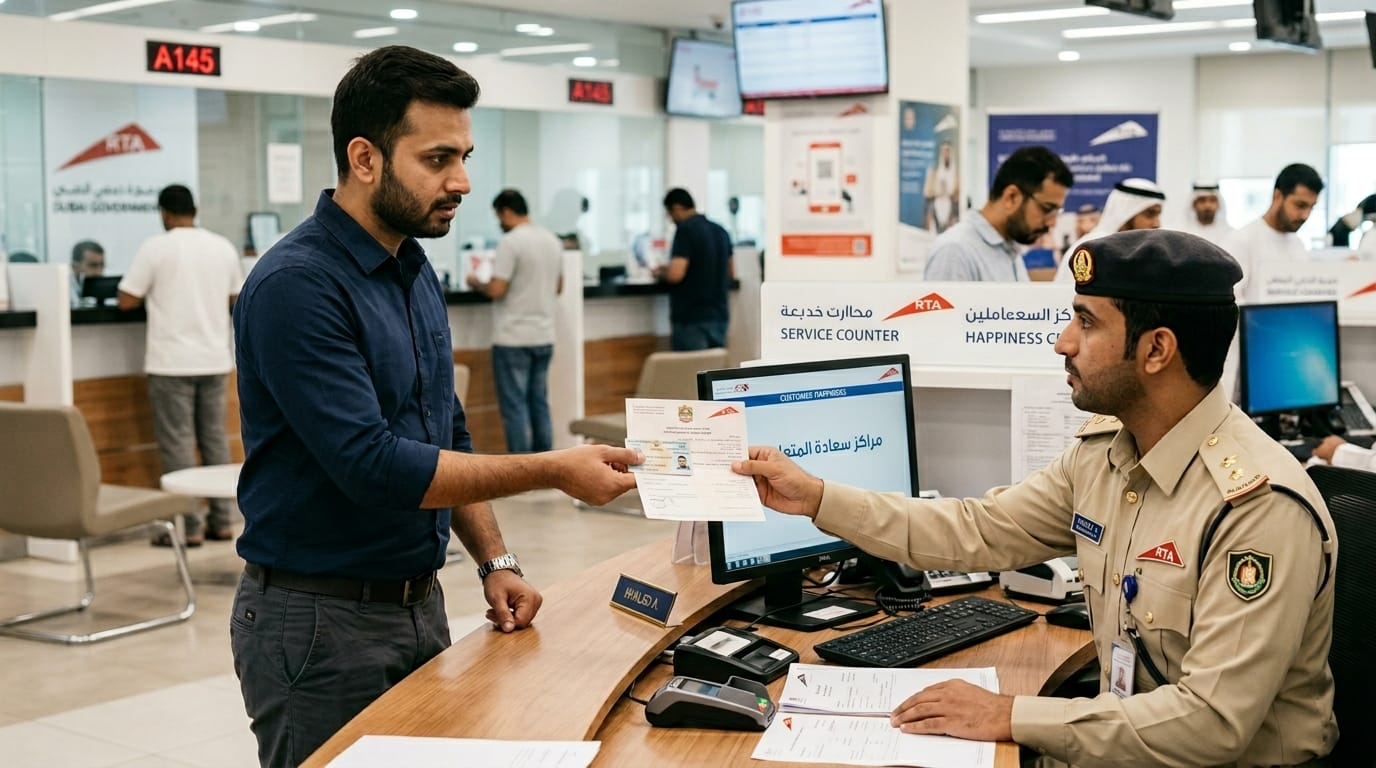
Use the Dubai Police app, the RTA website, or call 901 (RTA Dubai helpline) to identify every outstanding fine linked to your plate. This gives you the total amount before you go to a payment center and prevents surprises at the counter.
Step 6: Pay fines through the correct channel.
Dubai fines can be paid through:
Dubai Police app (fastest for standard fines)
RTA service centers
Designated payment kiosks at major petrol stations and malls
Bank transfer for large fine amounts above 5,000 AED
Do not pay any fine through a third-party agent who approaches you claiming to process payments faster. This is a documented scam that targets expats near traffic court buildings in Deira and Al Barsha.
Step 7: For court-linked files — go directly to the traffic court.
If the impoundment is linked to a court order or a disputed fine file, payment apps and kiosks will not resolve it. You must go to the relevant traffic court in person. In Dubai, this is the Traffic Prosecution at Al Twar. Bring your Emirates ID, your driving license, the vehicle registration, and the impoundment notice.
Hour 3 — Release Process and Collection
Step 8: Obtain the fine clearance receipt.
After paying all outstanding fines, you will receive a clearance receipt. This is the document that authorizes the impound lot to release the vehicle. Without it, the lot will not hand over the car regardless of verbal confirmation.
Step 9: Go to the impound lot with the correct documents.
You will need all of the following:
Original Emirates ID (copy is not accepted)
Original driving license
Original vehicle Mulkiya (registration)
Fine clearance receipt or court release order
Impoundment notice from Step 1
Step 10: Inspect the vehicle before signing the release.
Walk around the car before signing the release form. Compare the current condition to the photographs taken in Step 2. Note any damage on the release form before signing. Once you sign the standard release document, the impound lot’s liability for the vehicle’s condition ends.
Step 11: Check the vehicle is drivable before leaving.
A small percentage of impounded vehicles — particularly those towed from underground parking or difficult locations — sustain minor mechanical damage during the towing process. Check that the car starts normally, the tires are inflated, and nothing is visibly damaged underneath before driving out.
Real Cost Breakdown — What Impoundment Actually Costs in UAE 2026
Cost ItemDubai (AED)Abu Dhabi (AED)Sharjah (AED)Standard towing fee350400300Daily storage charge30 – 5035 – 6025 – 40Administrative release fee100 – 200100 – 200100Fine surcharges (late payment)25% of fine25% of fine25% of fineMandatory impound period fines (serious violations)30 to 60 days storage30 to 60 days storage30 to 60 days storageMinimum total for standard fine impoundment750 – 1,050850 – 1,200650 – 900Maximum total if court-linked2,500 – 5,000+3,000 – 6,000+2,000 – 4,000+
The numbers above do not include the original traffic fine amount, which is paid separately. A driver with 3,000 AED in accumulated fines who is impounded in Dubai can expect a total outlay of 3,750 to 4,050 AED to recover their vehicle, assuming no court involvement and a one-day storage period.
The Positive Side — How UAE Traffic Authorities Actually Help
It is worth documenting that UAE traffic authorities have made significant improvements in expat-accessible services over the past three years. These are not token changes — they reduce resolution time materially.
Multilingual support: The Dubai Police 901 helpline and the RTA service centers offer support in English, Hindi, Urdu, and Tagalog during standard business hours. An expat who calls 901 and explains the situation in English will be directed clearly through the next steps.
Digital fine payment: The Dubai Police app allows complete fine payment for standard violations without visiting a government office. For a driver whose impoundment is solely fine-related, it is possible to pay on a phone within minutes of the car being taken.
Real-time fine tracking: Both the Dubai Police app and the RTA official portal show fine status in real time. An expat who checks their fine status monthly will never be surprised by an impoundment threshold being crossed.
Tasjeel renewal reminders: Tasjeel sends SMS reminders to the registered phone number approximately 30 days before registration expiry. An expat who keeps their registered contact number current will receive this reminder and can renew before a roadside stop becomes an impoundment.
Special Cases — What Expats Get Wrong
Getting impounded near the end of a work contract.
If you are approaching the end of your UAE employment contract and your car is impounded, the timeline pressure increases significantly. A vehicle in an impound lot accumulates daily storage charges. If you leave the country without resolving the file, the charges continue and may create a legal barrier to re-entry. Resolve any impoundment before leaving the UAE, even if it requires extending your departure date by one or two days.
Renting a replacement car during impoundment.
If your impoundment is for a serious violation with a mandatory 30-day period, you will need alternative transport. Short-term car rentals in Dubai start at approximately 80 to 130 AED per day for economy vehicles. Over 30 days, this adds 2,400 to 3,900 AED to the total cost of a serious violation impoundment.
Driving someone else’s car that gets impounded.
If the car belongs to your employer or a family member and is impounded while you are driving, the owner — not you — must be present for the release process in most cases. The owner’s Emirates ID and Mulkiya are required. This is a situation that requires an immediate call to the registered owner, not a solo visit to the impound lot.
Buying a car from someone who has outstanding fines.
As documented in the Mechanic’s Inspection Log above, a previous owner’s unresolved fine file can transfer with the vehicle in certain administrative circumstances. Before purchasing any used vehicle, check the UAE Federal Traffic Portal at evg.ae and request a liability clearance letter from the seller. These two steps cost nothing and prevent the scenario described above.
FAQ — Car Impoundment in UAE
Once your car is back and you have resolved the fine situation, the next overlooked financial risk is the insurance renewal process — where most expats pay more than they should without questioning the bill. Read the complete breakdown: UAE Car Insurance Renewal 2026: 6 Hidden Charges Expats Never Question
