
Written By: Omar Al-Fayed, Senior Automotive Consultant | Fact-Checked By: Emirates Cars Editorial Team | Last Updated: July 2026 | Category: Finance & Legal
Registering a company vehicle under a UAE trade license is a straightforward process when you understand the required documents, the relevant authority for your emirate, and the common mistakes that delay approvals. In Dubai, most mainland company vehicle registrations are completed at a Roads and Transport Authority (RTA) licensing center.
In Abu Dhabi, the process runs through the TAMM portal or Abu Dhabi Police-linked registration centers. Fees typically range from AED 350 to AED 1,200 depending on vehicle type, emirate, and weight category — with Free Zone companies sometimes facing additional requirements. If you are a self-employed expat deciding between personal and corporate registration, this guide covers everything before you visit a registration center.
⚠ Financial & Legal Disclaimer: The information provided in this article is for educational purposes only. Regulations, lending criteria, VAT rules, and corporate tax guidance in the UAE may change over time. Readers should verify information with licensed UAE professionals or official government portals before making financial or legal decisions. This guide is reviewed periodically as UAE Federal Tax Authority procedures and corporate tax regulations evolve.
What Is a Company Car in the UAE?
A company car in the UAE is any vehicle registered under a trade license rather than under an individual’s name. The vehicle appears in the company’s name on the Mulkiya (vehicle registration card), and all renewal, insurance, and compliance obligations fall to the business entity.
This is different from a personally owned car driven for business purposes. If the registration card shows your personal name, the car is personal — even if your employer pays for it. For tax purposes under the UAE Corporate Tax framework introduced in 2023, how the vehicle is registered affects how expenses can be treated. Many expats confuse employer-provided vehicles with company-registered vehicles — they are not always the same thing.
Who Can Register a Company Vehicle?
Not every business structure has equal access to company vehicle registration. The following entity types may register vehicles under their trade license in the UAE:
| Entity Type | Can Register? | Key Condition |
|---|---|---|
| Mainland LLC | Yes | Valid trade license + authorized signatory |
| Sole Establishment | Yes | Owner as authorized signatory |
| Free Zone Company (within zone) | Yes | Registration may be restricted to zone authority |
| Free Zone Company (on mainland) | Conditional | Requires mainland branch or special permit |
| Branch of Foreign Company | Yes | Requires UAE-registered trade license |
| Government Entity | Yes | Separate fleet registration channel |
| Civil Company (Professional) | Yes | Must match business activity |
Can Freelancers Register a Company Vehicle?
Freelancers holding a Freelance Permit (issued by Free Zones such as TECOM, Fujairah Creative City, or Shams) generally cannot register a vehicle under that permit as a “company vehicle” in the traditional sense. Freelance permits are not trade licenses issued under a commercial company structure.
However, freelancers operating as a sole establishment under a DED (Department of Economic Development) trade license may register a vehicle in the establishment’s name. If you hold only a freelance permit, the vehicle will typically need to remain in your personal name. Freelancer financing documents follow different rules than those for LLC owners.
Trade License Requirements
Before proceeding to a registration center, your trade license must meet three baseline conditions:
- Valid and not expired: An expired trade license will result in immediate rejection. Renew it before attempting any vehicle registration.
- Business activity compatibility: Some registration centers, particularly for commercial vehicles (vans, trucks, pickups), may cross-check whether the listed business activity justifies that vehicle category. A consulting firm registering a 10-ton truck may face questions.
- Authorized signatory on file: The person submitting documents must appear as an authorized signatory on the trade license or hold a valid Power of Attorney (POA) on company letterhead, attested by a UAE notary.
Required Documents
The standard document set applies across most Emirates, though individual centers may request additional items. Prepare everything before your visit — missing a single document means a return trip.
| Document | Notes |
|---|---|
| Original trade license (valid) | Photocopy accepted in most centers but bring the original |
| Emirates ID of authorized signatory | Must match the name on the trade license |
| Passport copy of authorized signatory | Some centers request this; carry it regardless |
| Vehicle purchase invoice or sales agreement | For new vehicles; must show company name as buyer |
| Customs clearance certificate | For imported vehicles only |
| RTA/authority vehicle inspection certificate | Required before registration; not issued simultaneously |
| Valid insurance certificate (in company name) | Insurance must reflect the company as the registered owner |
| Previous Mulkiya (for used vehicles) | Required for transfer; seller’s cancellation stamp may be needed |
| NOC from financing bank (if vehicle is financed) | Bank issues this after confirming registration structure |
| Power of Attorney (if signatory is not on trade license) | Must be notarized in UAE |
If the vehicle is being registered under a company name for the first time (purchased new), ensure the sales invoice explicitly names the company — not an individual. Some dealerships default to the individual’s name if not instructed otherwise. Hidden fees during vehicle purchase can appear at this stage if the dealer handles registration on your behalf with the wrong name on record.
Step-by-Step Registration Process
The workflow below reflects the general process used across most UAE Emirates. Steps may vary slightly depending on whether you are in Dubai, Abu Dhabi, Sharjah, or another emirate.
flowchart TD
    A[1. Obtain Vehicle & Confirm Invoice in Company Name] --> B[2. Arrange Insurance in the Company's Name]
    B --> C[3. Book & Complete Vehicle Inspection]
    C --> D[4. Pass Inspection & Receive Certificate]
    D --> E[5. Visit RTA/Authority & Submit All Documents]
    E --> F[6. Pay Registration Fees]
    F --> G[7. Receive Corporate Mulkiya & Number Plates]
    classDef default fill:#000000,color:#ffffff,stroke:#000000;
| Step | Action | Estimated Time |
|---|---|---|
| 1 | Obtain vehicle and confirm invoice in company name | Same day (dealer) |
| 2 | Arrange insurance in the company’s name | 1 to 2 business days |
| 3 | Book and complete vehicle inspection | 1 to 3 days depending on center availability |
| 4 | Visit licensing/registration authority with full document set | Half day |
| 5 | Pay fees and receive Mulkiya and plates | Same visit (often same day) |
Where to Register — By Emirate
Vehicle registration authority varies significantly by emirate. Using the wrong center is a common expat mistake.
| Emirate | Authority | Key Portal / Location |
|---|---|---|
| Dubai | Roads and Transport Authority (RTA) | rta.ae — Tasjeel centers (Al Quoz, Umm Ramool, Deira) |
| Abu Dhabi | Abu Dhabi Police / TAMM | tamm.abudhabi |
| Sharjah | Sharjah Roads and Transport Authority | SRTA centers in Abu Shagara and Al Khan |
| Ajman | Ajman Police Traffic Department | Ajman Police HQ |
| RAK / Fujairah / UAQ | Respective emirate police traffic departments | Verify locally — procedures vary |
For companies operating across multiple Emirates, the vehicle must be registered in the emirate where the company’s trade license is issued — not necessarily where the vehicle will primarily be driven. Sharjah and Dubai market differences also extend to registration procedures and fees.
Vehicle Inspection Requirements
Before any vehicle can be registered — new or used — it must pass an official inspection. In Dubai, this is handled through RTA-authorized Tasjeel centers in locations such as Al Quoz Industrial Area, Umm Ramool, and Nad Al Hamar. Passing the Tasjeel inspection requires the vehicle to be road-worthy, properly documented, and in compliance with RTA safety standards.
For brand-new vehicles purchased from an authorized dealership, the dealer typically handles the initial inspection as part of the registration package. For used vehicles — particularly imported or transferred ones — an independent inspection booking is required before proceeding to the registration counter.
Inspection fees in Dubai generally range from approximately AED 120 to AED 200 depending on vehicle category, though these figures are subject to change. Always verify current fees at rta.ae before visiting.
Insurance Requirements Before Registration
No UAE registration center will process a vehicle registration without a valid insurance certificate. For company vehicles, the insurance policy must name the company — not an individual employee — as the registered owner.
This is a detail that dealerships and insurance brokers sometimes overlook. If the policy is issued in an employee’s personal name and the vehicle is registered in the company’s name, the registration will fail. Confirm with your insurance provider before the appointment that the certificate reflects the company’s official trade name exactly as it appears on the trade license.
For companies with multiple vehicles, fleet insurance policies are available from most major UAE insurers and can simplify renewal management. Comprehensive versus third-party insurance choices affect both coverage and registration eligibility — UAE law generally requires at least third-party liability insurance, but financing institutions typically require comprehensive.
Registration Fees
Registration fees vary by emirate, vehicle category, and weight. The figures below represent typical ranges based on common market patterns and publicly available information. Verify current official fees before visiting.
| Fee Component | Estimated Range (AED) | Notes |
|---|---|---|
| Vehicle registration (passenger car) | 350 to 500 | Annual; varies by emirate |
| Vehicle inspection | 120 to 200 | Per inspection |
| Number plate issuance (standard) | 35 to 100 | One-time; specialty plates cost significantly more |
| Knowledge and innovation fee (Dubai) | 20 | Dubai-specific government levy |
| Ownership transfer fee (used vehicle) | 350 to 500 | Paid when transferring used vehicle to company name |
| Customs clearance processing (imported) | Varies | Depends on vehicle value and origin |
Commercial vehicles (vans, pickups, trucks) carry higher registration fees than passenger cars. Vehicles above a certain gross weight may attract additional levies. Always request a full fee breakdown at the registration counter before payment.
Number Plate Issuance
Standard number plates are issued at the registration center on the same day as registration approval. In Dubai, plates are produced on-site at most Tasjeel centers. Specialty or personalized plates require a separate application through the RTA smart portal or authorized dealers, and their costs vary widely — from a few hundred to tens of thousands of AED depending on the plate number.
Company vehicles receive standard-format plates. There is no specific “corporate” plate design in the UAE. The vehicle category (private, commercial, heavy) appears in the plate code format and is determined by the vehicle’s technical classification, not by the owner’s business type.
How Long Registration Takes
For a well-prepared applicant with all documents in order, the entire visit to an RTA center typically takes between 30 minutes and 90 minutes — including queue time, document review, payment, and plate collection. The inspection booking, however, often takes 1 to 3 additional days depending on center availability.
Delays most commonly occur when:
- The trade license has expired or is near expiry
- The insurance certificate name does not exactly match the trade license name
- The vehicle has outstanding traffic fines
- The authorized signatory’s documents are not in order
- The vehicle has a financing lien without a bank NOC
Can a Used Car Be Registered Under a Trade License?
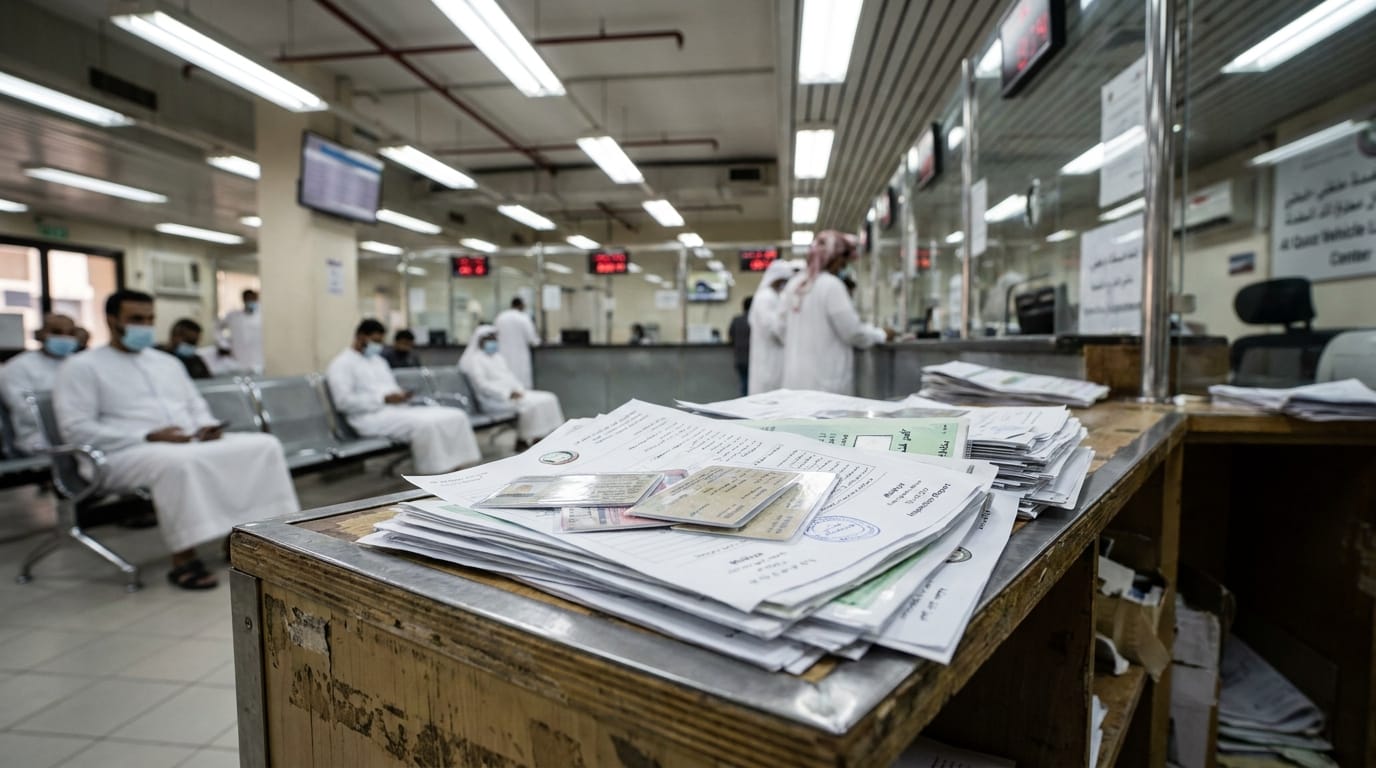
Yes. A used vehicle can be transferred into a company’s name. The process requires the seller to visit the registration center with the buyer (or the buyer’s authorized representative) to complete the ownership transfer. In Dubai, both parties — or their representatives with valid POAs — must be present at the RTA licensing center.
The vehicle must pass a fresh inspection before the transfer is completed. Outstanding traffic fines on the vehicle must be settled before the transfer can proceed. Transferring car ownership in Dubai involves the same steps whether the new owner is an individual or a company, with the added requirement that the company representative holds proper documentation.
One practical note: when a company purchases a used vehicle, ensure the Mulkiya (and all post-transfer documents) show the company’s trade name precisely as registered. Discrepancies between the trade license name and the Mulkiya create complications at renewal.
Can Imported Vehicles Be Registered?
Imported vehicles — whether arriving from GCC countries, the UK, the US, or elsewhere — can be registered under a company trade license, provided they meet UAE import requirements. The process involves additional steps:
- Customs clearance through UAE Customs (Dubai Customs, Abu Dhabi Customs, or the relevant authority)
- A Vehicle Conformity Certificate confirming the vehicle meets UAE and GCC technical standards
- Homologation (modification to GCC spec) if the vehicle was manufactured for a different market — particularly relevant for US-spec imports
- Standard inspection and insurance requirements apply after customs clearance
GCC spec versus non-GCC spec differences affect both the import process and long-term maintenance costs. Non-GCC imports can be registered but may require modifications that add significant cost before they pass inspection.
Company Vehicle vs Personal Vehicle Registration
| Factor | Company Registration | Personal Registration |
|---|---|---|
| Registered owner on Mulkiya | Trade license entity | Individual name |
| Insurance policyholder | Company | Individual |
| Traffic fine liability | Company (paid by designated driver record) | Individual |
| VAT recovery eligibility | Potentially yes — subject to FTA rules | No |
| Corporate tax deductibility | May be deductible as business expense | Not applicable |
| Resale process | Requires company signatory | Individual can transact directly |
| Complexity | Higher — requires trade license documentation | Lower |
💡 Expat Tip: Some small business owners register vehicles personally to simplify resale and avoid company paperwork overhead, then claim mileage as a business expense. This is a common practice, but it means the vehicle is not technically a company asset. Consult a UAE-registered accountant for advice specific to your tax position under the Corporate Tax framework.
Fleet Registration
Companies operating five or more vehicles typically qualify for fleet registration arrangements. In Dubai, the RTA offers fleet management solutions for businesses that require centralized registration, renewal, and inspection scheduling. Fleet accounts allow HR or fleet managers to process renewals without individual vehicle queuing.
For Abu Dhabi-based fleets, the TAMM government services platform provides fleet-related services for company vehicles. Companies managing delivery fleets, construction equipment fleets, or transport operations may also engage with the Ministry of Energy and Infrastructure for commercial vehicle type approvals.
Fleet insurance is generally more cost-effective than individual vehicle policies when managing more than three to five vehicles. Request fleet quotes from at least two to three insurers — pricing varies considerably across providers.
Free Zone Companies: Specific Considerations
Free Zone companies face a common practical limitation: their trade license is issued by a Free Zone authority (JAFZA, DMCC, DAFZA, TECOM, Sharjah Airport International Free Zone, etc.), not by a mainland DED. This creates complications for mainland road registration because UAE vehicle registration authorities are mainland entities.
The practical solutions vary by Free Zone:
- Some Free Zones have their own vehicle registration processes for vehicles operating exclusively within the zone perimeter (notably JAFZA for port-area vehicles)
- For road-use vehicles, Free Zone companies often need to establish a mainland branch with a mainland DED trade license to register road vehicles
- Some entities register vehicles in a shareholder’s personal name as a workaround — this carries insurance and liability implications
If you operate a Free Zone company and need to register road vehicles, consult with the Free Zone authority’s customer service before committing to a vehicle purchase. Requirements evolve and the answer depends on your specific zone.
Commercial Vehicles: Pickup, Van, Truck
Commercial vehicles carry a different registration classification than passenger cars. The distinction matters because:
- Commercial vehicle registration fees are generally higher than passenger car fees
- Commercial vehicles require specific insurance types (goods in transit, public liability depending on use)
- Salik (toll) charges differ for commercial vehicles on some corridors
- Parking regulations in urban areas (Downtown Dubai, DIFC, Jumeirah) may restrict commercial vehicle access during certain hours
For pickup trucks classified as “light commercial vehicles” (typically under 3.5 tons GVW), the registration process closely mirrors that for passenger cars. Heavier trucks require additional permits from transport authorities and may involve route permits for certain cargo types.
Leased Company Vehicles
When a company leases a vehicle from a leasing company (such as through a long-term car rental arrangement), registration responsibility typically remains with the leasing company — they are the legal owner. The lessee (the company) drives under the leasing company’s registration.
However, in operational lease arrangements where the business registers the vehicle, the lease company issues a NOC authorizing the business to register the asset. Clarify registration responsibility explicitly in the lease contract before signing — this is a common point of confusion. Lease versus buy cost comparison is worth reviewing before committing to either structure.
Financed Company Vehicles
When a company purchases a vehicle through bank financing, the bank holds a lien on the vehicle until the loan is repaid. This affects registration in two ways:
- The Mulkiya will note the bank as a lienholder — the vehicle cannot be transferred or sold without the bank’s NOC
- The bank typically requires comprehensive insurance (not third-party only) as a condition of the loan
Some banks finance company vehicles differently from personal vehicles. Eligibility criteria, required financials, and processing timelines vary. UAE used car bank loan processes provide a useful baseline for understanding what banks require, though company vehicle financing may involve additional business documentation (audited accounts, bank statements).
Renewing Company Vehicle Registration
Company vehicle registration in the UAE is annual. The renewal process mirrors the initial registration with fewer steps — no number plate issuance is needed on renewal, and the vehicle inspection is typically required annually (some vehicle categories require more frequent inspections).
| Renewal Checklist Item | Status to Confirm Before Visit |
|---|---|
| Trade license | Valid and not expired |
| Insurance certificate | Current policy in company name |
| Vehicle inspection | Passed (book at least 1 week before expiry) |
| Outstanding traffic fines | All settled |
| Salik balance (if applicable) | Positive balance recommended |
| Bank NOC (if financed) | Confirm with bank if required annually |
Dubai’s RTA allows online vehicle registration renewal for company vehicles through the RTA smart services portal and the Dubai Drive app, provided the inspection is already completed and all fines are cleared. This avoids a physical center visit entirely. Abu Dhabi renewals can be managed through the TAMM platform.
Grace periods after registration expiry are typically short (often 30 days before additional fines apply). Managing renewal dates in a fleet tracker — even a simple spreadsheet — prevents lapses that generate fines and legal complications. The expat car ownership annual calendar outlines key dates to track across all registration obligations.
Transferring Ownership
Three common transfer scenarios involve company vehicles:
Company to Individual
When a company sells or transfers a vehicle to an employee or any individual, both parties visit the registration center together. The trade license, Mulkiya, and identification documents of both parties are required. Outstanding fines must be cleared. If financed, the bank must issue a NOC confirming the lien is released.
Individual to Company
This is the reverse — buying a used vehicle currently in an individual’s name and registering it under the company. The individual seller and company representative both attend. The vehicle must pass inspection before the transfer is finalized.
Company to Company
Inter-company transfers follow the same process but require authorized signatories from both companies with valid trade licenses. This is common in business acquisitions or asset restructuring scenarios.
Selling a Company Vehicle
Selling a company-registered vehicle requires the same transfer process as above. Additionally:
- The company’s authorized signatory must be present or provide a notarized POA
- The company’s trade license must be valid at the time of transfer
- For VAT-registered companies, the sale of a company asset may be subject to VAT — verify with your accountant
Selling a car before leaving UAE guidance also applies to company vehicle disposals, particularly for businesses winding down or relocating operations.
Cancelling Registration
If a company vehicle is exported, scrapped, written off, or permanently retired from UAE roads, the registration must be cancelled with the relevant authority. Failure to cancel results in continued renewal obligation notices and potential fines. Cancellation requires the Mulkiya, the number plates, and proof of export (for exported vehicles) or a scrapyard certificate (for scrapped vehicles).

Common Registration Mistakes
| Mistake | Consequence | Prevention |
|---|---|---|
| Insurance in individual name, not company | Registration refused | Confirm policy name before visiting |
| Expired trade license | Registration refused | Check trade license expiry one month ahead |
| Vehicle invoice in employee’s name, not company | Ownership dispute complications | Instruct dealer to use company name on invoice |
| Missing authorized signatory POA | Processing delayed or refused | Obtain notarized POA in advance if signatory cannot attend |
| Outstanding traffic fines not cleared | Transfer or renewal blocked | Check fines via RTA app before any registration visit |
| Skipping inspection before registration attempt | Wasted trip | Complete inspection first, always |
| Free Zone license used for mainland registration | Rejection — wrong authority | Confirm registration eligibility with Free Zone before purchase |
Scam Prevention: Company Vehicle Fraud Risks
🚨 Warning: A recurring pattern in UAE used vehicle markets involves sellers claiming a vehicle is “company-registered and well-maintained” as a trust signal — when in fact the company may be dormant, the Mulkiya may not match the presented trade license, or the vehicle may carry undisclosed fines under a company name that is difficult for buyers to trace. Always verify the vehicle’s registration status directly through the RTA smart portal or Tasjeel terminal before any payment. A Mulkiya printed from a phone screenshot is not verification.
Additional fraud risks specific to company vehicle transactions include:
- Fake NOC letters: Forged bank NOCs presented to complete transfers — the bank should confirm directly
- Dormant company transfers: A vehicle sold by a company that has since been cancelled — the transfer may face complications if the DED shows the trade license as inactive
- Misrepresented service records: Company vehicle service histories are often maintained by a fleet manager who may have gaps — always request physical service records, not verbal assurances
- Undisclosed accident history: Checking accident history in UAE is possible through official channels — do this before purchasing any used company vehicle
Who Can Drive a Company Vehicle?
Any employee with a valid UAE driving license can typically drive a company-registered vehicle. The company’s insurance policy will specify whether coverage extends to any licensed driver or only named drivers — confirm this with your insurer.
For commercial vehicle categories (trucks, vans carrying goods), additional licensing categories may be required (e.g., light truck license, heavy vehicle license). An employee with only a standard passenger vehicle license driving a commercial vehicle outside their license category is both a traffic violation and an insurance coverage risk.
Traffic Violations for Company Cars
Traffic fines are linked to the vehicle registration, not the driver. When a company vehicle receives a camera-detected fine (speed, red light, Salik evasion), the fine appears on the vehicle registration — which means it blocks renewal until settled.
For fleet managers: UAE traffic fines can accumulate quickly across a fleet if not monitored. The RTA provides fleet fine management services for registered company accounts. Establish a monthly fine-clearance process to avoid renewal complications. Many companies implement internal policies where the driver responsible for a fine pays it from their salary — this is a matter of company policy, not UAE law.
If you believe a fine was issued incorrectly, contesting wrong traffic fines in Dubai is possible through RTA customer service or Dubai Police online channels. The process is straightforward for clear cases but rarely results in full waiver.
Illustrative Field Scenarios: Workshop & Market Patterns
Example scenarios based on recurring UAE market patterns, not actual documented cases.
Scenario A: Small Trading Company, Dubai Mainland
A Pakistani-owned trading LLC in Deira needed to register a used Toyota Hilux pickup for delivery operations. The vehicle had been purchased from a private seller and the invoice was in the seller’s personal name. The company’s HR manager arrived at the Al Aweer registration center without the seller present, assuming a signed transfer form would suffice. The transfer was rejected — both parties must appear together, or a notarized POA from the seller is required. A second appointment was needed, adding three working days and approximately AED 150 to 200 in additional costs (inspection rebook and transport). The lesson: confirm the seller’s availability before completing any vehicle purchase for company registration.
Scenario B: Free Zone Company, Dubai
A DMCC-licensed consulting firm wanted to register a Nissan Patrol in the company’s name for executive transport. After visiting the Tasjeel center in Al Quoz, they were informed that a DMCC trade license cannot be used to register a road vehicle at a mainland RTA center without a mainland branch license. The company ultimately registered the vehicle in the managing partner’s personal name and obtained an insurance policy in the same name. While functional, this meant the vehicle appeared on the partner’s personal record — relevant for any future loan or liability matters. Free Zone companies should clarify this before purchasing.
Scenario C: Construction Company Fleet Renewal, Sharjah
A Sharjah-based construction company with eight registered vehicles — a mix of pickups and passenger cars — missed renewal on three vehicles during a busy project period. By the time the fleet manager noticed, two vehicles had accumulated late renewal fines of approximately AED 250 to 500 each (market estimate; verify current fine structure with SRTA). The company implemented a shared calendar reminder system set 45 days before each vehicle’s registration expiry. No fleet management software was required — a basic Google Sheets tracker with email alerts was sufficient.
The Bottom Line Decision Framework
| Your Situation | Recommended Approach |
|---|---|
| Mainland LLC, buying new vehicle | Register in company name at RTA from day one — instruct dealer accordingly |
| Free Zone company, need road vehicle | Verify with your zone authority first; consider mainland branch if ongoing need |
| Sole establishment (personal DED license) | Can register in establishment name — useful for tax deductibility if applicable |
| Freelancer with freelance permit only | Register personally — your permit is unlikely to support corporate registration |
| Company buying used vehicle | Both parties attend together; inspect and clear fines before agreeing to purchase |
| Fleet of 5+ vehicles | Investigate RTA or TAMM fleet account — simplifies renewal management significantly |
| Leasing vehicles | Confirm in writing whether lessor or lessee is responsible for registration |
Data Sources & Methodology
The procedural information in this article is based on publicly available guidance from UAE government portals, common market patterns observed across multiple UAE emirates, and the operational experience of fleet managers and business owners in the UAE expatriate community. All government fee figures are presented as estimated ranges and are subject to change — they should be verified directly through the relevant authority before any transaction.
Official sources consulted for this article include:
- Roads and Transport Authority (RTA) — Dubai
- TAMM Abu Dhabi Government Services Platform
- UAE Ministry of Energy and Infrastructure
- UAE Federal Tax Authority (FTA) — for Corporate Tax context
- UAE Ministry of Economy — trade license context
📊 Market Volatility Notice: All fee ranges, processing times, and procedural requirements in this article reflect conditions as of mid-2026. UAE government fees and registration procedures are updated periodically. Readers should verify current requirements directly with the RTA, TAMM, or the relevant emirate authority before visiting. This article is reviewed and updated on a periodic basis as procedures evolve.
Frequently Asked Questions
Disclaimer: Emirates Cars is a 100% independent platform. We do not own showrooms, nor are we affiliated with any used car dealerships or garages. Our sole mission is to protect expats from financial fraud in the automotive market.
