Last Updated: May 2026 | By Omar Al-Fayed, Senior Automotive Consultant | Category: UAE Market News
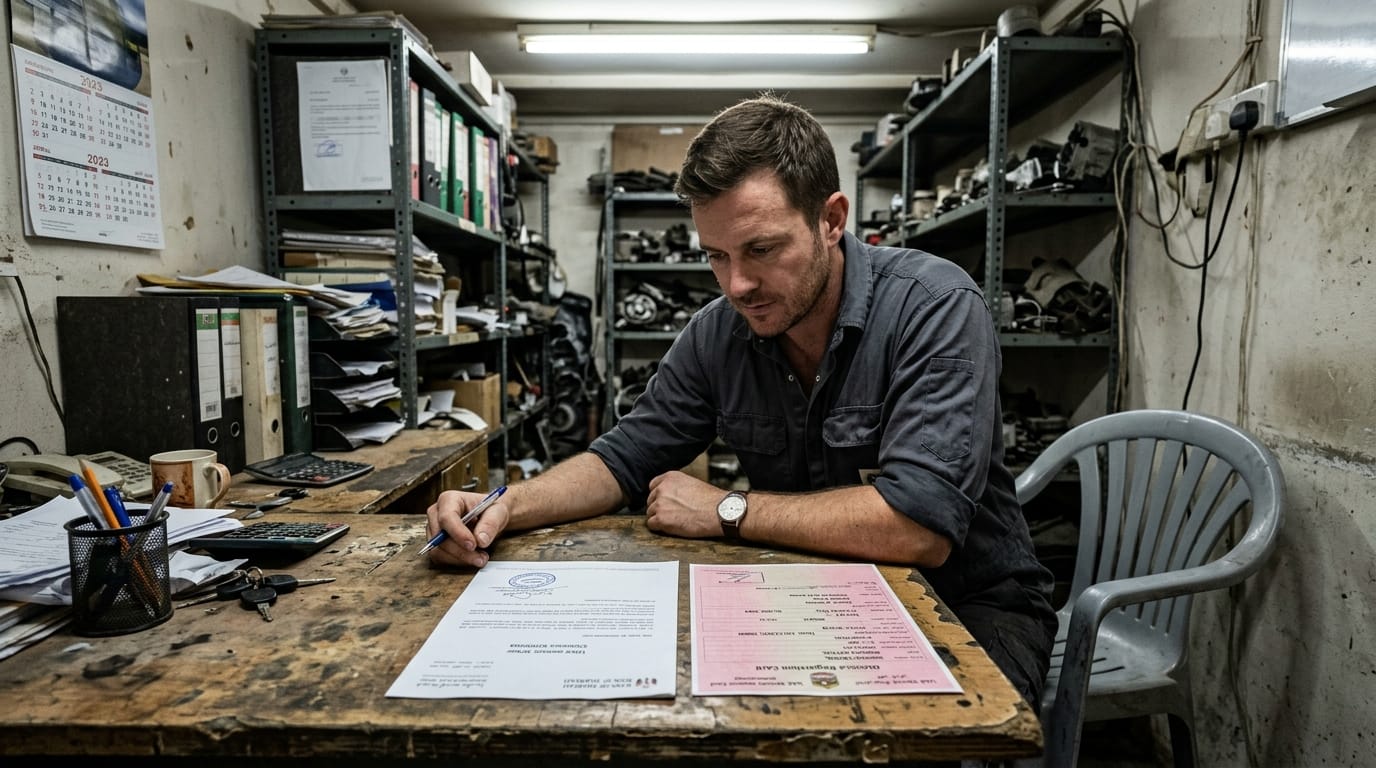
You found a Toyota Corolla on Dubizzle for 28,000 AED. The seller says it is “under bank finance.” Before you transfer a single dirham, understand what this means — because the legal structure of this transaction differs from a normal private sale. Anyone looking to buy used car under bank loan UAE needs to know one thing before anything else: one missed step can leave you without the car and without your money. See what this process looks like from the seller’s side — the timeline and pressure points are mirror images of what you face as the buyer.
The vehicle lien (bank mortgage) must be cleared before RTA ownership transfer
Never pay the seller directly before the bank issues a No Objection Certificate (NOC)
Use a manager’s cheque paid directly to the financing bank — not to the seller
Typical timeline: 3 to 7 business days from agreement to new Mulkiya in your name
Total transaction add-on cost: typically between 1,500 and 3,500 AED
What “Under Bank Loan” Actually Means in UAE
When a car is financed through a UAE bank — Emirates NBD, ADCB, FAB, Mashreq, Dubai Islamic Bank, or any other lender — the bank holds the vehicle as collateral until the loan is fully repaid. This is known as a vehicle lien or auto loan mortgage. The Mulkiya (registration card) shows the bank’s name as a lienholder, and RTA cannot transfer ownership to a new buyer until that lien is released via a mortgage release letter — also called a No Objection Certificate (NOC).
This is not an unusual situation. A significant portion of used cars listed on Dubizzle, Facebook Marketplace, and at Al Aweer Market in Dubai carry some remaining finance balance. A seller may have purchased the car three years ago on a five-year plan, paid off 60% of the loan, and now wants to sell. That remaining 40% is what you need to understand before proceeding.
Some sellers are transparent about this upfront. Others are not — either because they assume you know, or because they hope you will pay first and ask questions later. Checking the Mulkiya for a bank name before any financial discussion is step one.
Important CheckBefore agreeing to any price, ask the seller to share a photo of the current Mulkiya. If a bank name appears in the ownership or lienholder field, the vehicle has an active lien. Do not pay any deposit until you have a written settlement letter from the bank — not from the seller.
Is It Legal to Buy a Financed Car in UAE?
Yes — buying a car with an active bank loan is fully legal in the UAE for any buyer, including expats on all visa types. The law does not prevent the sale. What it prevents is the transfer of ownership without proper lien clearance.
Under UAE Federal Traffic Law and the RTA vehicle transfer regulations, a vehicle with a recorded bank lien cannot be transferred at any official transfer point — RTA service centres, Tasjeel branches, or Emirates Vehicle Gate locations — without the financing bank first issuing a No Objection Certificate. This applies regardless of whether the buyer is Emirati or an expat, and regardless of how the buyer is paying (cash or their own bank finance).
The NOC is the bank’s formal statement that the loan obligation on that specific vehicle has been satisfied and the lien is released. Without it, the RTA system will not process the transfer. There is no workaround, no exception, and no “we’ll sort it later.” The NOC is a hard requirement.
| Advantages | Disadvantages |
|---|---|
| Fully legal — no restrictions on expats | Transfer takes 3 to 7 business days minimum |
| Better negotiation leverage vs clean-title cars | Extra fees: NOC, admin, manager’s cheque |
| Larger available inventory on platforms | Requires coordination between multiple parties |
| Often better service history documentation | Higher fraud exposure if process not followed |
| Structured paper trail for both parties | Complex if buyer also using bank finance |
Ownership vs Possession — The Key Misunderstanding
This distinction is where most expat buyers make a costly error. In the UAE automotive market, possession of a car is not the same as legal ownership of a car.
A seller can hand you the keys. You can drive the car home. You can have a signed paper agreement. None of this makes you the legal owner. Legal ownership in the UAE is determined entirely by the name on the Mulkiya — the official vehicle registration card issued by the relevant emirate authority.
Until the RTA transfer is completed and a new Mulkiya is printed in your name, the car belongs to whoever’s name appears on the current registration. If the original owner defaults on their remaining bank loan after you have “bought” the car but before the transfer, the bank has the right to pursue that vehicle as collateral. Several documented cases at Dubai Consumer Protection involve exactly this scenario.
A WhatsApp agreement is not ownership. A signed receipt is not ownership. Driving the car daily for a week is not ownership. Only the Mulkiya in your name is ownership.
Core RiskDo not take physical possession of any vehicle, or make any payment to the seller, before the bank lien is formally cleared and the RTA transfer is completed on the same day. The two steps — settlement and transfer — should happen in sequence within the same transaction window.
How to Verify a Car’s Loan Status Yourself
You do not need to take the seller’s word for whether a car has active finance. Several independent verification methods are available in the UAE:
Method 1 — Check the Mulkiya
The vehicle registration card (Mulkiya) lists the registered owner and any lienholder. Ask the seller for a clear photo of both sides. A bank name in the owner section indicates active finance. If the seller is reluctant to share this, that reluctance itself is a signal.
Method 2 — RTA Dubai App
The RTA Dubai smart app allows plate number lookups showing basic vehicle status, outstanding fines, and registration validity. While it does not always display the lien holder’s name explicitly, vehicles with unresolved financial holds may show transfer restrictions.
Method 3 — Emirates Vehicle Gate (EVG)
The Emirates Vehicle Gate platform at evg.gov.ae provides vehicle information services including ownership details and encumbrance status for registered UAE vehicles. This is one of the most reliable independent verification sources available to buyers.
Method 4 — VIN / Chassis Number Check
Request the full VIN or chassis number from the seller before meeting. Some UAE insurance and registration platforms allow VIN-based lookups that reveal accident history, previous ownership, and registered financial holds.
Method 5 — Outstanding Fines Check
A vehicle with significant unpaid fines can complicate the transfer process independently of the loan. Check fines via the Dubai Police fines portal, the RTA app, or the relevant emirate’s traffic authority using the plate number. Outstanding fines must typically be settled before a transfer is completed.
Practical StepRun all available checks before the first in-person meeting with the seller. If any check returns unexpected results — fines, restricted status, or ownership discrepancy — raise these before viewing the car, not after.
Documents to Request Before Meeting the Seller
Request all of the following by WhatsApp or email before agreeing to meet. A seller who refuses to share basic documentation before a viewing is worth approaching with caution.
| Document | What to Look For | Red Flag |
|---|---|---|
| Mulkiya copy (front & back) | Owner name, bank lien holder, expiry date | Name mismatch or visible alteration |
| Seller’s Emirates ID copy | Name matches Mulkiya owner exactly | Different name, reluctance to share |
| Bank Settlement Letter | Outstanding balance, bank name, expiry date | Verbal estimate only, no written letter |
| Service history records | Stamps, dates, mileage consistency | Gaps above 15,000 km, no original booklet |
| Previous accident disclosure | Any bodywork repairs, insurance claims | “Never in accident” for a car over 80,000 km |
| Chassis / VIN number photo | Matches Mulkiya, no visible tampering | Scratched, re-stamped, or difficult to read |
The Full Step-by-Step Process
Step 1 — Verify Loan Status and Request Settlement Letter
Ask the seller to request a Liability Letter or Settlement Letter from their bank. This document states the exact outstanding balance as of a specific date, including any early settlement fees. Most major UAE banks — Emirates NBD, ADCB, FAB, Mashreq — issue this within 1 to 3 business days.
Step 2 — Conduct an Independent Pre-Purchase Inspection
A car under finance does not mean a well-maintained car. Workshops across Al Quoz Industrial Area in Dubai and Abu Shagara in Sharjah conduct pre-purchase inspections for between 200 and 400 AED. Book this before committing to any price — the findings directly affect your negotiating position.
Step 3 — Negotiate the Purchase Price with Full Information
With the settlement letter and inspection report in hand, negotiate from a position of documented facts. If the car is listed at 30,000 AED and the outstanding loan is 18,000 AED, the seller’s net is 12,000 AED. Any mechanical issues found in the inspection reduce this further. Structure your offer around the total picture, not just the asking price.
Step 4 — Settle the Loan via a Structured Payment Method
The safest method: issue a manager’s cheque directly to the seller’s financing bank for the outstanding balance. The remaining amount goes to the seller by separate transfer. This creates a clear paper trail and removes the risk of the seller failing to forward the payment to the bank.
Step 5 — Obtain the Bank NOC
After confirming payment is cleared, the bank issues the mortgage release letter (NOC). Most major banks process this within 1 to 3 business days. This document is physically presented at the RTA transfer centre — some banks now allow digital submission directly to the RTA system.
Step 6 — Complete the RTA Ownership Transfer
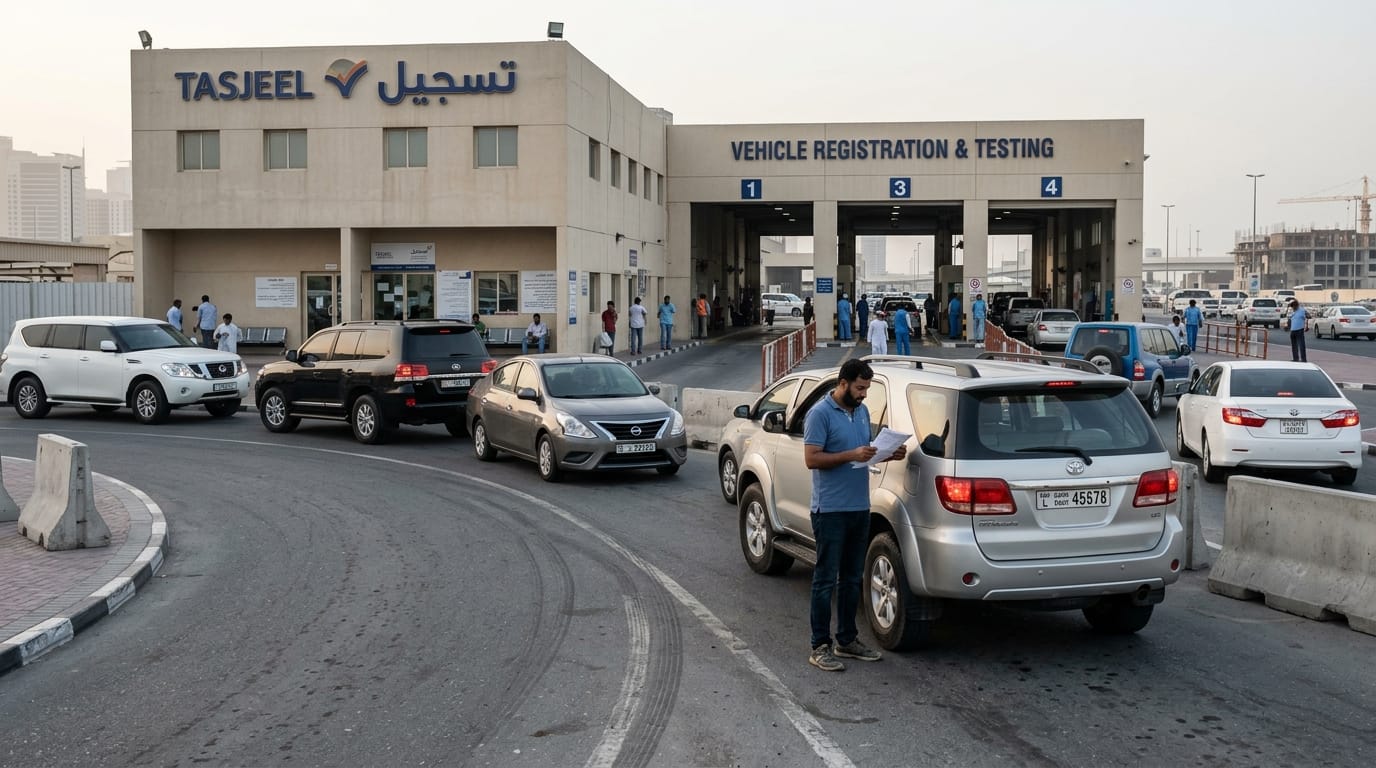
Both buyer and seller attend an official RTA service centre, licensed Tasjeel branch, or Emirates Vehicle Gate location. The transfer is completed the same day and a new Mulkiya is issued in the buyer’s name. Transfer fees range from 350 to 600 AED depending on vehicle type and emirate.
Safe Transaction SignalA seller who agrees to a manager’s cheque paid directly to their bank — rather than cash in hand — is demonstrating structural transparency. This arrangement is in the seller’s interest too: it creates a clean record of the transaction.
Payment Methods Compared — Which Is Safest?
| Payment Method | Risk Level | Recommended? | Notes |
|---|---|---|---|
| Manager’s cheque to seller’s bank | Low | Yes — preferred | Bank receives loan amount directly; paper trail clear |
| Bank-to-bank transfer to seller’s bank | Low | Yes — acceptable | Electronic record; confirm bank account details carefully |
| Seller settles first, buyer pays after NOC | Low | Yes — cleanest | Requires seller to have access to settlement funds upfront |
| Cash to seller, seller pays bank | High | No | Seller may delay or fail to forward payment to bank |
| Deposit + balance later | High | Avoid | Deposit recovery is difficult if transaction does not complete |
| Full payment before NOC issued | Very High | Never | Leaves buyer with no leverage if lien is not cleared |
Can You Take Over the Existing Car Loan?
This question — whether a buyer can assume or transfer the seller’s existing car loan — comes up regularly in the UAE market. The short answer: formal loan takeover (also called finance transfer or loan assumption) is generally not available as a standard product from most UAE banks in private person-to-person transactions.
When a seller wants to exit their finance, the standard process is loan settlement, not transfer. The existing loan is closed, the lien is released, and if the buyer wishes to finance their purchase, they apply independently for a new car loan against a vehicle with a clean title.
What About Buying From a Dealer?
Some licensed UAE dealerships offer arrangement services where they facilitate simultaneous settlement and new-buyer financing in a single coordinated transaction. This is more structured than private sales and typically faster, though dealer prices generally reflect a premium over private market rates. Dealers familiar with this process are commonly found in Al Quoz, Deira, and the Sharjah Industrial Area.
How to Buy Used Car Under Bank Loan UAE When You Also Need Finance
Expats applying for independent car finance in the UAE typically need a minimum monthly salary of 5,000 to 7,000 AED, a UAE bank account with salary transfer, and a minimum of 3 to 6 months of employment history in the country. Your bank needs confirmation that the existing lien is cleared before releasing their own finance against the vehicle. Coordinate both banks before agreeing to any timeline. Several UAE banks offer a simultaneous settlement arrangement specifically for this scenario.
Freelancer and Self-Employed BuyersIf you are on a freelance visa or self-employed, most UAE banks require additional documentation for car finance applications — trade licence, bank statements for 6 to 12 months, and sometimes a larger down payment. This does not affect your ability to buy a financed car with cash. It only affects your ability to obtain your own car loan.
Pre-Purchase Inspection — What to Check
A pre-purchase inspection at an independent workshop is not optional on any used car, financed or otherwise. These are the areas that matter most in the UAE climate:
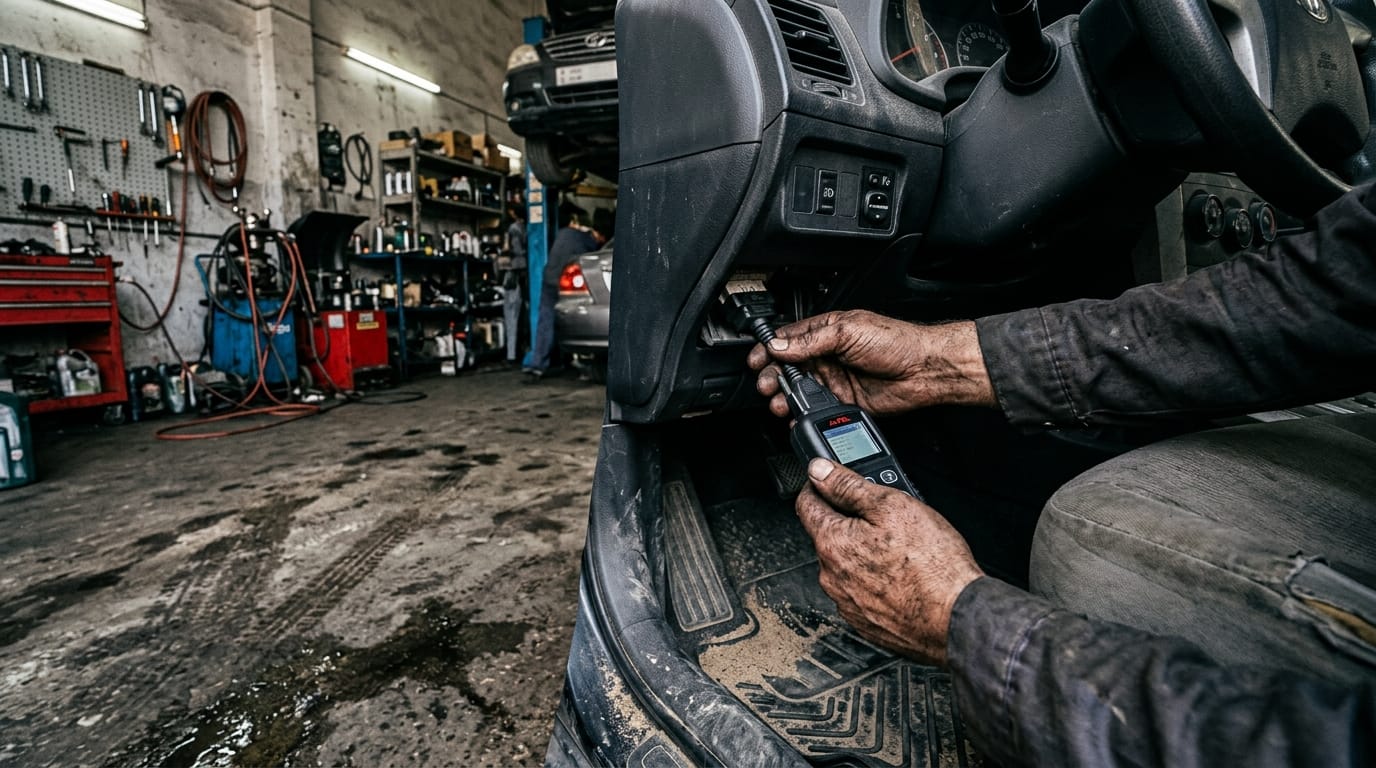
Engine compression test — confirms cylinder health, especially on cars above 80,000 km. Transmission check — CVT hesitation or shudder is common on Nissan and Honda models; costly to address. Coolant system — UAE heat accelerates hose and thermostat wear; inspect for leaks and rust contamination. AC performance — test under sustained idle; a system that cools well in motion but struggles at standstill may need attention. Flood damage indicators — watermarks under carpet, corrosion on wiring looms, musty smell with AC running. Flood damage is one of the more difficult problems to identify without specialist tools. Repaint detection — UV light or paint thickness meter reveals panel repairs. OBD diagnostic scan — reads active and stored fault codes. Tyre condition and tread depth — check all four; UAE heat accelerates sidewall degradation independently of tread wear.
Al Quoz Industrial Area workshops and Abu Shagara specialist garages in Sharjah are reliable for independent inspections. Toyota and Nissan-specialist garages in these areas typically produce more detailed reports on those makes than general workshops.
Mechanic’s Inspection Log — A Real Pattern from Al Quoz
A recurring observation from inspections conducted through Al Quoz workshops: the condition of a bank-financed used car often correlates with how recent the financial pressure on the seller is — not with the car’s age or mileage.
One documented case involved a 2019 Nissan Sunny listed at 21,000 AED in Abu Shagara, Sharjah. The seller disclosed the loan upfront — outstanding balance was approximately 9,400 AED. OBD scan returned a P0420 code indicating reduced catalytic converter efficiency. The right front CV axle showed early wear — replacement cost estimated at 380 to 500 AED at that workshop. Rear left tyre was 15 PSI below spec.
Based on the inspection findings, the buyer negotiated from 21,000 to 19,200 AED. Bank clearance and transfer completed in 5 business days. Inspection cost: 250 AED. Price reduction achieved: 1,800 AED. Repairs identified: approximately 900 AED. Total value from the 250 AED inspection: around 2,700 AED.
NoteExample scenario based on recurring UAE market patterns observed in Al Quoz and Abu Shagara workshops. Seller identity and specific details generalised for privacy.
Hidden Costs Most Buyers Forget
The headline transaction fees are only part of the picture. These costs are frequently overlooked by first-time buyers in the UAE market:
| Cost Item | Typical Range (AED) | Notes |
|---|---|---|
| Salik account transfer or setup | 50 – 100 | Required for Dubai road toll usage |
| Outstanding fines on the vehicle | Varies widely | Must be settled before transfer; verify via RTA app |
| Tyre replacement (if needed) | 800 – 2,000 | Heat-degraded sidewalls are common on older used cars |
| Battery replacement | 250 – 500 | UAE heat accelerates battery wear; check age at inspection |
| Registration renewal (if due soon) | 370 – 620 | Includes Tasjeel test fee and plate renewal |
| Insurance gap period | Varies | Previous owner’s policy does not cover new owner |
| Parking permit (residential) | 200 – 800 per year | Depends on area; often overlooked by new residents |
| Bank early settlement penalty | 1% – 3% of balance | Some lenders charge this; must appear in settlement letter |
| Minor service / fluids at handover | 300 – 600 | Oil, filters, coolant top-up — standard at purchase |
| Estimated Hidden Cost Range | 2,000 – 5,500 AED | In addition to purchase price and main transaction fees |
Bank-by-Bank Differences in UAE
The NOC process is not identical across all UAE banks. Processing time, fees, and how smoothly the documentation flows vary based on the institution involved:
| Bank | Typical NOC Time | NOC / Admin Fee (approx.) | Process Notes |
|---|---|---|---|
| Emirates NBD | 1 – 2 business days | 100 – 200 AED | Well-structured process; digital NOC available in many cases |
| ADCB | 1 – 3 business days | 100 – 250 AED | Straightforward for standard car loans |
| First Abu Dhabi Bank (FAB) | 2 – 3 business days | 150 – 300 AED | Abu Dhabi-registered vehicles may require branch visit |
| Mashreq Bank | 1 – 2 business days | 100 – 200 AED | Generally smooth; online application option available |
| Dubai Islamic Bank (DIB) | 2 – 4 business days | 150 – 300 AED | Islamic finance structure may require additional documentation |
| Smaller / regional banks | 3 – 7 business days | Varies — confirm in advance | Process less standardised; confirm with branch directly |
Fee ranges above are approximate and based on workshop observations across UAE transactions. Confirm the specific fee with the seller’s bank before finalising the transaction timeline.
Red Flags — Walk Away Immediately If You See These
These are patterns observed repeatedly across UAE used car transactions involving bank-financed vehicles. Common red flags apply to any used car purchase, but financed vehicles add specific warning patterns.
Seller refuses to share the Mulkiya photo before meeting. There is no legitimate reason to withhold this document. Seller says the loan balance is “approximately” a certain amount. The settlement letter is a standard bank document available within days. Seller asks for a deposit to “hold” the car before any documents are shared. A deposit before documentation is a common fraud entry point. Seller suggests completing the transfer “next week” after you pay today. Payment and transfer should happen in the same coordinated window. The name on the Mulkiya does not match the seller’s Emirates ID. The seller must be the registered owner. Seller discourages an independent inspection. Any seller who resists a third-party workshop check has a reason for doing so. Seller pressures you to decide quickly. Urgency language is a signal, not a reason to accelerate.
Pattern WarningMultiple red flags in a single conversation are not coincidences. When three or more of the above signals appear together, the probability of a problematic transaction increases substantially. In these cases, moving to the next listing is a legitimate and practical decision.
Signs the Car Is Actually a Good Deal
Not every bank-financed used car is a complicated purchase. These signals indicate a well-structured transaction with a motivated, transparent seller:
Seller provides the settlement letter without being asked. This reflects awareness of the process and willingness to be clear about the financial position. Service history is consistent and documented. Many financed cars are better maintained because comprehensive insurance — often required by the bank — encourages regular servicing. Outstanding balance is below 35% of the market sale price. A low loan-to-value ratio means the transaction is structurally simpler. Seller agrees to manager’s cheque paid directly to their bank. Willingness to accept this structure demonstrates transparency. Bank is a major UAE institution with a standardised NOC process. Emirates NBD, FAB, ADCB, and Mashreq all have documented, predictable timelines for mortgage release letters.
Best and Worst Cars to Buy Under Finance in UAE
Cars That Work Well in a Financed Transaction
| Model | Why It Works Under Finance | Parts Availability |
|---|---|---|
| Toyota Corolla (2015–2021) | Strong resale, lower depreciation risk during settlement process | Excellent — Al Quoz, Sharjah Industrial Area |
| Nissan Sunny (2014–2020) | Simple mechanicals, low ownership cost, fast resale on Dubizzle | Excellent — same-day availability across UAE |
| Toyota Camry (2014–2020) | High demand keeps value stable during multi-day clearance window | Excellent — widespread specialist availability |
| Nissan Altima (2013–2019) | Popular segment; motivated sellers often price competitively | Good — widely stocked in Dubai and Sharjah |
| Honda Civic (2012–2018) | Consistent demand, parts available across Al Quoz garages | Good — some specialist parts on 1-day order |
Cars to Approach Carefully Under Finance
German luxury vehicles above 80,000 km with remaining finance. A BMW 5 Series or Mercedes E-Class that is underpriced and financed often reflects undisclosed maintenance deferrals. When the loan clears and the inspection is done, the repair list may exceed the price advantage. US-spec imports under finance. Non-GCC specification vehicles with outstanding loans add a layer of complexity. Vehicles with undisclosed flood history carrying a loan. An independent inspection is essential — and if any flood indicators appear, the transaction should be reconsidered regardless of price. High-mileage CVT models without documented service records. A Nissan Altima or X-Trail with an unserviced CVT and a remaining loan presents two simultaneous risk factors.
RTA Transfer Day Checklist
Both buyer and seller must attend the transfer. Arriving with incomplete documentation causes delays or requires a return visit. Bring all of the following:
| Document / Item | Who Brings It | Notes |
|---|---|---|
| Original Emirates ID | Both parties | Must be valid on transfer day |
| Bank NOC / mortgage release letter | Seller (or bank directly) | Original required; some banks submit digitally to RTA |
| Current Mulkiya | Seller | Original vehicle registration card |
| Valid insurance in buyer’s name | Buyer | Required before transfer completes in most cases |
| Tasjeel roadworthiness certificate | Seller | Required if due; check expiry date beforehand |
| Loan settlement payment proof | Buyer | Bank receipt or transfer confirmation |
| Outstanding fines settlement receipts | Seller | Any fines must be cleared before transfer |
| RTA transfer fee payment | Buyer (typically) | 350 to 600 AED; card payment accepted at most centres |
Practical NoteRTA service centres in Dubai, Tasjeel branches, and Emirates Vehicle Gate locations are open Saturday to Thursday. Arrive early — queue times at peak hours (8:00 to 10:00 AM and 4:00 to 6:00 PM) commonly run 30 to 60 minutes. Midweek morning visits typically process faster.
What If Something Goes Wrong?
Seller Has Disappeared After Partial Payment
If you made a documented payment (bank transfer, manager’s cheque) and the seller is unresponsive, your first step is to file a police report at the nearest station with all transaction documentation. A bank-to-bank payment record establishes the financial trail. Dubai Consumer Protection (600 522 225) handles automotive fraud complaints and can coordinate with RTA on vehicle status.
Bank Delays the NOC Beyond Agreed Timeline
Contact the financing bank’s customer service with the settlement payment reference number and request an escalation. If the delay extends beyond 7 business days without explanation, a formal complaint via the UAE Central Bank Consumer Protection Department may be appropriate.
Transfer Is Blocked Due to Undisclosed Fines or Additional Liens
If additional encumbrances appear at the RTA that were not disclosed, the seller is obligated to resolve them before the transfer can complete. Do not pay the seller’s remaining balance until all transfer blockages are cleared. Document any discrepancy between what was disclosed and what the RTA system shows.
Fake NOC Letter
Counterfeit bank letters occasionally appear in the UAE market. Before the RTA transfer, verify the NOC authenticity by calling the bank directly using the number on the bank’s official website — not a number provided by the seller. Legitimate NOC letters include branch codes and can be verified by the issuing bank within minutes.
Legal Rights and Consumer Protection in UAE
Buyers who have experienced fraud or misrepresentation in a UAE used car transaction have several formal channels available. Outcomes vary significantly depending on available documentation and how the transaction was conducted.
Dubai Consumer Protection: File complaints related to vehicle misrepresentation, fraud, or non-delivery via the DED consumer protection portal or 600 522 225. Police Report: A police report is the foundational document for any subsequent legal action. File at the nearest station with all transaction records. Small Claims Court (Dubai): Claims below 500,000 AED can be filed at the Small Claims section of Dubai Courts. UAE Central Bank: If a licensed bank’s conduct was improper, complaints can be directed to the Central Bank Consumer Protection unit.
Legal Framing NoteBuyers may have legal remedies depending on the evidence and specific circumstances of the sale. Outcomes vary significantly based on available documentation and how the transaction was conducted. This article does not constitute legal advice. For specific legal situations, consult a UAE-licensed legal professional.
Financed vs Non-Financed Used Cars — Full Comparison
| Factor | Bank-Financed Car | Non-Financed Car |
|---|---|---|
| Transfer speed | 3 – 7 business days | Same day possible |
| Documentation complexity | Higher — NOC required | Standard RTA process only |
| Price negotiation leverage | Often stronger — seller motivated | Variable |
| Service history availability | Often documented (insurance requirement) | Varies widely |
| Fraud risk if process mishandled | Higher — multiple steps required | Lower — fewer parties involved |
| Inventory availability on Dubizzle | High — large proportion of listings | Common but smaller share |
| Resale clarity after purchase | Clean — full paper trail created | Clean if standard transfer completed |
Owner Scenarios — What This Looks Like for Different Buyers
New expat, limited UAE experience
Buying a financed car with cash is accessible regardless of how long you have been in the UAE. The loan is the seller’s obligation, not yours. That said, a non-financed vehicle removes one coordination layer while you are still learning how the UAE vehicle registration system works. Both options are viable; the non-financed route is simply more straightforward.
Leaving the UAE within 12 to 18 months
A Toyota Corolla or Nissan Sunny acquired through a correctly cleared financed transaction holds resale value well. A clean Mulkiya with a documented transfer history is what future buyers in your position will want to see. Completing the process correctly now makes your own eventual resale faster.
Buying with your own UAE bank finance
Your bank needs confirmation that the existing lien is cleared before releasing their own finance against the vehicle. Coordinate both banks before agreeing to any timeline. Several UAE banks offer a simultaneous settlement arrangement specifically for this scenario. Confirm this option with your relationship manager before signing anything.
Freelancer or self-employed expat
Cash purchase of a financed car carries no additional complexity for self-employed buyers. The difficulty arises only if you are also applying for your own car finance — in which case documentation requirements are higher. For cash purchases, your employment type does not affect the transaction process.
Found the car on Facebook Marketplace
The loan clearance process is identical regardless of the platform. Facebook Marketplace vs Dubizzle has different seller verification standards — request all documentation before meeting. The documentation requirements do not change based on where the listing appeared.
Full Cost Summary — Transaction Breakdown
| Cost Item | Typical Range (AED) | Notes |
|---|---|---|
| Car Purchase Price | Varies | Negotiate after settlement letter and inspection |
| Outstanding Loan Settlement | Varies | Included in or subtracted from purchase price |
| Bank NOC / Admin Fee | 100 – 300 | Charged by seller’s bank; varies by lender |
| Early Settlement Penalty | 0 – 3% of balance | Confirm in settlement letter before agreeing |
| Pre-Purchase Inspection | 200 – 400 | Al Quoz or Abu Shagara independent workshops |
| RTA Ownership Transfer Fee | 350 – 600 | Varies by vehicle type and emirate |
| Insurance (new policy in buyer’s name) | 1,200 – 2,500 per year | Required before transfer is completed |
| Manager’s Cheque Fee | 25 – 75 | Applicable if using cheque payment method |
| Outstanding Fines (vehicle) | 0 – varies | Check via RTA app before meeting seller |
| Salik Setup / Transfer | 50 – 100 | Required for Dubai road toll usage |
| Total Transaction Add-On Cost | 2,000 – 4,500 AED | Excluding the car purchase price itself |
Process Timeline — Realistic Expectations
| Stage | Typical Duration | Notes |
|---|---|---|
| Pre-meeting document checks | 1 day | Mulkiya, EVG check, fines verification |
| Request settlement letter from bank | 1 – 3 business days | Seller makes this request; major banks faster |
| Pre-purchase inspection | Same day to 1 day | Book Al Quoz or Abu Shagara workshop in advance |
| Price negotiation and agreement | 1 – 2 days | After inspection findings are known |
| Loan settlement payment | Same day | Manager’s cheque or bank transfer |
| Bank issues NOC | 1 – 3 business days | After confirming payment has cleared |
| RTA ownership transfer | Same day | Both parties attend; bring all documents |
| Total Process Time | 4 – 8 business days | Well-coordinated transaction, major UAE bank |
Safe Alternative — For Buyers Who Want Less Complexity
If the multi-step coordination of a financed transaction does not suit your timeline or risk tolerance, the structurally simpler alternative is a GCC-spec vehicle with a clean, unencumbered title. The Toyota Corolla 2016 to 2019 and Nissan Sunny 2018 to 2021 remain the most consistently available non-financed options in the 18,000 to 28,000 AED range across Dubizzle and Al Aweer Market.
Toyota and Nissan parts are widely stocked across Al Quoz Industrial Area and the Sharjah Industrial Area, typically available same day without ordering. Avoiding financed cars entirely does narrow your available inventory. Many well-maintained vehicles carry active loans. The correct process, followed through, produces the same clean result: a Mulkiya in your name with no outstanding liens.
User Type Recommendation Table
| If You Are… | Recommendation | Why |
|---|---|---|
| New expat, first UAE purchase | Non-financed car preferred | Fewer steps while learning the system |
| Experienced UAE resident, cash buyer | Financed cars are fine with correct process | Better negotiation leverage, more inventory |
| Applying for your own bank finance | Proceed carefully — coordinate both banks | Dual-bank process adds steps; confirm upfront |
| Leaving UAE in 6 – 12 months | Toyota or Nissan — clean title preferred | Faster resale with clean Mulkiya history |
| Budget buyer under 20,000 AED | Verify loan balance carefully before any commitment | Loan-to-value ratios less predictable in lower range |
| Freelancer / self-employed expat | Cash purchase of financed car — no issue | Employment type does not affect this process |
| Looking for fastest possible transfer | Non-financed car from major platform | Same-day transfer is possible without lien clearance step |
Analytical Conclusion
A bank-financed used car in the UAE is not inherently riskier than any other used car. The risk is specific: it is concentrated in the payment window before the NOC is issued and the transfer is completed. Manage that window correctly, and the transaction produces the same outcome as any clean-title purchase.
Compared to a non-financed purchase, the correct process adds between 4 and 8 business days and approximately 500 to 1,000 AED in additional coordination fees. Against this, financed car buyers in the UAE market generally access stronger negotiation leverage — the seller’s motivation is structural, not emotional. In many workshop observations across Dubai and Sharjah, transactions where the buyer paid directly to the bank produce cleaner documentation trails than informal cash deals.
The decision framework is straightforward: if the seller is transparent, the bank is a recognised UAE institution, the inspection is clean, and both parties are willing to follow the correct sequence — proceed. If any of those conditions is missing, the next listing is one scroll away. For a full guide to the buying process from start to finish, our complete expat buying guide covers every step without the loan complexity.
Frequently Asked Questions
Q: Can I buy a UAE car under bank loan without the seller clearing the bank first?
Q: How do I check if a used car has an active bank loan before meeting the seller?
Q: Can expats buy a financed car in UAE — are there any restrictions?
Q: What is the safest way to buy used car under bank loan UAE — which payment method works best?
Q: How long does the bank NOC typically take in UAE?
Q: What if the outstanding loan balance is higher than the car’s market value?
Data Sources Used
- RTA Dubai — Vehicle Registration and Ownership Transfer
- Emirates Vehicle Gate — Vehicle Status and Encumbrance Check
- Dubai Police — Traffic Fines Inquiry and Payment
- Dubai Consumer Protection — Complaints Portal
- UAE Central Bank — Consumer Protection Department
- Abu Dhabi Police — Vehicle Services Portal
- Abu Dhabi DMT — Vehicle Registration and Transfer
- Sharjah Police — Traffic and Vehicle Services
