Last Updated: Sep 2026 | By Omar Al-Fayed | Fact-Checked By: Emirates Cars Editorial Team | Category: UAE Market News
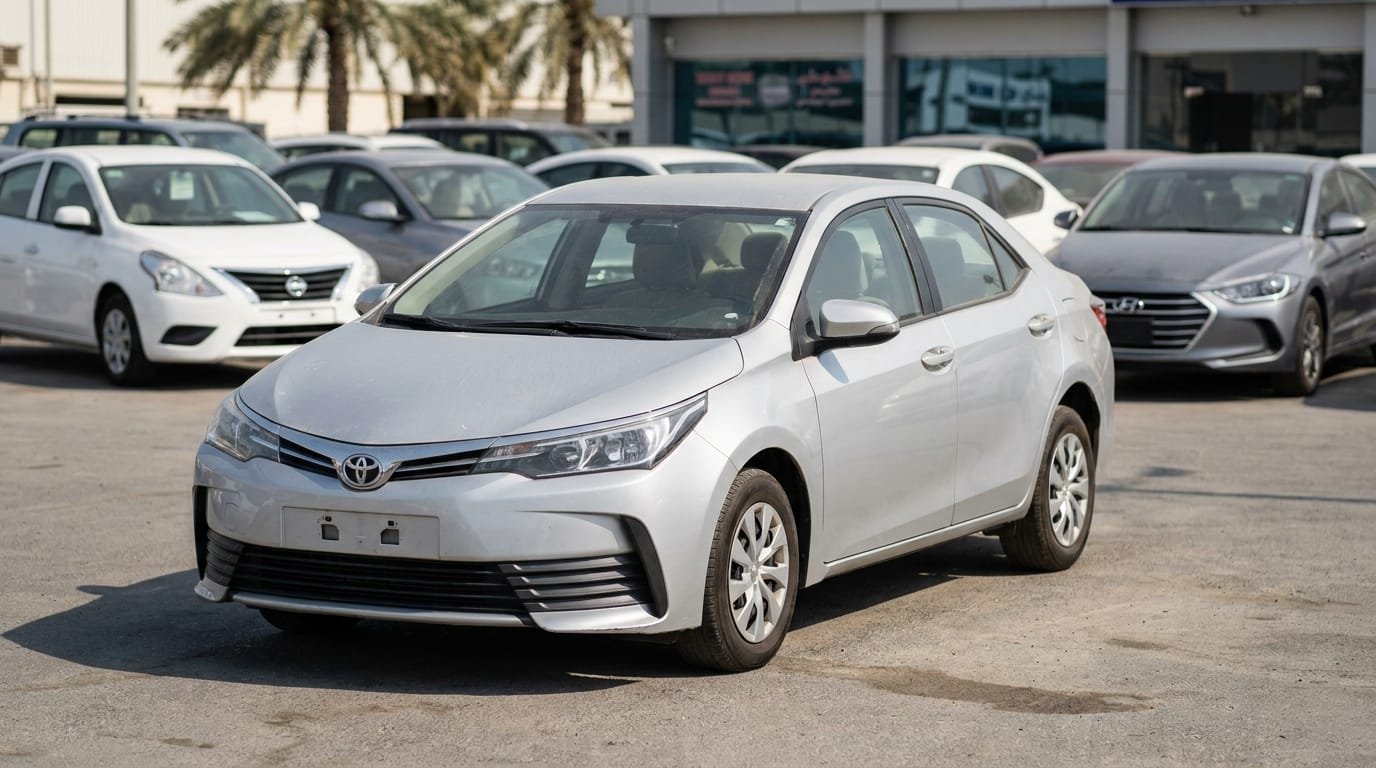
Current marketplace data shows a wide price spread for 2019 Toyota Corollas in both markets, but the available listings are not sufficiently comparable to support a fixed UAE AED 31,000–43,000 versus Saudi AED 50,000–63,000 range. UAE vs Saudi Arabia used car prices move differently depending on the make, model year, specification and how the seller acquired the car, so a lower number in one country does not automatically mean a better deal.
Are Used Cars Cheaper in the UAE or Saudi Arabia?
There is no single answer that applies across all models. For the Toyota Corolla, published listing and sold-price data vary widely and are not consistently comparable across the two markets.
| Vehicle | UAE Data | Saudi Arabia Data | Data Type |
|---|---|---|---|
| 2019 Toyota Corolla | AED 31,500–32,500 (current listings) | SAR 41,000 average sold price (SAR 40,000–43,000 range) | Mixed: Listing (UAE) vs Sold (Saudi) |
| 2018 Toyota Corolla | AED 29,000–42,500 (current listings) | SAR 37,000 average sold price (SAR 30,000–45,000 range) | Mixed: Listing (UAE) vs Sold (Saudi) |
Current CarSwitch data reports an average sold price of about SAR 37,000 for a 2018 Corolla in Saudi Arabia, while current UAE listings vary by mileage, specification and condition. Before assuming either country is genuinely cheaper for a specific car, check current UAE used car prices against real listings rather than averages.
Why Can the Same Used Car Cost More in One Country?
Several factors move independently, and not every factor applies to every model.
- Supply and fleet composition: Fleet and lease-return vehicles contribute to used-car supply in the UAE, particularly for some mainstream models.
- New-car pricing and incentives: Aggressive new-car discounting in one market pulls used prices down for recent model years, since buyers can shift to new instead.
- GCC-spec availability: Differences in GCC-spec supply can affect availability and pricing, but the effect should be treated as a market observation rather than a general pricing rule. Specification differences are covered in more depth in the GCC-spec vs non-GCC-spec guide.
- Taxation on dealer sales: Saudi Arabia applies a standard 15% VAT rate to taxable supplies. For qualifying used-car dealers, ZATCA also allows a VAT profit-margin scheme subject to specific conditions. A private individual selling outside an economic activity should not automatically be treated the same as a VAT-registered dealer.
- Regional demand patterns: A model that is unusually popular in one country (family SUVs in Saudi Arabia, compact sedans in the UAE) will hold price better there regardless of tax or supply.
None of these factors alone explains the full Corolla price gap above. Taxation is a plausible contributor to the dealer-sold portion of Saudi listings, not a proven single cause.
UAE vs Saudi Arabia Used Car Prices: What Actually Changes the Comparison
| Factor | UAE | Saudi Arabia | Why It Changes the Comparison |
|---|---|---|---|
| VAT on dealer sale | UAE VAT is 5% on taxable supplies by VAT-registered suppliers; the Profit Margin Scheme may apply to qualifying used-car sales subject to its conditions | 15% standard rate | Raises dealer-sold Saudi prices relative to UAE for comparable dealer stock |
| Private-party sale | Generally no VAT | Generally no VAT | Removes tax as a factor for individual-to-individual sales in both markets |
| Personal import age limit | No blanket 5-year cap for GCC residents | Model-year depreciation rules and specific import-category requirements apply | Restricts which used cars a Saudi resident can legally bring in from abroad |
| Import customs + VAT for a UAE resident bringing a car in from abroad | Customs duty is generally 5% of the assessed customs value, and import VAT is generally 5% on the applicable import value; the exact valuation and procedure must be confirmed for the specific import | Saudi Arabia’s own 5% customs duty + 15% VAT applies only when importing a vehicle into Saudi Arabia from abroad — not when a Saudi-bought car is exported to the UAE | Clarifies which country’s import rules actually apply to the transaction |
| Fleet/lease-return supply | Contributes to supply for some mainstream sedans | Lower relative supply reported for the same segment | Supply differences can affect asking prices for common models |
Is a Lower Saudi or UAE Price Really a Saving?
A lower headline price only becomes a real saving after every cost of getting the car registered and usable is added.
Realistic acquisition cost = vehicle price + transport (if bought out of country) + customs duty and VAT where applicable + registration and compliance costs + inspection. A UAE resident who finds a cheaper Saudi listing but then adds shipping, Saudi export paperwork, and UAE re-registration will often land close to, or above, the local UAE price for the same specification. Specific import figures depend on the car’s declared value and shipping route, so treat any total as an estimate until quoted directly by a licensed shipper and the relevant customs authority.
Why You Should Compare the Same Car, Not the Same Model
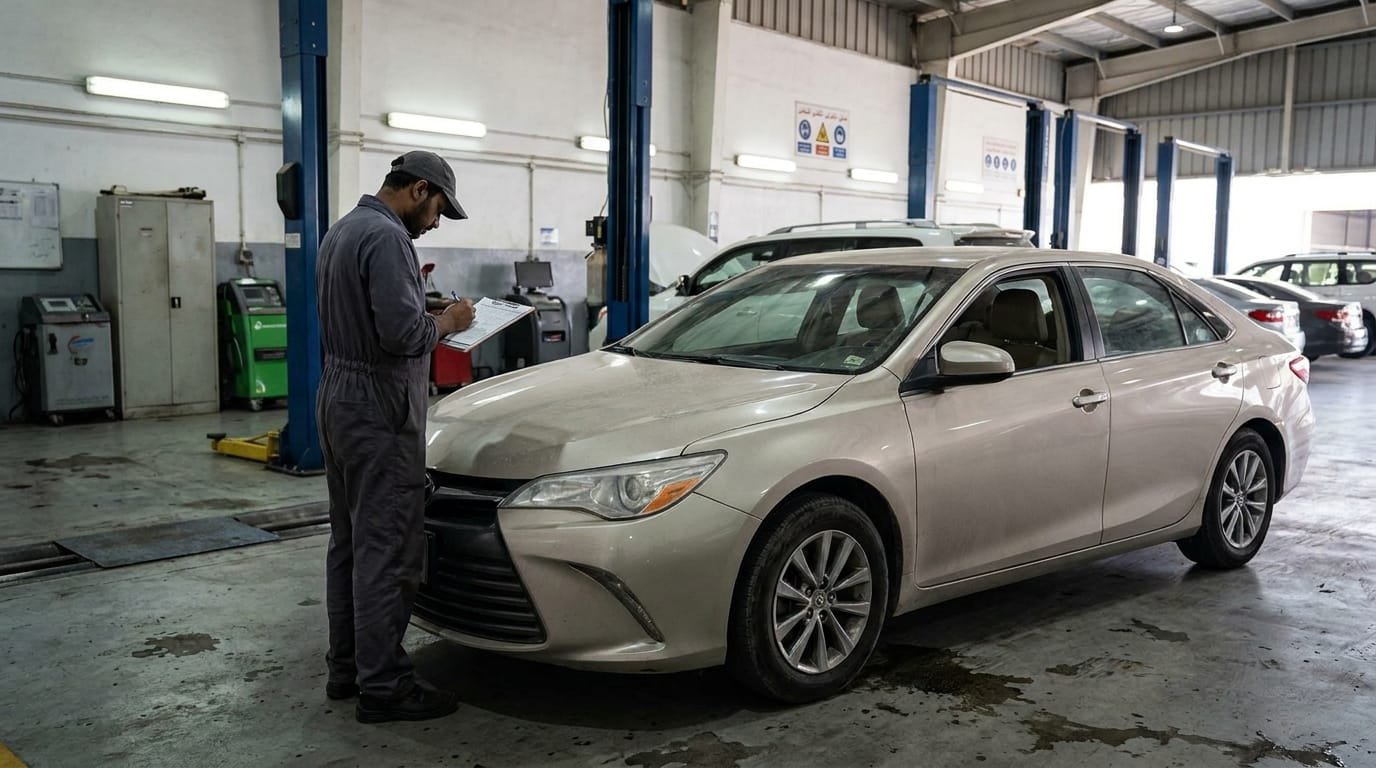
“Corolla vs Corolla” is not a valid comparison unless these also match:
- Model year and mid-cycle facelift (a 2019 pre-facelift and 2019 facelift Corolla are priced differently)
- Trim and engine size (1.6L vs 2.0L changes both new and used pricing)
- Mileage band, since a 60,000 km car and a 180,000 km car of the same year are not comparable
- Accident and flood history, which a seller may not disclose in either market
- GCC-spec vs grey-import spec, which affects both resale and insurance
Two listings that look identical on price can differ by thousands of dirhams in real value once mileage and history are matched. Run a accident history check before treating any cross-border price gap as genuine.
What This Means for a UAE Expat Buyer
Decision Scenario: Buying Locally vs Chasing a Saudi Listing
- If This Sounds Like You: You live in Dubai or Sharjah and found a Saudi listing that looks cheaper for the same model year.
- The Decision: Buy locally in the UAE versus pursue the Saudi vehicle and import it.
- Recommended Action: Get a written shipping and customs quote before assuming the Saudi price is cheaper, then compare it against a fully inspected UAE listing.
- Why: UAE import customs duty and applicable UAE import VAT, together with transport, export documentation and registration costs, can reduce or eliminate a headline price advantage.
Decision Scenario: Buyer Prioritising Lowest Upfront Cost
- If This Sounds Like You: You are a budget-focused expat comparing a 2018–2019 Corolla or Sunny across both markets, with resale in three years as a secondary concern.
- The Decision: Choosing a UAE-market car with higher supply versus a Saudi-market car with a lower headline price.
- Recommended Action: Stay in the UAE market for mainstream sedans; the supply of GCC-spec lease returns keeps local asking prices closer to actual sold prices.
- Why: Saudi import rules apply model-year depreciation and specific conditions to vehicles entering the Kingdom that vary by import category, not a single blanket age rule, and these add cost layers that can erode a small price advantage.
How to Check Whether the Price Gap Is Genuine
- Match the exact model year and facelift.
- Match trim, engine size and specification.
- Compare mileage bands, not just the odometer number in one ad.
- Pull an odometer and accident history check in both markets where possible.
- Separate asking price from any sold-price or valuation-tool data available.
- Add transport and applicable customs/VAT if the car is crossing a border.
- Check insurance cost differences, since a re-registered import can carry a different premium.
- Compare resale liquidity, not just the buy-in number — see which used cars hold value best in the UAE.
- Total the final landed cost before deciding either market is cheaper.
flowchart TD
A[Found a lower price abroad?] --> B{Same year, trim, mileage, history?}
B -- No --> C[Not a valid comparison - re-check listings]
B -- Yes --> D{Buying across a border?}
D -- No --> E[Compare local sold prices, not just asking price]
D -- Yes --> F[Add transport + customs + VAT + registration]
F --> G[Compare total landed cost to local UAE price]
G --> H{Landed cost still lower?}
H -- Yes --> I[Proceed with full history check]
H -- No --> J[Buy locally in UAE market]
classDef default fill:#000000,color:#ffffff,stroke:#000000,font-size:16px,padding:14px;
Landed-Cost Checklist: Importing a Saudi-Bought Corolla into the UAE
Do not treat a lower Saudi headline price as a saving until each of these cost layers is priced individually against the specific vehicle and route:
- Vehicle purchase price: confirm whether the Saudi figure is an asking price or a completed sale.
- Saudi export costs: obtain a current written quote for the specific vehicle and export transaction rather than assuming a fixed fee.
- UAE import customs duty and import VAT: apply UAE import rules to this transaction; do not add Saudi import customs duty, which applies only to vehicles entering Saudi Arabia.
- UAE registration and inspection: confirm the applicable fees for the vehicle and emirate before calculating the landed cost.
- Insurance: obtain an actual quotation for the imported vehicle, since the premium depends on the vehicle, driver, insurer, coverage and other underwriting factors.
A UAE-market Corolla may be the lower-cost option after all import-related costs are calculated, but the comparison should be based on genuinely comparable vehicles and verified history rather than a fixed benchmark price. Run a full pre-purchase inspection either way before transferring funds.
Decision Framework: Which Market Fits Your Situation
| Buyer Profile | Better-Fit Market | Reason |
|---|---|---|
| Lowest upfront local price, mainstream sedan | UAE | Greater supply can put downward pressure on asking prices, but the effect varies by model, specification, condition and demand |
| Specific trim/spec only available in Saudi Arabia | Saudi Arabia, with full landed-cost check | Model availability outweighs a small cost gap |
| Fastest resale in 2–3 years | UAE | Larger active marketplace and buyer pool for common models |
| Long-term Saudi residency plan | Saudi Arabia | Avoids double registration and import costs later |
There is no universal winner. A newer, well-specified trim can favour Saudi Arabia even where mainstream sedans favour the UAE, and the correct answer depends on the exact model, year, condition and the buyer’s resale horizon. Buyers weighing where to settle for the long term can also review the Sharjah vs Dubai used car market comparison, since intra-UAE differences can matter as much as the UAE-Saudi gap.
Emirates Cars Editorial Methodology
This guide combines official UAE and Saudi government tax and customs information with live UAE and Saudi marketplace listings and current market observations.
Official references used where applicable:
- UAE Federal Tax Authority — Automotive VAT Guidance
- ZATCA — Saudi Vehicle Import Controls
- U.ae — UAE Official Government Portal
Disclaimer: Emirates Cars is a 100% independent platform and is not affiliated with any dealership, government authority, or financial institution. All prices are market observations current as of publication and may change.
