Written By: Omar Al-Fayed, Senior Automotive Consultant | Fact-Checked By: Emirates Cars Editorial Team | Last Updated: July 2026 | Category: Finance & Legal
Classic and rare cars in Dubai occupy an unusual space in the investment world. Unlike gold or property, they combine emotional appeal with financial potential — but the risks are real and the market is opaque for most expats.
If you are considering putting between AED 80,000 and AED 500,000 into a collector vehicle in 2026, this report gives you the market context, cost structure, and decision framework to assess whether it makes sense for your situation. For background on how UAE used car values behave generally, our UAE used car prices 2026 overview is a useful starting point.
⚠ Financial & Legal Disclaimer: The information provided in this article is for educational purposes only. Regulations, lending criteria, and investment conditions in the UAE may change over time. Classic vehicle markets are subject to demand shifts, economic cycles, and collector sentiment. This article is not financial or investment advice. Readers should verify information with licensed UAE professionals before making any investment decisions. Classic vehicles may appreciate or depreciate depending on market demand, originality, maintenance, economic conditions, and collector interest.
Are Classic Cars Really an Investment?
The short answer: sometimes yes, often partially, and occasionally not at all. Classic cars can appreciate in value — but appreciation is uneven, illiquid, and dependent on factors that are difficult to predict from the outside.
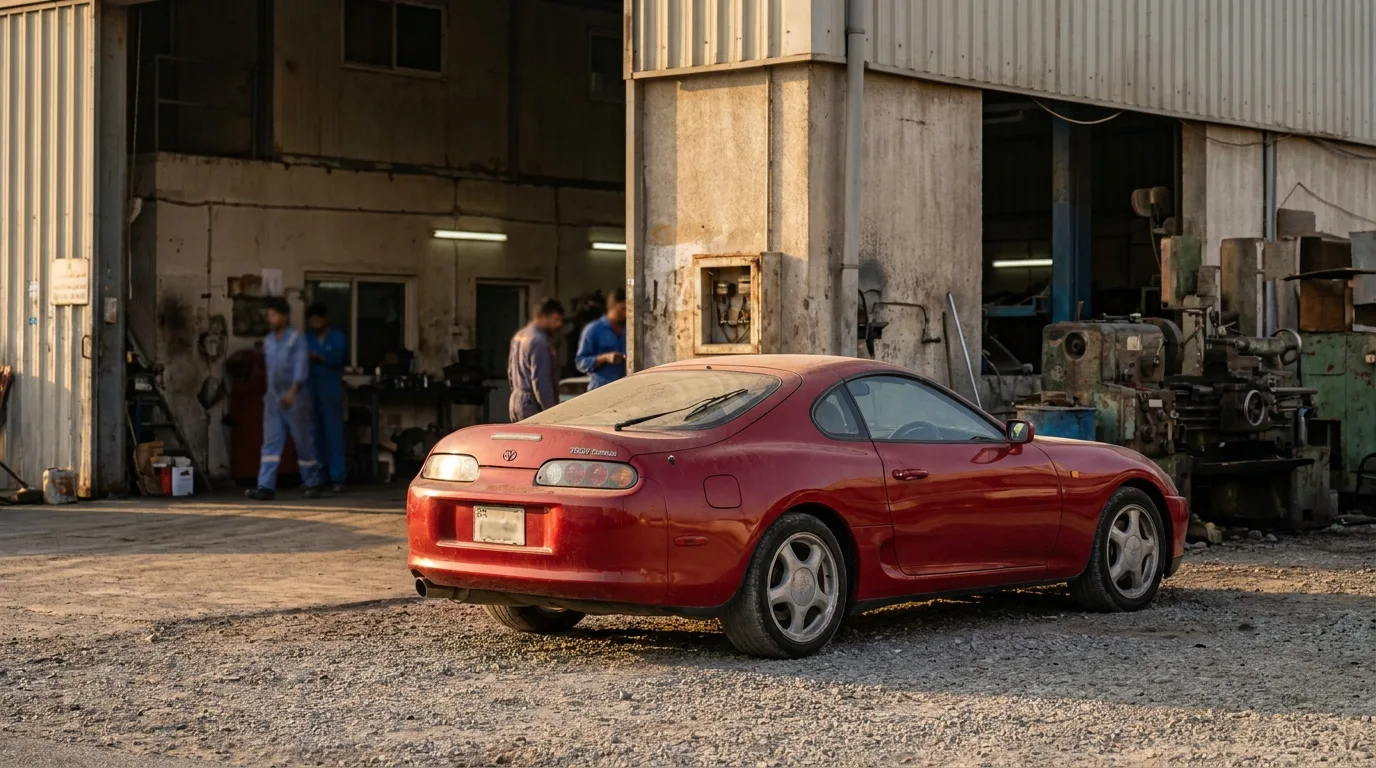
What separates a collector car from an ordinary used vehicle is scarcity. A 2005 Nissan Sunny depreciates because thousands exist and more are available every week. A 1993 Toyota Supra Twin Turbo in original condition depreciates much more slowly — and in recent years, has moved in the opposite direction — because the supply of clean examples is finite and shrinking.
The key investment variables are:
- Scarcity: Is production limited or is the model genuinely rare?
- Demand: Is collector interest growing, stable, or fading?
- Condition: Is the vehicle original, documented, and well-preserved?
- Market: Is there an active global buyer pool, or only local demand?
- Cost of carry: Storage, insurance, and maintenance reduce net returns.
Without all five factors working in your favour, the investment case weakens considerably.
Classic Cars vs Normal Used Cars
A standard used Toyota Corolla loses roughly 10–15% of its value in year one and continues declining. A classic vehicle follows a different curve: initial depreciation from new, a trough period where value stabilises, then a potential appreciation phase as the collector market recognises the model. The challenge is identifying which vehicles will move from trough to appreciation before the price rises.
Why Dubai Has Become a Relevant Classic Car Market
Dubai is not yet London, Monaco, or California in terms of classic car depth. But it has developed genuine relevance as a secondary collector market for several reasons.
The Wealth and Tax Environment
The UAE charges no personal income tax and no capital gains tax on vehicle sales. For a high-net-worth investor who buys a Porsche 911 for AED 280,000 and sells it for AED 420,000 three years later, the AED 140,000 gain is not subject to federal capital gains taxation. This compares favourably with many European jurisdictions where such a gain would attract significant tax liability.
International Buyer Access
Dubai’s geography, logistics infrastructure, and re-export mechanisms mean vehicles can move between markets relatively efficiently. Buyers from GCC countries, India, and Eastern Europe are active participants in the Dubai collector market.
Climate Considerations
Dry heat is preferable to humidity for vehicle preservation. Rust — the primary enemy of classic metal — develops slowly in Dubai’s climate compared to coastal European or North American environments. This makes long-term storage more viable, though air-conditioned storage is still necessary for paint and rubber preservation.
Auction Activity
International auction houses including Bonhams, RM Sotheby’s, and regional operators have held collector car events in the UAE. These events bring price transparency and international buyer participation that supports market liquidity for premium vehicles.
Who Should Consider Classic Car Investment?
Classic car investment is appropriate for a specific profile. It is not suitable for everyone, and expats in particular should assess their situation carefully before committing capital.
| Investor Profile | Suitability | Key Consideration |
|---|---|---|
| Long-term UAE resident (5+ years remaining) | Moderate | Has time to hold through market cycles |
| Expat leaving within 12–24 months | Low | Forced sale timing reduces negotiating position |
| High-net-worth individual with diversified assets | Higher | Can absorb cost of carry; treats as alternative asset |
| Budget buyer seeking quick returns | Low | Classic market is slow and illiquid |
| Automotive enthusiast with genuine knowledge | Moderate to High | Knowledge edge reduces overpayment risk |
| Investor with no automotive background | Low without specialist advice | High risk of overpaying or buying wrong vehicle |
The most common mistake is treating a passion purchase as an investment simply to rationalise the spending. Emotional decisions rarely produce strong financial outcomes in this market.
How Classic Car Investment Works in Practice
flowchart TD
    A[1. Sourcing & Verification Phase] --> B[2. Pre-Purchase Inspection & Authentication]
    B --> C{Verified as Authentic?}
    C -->|Yes| D[3. Purchase & Import/Registration]
    C -->|No| X[Walk Away]
    D --> E[4. Holding Phase: Climate Storage & Maintenance]
    E --> F[5. Market Monitoring for Liquidity Peaks]
    F --> G[6. Exit Phase: Auction, Dealer, or Private Sale]
    classDef default fill:#000000,color:#ffffff,stroke:#000000;
The Buying Phase
Sourcing a genuine collector vehicle in Dubai requires patience. The primary channels are private sales (Dubizzle, collector community networks), specialist dealers, and auction events. Each has different risk and price profiles.
Private sales offer the best prices but carry the highest verification risk. Specialist dealers provide some level of curation but charge a premium — typically 15–25% above private market pricing for the same vehicle. Auctions offer price transparency but add buyer’s premiums of roughly 10–15% on top of the hammer price.
The Holding Phase
During ownership, costs accumulate. Annual storage in a climate-controlled Dubai facility runs approximately AED 8,000–18,000 depending on size and location. Insurance for a vehicle valued at AED 200,000 typically costs AED 3,000–6,000 per year for agreed-value collector coverage. Maintenance, registration, and periodic servicing add further costs.
For a AED 250,000 vehicle held for three years, realistic carrying costs may total AED 40,000–70,000 before any profit calculation. This is not typically factored in by first-time buyers.
The Exit Phase
Selling a collector car in Dubai is slower than selling a standard used vehicle. Buyer pools are smaller. Negotiation periods are longer. For vehicles priced above AED 300,000, expect a realistic selling period of 3–9 months for a willing buyer at a reasonable price. Forced or time-pressured sales typically result in meaningful discounts.
Investment vs Daily Driving
Vehicles driven regularly depreciate faster through mileage accumulation, wear, and the associated maintenance costs. Investment-grade classics are generally stored, not driven, which creates a secondary challenge: mechanical deterioration from disuse.
Rubber seals, fuel systems, and brake components degrade during prolonged storage even without mileage. A vehicle stored improperly for two years may require AED 8,000–20,000 in recommissioning work before it is driveable or saleable at premium prices.
If you intend to drive the vehicle regularly, adjust your financial expectations accordingly. A driven classic is primarily a lifestyle asset with partial investment potential, not a pure investment vehicle.
Historical Performance of Collector Cars
Global collector car indices — tracked by organisations like Historic Automobile Group International (HAGI) — have shown that top-tier collector cars outperformed many traditional asset classes over certain multi-decade periods. However, this performance is concentrated in blue-chip vehicles: iconic models in exceptional condition with clear provenance.
The broader collector market has shown more modest and inconsistent results. Mid-range vehicles — models that are interesting but not iconic — have produced returns that often barely cover the cost of carry over 5–10 year holding periods.
In the GCC specifically, there is limited published data on average returns. Market observations from dealers and auction participants suggest that Japanese performance cars (Supra, Skyline, NSX) have seen the most consistent interest-driven price increases in the 2018–2026 period, while European classics have followed international trends with some lag.
ℹ Expat Tip: No comprehensive database of UAE classic car returns exists. Any adviser quoting specific percentage returns for the Dubai market should be asked to provide their source. Treat such figures as estimates rather than verified data.
Classic Cars vs Other Investment Assets
| Asset Class | Liquidity | Typical Hold Period | Annual Carrying Cost | UAE Tax on Gains | Entry Barrier |
|---|---|---|---|---|---|
| Classic Car | Low | 3–10 years | Moderate to High (storage, insurance) | None (personal) | Specialist knowledge required |
| Dubai Property | Low to Medium | 3–7 years | Service charges, maintenance | None (personal) | High capital requirement |
| Gold | High | Flexible | Low (storage) | None | Low |
| Stocks / ETFs | Very High | Flexible | Very Low (platform fees) | None (personal) | Low |
| Luxury Watches | Medium | 2–5 years | Very Low | None | Knowledge required |
| Supercars (modern) | Medium | 1–3 years | High (depreciation risk) | None | Very high capital |
Classic cars sit in a middle position: better tax treatment and potential appreciation than property in some scenarios, but significantly lower liquidity than financial assets. The cost of carry is higher than most alternatives, which means the gross appreciation needed to break even is substantial.
How the Dubai Collector Car Market Works
Specialist Dealerships
A small number of Dubai dealers focus on collector and rare vehicles. These businesses typically stock vehicles sourced from GCC private owners, European auctions, and US imports. Pricing at specialist dealers reflects curation, reconditioning, and dealer margin — expect to pay above private market rates.
Private Sales
Dubizzle and collector community networks (WhatsApp groups, car club forums) are active channels for private transactions. Private pricing is generally lower but verification responsibility falls entirely on the buyer. Independent inspection before any private purchase is not optional — it is essential.
Auction Events
International auction houses periodically hold UAE events, typically in Dubai during the cooler months (October–March). These events attract regional and international bidders and provide genuine price discovery. Buyer’s premiums and import logistics should be factored into total cost calculations.
Import Channels
Vehicles imported from the US, Europe, or Japan must comply with UAE import regulations administered by Emirates Authority for Standardization and Metrology (ESMA) and RTA. Some classic vehicles are exempt from certain standards requirements due to age, but verification with a UAE customs broker is advisable before committing to an import purchase. More on general US-spec import considerations is covered in our dedicated guide.
Best Classic Japanese Cars for Investment Consideration
Japanese performance vehicles from the late 1980s and 1990s have attracted sustained international collector interest. The following models are commonly discussed in the collector market context.
Toyota Supra (A80, 1993–2002)
The twin-turbocharged A80 Supra is among the most recognised Japanese collector cars globally. Clean examples in original condition have seen significant price increases since approximately 2018, driven by a combination of generational nostalgia and media exposure. In the UAE, original right-hand-drive JDM examples are rare; left-hand-drive US-spec versions are more accessible. Prices for well-documented examples vary widely — from approximately AED 180,000 for high-mileage cars to AED 500,000+ for low-mileage originals.
Nissan Skyline GT-R (R32, R33, R34)
The GT-R series carries strong collector interest, particularly the R34 generation. Right-hand-drive JDM vehicles face UAE registration complications depending on specification and age. Some buyers import through specialist brokers who handle compliance. R34 pricing internationally has moved into ranges that may not offer the same appreciation potential as earlier periods.
Honda NSX (1990–2005)
The NSX remains one of the most respected Japanese collector cars from an engineering standpoint. UAE market availability is limited. Examples in good condition typically start from AED 200,000 and vary significantly by mileage and condition.
Mazda RX-7 (FD, 1992–2002)
Rotary engine complexity is the primary ownership risk — specialist knowledge for maintenance is essential and UAE mechanics with genuine RX-7 rotary experience are limited. Al Quoz has a small number of specialist shops. Appreciation potential exists for clean examples, but carrying costs related to engine-specific maintenance can be meaningful.
Toyota AE86 Corolla
The AE86 has developed a dedicated collector following. Original examples in UAE are uncommon. The model’s affordability relative to Supra or GT-R makes entry more accessible, but finding genuinely original, unmodified examples requires patience.
Best European Classics for Consideration
Porsche 911 (Air-Cooled, Pre-1998)
Air-cooled 911s represent one of the most consistently strong performer segments in global collector markets. The 993 generation (1994–1998) is particularly sought after as the last air-cooled variant. UAE availability is limited; most desirable examples come from European or US sources. Pricing for well-documented 993 examples typically starts from approximately AED 250,000–350,000 for standard Carrera models, with significant premiums for Turbo, RS, or limited variants.
Mercedes-Benz W113 Pagoda SL (1963–1971)
An established classic with consistent international demand. UAE climate is well-suited for preservation. Finding genuine, unmolested examples requires specialist sourcing networks. Prices vary significantly by condition and restoration quality.
BMW M-Series Classics (E30 M3, E28 M5)
Early M-Series vehicles have developed strong collector followings. E30 M3 in particular has seen substantial international price increases. UAE examples are uncommon and often require import.
Ferrari and Lamborghini
Italian exotics from the 1970s–1990s attract serious collector interest but require serious capital (AED 500,000+), specialist maintenance (very limited in UAE), and careful provenance verification. For most expat investors, this segment involves complexity that outweighs the investment case unless backed by specialist advisers.
Best American Classics for Consideration
American muscle cars — 1960s and 1970s Ford Mustangs, Chevrolet Camaros, Dodge Challengers — have established UAE collector communities. Climate suitability is good, and left-hand-drive specifications align with UAE road requirements without conversion.
Parts availability through US import channels is reasonable. Specialist mechanics familiar with American V8 engines exist in Dubai (primarily Al Quoz and Sharjah Industrial Area). The primary risk is that collector demand for this segment is more concentrated in North American buyers, which can affect UAE resale liquidity.
Modern Future Classics
Identifying future classics before the market prices them in is the highest-reward, highest-risk approach. The collector community debates this constantly, but some categories receive consistent mention:
- First-generation Japanese performance cars from the early 2000s (Honda S2000, Subaru Impreza STI, Mitsubishi Lancer Evo)
- Last naturally aspirated sports cars before turbocharged regulations became dominant
- Limited production special editions from mainstream manufacturers
- First-generation examples of iconic nameplates (first-gen Mazda MX-5/Miata)
Many of these vehicles are currently in their depreciation trough, which is theoretically the optimal entry point — but identifying the trough in real time is not straightforward. Our analysis of best resale value patterns covers some of these dynamics in the broader UAE used car context.
Best Investment Cars by Budget Range
| Budget (AED) | Accessible Categories | Investment Risk Level | Typical Holding Period |
|---|---|---|---|
| Under 100,000 | AE86, early MX-5, domestic JDM imports, US muscle projects | Higher (condition variability) | 5–10 years |
| 100,000 – 250,000 | Clean Supra, NSX, RX-7, early Porsche 944/928, Mercedes SL pagoda projects | Moderate | 4–8 years |
| 250,000 – 500,000 | 993 Porsche, clean R34 GTR, low-mileage NSX, E30 M3 imports | Moderate (market liquidity improves) | 3–7 years |
| 500,000+ | Ferrari 308/328, Lamborghini Countach/Diablo, top-spec 911 variants | Lower if genuine (but verification costs are high) | 3–10 years |
Budget is not the primary determinant of investment success. A AED 90,000 AE86 in original condition with clean documentation may outperform a AED 300,000 vehicle purchased at an inflated price from a poorly informed seller.
What Makes a Classic Car Appreciate?
flowchart LR
    A[Classic Car Valuation] --> B[Value Drivers Appreciation]
    A --> C[Value Destroyers Depreciation]
    B --> D[Matching Numbers & Originality]
    B --> E[Documented Provenance & Service History]
    B --> F[Honest Low Mileage]
    C --> G[Structural Accident History]
    C --> H[Non-Factory Modifications]
    C --> I[Missing or Altered VIN / Rust]
    classDef default fill:#000000,color:#ffffff,stroke:#000000;
Originality and Matching Numbers
In the collector world, “matching numbers” means the vehicle retains its original engine, transmission, and major components with serial numbers matching the factory build record. Non-matching vehicles — where engines or transmissions have been replaced — trade at meaningful discounts. Verification requires specialist inspection and sometimes factory records research.
Documentation and Provenance
A vehicle with a continuous, documented ownership history, service records, and original purchase paperwork commands premium pricing. Documentation gaps create valuation uncertainty and reduce buyer confidence at point of sale.
Low and Honest Mileage
Genuine low-mileage examples are significantly more valuable than high-mileage equivalents. UAE odometer fraud exists in the used car market — our guide to odometer fraud verification is relevant even for classic car buyers. However, very low mileage (<5,000 km) combined with age creates its own preservation challenges — a car that has sat unused for 20 years may require substantial recommissioning.
Colour and Specification
Original colours — particularly factory rare options — typically add value. Resprayed vehicles, even in high-quality finishes, trade below original paint examples. Factory limited editions, special packages, or rare option combinations add collectability.
Global Demand, Not Just Local
Vehicles with an international collector following are more liquid and better price-supported than those with only local or regional demand. A model that only GCC collectors want has a smaller buyer pool and is more vulnerable to local sentiment shifts.
What Reduces Investment Value?
Accident History
Structural repairs — even high-quality ones — significantly reduce collector value. A vehicle that has had chassis or major body structural work will typically sell for 20–40% less than a comparable accident-free example regardless of visible repair quality. UAE accident history can be partially checked through official channels — the accident history check guide explains the process.
Non-Factory Modifications
Engine swaps, body kits, aftermarket suspension, and interior modifications reduce collector value for most vehicles. The exception is very rare cases where period-correct modifications (like factory option accessories or documented dealer-installed equipment) are considered part of the vehicle’s history.
Poor or Amateur Restoration
Badly executed restoration work — incorrect paint colours, improper panel gaps, non-OEM parts used incorrectly — can reduce value below an unrestored original. “Barn find” original condition often commands premiums over mediocre restorations.
Missing or Altered VIN
Any irregularity with Vehicle Identification Numbers is an immediate disqualifier. Beyond the investment concern, importing or registering a vehicle with VIN issues creates serious legal complications in UAE.
Rust and Structural Corrosion
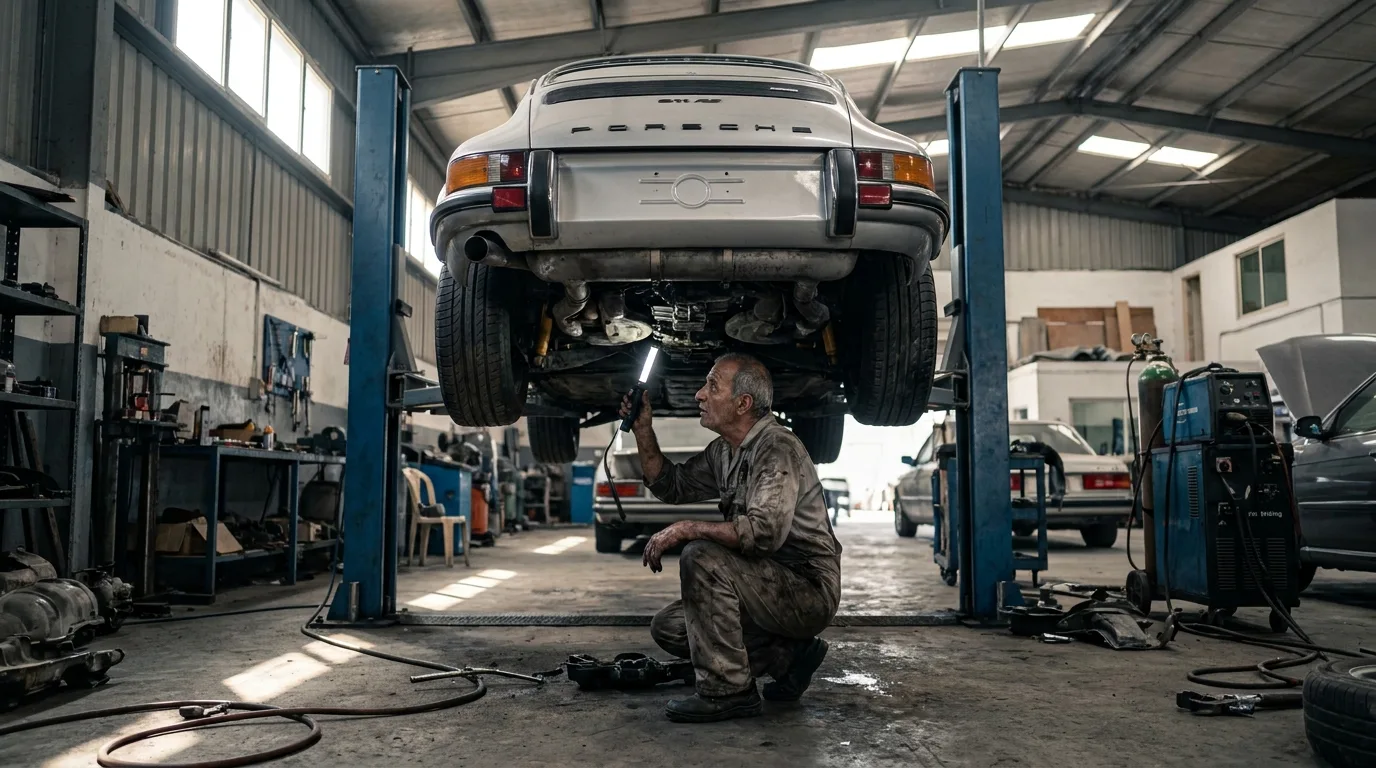
While UAE climate slows rust development, imported vehicles from wetter climates may carry hidden corrosion. Sill sections, floor pans, and wheel arch areas are typical hiding places. Professional inspection with a lift and rust probe is standard practice before any significant collector purchase.
Original vs Restored: The Investment Difference
This is a nuanced area with no single correct answer. Broadly:
Original, unrestored vehicles in genuinely good condition command the strongest premiums. “Patina” — honest wear that reflects age — is acceptable and sometimes desirable in collector circles. These vehicles carry the strongest provenance story.
Correctly restored vehicles using factory-correct parts and finishes can command strong prices — particularly if restoration was performed by a known specialist and documented thoroughly. Restoration to show standard adds value if the work quality is verifiable.
Partially or incorrectly restored vehicles often trade at a discount to both categories. The cost of correcting a poor restoration typically exceeds the cost of performing a correct restoration from scratch.
Documentation Every Investor Should Verify
| Document / Item | What to Verify | Red Flag |
|---|---|---|
| Title / Mulkiya | Owner name, chassis number match, registration status | Altered entries, multiple ownership gaps |
| VIN plate | Physical plate condition, matching numbers | Stamps look fresh, non-factory font |
| Service records | Continuity of dates, consistent mileage progression | Gaps, odometer inconsistency |
| Import documentation | Country of origin, customs clearance, age-related exemptions | Missing paperwork, grey-area import |
| Restoration records | Shop name, dates, parts used, before/after photos | Verbal claims only, no paperwork trail |
| Accident history | Official UAE database check, CarFax for US imports | Seller reluctant to allow check |
| Previous auction records | Past sale prices, condition notes from auction houses | Vehicle sold repeatedly in short periods |
How to Verify Authenticity Practically
For most expat investors without deep automotive knowledge, authenticity verification requires engaging specialists rather than relying on personal assessment.
Practical steps include:
- Engage a UAE-based specialist mechanic with documented experience in the specific marque and model.
- Request a full pre-purchase inspection including a lift inspection, OBD diagnostic where applicable, and paint depth measurement (to detect filler or respray).
- Cross-reference VIN against manufacturer records where available. Porsche, Ferrari, and some Japanese manufacturers maintain verification services.
- Check international auction databases — some previous auction lots appear in public records with condition assessments.
- For US-imported vehicles, obtain a full CarFax or equivalent history report before completing any transaction.
🚨 Warning: Any seller who resists an independent inspection, discourages VIN checks, or pressures for a quick decision should be considered a serious risk. Legitimate sellers of investment-grade vehicles expect and facilitate thorough buyer due diligence. Pressure tactics are not normal in this market segment.
Storage Costs in Dubai
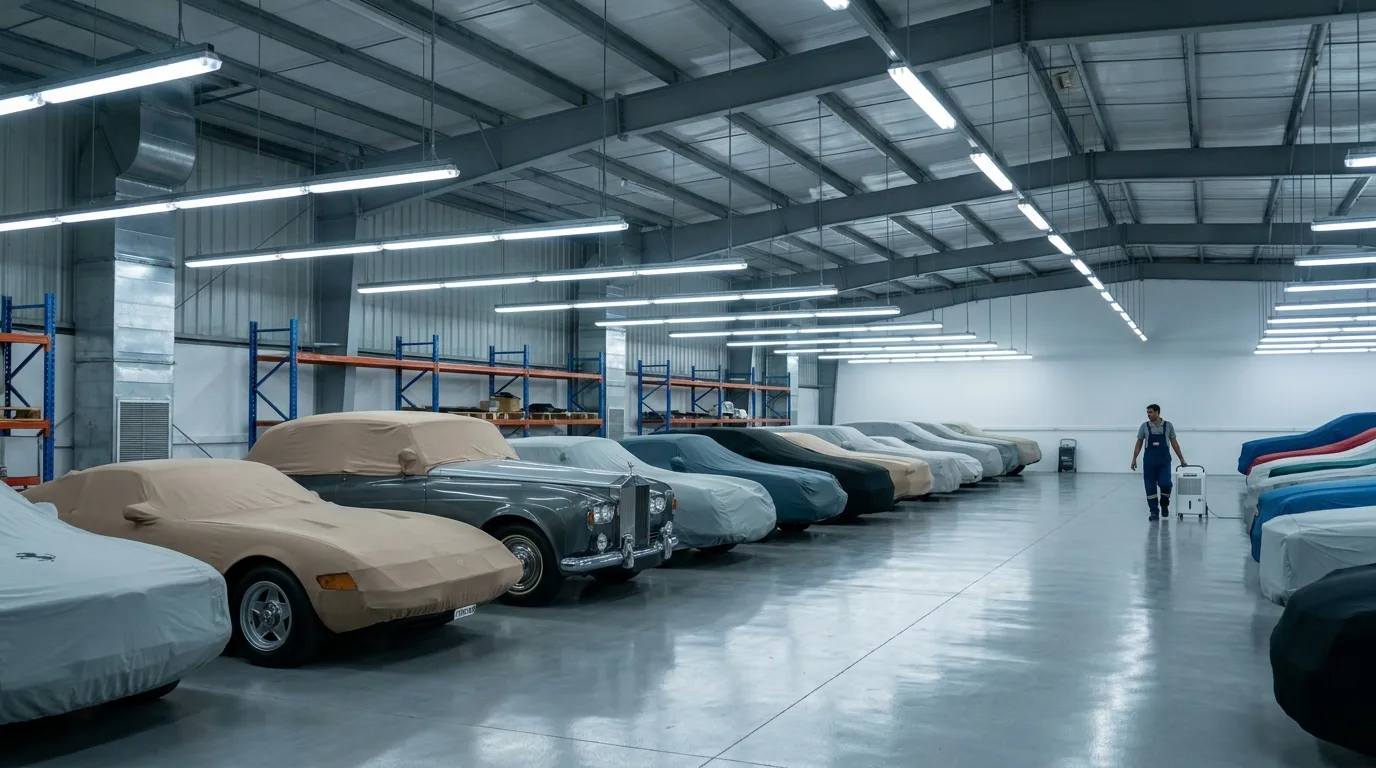
Proper storage is not optional for investment-grade vehicles. Dubai’s summer temperatures — regularly exceeding 45°C outdoors — accelerate rubber degradation, paint oxidation, and battery deterioration for vehicles left in uncontrolled environments.
Storage Options and Estimated Costs
| Storage Type | Estimated Monthly Cost (AED) | Suitable For |
|---|---|---|
| Basic indoor unit (not climate controlled) | 500 – 900 | Short-term, lower-value vehicles |
| Climate-controlled individual bay | 800 – 1,500 | Most investment-grade classics |
| Premium concierge storage (with maintenance monitoring) | 1,500 – 3,000+ | High-value collectors, show vehicles |
Annual storage costs should be built into your investment return calculations from day one. A vehicle stored for three years at AED 1,200/month represents AED 43,200 in carrying costs before insurance, maintenance, or registration.
Insurance for Investment Cars
Standard UAE comprehensive insurance is generally not appropriate for collector vehicles. Standard policies are based on replacement market value — which for a classic car bears no relationship to collector value. A standard insurer may value a 1993 Supra at scrap or parts value; a specialist collector insurer may agree to insure it for AED 350,000.
Agreed Value policies are the appropriate product. The vehicle’s value is agreed between insurer and owner at inception, eliminating market value disputes at claim time. These policies are available from specialist providers and some UAE insurers who offer classic vehicle coverage. Costs vary significantly — obtaining multiple quotes is advisable. For broader context on UAE insurance options, the comprehensive vs third-party insurance comparison provides useful background on policy structures.
Maintenance Costs for Classic Vehicles
Classic vehicles cost more to maintain than comparable modern vehicles — not necessarily more frequently, but more per intervention. Parts availability varies significantly by model and source.
| Maintenance Item | Typical Frequency | Estimated Cost Range (AED) |
|---|---|---|
| Annual service (basic) | Annually | 1,500 – 4,000 |
| Tyre replacement (period-correct) | Every 5–8 years (storage) | 2,000 – 5,000 per set |
| Brake fluid change | Every 2 years | 400 – 800 |
| Battery maintenance / replacement | Every 3–5 years | 300 – 800 |
| Rubber seal replacement (preventive) | Every 5–10 years | 1,500 – 6,000 |
| Fuel system service | Every 3–5 years | 800 – 2,500 |
Japanese models with wider parts networks (Toyota, Nissan, Honda) have lower maintenance carrying costs in the UAE. European exotics — particularly Ferrari and Lamborghini — require specialist workshop access and imported parts that can make individual service events expensive.
Importing Rare Cars into UAE: Key Considerations
The UAE allows the import of classic vehicles, but several regulatory requirements apply. Key considerations include:
- Age exemptions: Vehicles over a certain age may qualify for different ESMA emissions and safety standards requirements. The specific thresholds and applicable exemptions should be confirmed with a licensed UAE customs broker before committing to any purchase, as these rules evolve.
- Left vs right-hand drive: UAE requires left-hand-drive vehicles for registration. Right-hand-drive JDM imports face conversion requirements unless registered under specific collector or age-exemption pathways. Specialist agents handle these cases; costs and feasibility vary.
- Shipping costs: Container shipping from the US, Europe, or Japan typically costs AED 6,000–18,000 depending on route and container type. Insurance during transit is separate.
- Customs duty: Generally 5% of declared vehicle value for GCC imports. Ensure the declared value reflects fair market value — undervaluation creates legal risk.
Exporting Investment Cars from UAE
UAE-based collector vehicles can be exported to other markets. The process involves deregistration, export clearance documentation, and compliance with the destination country’s import regulations. For investors planning to purchase in UAE and sell internationally, factor export logistics costs — typically AED 5,000–15,000 for shipping plus destination import duties — into total return calculations.
Classic Car Auctions in Dubai: What to Expect
The Auction Process
Catalogue auctions — held by international houses like Bonhams or regional operators — publish vehicle details, condition reports, and estimated price ranges in advance. Bidding occurs live (in-room) and remotely (telephone or online). Registered bidders require proof of identity and sometimes a deposit.
Fees Structure
Buyer’s premium typically adds 10–15% to the hammer price. Seller’s commission ranges from 5–12% of the hammer price. Combined, the spread between what the buyer pays and what the seller receives can be 15–25%. This is an important consideration when evaluating auction prices as market benchmarks — the seller received less than the reported sale price.
Private Dealers vs Auctions: Comparison
| Factor | Private Dealer | Auction |
|---|---|---|
| Price transparency | Low (negotiated) | High (public bidding) |
| Buyer’s premium | None (built into asking price) | 10–15% on top of hammer |
| Vehicle curation | Dealer-assessed | Auction house-assessed (varies) |
| Inspection opportunity | Usually available pre-purchase | Preview period (limited time) |
| Return / recourse | Negotiable with reputable dealers | Generally sold as-is |
| Best use case | Specific model already identified | Price discovery, rare finds |
Scam Prevention: Red Flags in the Classic Car Market
🚨 Most Common Classic Car Fraud in UAE: The fake “motivated seller” — a vehicle presented as urgently for sale due to relocation or financial pressure, priced just below market to create urgency. These vehicles frequently have concealed accident history, odometer rollback, or outright false provenance documentation. Never make a decision under artificial time pressure.
Additional red flags specific to the classic car segment:
- Unverifiable provenance: Sellers claiming the vehicle was “previously owned by a European diplomat” or similar stories without documentary evidence. Provenance claims require paper proof — not verbal accounts.
- Suspicious restoration pricing: A vehicle presented as “fully restored” sold at or below market rate for an unrestored example. Quality restoration is expensive. If the restoration cost less than AED 30,000–60,000, question the quality or scope.
- Remote transactions: Any seller requesting payment before physical inspection, or offering to ship the vehicle before funds clear. These are common advance-fee fraud patterns operating within the collector car space.
- VIN inconsistencies: Numbers that don’t match across plates, documentation, and the door jamb stamp are grounds for immediate disengagement from any transaction.
- Pressure around inspection: Legitimate sellers of investment-grade vehicles have nothing to hide from professional inspection. Any resistance to third-party inspection is a meaningful warning sign.
If purchasing privately, collect all seller identification, save all communication, and document every claim made about the vehicle in writing — including WhatsApp messages. Our evidence collection checklist covers documentation protocol in detail.
Common Investment Mistakes
Buying With Emotion, Not Analysis
The most frequent error is purchasing a vehicle because of personal enthusiasm rather than investment merit. A car you loved growing up may not have broad enough collector demand to appreciate meaningfully. Investment decisions in this market require separating personal taste from market reality.
Ignoring the Total Cost of Carry
Many first-time investors focus on the purchase price and the projected resale price — and ignore everything in between. Three years of storage, insurance, maintenance, and registration can represent 15–25% of the vehicle’s purchase price in additional costs.
Overpaying at Entry
Buying at the top of a demand cycle reduces or eliminates future appreciation. The collector market goes through cycles. Purchasing during peak media attention for a model (when prices are highest) produces worse returns than buying during quieter periods.
Underestimating Liquidity Risk
The exit strategy matters as much as the entry. A vehicle that cannot be sold within 6–12 months at a reasonable price is not a liquid investment. If your personal financial circumstances require you to liquidate within a specific timeframe, classic car investment carries meaningful timing risk.
Neglecting to Budget for Surprises
Classic vehicles produce unexpected repair costs. Fuel system failures, brake system degradation from age, electrical faults in older wiring — these are normal, not exceptional. Budget approximately 5–10% of the vehicle’s value per year as a maintenance reserve, even for stored vehicles.
How to Build a Collector Portfolio
Investors with substantial capital sometimes spread risk across multiple vehicles in different categories — Japanese, European, and American — across different price points and market cycles. Diversification within the collector market reduces exposure to any single model’s demand cycle.
A conservative portfolio approach might include:
- One established blue-chip vehicle (high confidence, lower upside)
- One mid-tier vehicle with strong collector fundamentals (moderate risk/reward)
- One “future classic” position at lower price (higher risk, higher potential upside)
This structure is more relevant for investors with AED 600,000+ allocated to collector vehicles as an asset class. For most expats, single-vehicle positions are more practical and provide sufficient exposure to assess whether the asset class suits their preferences before committing further capital.
Illustrative Field Scenarios: Market Patterns Observed
Example scenarios based on recurring UAE market patterns. These are not documented individual cases — they represent typical situations observed across the Dubai collector market.
Scenario 1 — Japanese Sports Car, Long Hold
A British expat working in finance purchased a clean 1994 Toyota Supra Twin Turbo from a private seller in 2019 for approximately AED 130,000. The vehicle had 62,000 km, original paint, and a verifiable service history. Annual carrying costs (storage, insurance, occasional service) averaged roughly AED 12,000–15,000 per year. In 2024, following sustained global demand increases for A80 Supras, the vehicle was sold through a specialist dealer for approximately AED 310,000. The gross return over five years was substantial, though the net return after carrying costs was more moderate. This type of outcome depends heavily on the original purchase price being at or below fair market value and the vehicle’s condition being genuinely premium.
Scenario 2 — European Classic, Shorter Hold
An Indian expat engineer purchased a Porsche 944 in 2021 for AED 55,000, intending it as an affordable entry into the collector market. The vehicle required significant brake system and fuel injection work — approximately AED 18,000 in the first year. A later inspection revealed previous accident repairs that had not been disclosed. The vehicle was eventually sold for AED 48,000 after 18 months — a loss before carrying costs are calculated. This pattern is common when pre-purchase inspection is skipped or conducted informally.
Scenario 3 — Future Classic Approach
A Filipino professional working in logistics purchased a clean 2000 Honda S2000 in 2022 for AED 38,000. The vehicle required cosmetic attention (AED 6,000) and new tyres (AED 3,200). As of mid-2026, comparable clean S2000s in UAE are being listed between AED 55,000 and AED 72,000. The investor has not yet sold but is monitoring the market. This represents the lower-budget end of the collector market — higher uncertainty, but also lower absolute capital at risk.
Market Liquidity: How Easy Is It to Sell?
Liquidity varies significantly by model, price range, and current market conditions.
| Vehicle Category | Typical UAE Selling Period | Key Liquidity Factor |
|---|---|---|
| Blue-chip Japanese (clean Supra, GT-R) | 1–4 months | International buyer pool, strong online demand |
| Established European (Porsche 911 air-cooled) | 2–5 months | Auction house option available |
| American muscle, well-known models | 2–6 months | GCC collector community active |
| Mid-tier Japanese (RX-7, NSX) | 3–8 months | Smaller buyer pool, specialist market |
| Niche or obscure classics | 6–18 months | Limited local demand; may need export |
| Italian exotics (Ferrari, Lamborghini) | 3–12 months | High capital requirement limits local pool |
Ownership Costs vs Potential Appreciation: A Realistic View
| Cost / Return Factor | Illustrative Example (AED 200,000 Vehicle, 5 Years) |
|---|---|
| Purchase price | 200,000 |
| Storage (5 years @ AED 1,000/month) | 60,000 |
| Insurance (agreed value, ~2.5%/year) | 25,000 |
| Maintenance and servicing | 20,000 |
| Registration and administrative | 5,000 |
| Total cost of carry | 110,000 |
| Break-even sale price (no profit) | 310,000 |
| Sale price for 15% net return on investment | Approximately 340,000+ |
This table illustrates why collector vehicle investment requires meaningful appreciation just to break even. It also explains why buying at the wrong price eliminates the investment case entirely — there is no margin for error on the purchase.
Red Flags Before Buying an Investment Classic
- Paint depth readings inconsistent across panels (indicates respray concealing damage)
- VIN plates showing signs of replacement or re-stamping
- Chassis number does not match across door jamb, engine bay, and documents
- Service records showing implausible mileage progression
- Seller unable to explain ownership history for any gap period
- Asking price significantly below comparable market listings without credible explanation
- Interior wear inconsistent with claimed mileage
- Evidence of water intrusion (mould smell, stained carpets, rust in hidden areas)
Should Expats Invest in Classics Before Leaving UAE?
This is one of the most common questions from expats with 12–36 months remaining in UAE. The honest answer is: it depends significantly on your destination country, personal circumstances, and how you plan to exit the investment.
Advantages of buying before leaving: If you identify a vehicle at a fair price that has strong global collector demand, buying in UAE allows access to the regional market (sometimes better-priced than European equivalents) with no capital gains tax during the holding period.
Disadvantages and risks: If your departure is fixed and relatively near, you face the liquidity problem discussed throughout this report. Forced sale timing removes your negotiating power. Export logistics costs add further pressure. Our guide on selling your car before leaving UAE covers the general dynamics of time-pressured exits.
The general market observation is that classic car investment works best when the investor has genuine flexibility on exit timing. Fixed departure dates and collector car investment are a difficult combination.
Data Sources & Methodology
This report is based on market observations from dealer consultations, auction house published results, collector community inputs, and publicly available UAE regulatory documentation. Where specific price ranges are provided, they represent observed market patterns rather than statistically derived averages. No comprehensive official database of UAE classic car transaction values exists at the time of publication.
Government sources referenced include:
- Roads and Transport Authority (RTA) — UAE for registration requirements
- Emirates Authority for Standardization and Metrology (ESMA) for vehicle import standards
- Dubai Customs for import duty rates and clearance procedures
- UAE Ministry of Energy and Infrastructure for vehicle regulations
ℹ Market Volatility Notice: All price ranges, cost estimates, and market observations contained in this article represent conditions at the time of research and are subject to change as market conditions evolve. Collector car values fluctuate based on global economic conditions, collector sentiment, model-specific demand cycles, and condition of individual vehicles. Readers should verify current pricing through independent market research and specialist consultation before making any purchasing or investment decisions.
The Bottom Line Decision Framework
| Your Situation | Recommendation |
|---|---|
| UAE stay confirmed for 5+ years, capital to spare, automotive knowledge | Moderate investment case — proceed with specialist guidance and full due diligence |
| Leaving UAE within 24 months, fixed departure | Not recommended as investment — liquidity risk is too high |
| Limited automotive knowledge, no specialist network | Engage a specialist consultant before any purchase. Do not buy independently. |
| Budget under AED 80,000 | Entry level is possible but risk is higher — vehicle quality at this price point is variable |
| Looking for quick returns (under 2 years) | Classic car investment is not appropriate — consider more liquid assets |
| Already automotive enthusiast with specific model knowledge | Knowledge edge is a genuine advantage — still requires full professional inspection |
| High-net-worth investor seeking portfolio diversification | Viable alternative asset allocation with tax advantages — but treat as illiquid portion of portfolio |
Frequently Asked Questions
Final Investment Outlook for 2026
The Dubai classic car market in 2026 occupies a position of moderate growth and increasing sophistication. International auction activity has raised price visibility. A growing community of knowledgeable collectors has developed over the past decade, reducing some of the information asymmetry that previously existed.
The most credible opportunities remain in Japanese performance vehicles with strong international demand, and in established European classics where UAE climate has preserved examples well. Budget-level market entry is possible but carries higher risk due to condition variability at lower price points.
The investment case is not universal. It is strongest for investors with genuine automotive knowledge, a long time horizon, flexibility on exit timing, and capital that can be treated as genuinely illiquid for 5+ years. For expats with fixed departure dates or limited automotive background, the risks — including liquidity, authenticity, and carrying cost — generally outweigh the potential returns available in this market.
For those who do proceed, thorough due diligence — starting with independent professional inspection before any purchase — is the single most effective risk-reduction measure available. For a broader view of how to approach major vehicle purchases in the UAE market, our complete expat used car buying guide covers the foundational steps applicable to any significant automotive transaction.
Disclaimer: Emirates Cars is a 100% independent platform. We do not own showrooms, nor are we affiliated with any used car dealerships or garages. Our sole mission is to protect expats from financial fraud in the automotive market.
