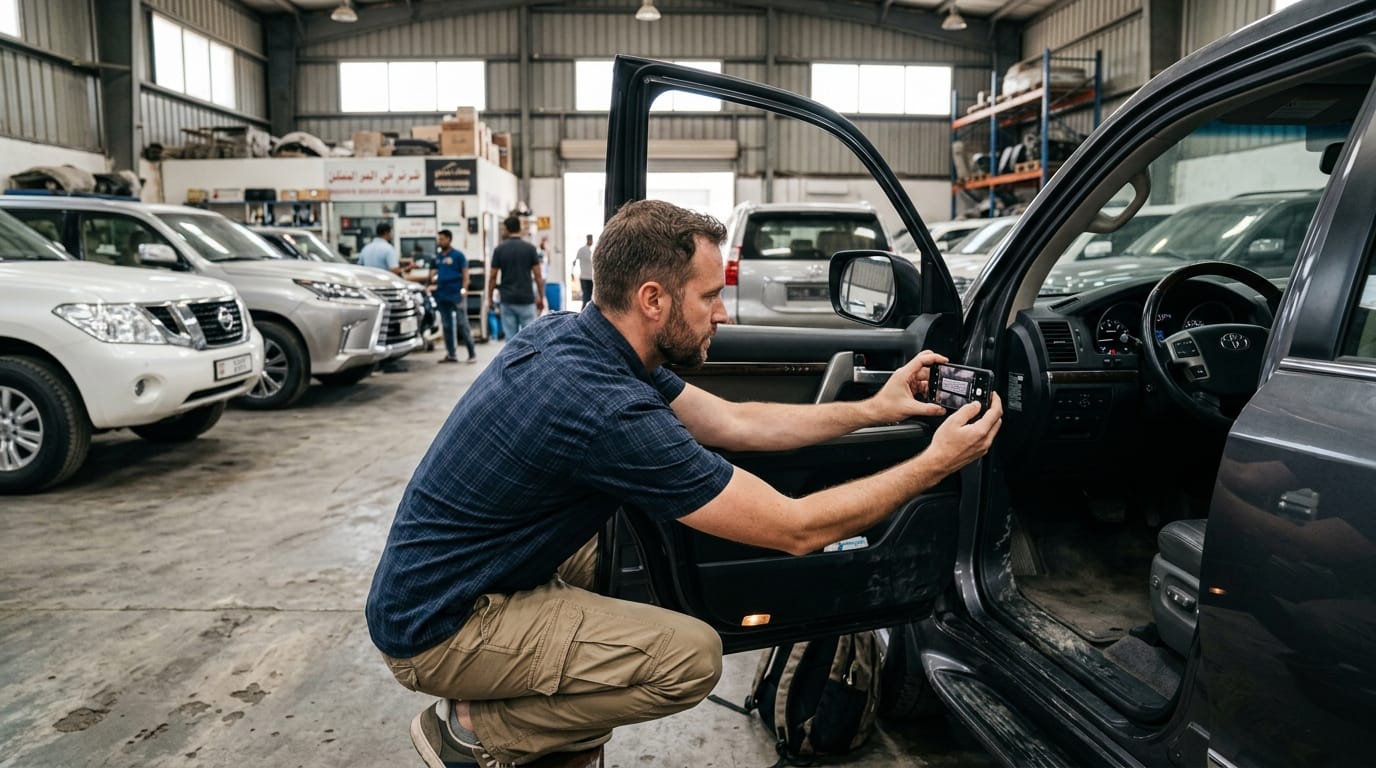
Written By: Omar Al-Fayed, Senior Automotive Consultant | Fact-Checked By: Emirates Cars Editorial Team | Last Updated: June 2026 | Category: Finance & Legal
Most used car disputes in the UAE are not lost in court. They are lost weeks earlier — in a WhatsApp conversation that was never saved, an inspection that was never done, or an advertisement that was never screenshotted before it disappeared. Evidence determines the outcome of nearly every vehicle complaint in this market. A buyer with a legitimate claim but no documentation will often receive nothing. A buyer with organized, timestamped evidence collected before purchase has significantly better options across every resolution channel — from dealer negotiation to Dubai Consumer Protection to the Small Claims Court.
This guide covers every category of evidence relevant to used car disputes in the UAE. It applies whether your dispute involves a dealer in Al Quoz, a private seller in Sharjah, or a platform listing on Dubizzle or Facebook Marketplace. consumer protection cases in the UAE follow a pattern: the buyers who succeed are the ones who treated documentation as a habit, not an afterthought. Start building that habit before you hand over any money.
⚠ Legal Disclaimer: The information provided in this article is for educational purposes only. UAE legal procedures, court fees, traffic laws, and judicial mandates may change over time. Readers should verify current requirements with a licensed UAE legal consultant or official government portals before taking formal legal action. This guide is reviewed periodically as Dubai Courts and police procedures evolve.
Section 1: Common Used Car Disputes in UAE
Understanding what disputes actually look like in the UAE market helps you recognize which evidence applies to your situation.
Hidden Accident History
A vehicle is advertised as “accident-free “accident-free” but the buyer later discovers structural repairs, resprayed panels, or a misaligned chassis. This is one of the most common disputes at Al Aweer and across private sale platforms. Evidence of the seller’s specific claim combined with independent inspection findings forms the core of this case.
Odometer Rollback
The dashboard shows 65,000 km. Service records, wear patterns, and historical inspection data suggest the real figure is closer to 140,000 km. odometer fraud is documented regularly in UAE workshops, particularly on vehicles sourced from auction. Mechanical wear evidence and historical mileage records are the primary tools here.
Forged Service Records
The service book shows stamps from an authorized dealer. The dealer has no record of the vehicle. Dates do not match registration history. fake service history cases require cross-referencing official agency records with the physical book presented at sale.
Undisclosed Flood Damage
Following UAE flooding events in 2024, a significant number of vehicles with water damage entered the used car market. Electrical failures, rust patterns inside door sills, and corrosion under carpeting emerged months after purchase. Inspection photos taken before purchase are the most valuable evidence in these cases.
Engine or Transmission Defects
A CVT transmission that was described as “fully serviced” fails within three months of purchase. A turbocharged engine burns oil from day one. These disputes hinge on whether the defect was pre-existing and whether the seller had knowledge of it. Pre-purchase inspection reports and repair invoices carry the most weight.
Fake GCC Specifications
A vehicle is sold as “GCC spec” with full UAE-appropriate cooling and components. It is later identified as a US-spec or Japanese-market import with non-standard components. GCC spec verification requires VIN decoding evidence and official import documentation.
Misrepresentation by Dealer
Verbal or written claims made by a salesperson that do not match the actual condition of the vehicle. Written communications where these claims appear are essential evidence in dealer disputes.
Warranty, Deposit, and Transfer Disputes
Dealer warranties that are denied when claims arise. Deposits paid and not refunded when sales fall through. Ownership transfers delayed or disputed. Each has specific documentation requirements covered in detail below.
Section 2: Understanding Burden of Proof
In any UAE dispute channel — dealer negotiation, Consumer Protection complaint, or Small Claims Court — the burden of proof rests with the claimant. This means you, as the buyer making the allegation, are responsible for producing evidence that supports your version of events.
Allegations without documentation rarely succeed. A complaint stating “the dealer told me the car had no accidents” carries no weight without a record of that statement. A complaint stating “the dealer sent me a WhatsApp message on [date] stating the vehicle had no accident history, which I have saved and can produce” is a different matter entirely.
Documentation serves three practical functions. First, it anchors your timeline and prevents sellers or dealers from revising their account of events after a dispute arises. Second, it demonstrates to adjudicators that you acted in good faith and with reasonable diligence. Third, it quantifies your loss — the specific financial damage you suffered — which is what consumer protection bodies and courts actually resolve.
In practice, well-organized evidence frequently resolves disputes before they reach formal channels. Dealers aware that a buyer holds documented proof of misrepresentation are significantly more likely to negotiate a resolution quietly. The goal of evidence collection is not necessarily to go to court — it is to give you leverage at every stage of the process.
Section 3: The Ultimate Evidence Checklist Overview
The categories below represent the complete evidence framework for used car disputes in the UAE. Not every category applies to every dispute. Read through the full list, then identify which categories apply to your specific situation.
| Evidence Category | Primary Use | Difficulty to Obtain After Dispute |
|---|---|---|
| Purchase Agreement / Invoice | All disputes | Low (you have it or you don’t) |
| Vehicle Advertisement Screenshots | Misrepresentation | High (listings are often deleted) |
| WhatsApp / SMS Records | All disputes | Medium (saved conversations) |
| Email Communications | Dealer disputes | Low (stored in inbox) |
| Pre-Purchase Inspection Report | Defect disputes | Impossible (must be done before purchase) |
| Tasjeel / RTA Records | History disputes | Medium (official request required) |
| Service History Documentation | Fraud disputes | Medium |
| Photographic Evidence | All disputes | Impossible if not taken before purchase |
| Video Evidence | Defect disputes | Partially possible after |
| Expert Mechanic Report | Technical disputes | Low (can be done after) |
| Repair Estimates and Invoices | Damages calculation | Low |
| Witness Statements | Verbal claim disputes | Medium |
| Bank / Payment Records | All disputes | Low |
| Insurance Records | History disputes | Medium |
%%{init: {'theme': 'base', 'themeVariables': {'background': '#f8f9fa', 'textColor': '#1a1a1a', 'primaryColor': '#2c3e50', 'secondaryColor': '#c0392b', 'lineColor': '#1a1a1a'}}}%%
flowchart TD
    classDef default fill:#2c3e50,stroke:#1a1a1a,stroke-width:1px,color:#ffffff;

    A[Used Car Dispute Evidence Weight] --> B(Primary Evidence - Hard Copy)
    A --> C(Supporting Evidence - Digital)

    B --> B1[Signed Sale Contract & Invoice]
    B --> B2[Official Agency Service History]
    B --> B3[Tasjeel Inspection Certificates]

    C --> C1[Timestamped WhatsApp Conversations]
    C --> C2[Original Advertisement Screenshots]
    C --> C3[OBD Diagnostic Fault Logs]

    B1 & B2 & B3 --> Lawsuit[High Success Rate: Small Claims Court]
    C1 & C2 & C3 --> Mediation[Optimal Leverage: DED Mediation]
Section 4: Purchase Agreement Evidence
The purchase agreement is the foundation of any dispute. Without a written agreement, you are relying on verbal accounts — which are the weakest possible form of evidence in UAE dispute channels.
What to Collect
Obtain a signed sale agreement or contract from every vehicle purchase. Insist on this for both dealer and private sales. The document should include the vehicle’s VIN, make, model, year, mileage at time of sale, agreed price, date of transfer, and any conditions or warranties stated by the seller. If a dealer provides a standard contract, read every line. Any verbal promises that do not appear in the contract do not legally exist in a formal dispute.
Keep the original. Photograph it immediately and store the photo in cloud storage. If you have a physical original, store it somewhere you will not lose it. Many expats discover their documentation is in a car that has been sold or left in a home country.
Written Promises on the Contract
If a dealer makes specific claims — “one year warranty included,” “no accidents,” “engine fully checked” — ask for these to be written on the contract before signing. Most legitimate dealers will agree. A dealer who refuses to put written promises on paper is providing a useful signal about their confidence in those promises.
Invoice Discrepancies
Check that the price on the invoice matches what you actually paid. In some documented cases across UAE market, invoice prices are recorded lower than actual transaction amounts for unofficial reasons. This creates complications in any subsequent dispute or insurance claim because the official paper trail does not match your actual financial loss.
Section 5: Vehicle Advertisement Evidence
Dubizzle listings, Facebook Marketplace posts, dealer website pages, and Instagram vehicle posts are primary sources of misrepresentation claims. They are also routinely deleted within hours of a sale being completed.
Screenshot Everything Before Contacting the Seller
Before making a single call or sending the first message, take full screenshots of the listing. This includes the main listing page, all photographs, the description, the stated mileage, the price, the seller’s name or business name, and the listing date. On mobile, scroll through every visible element and capture it.
These screenshots establish what was claimed at the time of your contact with the seller. If the seller later deletes the listing and denies making specific claims, your timestamped screenshots become primary evidence.
Platform Archive Tools
Some UAE platforms maintain deleted listing data for internal purposes, and platform records can sometimes be requested through formal complaint channels. However, you cannot rely on this. Your own screenshots are the only evidence you can guarantee having.
Why Deleted Advertisements Still Matter
A deleted listing does not eliminate the evidence it contains. Screenshots taken before deletion are admissible documentation. The deletion itself may be useful context in a Consumer Protection complaint — a seller who immediately deletes a listing after completing a sale is not acting in a manner consistent with a seller confident in their representations.
🚨 Critical Window: The most common evidence failure in UAE used car disputes is the absence of listing screenshots. Buyers contact sellers, negotiate, purchase, and only think about the original listing when problems emerge weeks later. By then, it is gone. Screenshot every listing before any communication. This takes two minutes and it is irreversible protection.
Section 6: Screenshots Before Purchase
Beyond the listing itself, systematic screenshots throughout the pre-purchase process create a documented trail that covers the specific claims made to you.
What to Screenshot
Screenshot the full listing at least twice — once when you first view it, and once on the day you complete the purchase. Screenshot any changed prices or updated descriptions between your first contact and purchase. Screenshot the seller’s profile page on whatever platform you are using. Screenshot any “verified dealer” or “certified vehicle” badges displayed on the listing.
If the vehicle has an online vehicle history report — from CarFax UAE or similar services — screenshot the full report, including the date it was accessed. Screenshot any VIN check results you perform. Screenshot any online RTA or police clearance check results.
Naming and Storing Screenshots
Name screenshots systematically: [VehicleMake_Model_Year_PlatformName_Date]. Store them in a cloud folder dedicated to this specific vehicle. This organization becomes critical if your dispute reaches a formal stage weeks or months later.
Section 7: WhatsApp and Text Message Evidence
In the UAE used car market, WhatsApp is the dominant communication channel for negotiations, seller representations, and dealer conversations. It is also one of the most powerful evidence sources available to buyers.
Why WhatsApp Conversations Are Valuable
WhatsApp messages are timestamped, attributable to specific phone numbers, and difficult to fabricate credibly. A message from a dealer’s business WhatsApp number stating “this car has no accident history” is a documented representation by an identifiable party. That message, preserved in its original conversation thread with its timestamp, is admissible in UAE Consumer Protection complaints and court proceedings.
What to Document in Conversations
During negotiations, ask key questions about vehicle condition in writing rather than by phone call. Ask about accident history. Ask about service history. Ask about known defects. Ask about the reason for selling. Ask whether the mileage is original. The answers you receive become evidence of representations made.
Do not paraphrase in WhatsApp what was said over phone. Instead, send a confirming message: “As discussed by phone, you confirmed the vehicle has never been in an accident and the service history is complete from an authorized dealer. Please confirm.” If the seller confirms in writing, you have documented evidence. If they do not respond or deflect, that is also useful information before purchase.
Preserving WhatsApp Evidence
Export the full conversation thread using WhatsApp’s built-in export function. This creates a text file with timestamps that can be submitted to complaints bodies. Also take scrolling screenshots of critical messages. Back up the export to cloud storage. Do not rely solely on the conversation existing on your current phone — phones are lost, replaced, and reset.
Dealer Business Numbers
Note whether communications are with a personal number or a registered business WhatsApp account. Business account communications strengthen the attribution of representations to the dealership as an entity rather than just an individual employee.
Section 8: Email Communication Evidence
Formal dealer communications often come via email, particularly for official quotations, warranty documents, and post-sale correspondence. Email is slightly stronger than WhatsApp in formal proceedings because it carries inherent organizational structure and is harder to dispute.
Why Emails Are Powerful Evidence
Emails include sender and recipient addresses, precise timestamps, subject lines that establish context, and attachment histories. A dealer email stating “the vehicle comes with a one-year comprehensive warranty on the engine and transmission” is a clear, attributed, dated representation. If the dealer later denies the warranty exists, the email is definitive evidence.
Organizing Email Chains
Do not delete any pre-purchase or post-purchase emails from dealers or sellers. Create a dedicated folder in your email client for each vehicle purchase. Preserve the entire thread rather than individual messages — thread context can be important when a dispute requires establishing the sequence of events.
Requesting Confirmation by Email
After phone calls with dealers, send a brief email summarizing what was discussed and agreed. “Following our call today, I want to confirm your representation that the vehicle passed a full agency inspection and carries a six-month powertrain warranty as included in the sale price.” If the dealer responds confirming this, you have documented evidence. If they correct any misstatement, you have that on record too.
Section 9: Phone Call Documentation
Phone calls are the weakest form of evidence in UAE disputes because there is typically no contemporaneous record of what was said. However, there are practical steps to make verbal communications more useful.
Follow-Up Confirmation Texts
After any significant phone conversation with a seller or dealer, send a WhatsApp message summarizing the key points discussed. “Quick summary of our call: you confirmed mileage is 62,000 km, no accidents, GCC spec, and includes a three-month warranty. Looking forward to viewing the car on Thursday.” If the seller does not correct this summary, it functions as a confirmation of those representations.
Call Logs
Preserve call logs showing the date and time of communications with the seller. These establish the timeline of your interaction and can be relevant in disputes where the seller claims they never discussed certain topics with you.
Section 10: Vehicle Inspection Reports
An independent pre-purchase inspection is the single most important protective step any used car buyer in UAE can take. It is also the one piece of evidence that cannot be reconstructed after purchase.
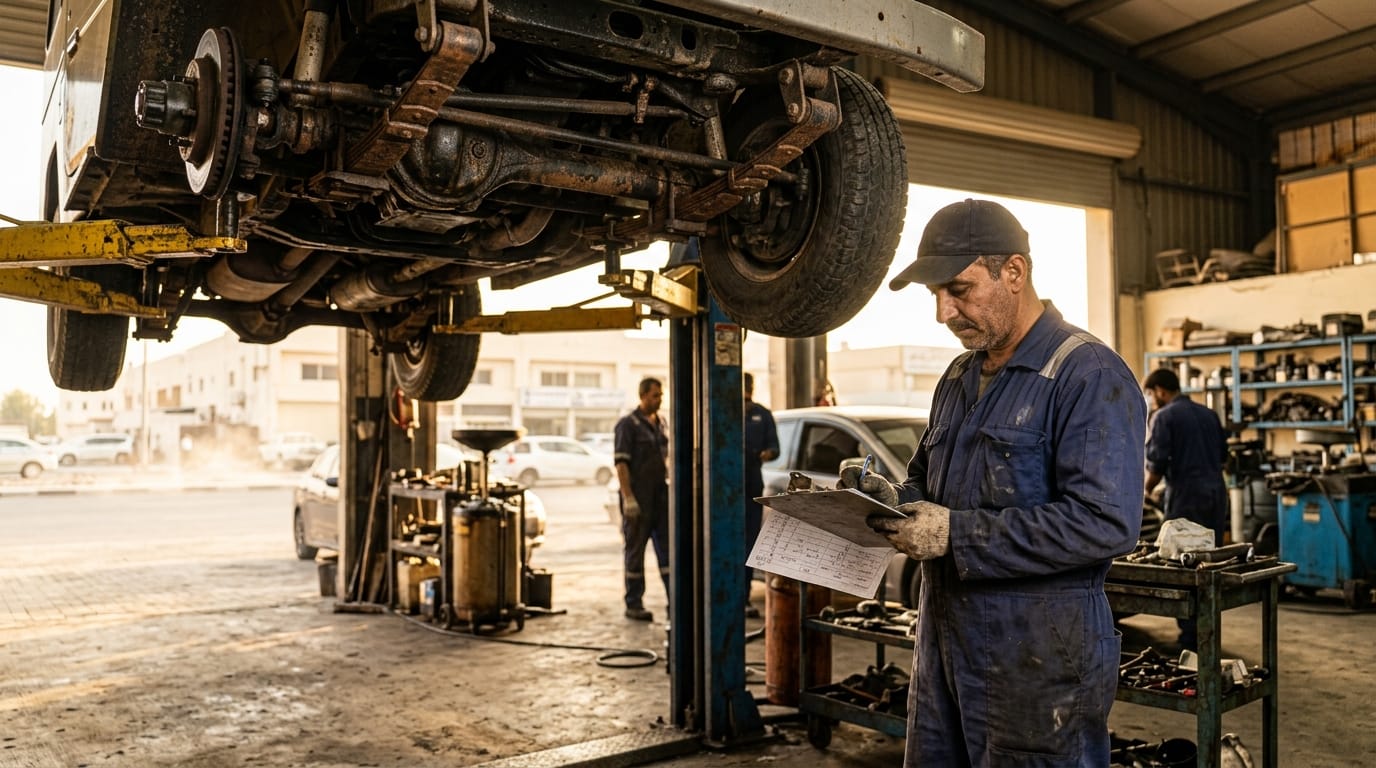
Independent Pre-Purchase Inspections
Before completing any used car purchase, have the vehicle inspected by an independent mechanic or inspection service — not affiliated with the seller. Inspection services operating in Dubai and Sharjah typically charge between 300 and 600 AED for a comprehensive mechanical and bodywork assessment. This cost is negligible relative to the repair bills it may prevent or the legal strength it provides if problems are discovered after purchase.
The inspection report should document every identified issue, including minor issues. A report that shows the inspector examined the vehicle in good faith and identified no major problems is strong evidence if serious defects emerge shortly after purchase — it shifts the timeline question toward whether those defects were pre-existing and concealed, or genuinely arose after the sale.
What a Quality Inspection Report Should Include
Chassis condition and any evidence of previous repairs or straightening. Panel paint thickness readings identifying resprayed areas. OBD scan results showing active or historical fault codes. Transmission behavior assessment. Engine bay condition. Underbody rust or flood damage indicators. Tire condition and age. Brake pad and disc measurements. AC system function. Electrical system check.
pre-purchase inspection services that provide written reports with photographs are significantly more useful in disputes than verbal assessments. Always request a written report with the inspector’s name, contact information, and stamp or signature.
Section 11: Tasjeel Inspection Records
Tasjeel vehicle inspection records — generated during mandatory periodic UAE roadworthiness testing — contain historical data about the vehicle’s condition at each inspection point. This data can support claims in several dispute types.
What Tasjeel Records May Reveal
Inspection records may show mileage recorded at previous inspection dates, which can be compared against the seller’s claimed mileage to identify inconsistencies. They may show items that previously failed inspection, indicating known mechanical issues at a specific point in time. They establish a timeline of the vehicle’s condition under official scrutiny.
Accessing Tasjeel Records
Official vehicle inspection history can be accessed through the RTA website and through Tasjeel service centers using the vehicle’s plate number or chassis number. Retain a printed or screenshot record of this data. It is useful both before purchase for due diligence and after purchase if a dispute arises.
Tasjeel inspection standards require vehicles to meet specific safety and mechanical criteria. A vehicle that failed inspection shortly before being sold, then passed after certain repairs, and is now experiencing problems in the same systems may support a claim of inadequate or cosmetic repair.
Section 12: Service History Documentation
Service records establish whether the vehicle received proper maintenance throughout its life. They are relevant in disputes about premature mechanical failure and in identifying whether sellers made false representations about maintenance history.
Evaluating Service Records at Purchase
A complete service history includes dated and stamped entries corresponding to each service interval, consistent with the vehicle’s mileage and age. Entries should come from identifiable workshops or authorized dealers. Gaps in the service history — particularly around mileage points where significant wear typically occurs — require explanation.
Photograph every page of the service book before purchase. Note the workshop names and dates. After purchase, you can cross-reference with those workshops directly to verify whether the records are genuine. This cross-referencing, if it reveals falsified records, is documentation of fraud.
Missing Service History
A seller claiming a service history exists but “the book is at home” or “the previous owner had it” is a significant warning sign. If you proceed with purchase based on a verbal representation of service history that was never actually produced, you have no documentary evidence of that representation unless you obtained it in a follow-up WhatsApp message.
Section 13: Agency Maintenance Records
For vehicles serviced at authorized UAE dealerships — Toyota, Nissan, Honda, Hyundai, and others — official service records can be verified directly with the manufacturer’s UAE dealer network using the vehicle VIN.
Requesting Official Agency Records
Contact the authorized dealer for the vehicle’s brand and provide the VIN. Many UAE dealers will provide a service history printout for a small fee or sometimes at no charge. This official record either confirms or contradicts the service book presented by the seller.
Official agency service records are substantially more credible evidence in formal disputes than a physical service book, which can be forged. An agency printout carries the dealer’s official records and is difficult to challenge as fabricated.
Section 14: Odometer Evidence
Odometer fraud — recording a lower mileage than the vehicle has actually traveled — affects a meaningful portion of high-mileage used vehicles in the UAE market. The mileage directly affects the vehicle’s value, expected maintenance costs, and remaining component life.
Establishing Mileage Inconsistencies
Compare the dashboard mileage against service records showing mileage at each service date. Compare against Tasjeel inspection records showing mileage at each inspection point. Compare against tyre wear, brake wear, interior wear, and clutch/transmission behavior relative to the stated mileage. A vehicle at 65,000 km with worn driver seat bolsters, cracked dash plastic, and a clutch near end-of-life is physically inconsistent with that figure.
An independent specialist can perform OBD mileage verification on many vehicles — some modules record historical distance data separately from the dashboard odometer. This technical assessment, if it produces a different figure from the dashboard reading, is strong documentary evidence of tampering.
Historical Vehicle Data Services
Vehicle history services available for imported vehicles and similar vehicle history platforms aggregate data from multiple sources — insurance claims, service records, registration history — and may reflect mileage data from multiple historical points. Access these records before purchase and screenshot the full report.
Section 15: Accident History Evidence
Undisclosed accident history is among the most common misrepresentation categories in UAE used car disputes. Structural repairs affect vehicle safety and significantly reduce resale value.
Police Reports
UAE traffic accidents involving police attendance generate official police reports linked to the vehicle’s plate number and chassis number. These reports can be requested through the Dubai Police platform or equivalent emirate police portals. A police report showing a significant accident contradicts a seller’s “no accidents” representation.
Insurance Claim Records
Accident claims generate insurance records. While individual claim details may not be publicly accessible, some vehicle history services aggregate insurance data. Additionally, the current insurer of the vehicle may have records from policy history that reveal prior significant claims. This is worth requesting formally in dispute situations.
Physical Inspection Evidence
A paint thickness gauge test — standard in quality pre-purchase inspections — identifies resprayed panels indicating prior bodywork. A chassis alignment check identifies structural repairs. These physical findings, documented in an inspection report, constitute evidence that accident damage existed regardless of what the seller claimed.
Section 16: Flood Damage Evidence
Following the significant rainfall events in the UAE in 2024, flood-damaged vehicles entered the used car market with varying levels of disclosure. Flood damage causes electrical deterioration, accelerated corrosion, and mechanical failures that may not manifest for six to eighteen months after the flooding event.
Physical Inspection Indicators
Documented indicators include water marks inside door sills and below the dashboard. Rust or corrosion on bolts, hinges, and metal components in areas not typically exposed to surface water. Musty or unusual odors from the cabin, particularly from air vents. Corrosion on electrical connectors and ground points. Evidence of water deposits in the spare tyre well.
Photographs taken during a pre-purchase inspection documenting these indicators are primary evidence in flood damage disputes. flood damage purchase cases in Dubai have resulted in repair bills ranging from 8,000 to over 30,000 AED depending on the extent of electrical and mechanical deterioration.
Insurance History as Flood Evidence
A vehicle with a comprehensive insurance policy that made a claim during the April 2024 flooding period may have an insurance record of that event. Requesting this information through formal channels in a dispute situation can establish that the vehicle was flood-affected at a specific point in time.
Section 17: Photographic Evidence
Photographs are among the most persuasive evidence forms in used car disputes because they are visual, immediate, and difficult to fabricate when taken at a known time and place.
Before Purchase Photos
On the day of viewing the vehicle, photograph comprehensively and systematically. Exterior panels from all angles. Under the bonnet — engine bay, fluid levels, visible hoses. Under the vehicle if accessible — underbody condition, exhaust, suspension components. Interior — dashboard, seats, carpets, door sills. The dashboard with the odometer reading clearly visible. All four tyres including the tread wear indicator positions. The VIN plate on the dashboard and the chassis stamp. The registration documents alongside the vehicle.
Modern smartphones embed metadata including the timestamp and GPS location into photographs. This metadata establishes exactly when and where photos were taken. Do not edit or process pre-purchase photos in ways that strip this metadata.
After Discovery Photos
When defects emerge after purchase, photograph them immediately and systematically. Document the specific defect, its location on the vehicle, and any relevant measurements or context. If a workshop is involved, photograph the vehicle at the workshop with identifying context visible.
Section 18: Video Evidence
Video captures dynamic vehicle behavior that photographs cannot — engine running sounds, transmission engagement behavior, electrical glitches, smoke, unusual vibrations, warning light behavior.
Pre-Purchase Walkaround Video
Record a brief video walkaround of the vehicle at time of viewing, narrating what you observe. “This is the [Make] [Model] [Year] I am viewing at [dealer/location], the odometer reads [X] km, the date is [date].” Walk around the exterior noting any visible damage. This video establishes the vehicle’s visible condition at time of purchase and may document things you did not notice at the time but can identify later in review.
Defect Demonstration Videos
When defects emerge, video is particularly useful for capturing symptoms that are intermittent or difficult to describe in writing. A CVT transmission that hesitates or shudders under acceleration can be captured on video with audio. An AC system that fails to cool after extended idling can be documented with a video showing the temperature gauge and vent output together.
Section 19: Expert Mechanical Reports
In disputes that proceed to formal complaint channels or court, an expert mechanical report from a qualified workshop or automotive engineer can carry significant evidential weight. Unlike buyer-produced photos and videos, an expert report comes from a credentialed third party.
Choosing the Right Workshop
For dispute-quality expert reports, use an established, licensed workshop in recognized automotive centers such as Al Quoz Industrial Area in Dubai or the Sharjah Industrial Area. The workshop should be willing to produce a signed, stamped written report on their letterhead that identifies the specific defects found, their likely cause, their estimated pre-purchase existence, and the cost of repair.
Al Quoz mechanics familiar with used car dispute documentation understand what detail complaint authorities require. Specify when commissioning the report that you may need it for a Consumer Protection complaint or court submission.
Specialist Opinions
For specific technical disputes — transmission fraud, engine misconduct, flood damage assessment — specialist workshops focusing on those systems produce more detailed and credible reports than general mechanics. A gearbox specialist diagnosing CVT wear that is consistent with 140,000 km of use despite a stated 65,000 km reading is a specific technical finding that directly supports an odometer fraud claim.
Section 20: Repair Estimates and Invoices
Consumer Protection bodies and courts need to understand the financial quantum of your claim. Repair estimates and invoices convert technical defects into concrete financial losses.
Multiple Repair Quotations
Obtain at least two to three written repair estimates for any significant defect. This demonstrates that your claimed repair cost is market-consistent and not inflated. It also gives you a realistic picture of your actual loss. Estimates should be on workshop letterhead with the workshop’s license number, the specific work described, and the total cost including parts and labor.
Actual Repair Invoices
If you proceed with repairs before resolving the dispute — because the vehicle is not driveable or the defect is safety-relevant — retain every invoice. These actual costs, rather than estimates, form the damages calculation in your claim. Keep parts receipts, labor invoices, and any third-party specialist charges separately and organized.
Section 21: Warranty Documentation
Dealer warranties on used vehicles in the UAE range from implied verbal assurances to formal written documents. The difference in evidential value between these two is significant.
Written Warranty Terms
If a dealer provides a warranty, obtain it in writing before completing the purchase. The document should specify what is covered, what is excluded, the duration, the authorized repair centers, the claim process, and any conditions that void the warranty. Read every exclusion. Some dealer warranties in the UAE market contain exclusions broad enough to effectively cover nothing.
Any warranty claim denial should be responded to in writing requesting the specific contractual basis for the denial. This creates a record of the dealer’s position and the reasoning they are relying on.
Third-Party Warranties
Some used car sales include third-party extended warranties from insurance-backed providers. Obtain the policy document, not just a verbal representation that it exists. Verify that the vehicle is actually registered on the warranty system before completing purchase — some buyers have discovered that warranties “included” in sales were never actually activated.
Section 22: Insurance Evidence
Insurance records can support several types of used car disputes, particularly those involving accident history, flood damage, and vehicle specification claims.
How Insurance Records Support Disputes
A comprehensive insurance policy that made a claim for significant accident damage creates a record of that damage at a specific point in time. This can directly contradict a seller’s representation of no accident history. Insurance records also reflect the vehicle’s insured specification — a vehicle insured as a US-spec import cannot simultaneously be legitimately sold as GCC-spec.
insurance claim documentation becomes relevant in disputes involving flood damage from the 2024 UAE rainfall events. Vehicles that made flood claims during that period have an insurance record of the event, even if subsequent sellers did not disclose it.
Requesting Insurance History
Formal requests for insurance history can be submitted through the UAE Insurance Authority or through complaint channels at individual insurance companies. The process is not instantaneous and requires proper identification and documentation of your ownership or legitimate interest in the vehicle’s history.
Section 23: Bank and Payment Evidence
Financial transaction records establish what was paid, when, to whom, and through what channel. They are fundamental to any damages calculation and to establishing that a transaction actually occurred as claimed.
Bank Transfer Records
All significant payments for vehicle purchases should be made by traceable means — bank transfer, manager’s cheque, or financing disbursement — rather than cash. Bank transfers create a permanent record of the transaction with timestamps, account identifiers, and amounts. Cash payments are significantly harder to document and provide less evidential foundation if disputes arise.
Retain bank statements showing the transfer. Screenshot your online banking transaction records. These establish the financial element of your claim and, combined with the sale agreement, confirm the transaction occurred on specific terms.
Financing Documentation
If the vehicle was purchased through a UAE bank loan or finance arrangement, retain all financing documents — the loan agreement, disbursement confirmation, and repayment schedule. These establish the total financial commitment you made based on the vehicle representations. In some dispute contexts, car loan documentation becomes relevant to calculating total financial exposure.
Deposit Receipts
If you paid a deposit to hold a vehicle, obtain a written receipt specifying the amount, the vehicle it applies to, the conditions for refund or forfeiture, and the date. Verbal deposit arrangements are routinely disputed. A written deposit receipt prevents the seller from claiming the deposit was non-refundable under conditions they invent after the dispute arises.
Section 24: Witness Statements
Human witnesses who observed key interactions or vehicle conditions can provide supporting evidence in disputes. While witness testimony is generally weaker than documentary evidence in UAE dispute channels, it can corroborate and strengthen other documentation.
Who May Be a Useful Witness
A friend or colleague who accompanied you to view and purchase the vehicle can attest to representations made verbally by the seller or dealer during that visit. A mechanic who inspected the vehicle and can testify to findings at that time. A passenger who was present when a defect first manifested. An independent observer who saw the condition of the vehicle at a specific relevant point.
Obtaining Written Statements
Request written, signed statements from witnesses as close to the event as possible. Memory degrades and witnesses may become unavailable. A written statement with the witness’s name, contact details, what they personally observed, and the date of their observation is more useful in formal proceedings than a verbal assurance that someone “can confirm” your account.
Section 25: Organizing Evidence Properly
Evidence that exists but cannot be produced efficiently is less useful than evidence that is well-organized and immediately accessible. A Consumer Protection complaint officer or court registrar receiving a disorganized bundle of materials faces a different interaction than one receiving a clearly indexed, chronological evidence pack.

The Evidence Folder System
Create a dedicated digital folder for each vehicle, named with make, model, and purchase date. Within it, create subfolders: Purchase Documents / Communications / Inspection / Photos and Videos / Repairs / Correspondence.
Maintain a single page summary document at the top of the folder listing: vehicle details, purchase date, purchase price, seller identity and contact details, nature of the dispute, timeline of events, evidence items by category, and the financial loss claimed. This summary allows anyone reviewing your evidence to immediately understand the case before examining individual documents.
Cloud Backup
Store the complete evidence folder in at least one cloud service — Google Drive, iCloud, or OneDrive. UAE disputes can take months to resolve. Phones are replaced, laptops fail, and documents stored only on physical media can be lost. Cloud storage ensures your evidence survives regardless of device changes.
Section 26: Evidence Mistakes That Destroy Cases
Understanding what goes wrong in failed dispute cases is as useful as knowing what to collect correctly.
Missing Screenshots
The single most common failure. The original listing described a “full service history from authorized dealer.” The buyer never screenshotted it. The seller deleted the listing after sale. The dispute rests entirely on the buyer’s verbal account of what the listing said — which is essentially no evidence at all.
Relying on Verbal Agreements
A dealer’s verbal representation during a showroom visit — “don’t worry, this car is perfect” — is worthless as legal evidence. The only agreements that matter in formal UAE dispute channels are written ones. If it was not confirmed in writing, it may as well not have been said.
Lost or Unfiled Documents
Original documents — sale contracts, inspection reports, warranty papers — stored carelessly and then lost cannot be reconstructed. Physical documents should be photographed immediately and stored digitally. The original should be kept in a designated location.
Delayed Independent Inspections
A buyer who discovers a defect after purchase but waits two months before getting an independent inspection faces a challenge — the seller will argue the defect arose during the buyer’s ownership. An inspection conducted within days of discovering the issue is substantially more useful than one conducted months later.
Altered Evidence
Modifying, editing, or presenting evidence out of context destroys your credibility in formal dispute channels and potentially creates legal liability. Present evidence exactly as it exists. If evidence is unfavorable to some aspects of your case, present it anyway — incomplete or selectively presented evidence is identifiable and undermines trust in everything else you submit.
⚠ Important: Never delete any WhatsApp messages, emails, or communications related to a vehicle purchase — even if they contain things you said that you later wish you had not. Attempting to present a selective record when the other party has the complete conversation is a significant credibility problem in formal proceedings.
Section 27: Evidence Required for Consumer Protection Complaints
The UAE’s Consumer Protection framework, operated under the Ministry of Economy and through emirate-level bodies including the UAE Ministry of Economy Consumer Protection, processes complaints about commercial transactions including used vehicle sales from licensed dealers.
Minimum Documentation for Consumer Protection Complaints
Proof of purchase — sale contract, invoice, or receipt. Evidence of the specific misrepresentation or defect. Evidence that you brought the issue to the seller’s attention and their response. An independent inspection or expert report where technical claims are involved. A clear statement of the financial loss or remedy requested.
Consumer Protection authorities in the UAE generally focus on complaints against licensed businesses. A complaint against a licensed dealer in Dubai supported by WhatsApp documentation of misrepresentation, a pre-purchase inspection report, and an independent assessment of the defect costs is a substantially stronger case than one relying on verbal account alone.
Response Timeline Expectations
Consumer Protection complaints in the UAE do not resolve immediately. Initial processing may take one to four weeks. Mediation sessions may be scheduled. Resolution timelines vary significantly based on case complexity and the parties involved. Organize your evidence before filing to avoid delays caused by requests for missing documentation.
Section 28: Evidence Required for Court Cases
If Consumer Protection mediation does not resolve the dispute, the Small Claims Court in Dubai and equivalent civil courts in other emirates offer formal legal resolution. small claims court in Dubai handles disputes up to 100,000 AED through a relatively accessible process designed for individual claimants.
Strongest Evidence Types for Court
Official documents — police reports, Tasjeel records, agency service records, bank statements — carry the most weight because they come from identifiable institutional sources and are difficult to challenge as fabricated. Written contracts and agreements are next. Expert reports from licensed workshops follow. Photographs and videos with verifiable metadata. WhatsApp exports and email chains as supporting documentation.
Supporting Evidence
Witness statements, if available. Timeline documents. Correspondence history showing the seller’s response to the complaint. Evidence of any repair costs incurred. Documentation of any diminution in vehicle value relative to what was paid.
Expert Reports in Court
Courts may appoint their own expert assessors, or accept expert reports commissioned by parties. An independent mechanic’s report is useful but may carry less weight than a court-appointed technical assessment. In complex technical disputes, discuss with a UAE-qualified legal consultant whether commissioning your own expert report before filing is strategically appropriate.
Section 29: Evidence Against Dealers vs Private Sellers
The evidence framework is similar regardless of whether you are disputing with a licensed dealer or a private seller, but the applicable legal channels and realistic outcomes differ.
Licensed Dealer Disputes
Licensed dealers are subject to UAE consumer protection legislation, licensing regulations, and potentially brand-specific dealer standards. Consumer Protection complaints against licensed dealers are viable and have a track record of producing resolutions. Dealers also have more to lose from formal complaints — regulatory risk, reputation on platforms, and licensing implications. Written communications from a dealer’s official channels (business WhatsApp, email, headed documents) are clean evidence because they are unambiguously attributable to the business entity.
Private Seller Disputes
Private seller disputes are more challenging. Consumer Protection frameworks primarily target commercial sellers. Civil court action against a private individual is possible but requires the seller to be identifiable and locatable, and outcomes vary more significantly based on available evidence. The seller’s Emirates ID copy, which you should have obtained during the transfer process, is essential for identifying the party in any formal proceedings.
In private sale disputes, the WhatsApp evidence framework is particularly important because it is often the only documented record of representations made. Without WhatsApp or email evidence of specific claims by the private seller, disputes typically come down to the buyer’s account versus the seller’s — an evidential tie that rarely favors the claimant.
Section 30: What to Do Immediately After Discovering a Problem
The first 72 hours after discovering a significant vehicle defect are the most important period for evidence preservation and dispute positioning.
Step-by-Step Immediate Action Plan
Immediate Evidence Collection & Action Protocol
Step 1 — Document the defect immediately. Photograph and video the defect as soon as you discover it. Note the current mileage. Record the date and time. Do this before doing anything else.
Step 2 — Do not attempt a quick DIY fix. If you attempt to repair a defect yourself before an expert assessment, you may compromise the evidence of its original state and potentially the argument that it was pre-existing.
Step 3 — Get an independent workshop assessment within 48 to 72 hours. Book the vehicle in at an independent workshop for a written assessment. Specify that you need a written report for a potential dispute. Ask them to record the mileage, identify the defect, assess its likely age and cause, and estimate the repair cost.
Step 4 — Contact the seller or dealer in writing. Send a WhatsApp message or email to the seller describing the defect and requesting their response. Keep this initial communication factual and non-aggressive. You are creating a written record that you notified them of the issue and their response — or absence of response — within a specific timeframe.
Step 5 — Compile your full evidence folder. Gather every document, screenshot, photograph, and communication related to the purchase. Organize them into the folder structure described above.
Step 6 — Assess your resolution options. Depending on whether the seller is a licensed dealer or private individual, and the value of your claim, your options range from direct negotiation to Consumer Protection complaint to Small Claims Court. If the amount is significant, consult a UAE legal professional before proceeding to formal channels.
Section 31: Scam Prevention — How Expats Are Targeted in UAE Car Disputes
🚨 Highest-Risk Scam in UAE Used Car Market: The “overseas buyer” scam involves a seller claiming they are leaving the UAE urgently and need to complete the sale remotely, requesting deposit payment before you see the vehicle. Once the deposit is transferred, the seller becomes unreachable. Never transfer any money to a party you have not met in person, whose identity you have not verified through their Emirates ID, and whose vehicle you have not physically inspected.
Common Scam Patterns Targeting Expats
The Fake Inspection Certificate: A seller presents a Tasjeel certificate that has been digitally altered to show a clean pass. Verify any inspection certificate directly through the RTA official portal using the plate or chassis number. Do not accept a printed copy alone.
The Rushed Sale Pressure: A seller creates urgency — “I have three other buyers coming today” — to prevent you from taking time for independent inspection or verification. Any legitimate seller will accommodate a reasonable request for an independent inspection. Pressure to skip this step is a significant warning signal.
The Transfer Before Registration Scam: A seller transfers possession of the vehicle before completing the official ownership transfer at a Tasjeel center, then disputes the sale or resells the vehicle to another party. Never take possession of a vehicle without completing the official transfer — car transfer in Dubai should be completed at the point of sale, not promised for “next week.”
The Fake Bank Transfer Confirmation: In negotiation, a seller or their associate sends a screenshot of a bank transfer to demonstrate their own good faith or previous transactions. Screenshots of bank transfers can be fabricated. Verify significant payments through your own banking app, not through screenshots provided by the other party.
Real Case Studies: Workshop & Market Logs
Case 1 — Indian Expat, Used Toyota Camry, Al Quoz
A logistics manager from Kerala purchased a 2017 Toyota Camry in Dubai for 32,000 AED from a dealer in the Al Quoz Industrial Area. The sale agreement stated “engine in good condition.” No independent inspection was conducted. Within six weeks, the engine began consuming excessive oil — approximately one liter per 800 km — consistent with worn piston rings. The buyer had no pre-purchase inspection report, no photos of the engine bay before purchase, and no written communication with the dealer about engine condition beyond the vague contract language. The dealer denied liability. The repair estimate from a Toyota specialist in Al Quoz was between 12,000 and 16,000 AED. The buyer filed a Consumer Protection complaint. Without specific evidence of a pre-existing defect, the complaint resulted in a 2,500 AED partial contribution from the dealer — not the full repair cost. The lesson: the contract language “engine in good condition” was too vague to constitute a specific representation, and the absence of an independent inspection report left the pre-existing nature of the defect unproven.
Case 2 — Pakistani Engineer, Flood-Damaged Nissan Altima, Sharjah
A civil engineer from Lahore purchased a 2019 Nissan Altima in Sharjah for 39,000 AED in late 2024. The Dubizzle listing described the vehicle as “accident-free, excellent condition.” The buyer had screenshotted the original listing. Electrical failures began appearing within two months — AC control module, passenger window regulator, dashboard cluster errors. An independent workshop in the Sharjah Industrial Area produced a written report attributing the failures to water intrusion consistent with flood exposure, based on corrosion patterns on the electrical connectors and water deposits in the sill channels. The buyer had also photographed the vehicle at point of purchase, and comparison with the earlier photos showed no visible corrosion at that time. With the listing screenshot (showing “excellent condition”), the independent report establishing flood damage, and the workshop invoice for 7,800 AED in initial repairs, the buyer filed a Consumer Protection complaint. The dealer agreed to contribute 6,000 AED toward repairs rather than face formal proceedings — an outcome the buyer’s documentation made achievable.
Case 3 — British Expat, Odometer Fraud, Honda Accord, Dubai
A teacher from Manchester purchased a 2016 Honda Accord for 28,000 AED from a private seller in Dubai. The dashboard showed 71,000 km. Within four months, the front brake pads and rear pads were completely worn, the clutch felt near end of life, and the cabin showed wear inconsistent with 71,000 km use. An independent mechanic in Al Quoz performed an OBD diagnostic that pulled distance data from a non-resettable module showing a figure approximately 58,000 km higher than the dashboard. The mechanic produced a written report. The buyer also obtained Tasjeel records showing mileage of 98,000 km at an inspection 18 months before the sale — contradicting the dashboard figure on the timeline. With the OBD report, the Tasjeel historical records, and the WhatsApp conversation in which the seller had explicitly confirmed “71k original km,” the buyer filed a police complaint for fraud. The private seller agreed to return 9,500 AED as settlement rather than proceed to formal legal proceedings. The buyer had the evidence to proceed further if needed.
The Bottom Line Decision Framework
| Your Situation | Recommended First Step | Realistic Outcome |
|---|---|---|
| Minor defect, licensed dealer, under 2,000 AED | Written complaint directly to dealer management | Repair or partial refund likely if documented |
| Significant defect, licensed dealer, 2,000–15,000 AED | Consumer Protection complaint with full evidence pack | Mediation resolution possible in 4–8 weeks |
| Significant defect, licensed dealer, over 15,000 AED | Legal consultation + Consumer Protection complaint | Mediation or Small Claims Court; outcome evidence-dependent |
| Misrepresentation, private seller, under 5,000 AED | Direct negotiation with written evidence presented | Partial recovery possible; court cost may exceed claim |
| Misrepresentation, private seller, over 5,000 AED | Legal consultation; assess whether seller is locatable | Civil court possible; timeline 3–12 months |
| Fraud elements (odometer, forged records) | Police complaint + legal consultation simultaneously | Criminal process possible; civil recovery varies |
| Warranty denial, written warranty exists | Written escalation to dealer + Consumer Protection | Strong case if warranty terms clearly breached |
Data Sources & Methodology
The case studies in this article are based on recurring dispute patterns observed across UAE used car consumer protection cases, workshop reports from Al Quoz and Sharjah Industrial Area mechanics, and documented expat buyer experiences. Financial figures represent ranges drawn from actual repair invoices and settlement amounts reported across these cases. Specific figures are ranges rather than precise amounts to reflect market variability.
Official regulatory context draws from the following sources:
- Roads and Transport Authority (RTA) — rta.ae
- UAE Ministry of Economy — Consumer Protection
- Dubai Government Portal — dubai.ae
- UAE Insurance Authority — insurance.ae
- Abu Dhabi Judicial Department — adjd.gov.ae
- Dubai Municipality — dm.gov.ae
ℹ Market Volatility Notice: All repair cost estimates, settlement ranges, and fee figures in this article are based on UAE market data at time of writing and are subject to change. Workshop labor rates, parts prices, and court filing fees vary by emirate, vehicle type, and time. Verify current figures directly with relevant service providers and government portals before making financial or legal decisions.
Final Expat Evidence Checklist
| Evidence Item | When to Collect | Storage Method |
|---|---|---|
| Full listing screenshots (all photos + description) | Before first contact with seller | Cloud folder |
| Seller profile / dealer page screenshot | Before first contact | Cloud folder |
| VIN check / vehicle history report screenshot | Before viewing | Cloud folder |
| WhatsApp export of full conversation | After sale complete | Cloud folder + email to self |
| Key WhatsApp messages screenshots | Throughout negotiation | Cloud folder |
| Post-call confirmation WhatsApp messages | After every significant call | Within conversation thread |
| Email chain — complete thread | Throughout process | Email folder dedicated to purchase |
| Signed sale agreement / contract | At point of sale | Original + photo in cloud |
| Purchase invoice | At point of sale | Original + photo in cloud |
| Deposit receipt (if applicable) | At time of deposit | Original + photo in cloud |
| Bank transfer records / receipts | At time of payment | Bank statement screenshot |
| Comprehensive pre-purchase photos (exterior/interior/engine/underbody) | At vehicle viewing | Cloud folder with date in filename |
| Pre-purchase walkaround video | At vehicle viewing | Cloud folder |
| Dashboard/odometer photo | At vehicle viewing | Cloud folder |
| VIN plate photo | At vehicle viewing | Cloud folder |
| Independent inspection report (written, signed, stamped) | Before purchase | Original + scan in cloud |
| Tasjeel historical inspection records | Before purchase | Screenshot or printout |
| Agency service records (if applicable) | Before purchase | Printout + photo |
| Physical service book — all pages photographed | At viewing | Cloud folder |
| Seller’s Emirates ID copy | At transfer | Scanned copy in cloud |
| Registration / Mulkiya copy | At transfer | Original + photo in cloud |
| Warranty document (full terms) | At point of sale | Original + scan |
| Insurance policy document | At policy activation | Policy document + cloud copy |
| Defect photos (if dispute arises) | Immediately on discovery | Cloud folder with date |
| Defect video (if dispute arises) | Immediately on discovery | Cloud folder with date |
| Independent expert workshop report (dispute) | Within 72 hours of discovery | Original + scan |
| Multiple repair estimates | Within first week of dispute | Originals + scans |
| Written notification to seller (dispute) | Within first week | WhatsApp/email — preserved |
| Witness statement (if applicable) | As soon as possible | Signed original + scan |
FAQ: Evidence in UAE Used Car Disputes
Conclusion
Used car disputes in the UAE are resolved on documentation, not on the strength of feelings or the clarity of memory. A buyer who collected no evidence before or during purchase, then discovers significant problems weeks later, faces a difficult situation regardless of how legitimate their claim actually is. A buyer who photographed the listing, confirmed seller representations in writing, conducted an independent inspection, photographed the vehicle comprehensively, retained all transaction documents, and organized everything systematically is in a fundamentally different position.
The practical lesson from the disputes documented across UAE workshops and consumer protection channels is consistent: evidence collection begins before you transfer a single dirham. The listing screenshot you take in thirty seconds before you contact a seller, the WhatsApp confirmation message you send after a phone call, the independent inspection you commission before completing the purchase — these are not bureaucratic formalities. They are the difference between a documented claim and a story that no one can verify.
red flags from dealers are visible early if you know what to look for. Sellers who resist written confirmations, refuse independent inspections, or create artificial urgency are providing information worth paying attention to before the purchase, not after. The evidence framework in this guide is protective throughout the buying process — not just remedial if something goes wrong.
Start your next vehicle purchase with your camera, your screenshot habit, and a written confirmation of every claim that matters. The UAE used car market offers genuine value for expat buyers who approach it with discipline. Documentation is that discipline applied to the legal dimension of a significant financial decision.
For additional protection throughout the ownership lifecycle, the full UAE car ownership calendar covers what documentation and actions are required at each stage of your vehicle ownership.
Disclaimer: Emirates Cars is a 100% independent platform. We do not own showrooms, nor are we affiliated with any used car dealerships or garages. Our sole mission is to protect expats from financial fraud in the automotive market.
