Written By: Omar Al-Fayed, Senior Automotive Consultant | Last Updated: July 2026 | Category: UAE Market News
If you drive in Dubai, two costs quietly drain your budget every single month: Salik toll charges and parking fees. Most expats underestimate both. They plan for fuel and insurance, but rarely sit down to calculate what Salik crossings and daily parking actually cost across a full year.
For a typical office commuter in Dubai, the combined annual figure often lands between 4,000 and 9,000 AED — sometimes higher — depending entirely on where you live and where you work.
⚠ Budgeting Disclaimer: The information provided in this article is for educational and planning purposes only. Salik toll rates, RTA parking fees, and zone classifications are subject to change. Readers should verify current rates directly through the RTA official portal before making financial decisions. This guide is reviewed periodically as Dubai traffic and parking regulations evolve.
What Does It Really Cost to Drive Around Dubai?
Driving costs in Dubai are often split into visible and invisible expenses. Fuel is visible — you see it at the pump. Insurance is visible — you pay it annually. But Salik and parking tend to accumulate quietly, deducted in small increments across hundreds of working days.
The honest answer to “what does it cost?” depends on three things: how many Salik gates your route crosses, whether your workplace offers free parking, and how often you drive outside your home area on evenings and weekends. These three factors can push the annual figure anywhere from under 2,000 AED to well above 10,000 AED.
This article builds practical annual budget estimates across different residential and workplace combinations. Every scenario is based on realistic Dubai commuting patterns, not theoretical minimums.
How Salik Works in Dubai
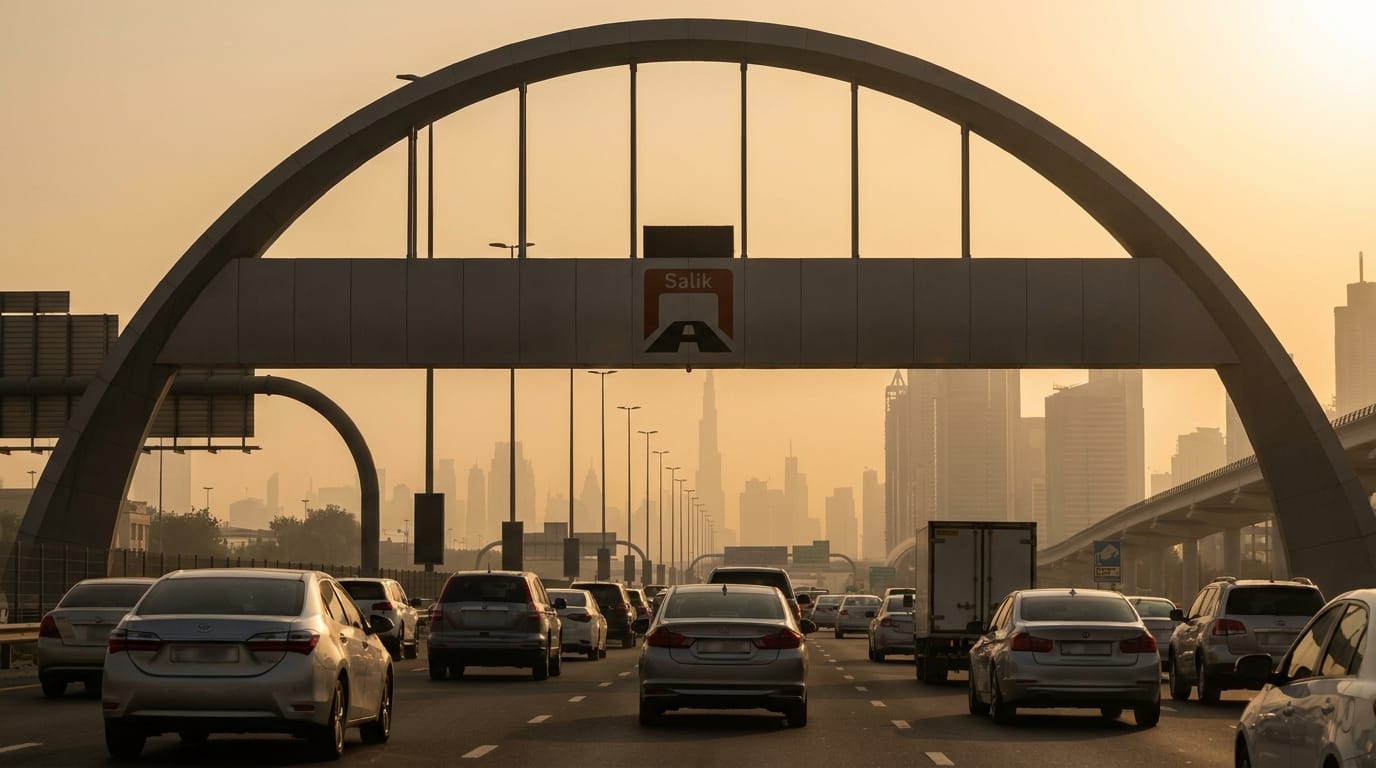
Salik is Dubai’s electronic road toll system, operated by the Roads and Transport Authority (RTA). Vehicles registered in Dubai are fitted with a Salik tag — a radio-frequency sticker on the windshield. When you pass under a Salik gate, the toll is automatically deducted from your prepaid balance.
Current Salik Gates and Charges
As of mid-2026, the Salik toll per crossing is 4 AED. There is no cap on daily crossings — each pass is charged individually. The gates currently active across Dubai include Al Garhoud Bridge, Al Maktoum Bridge, Al Safa (two gates), Airport Tunnel, Jebel Ali, Meydan, and Al Mamzar. Routes through central Dubai, the Sheikh Zayed Road corridor, and the Al Garhoud area commonly trigger multiple crossings in a single commute.
You can monitor your Salik balance and transaction history through the official Salik portal or the RTA Dubai app. Minimum recharge is 50 AED. If your balance drops to zero, a 4 AED debit grace crossing is allowed, but the account is then suspended until recharged.
When You Cross Multiple Gates
This is where many expats miscalculate. A single trip from Jumeirah Village Circle (JVC) to Deira — a common route for workers employed near the old Dubai Creek area — can trigger three Salik crossings: Al Safa, Airport Tunnel, and Al Garhoud. That is 12 AED one way, 24 AED per day, roughly 480 AED per month on Salik alone.
How Public Parking Works in Dubai
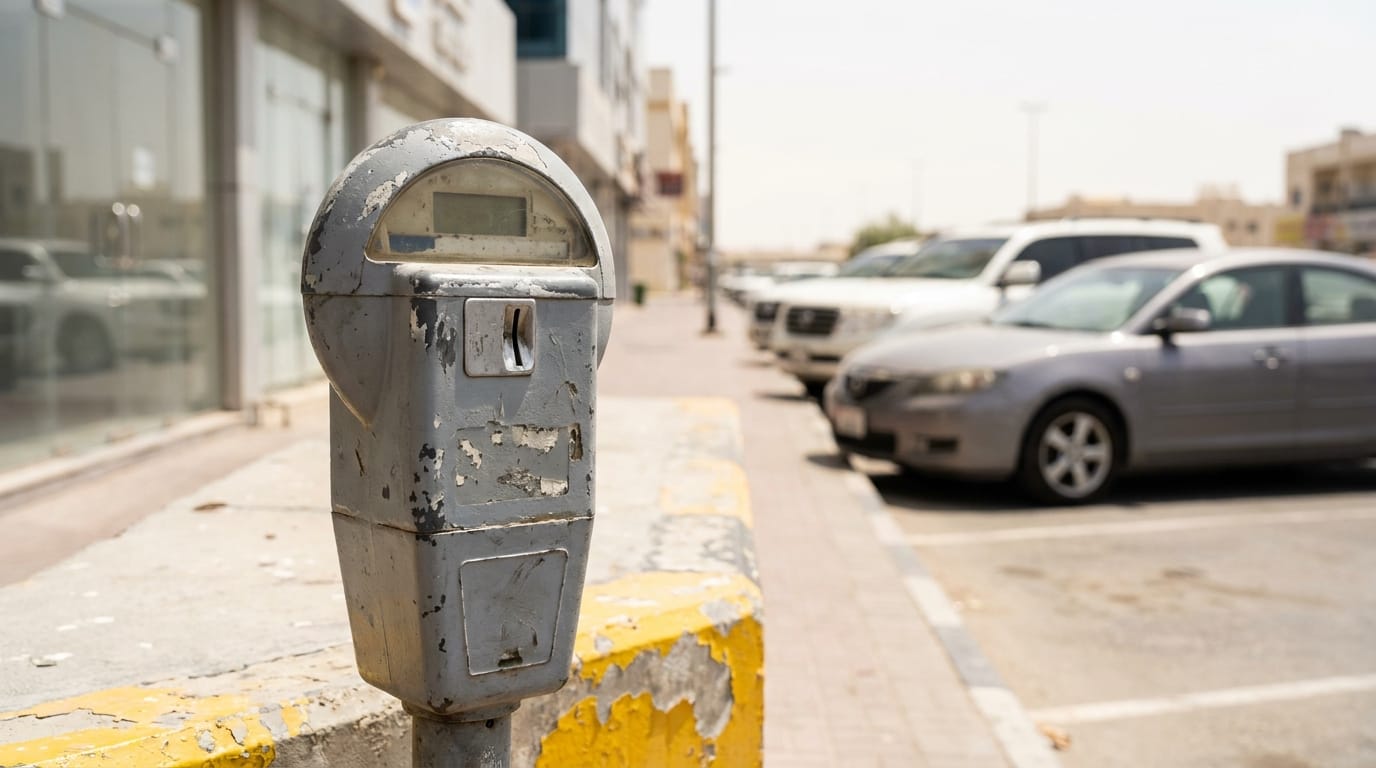
Dubai’s paid parking zones are managed by the RTA and cover most commercial, retail, and mixed-use areas across the city. Zones are color-coded on parking meters and signage.
Paid Zone Hours and Rates
Standard paid parking in most zones operates from 8:00 AM to 10:00 PM, Saturday through Thursday. Fridays are generally free in most areas, though some high-demand zones such as Downtown Dubai, DIFC, and parts of Business Bay now enforce paid parking on Fridays. You can pay via the RTA mParking app, parking meters, or SMS.
Hourly rates vary by zone. As of 2026, typical rates in most central Dubai zones run between 2 and 4 AED per hour. Some premium areas charge higher rates. A standard 8-hour workday in a paid zone costs approximately 16 to 32 AED depending on location and zone type. Check current rates through the RTA Parking Services portal.
Free Parking Areas in Dubai
Free parking still exists in significant portions of Dubai, particularly in older residential neighborhoods, outer industrial areas, parts of Deira, portions of Bur Dubai, and most of the newer outer suburban communities including International City, Silicon Oasis, and Discovery Gardens. Drivers who live and work entirely within free-zone corridors can realistically spend close to zero on parking annually.
Residential Parking Permits
RTA offers annual residential parking permits for buildings within paid zones. These typically cover overnight parking at a fixed annual fee significantly below what daily parking would cost. If your building is in a paid zone without a dedicated car park, a residential permit is worth calculating into your annual budget. Details and current fees are available through the RTA portal.
Factors That Affect Your Annual Driving Budget
flowchart TD
    A[Annual Driving Budget Dubai] --> B[Salik Gates Crossed]
    A --> C[Workplace Parking]
    A --> D[Commute Days per Week]
    A --> E[Personal Weekend Driving]
    B --> F[0 to 8+ Crossings Daily]
    C --> G[Free vs. Paid Zone]
    classDef default fill:#000000,color:#ffffff,stroke:#000000;
Before working through the zone-by-zone estimates, it helps to understand the four variables that most directly control your total annual Salik and parking spend.
Variable 1 — Number of Salik Gates on Your Route
This single factor matters more than any other. A driver who crosses zero Salik gates pays nothing regardless of how many kilometers they drive. A driver who crosses two gates each way pays roughly 8,000 AED per year in Salik alone on a standard 250-day working calendar.
Variable 2 — Workplace Parking
Many employers in free zones, industrial areas, and suburban office parks provide free parking. Companies in Downtown Dubai, DIFC, and Business Bay often do not — or charge employees for allocated spaces. The difference between free workplace parking and paid parking can be 3,000 to 6,000 AED annually for a full-time worker.
Variable 3 — Working Days and Hybrid Arrangements
A driver working five days per week accumulates approximately 250 working days per year. A hybrid worker at three days per week in the office accumulates around 150 days. This difference alone reduces annual Salik and parking spend by roughly 40 percent.
Variable 4 — Weekend and Evening Driving
Mall visits, social driving, grocery runs, and weekend trips add meaningful costs for drivers living near paid zones. A family making one mall trip and two social outings per week in a paid-zone area can add 1,500 to 2,500 AED annually to their parking total.
Estimated Annual Salik Costs by Daily Commute
The table below uses 250 working days as the baseline for full-time commuters. All figures represent return trip totals (both directions combined) at the current 4 AED per crossing rate.
| Crossings Per Day (Return) | Daily Salik Cost | Monthly Estimate | Annual Estimate | Typical Route Example |
|---|---|---|---|---|
| 0 crossings | 0 AED | 0 AED | 0 AED | Silicon Oasis to Academic City |
| 2 crossings (1 each way) | 8 AED | ~176 AED | ~2,000 AED | JVC to Al Quoz Industrial |
| 4 crossings (2 each way) | 16 AED | ~352 AED | ~4,000 AED | Dubai Marina to Downtown Dubai |
| 6 crossings (3 each way) | 24 AED | ~528 AED | ~6,000 AED | Mirdif to Media City via Al Garhoud |
| 8 crossings (4 each way) | 32 AED | ~704 AED | ~8,000 AED | International City to JLT or DIFC |
Hybrid workers (3 days/week in office) should apply a 0.6 multiplier to the annual figures above. A 4-crossing-per-day commuter working hybrid would spend approximately 2,400 AED annually on Salik instead of 4,000 AED.
Estimated Annual Parking Costs
Parking costs vary dramatically based on whether your employer provides parking and how much personal driving you do outside of work hours.
| Parking Situation | Monthly Estimate | Annual Estimate | Notes |
|---|---|---|---|
| Free workplace parking, free home area | ~50 AED | ~600 AED | Occasional mall/social parking only |
| Free workplace parking, paid home zone | ~200 AED | ~2,400 AED | Residential permit or evening paid parking |
| Paid workplace (daily metered) | ~400–700 AED | ~4,800–8,400 AED | Central Dubai: DIFC, Downtown, Business Bay |
| Monthly workplace permit (if offered) | ~300–500 AED | ~3,600–6,000 AED | Some buildings offer monthly discounted permits |
| Valet-heavy lifestyle (frequent dining/malls) | +200–400 AED | +2,400–4,800 AED | Add-on to any above scenario |
Annual Budget by Popular Residential Areas
Where you live determines both your Salik exposure and your home parking situation. The estimates below assume a standard office commute to a typical Dubai employment cluster.
Dubai Marina and JBR
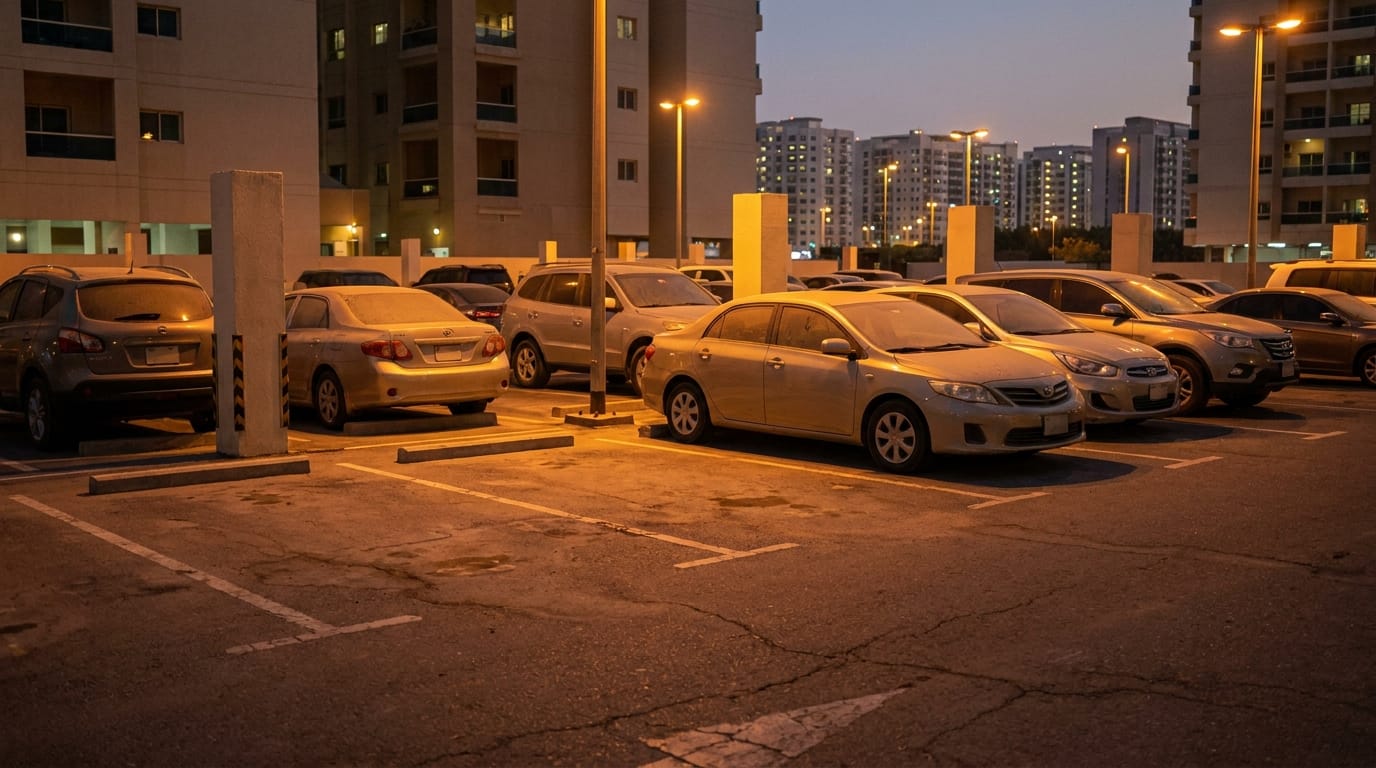
Residents here typically cross Al Safa gates heading toward central Dubai. Expect 2 to 4 Salik crossings per day for most employment destinations. Home parking is generally included in building packages, though visitor and weekend parking in the Marina Walk and JBR Walk areas is metered. Annual Salik estimate: 4,000 to 6,000 AED. Home parking: generally low additional cost if building parking is included.
Jumeirah Village Circle (JVC)
JVC sits inside the outer ring of Dubai with reasonable access to both the Sheikh Mohammed Bin Zayed Road and Al Khail Road corridors, which bypass several Salik gates. Commuters heading to Media City, Internet City, or JLT can often manage 0 to 2 crossings per day. Those heading to Downtown, DIFC, or Deira cross more. Annual Salik estimate: 1,000 to 4,000 AED depending on destination. Parking at most JVC buildings is free and included.
Business Bay and Downtown Dubai
Living here places you near the highest concentration of employment, reducing commute distance — but paid parking for visitors and personal errands is a near-daily reality. Salik exposure is moderate for outbound trips. The main ongoing cost is evening and weekend parking around the Dubai Mall, Dubai Fountain area, and Old Town. Annual Salik: 1,000 to 3,000 AED. Annual parking (personal): 2,000 to 5,000 AED depending on lifestyle.
Al Barsha
Al Barsha is well positioned relative to the Mall of the Emirates employment cluster, Media City, and Internet City. Most routes to these destinations involve 0 or 1 Salik crossing. Commuters heading east toward Downtown or DIFC cross Al Safa. Annual Salik: 500 to 3,000 AED. Home parking: generally free in residential buildings.
Deira and Bur Dubai
These older districts offer largely free street parking and residential parking in most areas. Salik exposure depends heavily on whether your work is also in the eastern parts of Dubai. Commuters heading west to Media City, Marina, or JLT cross multiple Salik gates and Al Maktoum or Al Garhoud bridges. Annual Salik for western commuters: 4,000 to 8,000 AED. For workers staying within the Deira-Bur Dubai-Al Quoz triangle: often under 1,000 AED annually.
International City
One of Dubai’s most budget-conscious residential zones. No Salik gates within the community. However, almost any commute to central Dubai crosses multiple gates, making this one of the highest annual Salik cost scenarios for office workers. A commute to DIFC or Downtown from International City typically crosses 3 to 4 gates each way. Annual Salik: 6,000 to 9,000 AED. Parking at home: generally free.
Silicon Oasis and Academic City
Minimal Salik exposure for workers employed within the tech and academic clusters of these zones. Free workplace and residential parking is common. Annual Salik for local workers: under 1,000 AED. For commuters to central Dubai: 4,000 to 6,000 AED.
Mirdif
Mirdif residents heading to central Dubai or the western employment clusters typically cross the Al Garhoud Bridge and Airport Tunnel gates. Annual Salik: 2,000 to 6,000 AED. Parking at home is free in most Mirdif villas and apartments. The City Centre Mirdif mall area has metered parking in outer zones but free parking in most of the larger car parks. For buyers considering Mirdif as a base, the Sharjah vs Dubai market comparison covers how proximity to Sharjah affects both car purchase options and daily commute tolls.
Arabian Ranches and Outer Villa Communities
These communities sit largely outside the Salik gate network for internal travel, but almost any commute into central Dubai or toward the coast passes through Al Safa or Jebel Ali gates. Annual Salik for standard office commuters: 3,000 to 6,000 AED. Home parking is free in all villa communities.
Annual Budget by Workplace Location
Your employment destination is often more predictable than your residential area, making this a practical starting point for budget planning.
| Workplace Area | Parking Situation | Typical Annual Parking Cost | Notes |
|---|---|---|---|
| DIFC | Paid metered or validated | 4,800–8,400 AED | Limited free validation; most workers pay |
| Business Bay | Mixed — building-dependent | 3,600–7,200 AED | Some buildings include parking; many do not |
| Downtown Dubai | Paid — high demand zone | 4,800–8,400 AED | Among Dubai’s most expensive parking zones |
| Media City / Internet City | Generally free within campus | 600–1,200 AED | Free on-campus; metered on surrounding roads |
| Jebel Ali Free Zone | Free within zone | 500–800 AED | Personal errands outside zone cost extra |
| Dubai South | Free in most areas | 400–700 AED | Low-density area; minimal meter coverage |
| Al Quoz Industrial | Free street parking | 200–500 AED | Informal parking; minimal enforcement |
| Dubai Airport / Deira clusters | Mixed — time-sensitive | 1,500–4,000 AED | Airport vicinity has paid zones; side streets free |
Home-to-Work Commute Scenarios
The following scenarios combine residential location, workplace destination, and daily driving pattern to produce a realistic combined Salik and parking annual estimate.
Scenario A — JVC to Media City (Common Expat Route)
Route uses Al Khail Road or Sheikh Mohammed Bin Zayed — typically 0 Salik crossings. Free parking at Media City. Annual Salik: 0 AED. Annual parking: ~600 AED (weekend and personal errands). Combined annual total: approximately 600 AED. This is among the most cost-efficient commutes in Dubai.
Scenario B — Dubai Marina to DIFC
Route via Sheikh Zayed Road crosses Al Safa gate both ways — 2 crossings per day. Workplace parking at DIFC is typically paid. Annual Salik: ~2,000 AED. Annual parking: ~5,000 to 7,000 AED. Combined annual total: approximately 7,000 to 9,000 AED.
Scenario C — Mirdif to Business Bay
Route via Al Garhoud Bridge crosses 2 Salik gates each way (4 crossings/day). Business Bay workplace parking is mixed but often paid. Annual Salik: ~4,000 AED. Annual parking: ~4,000 to 6,000 AED. Combined annual total: approximately 8,000 to 10,000 AED.
Scenario D — International City to Al Quoz
Route via Dubai-Al Ain Road and then inner roads — typically 2 to 3 Salik crossings each way. Workplace parking at Al Quoz is free. Annual Salik: ~4,000 to 6,000 AED. Annual parking: ~200 to 500 AED. Combined annual total: approximately 4,200 to 6,500 AED.
Scenario E — Al Barsha to Deira (Sales/Field Role)
A sales representative driving across the city daily may cross 4 to 6 Salik gates per day. Add paid parking in commercial Deira areas. Annual Salik: ~6,000 to 8,000 AED. Annual parking: ~2,000 to 4,000 AED. Combined annual total: approximately 8,000 to 12,000 AED. This is typical for field sales roles covering multiple Dubai districts daily.
Real Annual Cost Examples by Driver Type
Example 1 — Office Worker, Standard Commute
Indian expat, lives in JVC, works in Internet City, five days per week. Zero Salik crossings on primary route. Free workplace parking. Drives to mall twice weekly. Annual Salik: 0 AED. Annual parking: ~800 AED (weekend and grocery trips). Annual total: ~800 AED.
Example 2 — Finance Professional, Central Dubai
Pakistani expat, lives in Business Bay, works in DIFC. Two Salik crossings per day. Employer does not provide parking. Annual Salik: ~2,000 AED. Annual parking (workplace): ~5,500 AED. Evening and weekend parking: ~1,500 AED. Annual total: ~9,000 AED.
Example 3 — Family Driver, Eastern Suburbs
Filipino family, lives in Mirdif, one parent works in Media City, other manages school runs in Deira area. Combined daily crossings: 4 to 6 per day across both routes. Annual Salik: ~5,000 to 7,000 AED. Parking: ~1,000 AED (mostly free areas). Annual total: ~6,000 to 8,000 AED.
Example 4 — Hybrid Worker, 3 Days Per Week
British expat, lives in Dubai Marina, works in Downtown Dubai (3 days/week in office). Annual Salik (adjusted for hybrid): ~1,200 AED. Annual parking (workplace, 3 days): ~3,000 to 4,200 AED. Annual total: ~4,200 to 5,400 AED.
Example 5 — Weekend Driver, Free Zone Worker
Bangladeshi expat, lives and works in Jebel Ali Free Zone, drives into the city on weekends only. Annual Salik: ~500 to 1,000 AED. Annual parking: ~400 to 800 AED. Annual total: under 1,800 AED.
Monthly vs Annual Budget Comparison
flowchart TD
    A[Dubai Commuter Cost Profiles] --> B[Low Exposure: Under 2,000 AED]
    A --> C[Moderate Exposure: 4,000 - 8,000 AED]
    A --> D[High Exposure: 9,000 - 14,000+ AED]
    B --> E[Outer Zones & Free Parking]
    C --> F[Hybrid Workers & Partial Salik]
    D --> G[Central Dubai & Field Sales]
    classDef default fill:#000000,color:#ffffff,stroke:#000000;
| Driver Profile | Monthly Average | Annual Total |
|---|---|---|
| Minimal exposure (outer zones, free parking) | 50–150 AED | 600–1,800 AED |
| Low Salik, some paid parking | 200–400 AED | 2,400–4,800 AED |
| Moderate Salik, paid workplace parking | 500–750 AED | 6,000–9,000 AED |
| High Salik, central Dubai parking | 750–1,000 AED | 9,000–12,000 AED |
| Sales/field role, multi-zone daily driving | 800–1,200 AED | 9,600–14,400 AED |
Salik vs Fuel: Which Costs More?
For most Dubai commuters, fuel is the larger annual cost — but Salik closes the gap faster than expected for cross-city commuters. A driver covering 40 km per day in a typical sedan at 12 liters per 100 km, with UAE fuel at roughly 3.20 AED per liter, spends approximately 460 AED per month on fuel — around 5,500 AED annually.
A driver crossing 4 Salik gates daily spends 4,000 AED annually on tolls. The combined Salik and fuel figure for this profile is roughly 9,500 AED per year — before insurance, maintenance, and parking are added.
The key insight: on long cross-city commutes with multiple Salik crossings, the toll cost becomes comparable to fuel cost. On short, low-toll commutes, fuel dominates and Salik is negligible.
Parking vs Public Transport: Annual Cost Comparison
For commuters frustrated by rising parking costs, the math on public transport is worth running once. A Dubai Metro monthly pass currently costs approximately 350 AED. Annual cost: around 4,200 AED, covering unlimited metro trips.
A commuter paying 500 AED per month in combined Salik and parking saves approximately 1,800 AED per year by switching to the Metro — plus they eliminate fuel costs for the commute entirely. However, this only applies to routes with practical Metro access. For workers in areas not served by Metro, the calculation does not apply.
If you work near a Metro line and pay more than 400 AED monthly in Salik and parking combined, the financial case for Metro commuting is worth examining. You can check current Nol card and pass pricing through the RTA Nol Card portal.
Best Residential Areas for Lower Commuting Costs
Based on combined Salik and parking exposure, the following areas consistently produce lower annual commuting costs — particularly for workers in the western and central employment clusters:
| Area | Why Costs Are Lower | Best For Workers In |
|---|---|---|
| JVC | Multiple Salik-free route options; free building parking | Media City, Internet City, JLT, Al Quoz |
| Al Barsha | Close to western employment clusters; minimal toll exposure | Mall of Emirates area, Media City, Al Quoz |
| Jebel Ali / Discovery Gardens | Free parking; Jebel Ali gate only relevant for eastern trips | Jebel Ali Free Zone, Dubai South |
| Silicon Oasis | Self-contained tech zone; minimal Salik if working locally | Silicon Oasis, Academic City, nearby tech parks |
| Deira / Bur Dubai | Mostly free street parking; low Salik if working locally | Gold Souk area, Deira Creek, Bur Dubai commercial |
Areas With Highest Annual Driving Costs
Living in a premium central location or far-eastern suburb and commuting to central employment consistently produces the highest annual Salik and parking bills. International City to DIFC, Palm Jumeirah to Deira, and Mirdif to Downtown are among the most expensive combinations — typically producing annual combined costs above 9,000 AED.
The Palm Jumeirah adds a specific cost layer: the Palm Monorail is not a substitute for road driving, and the two main Palm access points both connect to areas with Salik exposure. Residents here commonly cross 3 to 5 Salik gates for standard central Dubai trips.
How Hybrid Working Changes Your Annual Budget
Hybrid work is now standard across many Dubai employers. The budget impact is direct and proportional. Moving from 5 office days to 3 office days reduces Salik and commute parking costs by approximately 40 percent — simply because there are fewer commute days.
A worker who previously spent 6,000 AED annually on Salik and parking at 5 days/week would spend approximately 3,600 AED at 3 days/week — a saving of 2,400 AED annually. If you have recently shifted to hybrid working, recalculating your monthly transport budget using your actual office days is worth doing.
How Remote Workers Can Reduce Costs
Fully remote workers in Dubai who primarily drive for personal errands, groceries, and social activities often spend under 2,000 AED annually on Salik and parking combined — particularly if they live in communities with free parking and avoid premium central areas. The main residual cost is weekend driving near malls and restaurants in paid zones.
Remote workers can further reduce costs by scheduling personal errands in free-parking outer areas like Al Quoz, Deira, and International City rather than regularly driving to Dubai Mall, JBR Walk, or Downtown. This behavioral adjustment can save 500 to 1,200 AED annually on parking alone.
How Families Can Reduce Annual Parking Expenses
Families with school-age children often face additional driving patterns: school runs, activity pickups, weekend leisure. A few practical adjustments produce meaningful savings. Choosing schools with free drop-off zones and adequate on-site parking reduces morning and afternoon costs. Planning weekend activities around destinations with free parking — Mushrif Park, Al Mamzar Beach Park, community parks — rather than paid-zone malls and beach clubs reduces incidental parking spend meaningfully over a year.
Families also benefit from reviewing whether both adults need cars or whether a single-car arrangement with Metro supplementation is viable. Eliminating one car’s Salik and parking exposure saves the full annual amount for one commute profile — often 4,000 to 8,000 AED annually.
Common Budgeting Mistakes Dubai Drivers Make
Mistake 1 — Ignoring Salik When Choosing Where to Live
Many expats choose accommodation based on rent, proximity to amenities, and community feel — without calculating the Salik toll cost of their likely daily commute. A AED 500 monthly rent saving in a far-eastern location can be entirely offset by daily Salik crossings to a central workplace.
Mistake 2 — Assuming Mall Parking Is Free
Most Dubai malls charge for parking beyond a validation threshold or after a certain number of free hours. Dubai Mall, Mall of the Emirates, and City Walk all have paid parking structures. Regular mall visitors who assume parking is generally free can accumulate 100 to 200 AED monthly in unexpected parking costs.
Mistake 3 — Calculating Salik on One Direction Only
A common error is doubling the number of gate crossings per day but only checking one direction of the route. If you cross two gates going to work, you cross two returning — four total daily crossings, not two. Budget accordingly.
Mistake 4 — Ignoring Guest and Visitor Parking Costs
If you live in a building in a paid zone without guest parking, visitors park on metered streets. This is rarely a large cost, but families and socially active residents in central areas sometimes find their visitors’ parking adds up to 100 to 300 AED monthly in incidental costs or reimbursements.
Tips to Reduce Annual Salik Costs
- Use Google Maps or Waze with Salik gate avoidance enabled before committing to a regular route — free alternatives often exist on Al Khail Road and Sheikh Mohammed Bin Zayed Road corridors.
- Check your Salik balance weekly. A depleted balance at a gate creates a debt deduction — if you do not notice, it can lead to account suspension and re-registration fees.
- For trips where the time saving is minimal, the longer free route may save 8 to 16 AED per trip — meaningful over hundreds of trips annually.
- If your employer offers a transport allowance, factor Salik into your negotiation. Many Dubai employers include Salik in their standard transport stipends, but only if it is explicitly included in the employment contract.
- The annual ownership calendar for UAE drivers is a practical tool for tracking all recurring car costs including Salik recharges.
Tips to Reduce Parking Costs
- Download the RTA mParking app. It allows you to end parking sessions remotely — so you only pay for time actually used, not the full hour you estimated.
- If your workplace is in a paid zone, ask HR whether the building has a monthly parking permit scheme. Monthly rates are typically lower than daily metered parking.
- For regular visitors to specific areas, check whether annual residential permits or business permits are available and whether they apply to your situation.
- In central Dubai, street parking on side roads is often metered at lower rates than podium car parks. A two-minute walk from a 2 AED/hour side street versus a 4 AED/hour building car park saves around 500 AED annually for a daily office worker.
- When planning personal errands, clustering multiple stops in a single parking session reduces individual parking fees. Three quick stops in three separate paid zones costs more than three stops within walking distance of one parking space.
Annual Budget Calculator: Step-by-Step Examples
Use this framework to estimate your own annual Salik and parking total.
Step 1: Count your Salik crossings per day (both directions). Multiply by 4 AED. Multiply by your working days per year (typically 220 to 260). This gives your annual Salik estimate.
Step 2: Determine your daily workplace parking cost. Multiply by your working days. Add any monthly residential parking fees multiplied by 12.
Step 3: Estimate weekly personal/social parking. A reasonable estimate for an active family is 50 to 100 AED per week. Multiply by 52.
Step 4: Add the three figures together. Cross-check against the scenario tables in this article to sense-check your result.
Example calculation for a Sharjah-based driver working in DIFC: 6 daily Salik crossings × 4 AED × 250 days = 6,000 AED Salik. Paid DIFC parking at 3,500 AED/year. Personal parking 60 AED/week × 52 = 3,120 AED. Annual total: approximately 12,620 AED. This is a significant figure for any budget-conscious expat to plan around. For context on broader ownership costs, the full monthly ownership breakdown for Dubai-based drivers provides additional context.
Illustrative Field Scenarios: Workshop and Market Patterns
Example scenarios based on recurring UAE market patterns, not actual documented cases.
Scenario — Indian Engineer, JVC to Business Bay
An Indian software engineer renting in JVC and working in Business Bay initially estimated his Salik costs at around 100 AED per month. After tracking actual crossings via the Salik app, he found he was crossing Al Safa twice daily — totaling approximately 175 AED per month in Salik alone. He also discovered his building charged 150 AED monthly for parking. His actual combined annual spend was closer to 3,900 AED rather than the 1,200 AED he had budgeted. Adjusting to a partially remote arrangement reduced this to approximately 2,400 AED annually.
Scenario — Filipino Family, Mirdif to Multiple Destinations
A Filipino family with two working adults and two school-age children in Mirdif tracked their driving costs over six months. One parent commuted to Deira (low Salik), the other to Media City (higher Salik via Al Garhoud). School runs added daily crossings. Combined annual Salik estimate: between 5,000 and 7,000 AED. Mall visits, weekend outings, and activity drop-offs added approximately 1,200 AED in parking annually. Planning school and activity locations closer to home would reduce their combined annual total by an estimated 1,500 to 2,000 AED.
Scenario — British Sales Manager, Multi-Zone Field Driving
A British sales manager covering accounts in DIFC, Jebel Ali, and Deira in a single working week crossed between 6 and 10 Salik gates per day. Annual Salik spend tracked at approximately 9,000 to 11,000 AED. His employer covered workplace parking but not Salik. During contract renewal negotiations, he successfully included a monthly Salik allowance of 500 AED in his revised package — reducing his personal exposure to approximately 5,000 to 7,000 AED annually.
Salik Fraud and Scam Awareness for Expats
🚨 Warning — Salik Phishing Scams: Fraudulent SMS and email messages claiming your Salik account has unpaid charges or requires urgent reactivation have been widely reported across Dubai. These messages often include fake payment links. The official Salik system communicates through the RTA app and the verified salik.ae website only. Never click payment links in unsolicited messages. If you receive one, check your balance directly through the official Salik portal or RTA app before taking any action.
A related scam involves third-party “Salik top-up” services promoted through social media, promising discounted recharges. These are not affiliated with RTA. Salik recharges should only be made through the official Salik portal, RTA app, petrol stations, or authorized RTA service centers. You can verify the current list of authorized recharge points through the expat traffic fines and RTA guide.
The Bottom Line Decision Framework
| Your Situation | Practical Recommendation |
|---|---|
| Choosing between two apartments at similar rents | Calculate annual Salik cost for each location against your workplace. A 500 AED rent difference can be wiped out by 1–2 extra daily Salik crossings. |
| Starting a new job in central Dubai (DIFC/Downtown) | Budget 5,000–9,000 AED annually for combined Salik and parking before accepting a salary offer. Negotiate transport allowance into your package. |
| Considering hybrid or remote work arrangement | Every day removed from the office reduces Salik and parking proportionally. A 3-day hybrid arrangement reduces annual commuting costs by roughly 40%. |
| Family with two commuting adults | Run the calculation for both commutes separately and add them together. Combined annual Salik for two cross-city commuters in Dubai often exceeds 10,000 AED. |
| Living in International City or far-east suburbs | Salik exposure to central Dubai is among the highest in the emirate. Consider Metro access seriously if your workplace is near a Metro station. |
| Budget-conscious new arrival | JVC, Al Barsha, and areas near free zones offer the best balance of rent, Salik exposure, and free building parking for most standard Dubai commutes. |
Data Sources and Methodology
Annual cost estimates in this article are based on the current Salik toll rate of 4 AED per crossing as published by the RTA, combined with observed RTA parking zone rates and market patterns across Dubai residential and commercial areas. All scenario figures represent realistic mid-range estimates; actual costs vary based on specific route, employer parking arrangements, and individual driving habits.
Government fee information referenced throughout this article was current as of mid-2026. Salik rates, parking zone boundaries, and RTA fees are subject to change. Readers should verify current rates through:
- Salik Official Portal — salik.ae
- RTA Dubai Official Website — rta.ae
- RTA Parking Services — rta.ae/parking
- RTA Nol Card and Public Transport — rta.ae/nol
ℹ Market Volatility Notice: All Salik, parking, and fuel cost figures in this article are estimates based on current rates and observed market patterns as of mid-2026. These figures are subject to change as RTA adjusts tariffs, zone classifications, and parking policies. Verify current rates directly through official RTA channels before finalizing your annual transport budget.
Frequently Asked Questions
Final Budget Planning Advice
Building a realistic annual Salik and parking budget for Dubai comes down to two numbers you can calculate before you even start driving: how many Salik gates your daily route crosses, and whether your workplace provides free parking.
Everything else — weekend driving, mall visits, social outings — adds a secondary layer that is largely within your control. The primary commute variables are largely fixed once you have chosen where to live and work.
A practical summary: if you live and work within the outer Dubai employment corridors (Media City, Internet City, Al Quoz, Jebel Ali, Silicon Oasis) with minimal cross-city driving, you can realistically budget under 2,000 AED annually for combined Salik and parking. If you commute daily from an eastern residential district to a central employment cluster (DIFC, Downtown, Business Bay), budget 7,000 to 10,000 AED annually as a conservative estimate. Cross-city field workers should add an additional 3,000 to 5,000 AED to whichever base figure applies to their situation.
For a complete view of annual car ownership costs beyond Salik and parking — including insurance, fuel, maintenance, and registration — the full ownership cost guide for Dubai expats provides all remaining line items needed to build a complete monthly vehicle budget.
Disclaimer: Emirates Cars is a 100% independent platform. We do not own showrooms, nor are we affiliated with any used car dealerships or garages. Our sole mission is to protect expats from financial fraud in the automotive market.
