Last Updated: Aug 2026 | By Omar Al-Fayed, Senior Automotive Consultant | Fact-Checked By: Emirates Cars Editorial Team | Category: Buying & Selling
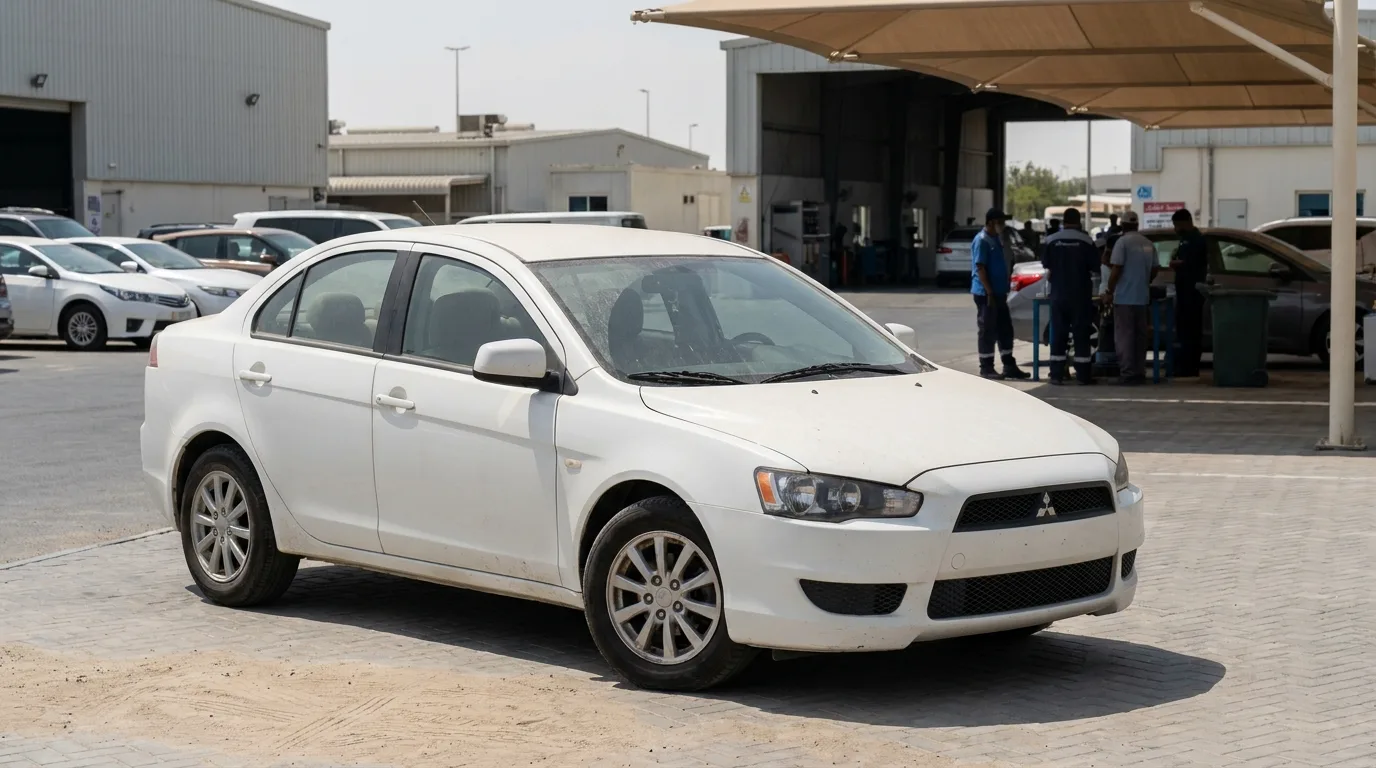
A used Mitsubishi Lancer can still be a practical UAE purchase. Before you pay a deposit, run through the used Mitsubishi Lancer problems UAE buyers most often flag: CVT transmission wear, oil consumption on certain 2.0-litre engines, suspension knocks, and AC performance once summer heat sets in. None of these affects every Lancer on the road. The outcome depends on service history, mileage, generation and how the car was driven before you saw it.
Used Mitsubishi Lancer Problems UAE Buyers Should Inspect First
TrueDelta provides owner-reported repair and reliability data for the Mitsubishi Lancer across multiple model years, including powertrain and chassis repair information. Use these data as supporting evidence rather than as a UAE-specific failure rate. Treat the table below as a checklist, not a verdict on every car.
| Problem area | What you may notice | What to check | Buying decision |
|---|---|---|---|
| CVT transmission (auto models) | Jerky acceleration, whining or metallic noise, delayed engagement | Cold start behavior, sustained highway speed, kickdown response | Negotiate or walk away if symptoms present |
| Tie-rod ends / suspension | Clunks over bumps, uneven tyre wear, vague steering | Front-end play, tyre shoulder wear | Usually negotiable wear item |
| Engine oil consumption (2.0L) | Blue smoke on start-up, low oil between changes | Oil level history, dipstick colour, exhaust smoke on cold start | Inspect before offering |
| A/C compressor | Weak cooling, clutch noise from compressor | Cooling performance on a hot test drive | Budget for repair if weak |
| Wheel bearing / hub | Humming noise that changes with speed | Test drive at varying speeds, wheel play check | Moderate repair cost, negotiable |
These are the most commonly reported items in that survey, not a list of guaranteed faults. Owner-reported frequency data should be treated as an indication of reported repair patterns, not as a claim that a specific percentage of all Lancers will develop the problem.
Decision Scenario: Choosing Between Two Similarly Priced Lancers
- If This Sounds Like You: You’re comparing a lower-mileage Lancer with a thin service file against a higher-mileage one with full stamped records.
- The Decision: Full service history vs. lower odometer reading.
- Recommended Action: Prioritise the car with verifiable service history and a clean accident history check over the one with only a lower number on the dash.
- Why: A documented CVT fluid change schedule reduces transmission risk more than an unverified low-mileage claim does.
Mitsubishi Lancer Transmission Problems: What to Check
Lancer transmission options varied by model year, engine, market and trim, so confirm the gearbox fitted to the specific UAE car by its VIN, specification and vehicle documentation. Not every Lancer on UAE roads has a CVT — a transmission that uses a belt and pulley system instead of fixed gears — so confirm which gearbox is fitted before assuming any of the points below apply.
Some Lancer CVT-equipped cars have documented complaints involving transmission behaviour and wear, but the available evidence does not establish a general mileage threshold at which symptoms appear. Inspect CVT operation and service history on the specific vehicle rather than relying on a mileage figure, and treat this as a pattern reported across multiple independent repair sources rather than a UAE-specific statistic.
On a test drive, run the car cold first, then again after 15–20 minutes of driving. A CVT that hesitates, drones under load, or produces a “slipping” sensation (engine revs rise without matching acceleration) needs a professional diagnostic before you negotiate further. A mild low-speed drone on acceleration can be a normal CVT characteristic; a delayed engagement from Park to Drive, or a warning light with reduced power (“limp mode”), is not normal and should stop the deal until diagnosed.
Check the transmission fluid condition and service intervals with a specialist — read the gearbox warning signs guide for the full symptom list before your inspection. Never assume a failure is guaranteed just because the car has a CVT; plenty of well-maintained units cover well past 150,000 km without issue.

Engine and Cooling System Problems to Check
Oil consumption can occur on high-mileage or poorly maintained Lancer engines, but the available evidence does not support treating excessive oil consumption or stalling as a universal 2.0-litre Lancer defect or assigning a single cause without diagnosis. Ask the seller for the last three oil change dates and check whether the oil level was ever noted as low between services.
| Symptom | Buyer can check | Needs professional inspection | Negotiate or walk away |
|---|---|---|---|
| Blue exhaust smoke on cold start | Yes – start engine cold, watch exhaust | Compression test | Negotiate on confirmed low compression |
| Coolant loss / overheating in traffic | Yes – check coolant reservoir level | Pressure test, radiator/fan check | Walk away if overheating confirmed |
| Weak AC cooling in summer | Yes – 10-minute cooling test | Compressor and refrigerant check | Budget for repair, negotiate |
UAE summer heat makes cooling-system and AC condition a bigger practical factor than in milder climates, since a marginal radiator or a weak compressor is tested every single drive. If the AC struggles on a mid-afternoon test drive, don’t take the seller’s word that “it just needs a recharge” — get it checked, and see the car AC not cooling guide for what a weak system actually costs to fix.
Suspension, Steering and Brake Problems
The TrueDelta data above points to tie-rod ends and struts as the most frequently replaced suspension parts. On a used Lancer inspection, listen for knocks over speed bumps at low speed and check for uneven tyre shoulder wear, which usually signals worn suspension bushings or incorrect alignment rather than a Lancer-specific design fault.
Normal wear you can price into your offer includes worn bushings, minor brake judder, and tyres nearing replacement. Wear needing immediate repair includes a knocking strut or a steering wheel that pulls to one side. A genuine safety stop-sale includes visible fluid leaks at the brake calipers, a spongy brake pedal, or excessive steering play — get these professionally checked before paying anything. For the full inspection sequence, see the suspension problems UAE guide.
Electrical, AC and Interior Problems
Electrical faults reported on the Lancer include intermittent power window switches, dashboard warning lights that stay lit after a repair, and clock spring (steering wheel wiring) faults that can trigger a horn or airbag light. Test every window, mirror adjustment, and switch during your viewing — a UAE cabin exposed to years of heat is where minor electrical faults surface fastest.
If the check-engine or airbag light is on, do not accept a verbal explanation. Have the fault codes pulled with a scan tool before negotiating, since the same light can mean anything from a loose sensor to a genuine safety component fault.
Accident, Flood and Poor-Repair Problems That Can Look Like Lancer Problems
Not every issue you find is a “Lancer problem.” A previous accident repair, water exposure, or years of skipped maintenance can create symptoms that look identical to a factory defect. Mismatched panel gaps, overspray inside the door jambs, or a musty interior smell after the AC runs are signs of prior accident or flood repair, not a transmission or engine fault.
Check the chassis/VIN against the vehicle documents, inspect the carpets and spare-wheel well for water evidence, and have the seat-belt and SRS system professionally inspected for signs of previous deployment or improper repair. If anything looks inconsistent, walk through the flood-damaged car checklist before you commit, and get a professional pre-purchase inspection rather than relying on a visual check alone.
Which Mitsubishi Lancer Problems Mean You Should Walk Away?
| Finding | Action |
|---|---|
| Minor age-related wear (bushings, worn tyres) | Negotiate |
| Repairable mechanical issue with a clear cost estimate | Negotiate only after inspection |
| Unclear or missing service history | Investigate further before offering |
| Serious CVT symptoms (limp mode, delayed engagement) | Professional diagnosis before purchase |
| Structural or major accident damage | Strong reason to walk away |
| Flood or water-exposure evidence | Strong reason to walk away |
| Safety-critical brake or steering fault | Do not purchase until repaired and independently verified |
Mitsubishi Lancer Pre-Purchase Inspection Checklist
- Verify the chassis/VIN number matches the registration card.
- Run a full accident history check before viewing.
- Request all available service records, not just the last invoice.
- Cold-start the engine and check for smoke or rough idle.
- Test the transmission cold, then again after 15–20 minutes.
- Check coolant level and look for white residue around the radiator.
- Run the AC for 10 minutes on a hot day before agreeing a price.
- Check for knocks over speed bumps and uneven tyre wear.
- Test steering feel at low and highway speed.
- Check brake pedal feel and look for fluid leaks at the calipers.
- Test every window, mirror, and dashboard warning light.
- Inspect the underbody for rust, water staining, or fresh undercoating.
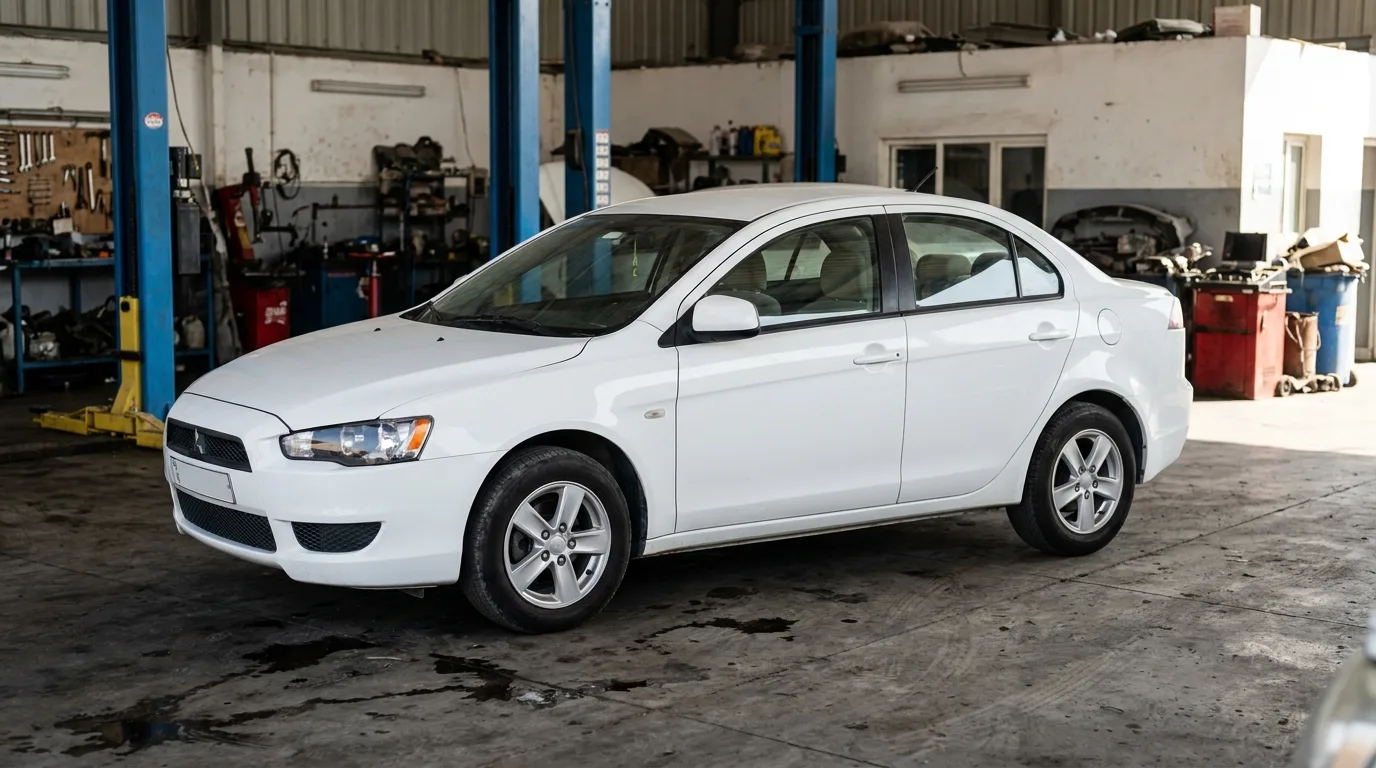
- Take it on a mixed test drive covering both city and highway conditions — follow the full test drive checklist.
- Book an independent pre-purchase inspection before final payment.
How Much Should You Worry About Mileage?
There is no single mileage cutoff that makes a Lancer unsafe to buy. A higher-mileage Lancer with strong service records and a clean independent inspection can be a better-supported purchase than a lower-mileage car with no verifiable history. Weigh mileage against service history, how the transmission behaves on your test drive, cooling system condition, suspension wear, and the accident-history result together, not mileage alone.
Should You Buy a Used Mitsubishi Lancer With Known Problems?
| Situation | Decision |
|---|---|
| Minor wear + good service history | Consider |
| Known repair with a documented cost estimate | Consider only after negotiating the price down |
| Multiple unresolved faults | Usually avoid |
| CVT symptoms present | Diagnose before purchase, don’t buy on promises |
| Structural or flood concerns | Avoid |
| Strong history + clean independent inspection | Stronger candidate |
Some used Mitsubishi Lancer problems UAE inspections turn up are routine wear items that can be priced into a negotiation, while structural damage, flood evidence or unresolved transmission problems can materially change the buying decision. If a seller resists an independent inspection or a test drive long enough to warm the transmission, treat that as information. Review the red flags used car dealer guide if anything about the sale feels rushed.
flowchart TD
classDef default fill:#000000,color:#ffffff,stroke:#000000,font-size:16px,padding:14px;
A[Found a used Lancer listing] --> B[Check service history and odometer]
B --> C{Records consistent?}
C -->|No| D[Walk away or investigate further]
C -->|Yes| E[Cold and warm test drive]
E --> F{CVT or engine symptoms?}
F -->|Yes| G[Professional diagnosis before offer]
F -->|No| H[Independent pre-purchase inspection]
H --> I{Structural or flood signs?}
I -->|Yes| D
I -->|No| J[Negotiate price on any minor wear]
J --> K[Proceed with purchase]
FAQs
Emirates Cars Editorial Methodology
This guide combines manufacturer and independent technical documentation with current UAE market listings and owner-reported reliability data.
Official and authoritative references used where applicable:
- RTA Dubai – Vehicle Testing (Tasjeel)
- TrueDelta Car Reliability Survey
- Dubizzle UAE – Used Mitsubishi Lancer Listings
Disclaimer: Emirates Cars is a 100% independent platform and is not affiliated with Mitsubishi Motors, any dealership, or any government entity. Information on vehicle condition, pricing and mechanical problems reflects general market and technical patterns and should be confirmed with an independent inspection before purchase.
