
Last Updated: July 2026 | By Omar Al-Fayed, Senior Automotive Consultant | Fact-Checked By: Emirates Cars Editorial Team | Category: Finance & Legal
Every expat who has bought a car in Dubai eventually discovers the same thing: the monthly loan payment is only a fraction of what car ownership actually costs. When you add fuel, insurance, maintenance, tyres, Salik, parking, and the invisible drain of depreciation, the real monthly cost of owning a car in Dubai is often 40 to 60 percent higher than the loan instalment alone.
This guide breaks down every recurring expense by category and by salary level, so you can calculate whether car ownership makes financial sense for your specific situation before you commit. If you are considering purchasing, our used car buying guide covers the step-by-step process in detail.
⚠ Financial Disclaimer: The information provided in this article is for educational purposes only. Banking regulations, auto loan interest rates, and lending criteria in the UAE are subject to periodic change. Readers should verify all terms directly with licensed UAE financial institutions or Central Bank portals before signing any contract.
Quick Monthly Cost Summary
The table below provides a realistic overview of average monthly ownership costs for a mid-range used sedan (approximately AED 35,000 to 50,000 purchase price) in Dubai. These are market estimates based on commonly observed ownership patterns, not officially published government statistics.
| Expense Category | Economy Sedan (Monthly) | Midsize Sedan (Monthly) | Compact SUV (Monthly) |
|---|---|---|---|
| Loan instalment (if financed) | AED 700 – 900 | AED 1,100 – 1,400 | AED 1,400 – 1,800 |
| Insurance (comprehensive) | AED 200 – 280 | AED 280 – 380 | AED 350 – 500 |
| Fuel (average commute) | AED 300 – 450 | AED 380 – 550 | AED 450 – 650 |
| Routine maintenance | AED 100 – 180 | AED 120 – 220 | AED 150 – 280 |
| Tyre allocation | AED 60 – 100 | AED 80 – 130 | AED 100 – 160 |
| Registration (monthly allocation) | AED 35 – 60 | AED 45 – 75 | AED 55 – 90 |
| Salik tolls | AED 80 – 200 | AED 80 – 200 | AED 80 – 200 |
| Parking | AED 50 – 200 | AED 50 – 200 | AED 50 – 200 |
| Depreciation (monthly allocation) | AED 350 – 600 | AED 500 – 900 | AED 700 – 1,100 |
| Emergency repair reserve | AED 150 – 250 | AED 150 – 250 | AED 150 – 250 |
| Estimated Monthly Total | AED 2,025 – 3,220 | AED 2,785 – 4,305 | AED 3,485 – 5,230 |
These figures assume standard UAE usage of approximately 1,000 to 1,500 km per month. Cash buyers replace the loan instalment with depreciation as their primary capital cost.
Why Car Ownership Costs More Than the Monthly Loan
Most first-time car buyers in Dubai compare loan instalments. This comparison misses the majority of the true ownership cost. The loan covers the financing cost of the vehicle. Everything else — fuel, insurance, maintenance, tyres, Salik, parking, registration renewal, and depreciation — sits entirely outside the loan payment.
Depreciation is particularly underestimated. A used Toyota Corolla purchased for AED 42,000 may be worth AED 32,000 to 34,000 after two years of average UAE use. That loss of AED 8,000 to 10,000 over 24 months works out to AED 333 to 417 per month — an invisible cost that never appears in a bank statement but directly affects your net financial position.
Insurance is another area where estimates consistently fall short. Comprehensive insurance for a used car in Dubai typically costs between 3 and 5 percent of the vehicle’s declared value annually, depending on the driver’s age, nationality, claims history, and the insurer. For a AED 40,000 vehicle, that represents AED 1,200 to 2,000 per year, or AED 100 to 167 per month.
When buyers calculate only the loan instalment, they frequently underestimate monthly car costs by 40 to 60 percent. For a complete expat ownership overview, the combined figures tell a very different story than the dealer’s monthly payment sheet.
Complete Monthly Cost Formula
Use this formula to calculate your personal monthly ownership cost before committing to a purchase.
| Component | How to Calculate | Typical Range (AED/month) |
|---|---|---|
| Loan instalment | Bank quote or online calculator | 700 – 2,000+ |
| OR Depreciation (cash buyers) | Expected resale loss ÷ ownership months | 300 – 1,200+ |
| Comprehensive insurance | Annual premium ÷ 12 | 100 – 500+ |
| Fuel | Monthly km ÷ fuel economy × price per litre | 250 – 700+ |
| Routine maintenance | Annual service cost ÷ 12 | 80 – 300 |
| Tyre allocation | Set of 4 tyres ÷ expected months of life | 60 – 200 |
| Registration renewal | Annual fee ÷ 12 | 35 – 100 |
| Salik tolls | Estimated daily crossings × days per month | 0 – 300+ |
| Parking | Residential + workplace + occasional | 50 – 400+ |
| Emergency repair reserve | Fixed monthly buffer | 150 – 300 |
| Car washing | Monthly frequency × cost per wash | 40 – 120 |
| Your Personal Total | Sum of all rows | Varies |
Average Monthly Cost by Salary Level
A commonly used guideline in UAE financial planning is that total car ownership costs should not exceed 15 to 20 percent of net monthly income. The scenarios below apply this guideline to common expat salary levels.
AED 3,000 Salary — Car Ownership is Financially Difficult
At AED 3,000 per month, 15 to 20 percent of income allows AED 450 to 600 for car ownership. The minimum realistic monthly cost for even the cheapest reliable used car (Nissan Sunny, Toyota Yaris) is approximately AED 1,800 to 2,200 once all costs are included. This gap makes car ownership financially unsustainable at this salary level without significant compromises elsewhere in the budget. Public transport or shared transport is the practical alternative.
AED 5,000 Salary — Possible with Cash Purchase and Careful Selection
At AED 5,000 monthly, the 15 to 20 percent band allows AED 750 to 1,000 per month for car costs. This is achievable only with a cash purchase of a reliable economy car (AED 15,000 to 22,000 range), third-party insurance, and low daily mileage. Financing at this salary level pushes total costs to AED 2,000+ per month, which represents 40 percent of income — well outside sustainable limits. cash vs loan comparisons for this income bracket consistently favour cash purchases of older reliable models.
AED 7,000 Salary — Manageable with Economy Segment
The affordable monthly range is AED 1,050 to 1,400. A financed economy sedan (Toyota Yaris, Nissan Sunny, Mitsubishi Attrage) purchased in the AED 25,000 to 35,000 range fits within this band. Third-party or basic comprehensive insurance keeps costs down. Salik usage and parking choices significantly affect whether the budget holds.
AED 10,000 Salary — Mid-Range Sedan is Viable
At AED 10,000 net, the 15 to 20 percent band allows AED 1,500 to 2,000 monthly. A financed Toyota Corolla, Nissan Altima, or Honda Civic in the AED 35,000 to 55,000 range fits comfortably within this limit. Comprehensive insurance is manageable. Depreciation and fuel become the variables to monitor closely.
AED 15,000 Salary — Full Midsize Sedan or Compact SUV
The affordable range expands to AED 2,250 to 3,000 monthly. A financed compact SUV (Toyota RAV4, Nissan X-Trail, Honda CR-V) or a premium sedan (Toyota Camry, Honda Accord) in the AED 60,000 to 90,000 range is feasible without financial stress. used Camry ownership data confirms that total monthly running costs for well-maintained examples typically fall between AED 2,200 and 2,900 at this usage level.
AED 20,000+ Salary — Broad Options Available
Above AED 20,000 monthly, the budget allows AED 3,000 to 4,000 for car costs. This covers financed midsize SUVs, luxury entry sedans, or two reliable economy cars for a family. The primary decisions shift from affordability to depreciation management and resale planning.
| Monthly Salary | Affordable Monthly Car Budget (15–20%) | Practical Vehicle Tier | Finance or Cash? |
|---|---|---|---|
| AED 3,000 | AED 450 – 600 | Not viable — public transport recommended | Neither |
| AED 5,000 | AED 750 – 1,000 | Cash only — AED 15,000–22,000 used economy | Cash only |
| AED 7,000 | AED 1,050 – 1,400 | AED 25,000–35,000 financed economy sedan | Finance possible |
| AED 10,000 | AED 1,500 – 2,000 | AED 35,000–55,000 financed midsize sedan | Finance comfortable |
| AED 15,000 | AED 2,250 – 3,000 | AED 60,000–90,000 SUV or premium sedan | Finance comfortable |
| AED 20,000+ | AED 3,000 – 4,000 | Broad options — depreciation management key | Either |
Monthly Cost by Vehicle Category
Vehicle type has a significant impact on monthly running costs beyond just the purchase price or loan instalment.
| Vehicle Category | Est. Total Monthly Cost | Highest Cost Driver | Lowest Cost Driver |
|---|---|---|---|
| Economy Sedan (Sunny, Yaris, Attrage) | AED 1,800 – 2,600 | Depreciation | Maintenance |
| Compact Sedan (Corolla, Elantra, City) | AED 2,200 – 3,200 | Loan instalment / Depreciation | Fuel (4-cyl) |
| Midsize Sedan (Camry, Accord, Altima) | AED 2,800 – 4,200 | Depreciation + Insurance | Fuel |
| Compact SUV (RAV4, Tucson, Sportage) | AED 3,200 – 5,000 | Loan instalment + Fuel | — |
| Luxury Sedan (E-Class, 5 Series, A6) | AED 5,500 – 9,000+ | Depreciation + Repairs | — |
| Luxury SUV (GLC, X5, Q7) | AED 7,000 – 12,000+ | Depreciation + Insurance | — |
| Pickup (Hilux, Navara, Ranger) | AED 2,900 – 4,500 | Fuel (higher consumption) | Durability (lower repair frequency) |
| EV (BYD, Tesla Model 3, Hyundai Ioniq) | AED 2,600 – 4,800 | Loan instalment + Depreciation | Fuel (electricity far cheaper) |
The luxury segments carry a disproportionate depreciation burden. A used BMW 5 Series purchased for AED 120,000 may lose AED 20,000 to 30,000 in value within 18 to 24 months — a monthly depreciation cost of AED 833 to 1,667 before any other expense is counted.
Monthly Loan Payment Examples
The following examples are illustrative calculations based on typical UAE auto loan structures. Actual rates and approvals depend on the individual bank, applicant profile, and vehicle age. Always verify directly with your lender before committing.
| Vehicle Price | Down Payment (20%) | Loan Amount | Term | Rate (Flat ~3.5%) | Est. Monthly |
|---|---|---|---|---|---|
| AED 25,000 | AED 5,000 | AED 20,000 | 36 months | ~3.5% flat | ≈ AED 613 |
| AED 40,000 | AED 8,000 | AED 32,000 | 48 months | ~3.5% flat | ≈ AED 760 |
| AED 60,000 | AED 12,000 | AED 48,000 | 48 months | ~3.5% flat | ≈ AED 1,140 |
| AED 85,000 | AED 17,000 | AED 68,000 | 60 months | ~3.5% flat | ≈ AED 1,330 |
| AED 120,000 | AED 24,000 | AED 96,000 | 60 months | ~3.5% flat | ≈ AED 1,876 |
These figures are market estimates using a flat interest rate approximation. Reducing rate loans (more common now in UAE banking) typically result in a higher effective cost. For self-employed expats, loan eligibility requirements differ significantly from salaried applicants.
💡 Expat Tip: UAE banks typically require a minimum salary of AED 5,000 to AED 7,000 for auto loan eligibility, a minimum employment of 3 to 6 months with the current employer, and a down payment of at least 20 percent for used vehicles. Requirements vary by bank and are subject to change — always confirm directly with your chosen lender.
Fuel Cost Per Month
Fuel prices in the UAE are reviewed monthly by the fuel pricing committee and benchmarked to international crude prices. As of mid-2026, Super 98 petrol is approximately AED 2.90 to 3.10 per litre (market estimate — verify at ADNOC Fuel Prices for current rates).
Monthly Fuel Cost by Usage Pattern
| Usage Profile | Monthly KM | Economy Car (12–14 L/100km) | Midsize Sedan (10–12 L/100km) | SUV (13–15 L/100km) |
|---|---|---|---|---|
| Light (local only) | 500 km | AED 175 – 220 | AED 155 – 195 | AED 210 – 250 |
| Average commute | 1,000 km | AED 350 – 440 | AED 310 – 390 | AED 420 – 500 |
| Heavy commute | 2,000 km | AED 700 – 880 | AED 620 – 780 | AED 840 – 1,000 |
| Daily delivery / high mileage | 3,000+ km | AED 1,050 – 1,320 | AED 930 – 1,170 | AED 1,260 – 1,500 |
UAE heat and frequent AC use add approximately 10 to 15 percent to fuel consumption compared to manufacturer-stated figures. Summer months (June to September) consistently produce higher fuel bills for the same distance.
Insurance Cost Per Month
Car insurance in the UAE is regulated by the Insurance Authority and is mandatory for all registered vehicles. Two main categories apply: comprehensive (covers damage to your vehicle and third parties) and third-party only (covers damage to others, not your own vehicle).
Factors That Affect Your Insurance Premium
Age, nationality, claims history, vehicle value, and selected coverage level all affect the annual premium. Drivers under 25 typically face surcharges. Drivers with a clean UAE no-claims history of three or more years can access discounts that reduce premiums meaningfully. For a detailed breakdown of options, comprehensive vs third-party insurance comparison covers the key decision points.
| Vehicle Value | Third-Party (Annual) | Comprehensive (Annual) | Comprehensive (Monthly) |
|---|---|---|---|
| AED 15,000 – 25,000 | AED 600 – 900 | AED 1,200 – 1,800 | AED 100 – 150 |
| AED 25,000 – 45,000 | AED 750 – 1,100 | AED 1,500 – 2,500 | AED 125 – 210 |
| AED 45,000 – 75,000 | AED 900 – 1,400 | AED 2,200 – 3,500 | AED 183 – 292 |
| AED 75,000 – 120,000 | AED 1,200 – 1,900 | AED 3,500 – 5,500 | AED 292 – 458 |
| AED 120,000+ | AED 1,800+ | AED 5,500 – 10,000+ | AED 458 – 833+ |
These ranges are market estimates. For financed vehicles, comprehensive insurance is typically required by the bank. Third-party insurance is legal but financially exposes the driver to the full cost of vehicle repairs after an at-fault accident. If your vehicle is involved in flood damage, flood coverage terms deserve careful review before the next rainy season.
Maintenance Cost Per Month
Routine maintenance is the most predictable recurring ownership cost. For most economy and midsize sedans, annual service intervals in the UAE typically fall at every 5,000 to 10,000 km, with a recommended maximum interval of 12 months regardless of mileage.
Agency vs Independent Garage
Agency service centres in Dubai charge significantly more than independent workshops. An oil change plus basic service at a Toyota agency typically costs AED 400 to 600. The same service at a reputable independent workshop in Al Quoz or Sharjah Industrial Area costs AED 150 to 280. For vehicles still under warranty, agency service is generally advisable. For post-warranty vehicles, independent workshops with genuine parts offer equivalent quality at lower cost. finding a reliable Al Quoz workshop requires checking for certifications and references before committing.
| Vehicle Type | Annual Service Cost (Agency) | Annual Service Cost (Independent) | Monthly Allocation |
|---|---|---|---|
| Economy Sedan (Sunny, Yaris) | AED 1,800 – 2,800 | AED 900 – 1,500 | AED 75 – 230 |
| Compact Sedan (Corolla, Elantra) | AED 2,000 – 3,200 | AED 1,000 – 1,800 | AED 83 – 265 |
| Midsize Sedan (Camry, Accord) | AED 2,500 – 4,000 | AED 1,200 – 2,200 | AED 100 – 335 |
| Compact SUV (RAV4, Tucson) | AED 3,000 – 5,000 | AED 1,500 – 2,800 | AED 125 – 415 |
| European luxury (BMW, Mercedes) | AED 8,000 – 20,000+ | AED 4,000 – 10,000+ | AED 335 – 1,665 |
Tyres and Wear Items
Tyre replacement is often overlooked in monthly budgeting. UAE heat significantly accelerates tyre degradation. Most tyre brands in the UAE recommend replacement every 3 to 5 years regardless of tread depth, due to heat-induced rubber hardening even on low-mileage vehicles.
| Vehicle Type | Set of 4 Tyres (Budget Brand) | Set of 4 Tyres (Mid Range) | Expected Life | Monthly Allocation |
|---|---|---|---|---|
| Economy Sedan | AED 700 – 1,000 | AED 1,100 – 1,600 | 3 – 4 years | AED 20 – 45 |
| Compact / Midsize Sedan | AED 900 – 1,400 | AED 1,400 – 2,200 | 3 – 4 years | AED 25 – 60 |
| SUV (larger tyres) | AED 1,400 – 2,000 | AED 2,200 – 3,500 | 3 – 4 years | AED 40 – 100 |
| Premium / Sports | AED 2,500+ | AED 3,500 – 6,000+ | 2 – 3 years | AED 100 – 250+ |
Brake pads, air filters, cabin filters, and wiper blades are additional recurring wear items. These typically add AED 300 to 700 per year for economy sedans, or AED 50 to 60 per month in the annual budget.
Vehicle Registration and Renewal
Annual vehicle registration renewal in Dubai is handled through the Roads and Transport Authority (RTA) or authorised service centres such as Tasjeel. Abu Dhabi registration is handled through TAMM Abu Dhabi.
Registration fees include the base registration fee, insurance certificate fee, and Salik tag issuance (first time). An additional vehicle inspection (technical test) is required annually for vehicles older than three years. Costs vary by vehicle type, engine size, and emirate. As market estimates, total annual registration renewal typically ranges from AED 420 to 700 for a standard sedan in Dubai — approximately AED 35 to 60 per month when allocated. Always verify current fees directly through the RTA website or at a Tasjeel service centre, as fees are subject to periodic adjustment.
Parking Costs
Parking costs in Dubai vary significantly by location and arrangement type.
| Parking Type | Typical Monthly Cost | Notes |
|---|---|---|
| Residential building (included) | AED 0 | Many apartment buildings include one space |
| Residential building (extra space) | AED 200 – 600 | Varies by building and area |
| RTA paid zones (work area) | AED 50 – 200 | Varies by zone and daily hours |
| Mall / commercial parking | AED 0 – 100 | First 1–3 hrs often free; extended stay billed |
| Central Dubai (DIFC, Downtown) | AED 300 – 800+ | High-demand zones — significant cost for daily workers |
Expats working in central Dubai areas without employer-provided parking frequently underestimate this cost. AED 200 to 400 per month in daily parking fees is common for office workers in DIFC, Business Bay, and Downtown areas.
Salik Costs
Dubai’s Salik toll system currently operates multiple gates across the city. Each crossing deducts a fixed amount from the registered Salik account. The per-crossing fee as of 2026 is AED 4 per gate (subject to change — verify at salik.ae).
| Daily Crossing Pattern | Monthly Salik Cost |
|---|---|
| No Salik gates in route | AED 0 |
| 1 gate twice daily (commute) | ≈ AED 176 (22 working days) |
| 2 gates twice daily | ≈ AED 352 |
| 3 gates twice daily (e.g. Sharjah–Dubai–DIFC) | ≈ AED 528 |
| High-use routes (delivery, multi-trip) | AED 600 – 1,200+ |
Expats commuting from Sharjah to central Dubai regularly pass through two to three gates each way, producing monthly Salik costs of AED 500 to 800 or more. This is a significant budget item that is frequently ignored during vehicle purchase decisions.
Car Washing and Cleaning
Regular washing is more than aesthetic maintenance in the UAE. Sand and dust buildup can affect paint, glass, and sensors over time. Monthly washing costs depend on frequency and method.
| Washing Method | Cost Per Wash | Frequency | Monthly Total |
|---|---|---|---|
| Manual car wash (petrol station) | AED 20 – 35 | 2–4 times | AED 40 – 140 |
| Waterless / mobile wash | AED 30 – 60 | 2–4 times | AED 60 – 240 |
| Interior + exterior full clean | AED 80 – 150 | Monthly | AED 80 – 150 |
| Automated drive-through | AED 10 – 25 | 4–8 times | AED 40 – 200 |
Unexpected Repairs Fund
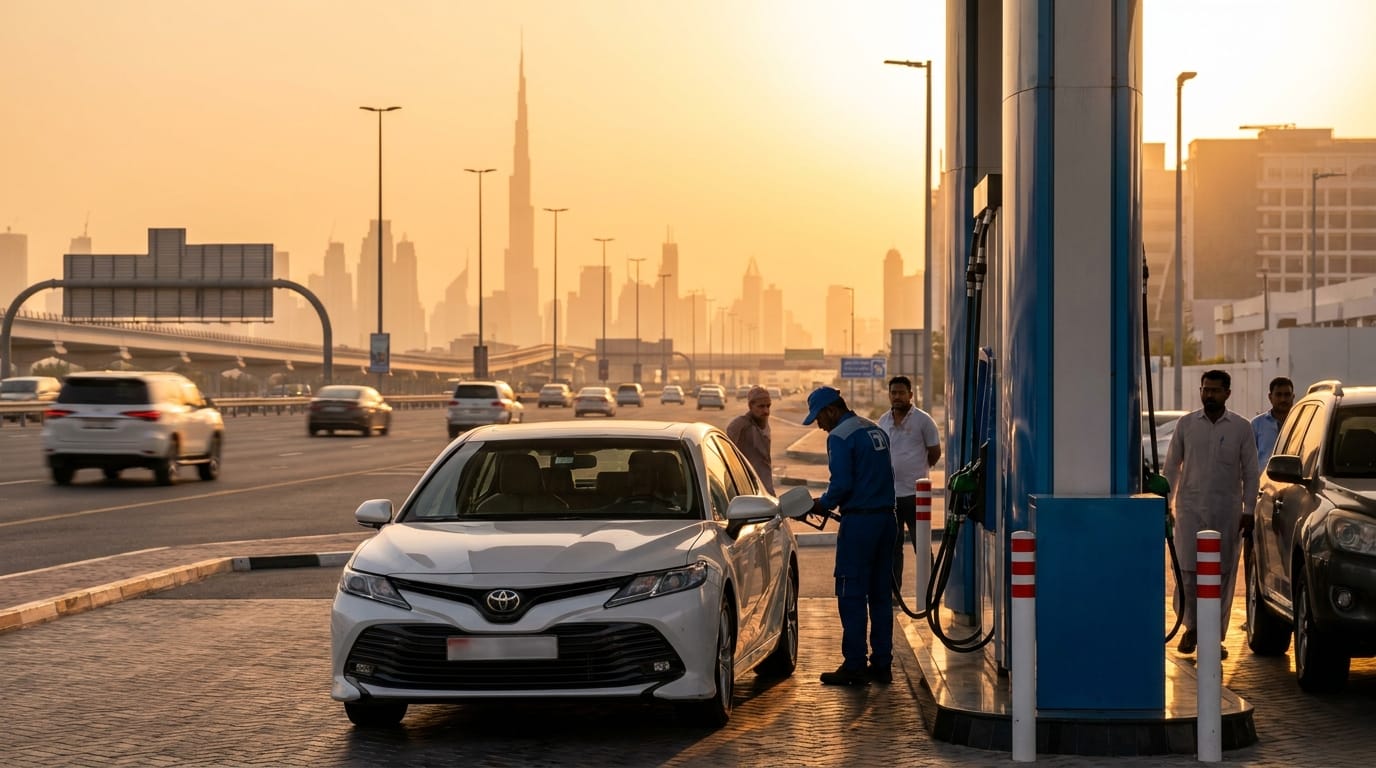
Every car owner in the UAE should budget a monthly reserve for unexpected repairs. This is not pessimism — it reflects the accelerated wear caused by heat, sand, and high-mileage road usage that is typical in the UAE market.
For a used vehicle with 50,000 to 100,000 km on the odometer, commonly occurring unplanned repairs include AC compressor servicing (AED 500 to 1,500), battery replacement (AED 250 to 500), CV axle or suspension components (AED 300 to 900), and intermittent electrical faults that require diagnostic time. A monthly reserve of AED 150 to 300 is a realistic buffer for economy and midsize segments. European and luxury segments warrant AED 400 to 800 monthly due to parts pricing.
Depreciation as a Hidden Monthly Cost
Depreciation is typically the single largest monthly ownership cost for most vehicles — yet it never appears in a monthly bank statement. It is the capital loss that occurs as your vehicle decreases in market value over time.
How to Calculate Monthly Depreciation
The basic formula is: (Purchase Price − Expected Resale Value) ÷ Number of Months of Ownership = Monthly Depreciation Cost.
| Vehicle | Purchase Price | Est. Resale (2 yrs) | Loss | Monthly Depreciation |
|---|---|---|---|---|
| Nissan Sunny 2021 | AED 32,000 | AED 24,000 – 26,000 | AED 6,000 – 8,000 | AED 250 – 333 |
| Toyota Corolla 2020 | AED 48,000 | AED 37,000 – 40,000 | AED 8,000 – 11,000 | AED 333 – 458 |
| Toyota Camry 2019 | AED 68,000 | AED 50,000 – 55,000 | AED 13,000 – 18,000 | AED 542 – 750 |
| Toyota RAV4 2020 | AED 85,000 | AED 63,000 – 70,000 | AED 15,000 – 22,000 | AED 625 – 917 |
| BMW 520i 2019 | AED 110,000 | AED 72,000 – 82,000 | AED 28,000 – 38,000 | AED 1,167 – 1,583 |
These are market estimates based on commonly observed used car price trends in Dubai. Japanese brands — particularly Toyota — have historically maintained stronger residual values in the UAE market than European or American alternatives at similar price points. For a focused analysis of resale performance, best resale value cars in UAE 2026 provides model-specific data.
Used Car vs New Car Monthly Cost
The common assumption is that a used car always costs less to own monthly than a new one. This is often but not always true. The trade-off involves three key variables: loan instalment (new cars cost more to finance), maintenance (new cars cost less to maintain initially), and warranty (new cars carry full manufacturer warranty that eliminates unexpected repair costs for the coverage period).
| Cost Category | New Toyota Corolla 2026 | Used Toyota Corolla 2020 (60,000 km) |
|---|---|---|
| Purchase Price | AED 68,000 – 75,000 | AED 44,000 – 50,000 |
| Monthly Loan (48 months, 20% down) | ≈ AED 1,285 – 1,420 | ≈ AED 835 – 950 |
| Insurance (Comprehensive) | AED 230 – 320 | AED 180 – 260 |
| Annual Maintenance | AED 1,500 – 2,500 | AED 2,000 – 3,500 |
| Unexpected repairs | Low (warranty) | AED 150 – 300/month reserve |
| Depreciation (monthly) | AED 600 – 800 | AED 350 – 500 |
| Est. Total Monthly | AED 3,200 – 4,200 | AED 2,200 – 3,300 |
The used car typically produces a lower total monthly cost, but the gap narrows when warranty-period repair savings for the new car are factored in. The calculation also depends heavily on the specific used car’s condition and service history.
Petrol vs Hybrid vs Electric
| Powertrain | Fuel/Energy Monthly | Maintenance Monthly | Insurance Monthly | Depreciation Monthly | Est. Total Monthly |
|---|---|---|---|---|---|
| Petrol (compact sedan) | AED 350 – 550 | AED 100 – 220 | AED 150 – 280 | AED 350 – 600 | AED 950 – 1,650 (running costs only) |
| Hybrid (Corolla Hybrid, Camry Hybrid) | AED 220 – 370 | AED 110 – 230 | AED 180 – 320 | AED 400 – 700 | AED 910 – 1,620 (running costs only) |
| Electric (BYD Atto 3, Ioniq 5) | AED 80 – 180 | AED 60 – 150 | AED 220 – 380 | AED 550 – 950 | AED 910 – 1,660 (running costs only) |
EVs save significantly on fuel but face higher purchase prices and, in the UAE market, less established resale values. Hybrid vehicles offer the most balanced running cost profile for high-mileage commuters. For expats commuting Dubai to Abu Dhabi daily, commute-specific ownership cost analysis shows that hybrid models frequently produce the lowest annual running cost for that specific route.
Japanese vs Korean vs European Cars
Origin significantly affects monthly running costs in the UAE, primarily through parts availability and labour rates.
| Origin | Parts Availability | Labour Rates (Independent) | Annual Maintenance Estimate | Typical Depreciation Rate |
|---|---|---|---|---|
| Japanese (Toyota, Nissan, Honda) | Excellent — stocked across Al Quoz and Sharjah Industrial Area, same-day availability in most cases | AED 80 – 150/hr | AED 900 – 2,500 | Lower — strong demand |
| Korean (Hyundai, Kia) | Good — widely stocked, occasionally 1–2 day order | AED 80 – 140/hr | AED 1,000 – 2,800 | Moderate |
| European (BMW, Mercedes, VW) | Variable — agency parts expensive, aftermarket patchy | AED 150 – 350/hr | AED 4,000 – 15,000+ | Higher — steeper post-warranty drop |
| American (Chevrolet, Dodge, Ford) | Moderate — some models well stocked, others require ordering | AED 100 – 200/hr | AED 2,000 – 6,000 | Moderate to high |
Toyota and Nissan parts are widely stocked across Al Quoz Industrial Area and the Sharjah Industrial Area, typically available same-day without ordering. This practical advantage translates directly to lower maintenance costs and shorter repair downtime. Japanese vs Korean maintenance cost comparison examines this in greater detail for UAE conditions.
Monthly Cost by Driving Distance
Total monthly ownership cost scales significantly with distance driven. The following estimates apply to a mid-range petrol sedan (Toyota Corolla class, financed at AED 48,000).
| Monthly Distance | Annual KM | Fuel Cost (Monthly) | Tyre Wear Impact | Maintenance Impact | Est. Total Running Cost |
|---|---|---|---|---|---|
| 500 km/month | 6,000 km/yr | AED 165 – 210 | Low | Low (annual service only) | AED 1,800 – 2,400 |
| 1,000 km/month | 12,000 km/yr | AED 330 – 420 | Moderate | Standard | AED 2,200 – 3,000 |
| 2,000 km/month | 24,000 km/yr | AED 660 – 840 | Accelerated | More frequent service | AED 2,800 – 3,800 |
| 3,000+ km/month | 36,000+ km/yr | AED 990 – 1,260 | Rapid | High — brakes, tyres, consumables | AED 3,600 – 5,000+ |
Monthly Cost for Families vs Singles
Family ownership patterns differ from single-driver usage in several ways that affect monthly costs.
Families typically accumulate higher monthly mileage (school runs, weekend trips), require more frequent interior cleaning, and may require a larger vehicle (SUV or minivan) with higher fuel and tyre costs. Families also benefit more from comprehensive insurance due to more frequent vehicle use by multiple family members.
Singles with shorter commutes and flexible work arrangements can more easily reduce costs through route optimisation, lower insurance risk profiles, and vehicle selection that prioritises fuel efficiency over space. The 15 to 20 percent of income guideline applies equally but the specific vehicle selection changes significantly.
Monthly Cost for Company Employees vs Freelancers
Salaried employees often benefit from employer-provided parking, fuel allowances, or company vehicles that reduce personal car ownership costs. Some companies in the UAE provide car allowances ranging from AED 1,000 to 3,000 per month as part of the compensation package.
Freelancers and self-employed expats face higher total ownership costs as a percentage of income because all costs fall entirely on the individual, and income may be variable month to month. For freelancers considering car financing, the specific document requirements for freelancer auto loans are more demanding than for salaried applicants. Building a buffer of three to four months of total car costs before purchasing is a practical risk management approach for variable-income earners.
Cost of Owning Two Cars
For families requiring two vehicles, the combined monthly ownership cost scales approximately as follows for an economy + midsize combination:
| Expense | Car 1 (Economy) | Car 2 (Midsize) | Combined Monthly |
|---|---|---|---|
| Loan (if financed) | AED 650 | AED 1,100 | AED 1,750 |
| Insurance | AED 150 | AED 250 | AED 400 |
| Fuel | AED 350 | AED 450 | AED 800 |
| Maintenance | AED 120 | AED 180 | AED 300 |
| Registration (monthly) | AED 40 | AED 60 | AED 100 |
| Depreciation | AED 280 | AED 500 | AED 780 |
| Salik + Parking | AED 150 | AED 200 | AED 350 |
| Total | AED 1,740 | AED 2,740 | AED 4,480 |
A combined monthly car budget of AED 4,500 to 5,500 for a two-car family requires a household income of approximately AED 22,500 to 27,500 monthly to stay within the 20 percent guideline.
Hidden Costs Most Buyers Forget
Beyond the core monthly categories, several recurring costs are frequently omitted from purchase-time calculations.
| Hidden Cost | Frequency | Estimated Cost | Monthly Allocation |
|---|---|---|---|
| 12V Battery replacement | Every 2–3 years (UAE heat) | AED 250 – 500 | AED 10 – 20 |
| AC cabin filter | Every 6–12 months | AED 50 – 150 | AED 6 – 15 |
| Windshield wiper blades | Annually | AED 80 – 200 | AED 7 – 17 |
| Traffic fine (if incurred) | Variable | AED 200 – 1,000+ | Variable |
| Accident deductible (insurance claim) | If claim made | AED 500 – 2,000 | Reserve AED 40 – 80 |
| Detailing / deep clean | 2–4 times yearly | AED 200 – 500 | AED 35 – 80 |
| Parking permit (residential) | Annual | AED 0 – 1,200 | AED 0 – 100 |
| Tinting (replacement over time) | Every 3–5 years | AED 300 – 800 | AED 8 – 20 |
Emergency Budget Recommendation
A practical UAE car ownership emergency fund should cover two to three months of total ownership costs. For an economy car owner with total monthly costs of AED 2,200, this means maintaining an accessible reserve of AED 4,400 to 6,600.
This buffer handles: a major unexpected repair, a traffic accident excess payment, an insurance premium increase at renewal, or a sudden need to replace all four tyres at once after a blowout. tyre blowout incidents on UAE highways often produce a cascade of repair costs (rim damage, suspension checks, alignment) that can reach AED 1,500 to 3,000 in a single event.
💡 Practical Tip: Set up a dedicated savings account for car emergencies and transfer a fixed monthly amount into it automatically. Even AED 200 per month builds a useful reserve within six months and prevents a single unexpected repair from disrupting your monthly budget.
Salary-Based Car Affordability Guide
Financial planning guidelines suggest that total vehicle ownership costs should represent no more than 15 to 20 percent of net monthly income. The table below provides a practical affordability reference across common UAE expat salary levels.
| Net Monthly Salary | Max Car Budget (15–20%) | Affordable Vehicle Tier | Monthly Leftover (at 20%) |
|---|---|---|---|
| AED 3,000 | AED 450 – 600 | Not viable — consider metro/bus | AED 2,400 |
| AED 4,000 | AED 600 – 800 | Marginal — cash only, oldest economy cars | AED 3,200 |
| AED 5,000 | AED 750 – 1,000 | Cash purchase, economy segment | AED 4,000 |
| AED 6,000 | AED 900 – 1,200 | Financed economy or cash midsize | AED 4,800 |
| AED 8,000 | AED 1,200 – 1,600 | Financed compact sedan comfortably | AED 6,400 |
| AED 10,000 | AED 1,500 – 2,000 | Mid-range sedan or older SUV | AED 8,000 |
| AED 15,000 | AED 2,250 – 3,000 | Newer SUV or premium sedan | AED 12,000 |
| AED 20,000 | AED 3,000 – 4,000 | Broad selection — strategy over budget | AED 16,000 |
Should You Finance or Pay Cash?
The financing versus cash decision affects monthly cost structure but not necessarily total ownership cost over the same period.
When Cash Makes More Sense
Cash purchase eliminates monthly loan payments, reduces total interest paid, and typically results in lower insurance premiums (some insurers offer lower rates to outright owners). Cash is especially advantageous for vehicles valued below AED 30,000 where financing costs may represent a disproportionate percentage of the vehicle value. For expats on shorter UAE contracts (under two years), cash also eliminates the complexity of settling a loan upon departure.
When Financing Makes More Sense
Financing makes sense when the cash amount could generate better returns if deployed differently, when the vehicle purchase is part of salary-linked benefits, or when the expat’s UAE tenure is long enough to benefit from spreading costs. For a detailed breakdown of this decision, loan vs cash analysis for UAE buyers covers the full cost comparison.
| Factor | Finance Advantage | Cash Advantage |
|---|---|---|
| Monthly cash flow | — | ✓ No instalment obligation |
| Total cost over ownership | — | ✓ No interest charges |
| Preserve liquid savings | ✓ Capital stays available | — |
| Early departure flexibility | — (loan settlement required) | ✓ No complications |
| Credit history building | ✓ Builds UAE credit profile | — |
Lease vs Own Monthly Cost
Long-term personal vehicle leasing is less common in the UAE retail market than outright purchase or financing, but fleet and corporate leasing is well established. For individuals, rent-a-car monthly contracts function as a practical alternative to ownership for shorter UAE contracts.
| Arrangement | Estimated Monthly Cost | Includes Insurance? | Depreciation Risk? | Best For |
|---|---|---|---|---|
| Monthly rental (economy sedan) | AED 1,800 – 2,800 | Usually yes | No — borne by rental company | Contracts under 12 months |
| Corporate lease (economy) | AED 1,400 – 2,200 | Usually yes | No | Company cars, 24–36 months |
| Owned (financed, economy) | AED 2,200 – 3,200 (all-in) | No — paid separately | Yes — you bear it | Longer UAE stays, 3+ years |
| Owned (cash, economy) | AED 1,600 – 2,400 (all-in) | No — paid separately | Yes — but minimised by cash | Budget-focused, 2+ years |
For expats on assignments of 12 months or less, monthly rental often produces a lower total cost than ownership once purchase, registration, insurance, and resale transaction costs are included.
How to Reduce Monthly Ownership Costs
Several practical steps consistently reduce monthly ownership costs for UAE expats without compromising reliability or safety.
| Action | Estimated Monthly Saving | Difficulty |
|---|---|---|
| Switch from agency to reputable independent workshop (post-warranty) | AED 80 – 200 | Low |
| Compare insurance quotes annually at renewal | AED 50 – 150 | Low |
| Optimise commute route to reduce Salik crossings | AED 50 – 200 | Low-Medium |
| Maintain correct tyre pressure (saves 3–5% fuel) | AED 15 – 30 | Very Low |
| Service on schedule to prevent larger repairs | AED 50 – 300 (prevented costs) | Low |
| Buy mid-range tyres rather than premium (for economy cars) | AED 20 – 50 | Low |
| Choose a vehicle with higher resale value at purchase | AED 200 – 600 (depreciation saving) | Medium |
| Pay parking annually where available (discount over monthly) | AED 30 – 100 | Low |
Common Budgeting Mistakes
These are the most frequently observed budgeting errors among first-time car owners in the UAE.
Calculating only the loan instalment. The instalment represents 30 to 50 percent of true monthly cost in most scenarios. New owners are regularly surprised by the full picture after three to four months of ownership.
Ignoring depreciation entirely. Because depreciation is invisible in monthly cash flow, it is routinely overlooked. Yet it is often the largest single component of ownership cost, especially for vehicles purchased above AED 60,000.
Underestimating Salik for cross-emirate commutes. Expats moving from Sharjah to Dubai frequently underestimate Salik by AED 200 to 400 per month by failing to count both directions and all gates on their specific route.
Skipping the emergency repair reserve. A single unplanned repair of AED 1,500 to 2,500 creates significant financial stress for owners without reserves. This cost is not exceptional — it is typical for used vehicles in UAE conditions.
Not accounting for insurance increase at renewal. Accident-free years reduce premiums, but a single claim can increase the next year’s premium by AED 300 to 600 annually. Budget conservatively for renewal.
Buying European luxury at budget prices. A used BMW or Mercedes at AED 60,000 carries maintenance, parts, and depreciation costs that are appropriate to the original AED 180,000 vehicle, not to the purchase price paid. This mismatch regularly produces unexpectedly expensive ownership for expats on moderate salaries.
⚠ High-Risk Trap: Buying a used European luxury vehicle (BMW, Mercedes-Benz, Audi) in the AED 50,000–80,000 range is one of the most commonly observed financial missteps among UAE expats on moderate salaries. The low purchase price is offset by high parts costs, agency labour rates, and steep depreciation. A repair bill of AED 8,000–15,000 within the first year is not uncommon for post-warranty European luxury models in the UAE market. Verify total ownership cost, not just purchase price, before committing.
Owner Scenarios: Real Monthly Cost Calculations
Scenario 1 — Indian IT Professional, AED 10,000 Salary, Toyota Corolla
Financed Toyota Corolla 2020, purchased for AED 48,000 with AED 10,000 down payment. Monthly loan: approximately AED 900. Insurance (comprehensive): AED 220 monthly. Fuel (1,200 km/month Dubai commute): AED 400. Maintenance (monthly allocation): AED 150. Salik (2 gates × 2 daily): AED 352. Parking (company parking provided): AED 0. Tyre allocation: AED 50. Depreciation: approximately AED 380. Emergency reserve: AED 150. Total estimated monthly: approximately AED 2,602. This represents 26 percent of income — slightly above the 20 percent guideline but manageable given no residential parking cost.
Scenario 2 — Filipino Nurse, AED 6,500 Salary, Nissan Sunny (Cash)
Cash purchase of Nissan Sunny 2019, approximately AED 26,000. No loan. Insurance (comprehensive): AED 170 monthly. Fuel (900 km/month): AED 290. Maintenance (monthly allocation): AED 100. Salik (1 gate, occasional use): AED 80. Parking (residential included): AED 0. Depreciation: approximately AED 250. Emergency reserve: AED 150. Total estimated monthly: approximately AED 1,040. This represents 16 percent of income — within guideline. Cash purchase was the enabling decision.
Scenario 3 — Pakistani Engineer, AED 15,000 Salary, Toyota RAV4
Financed Toyota RAV4 2021, purchased for AED 82,000 with AED 20,000 down payment. Monthly loan: approximately AED 1,400. Insurance (comprehensive): AED 380. Fuel (1,500 km/month): AED 520. Maintenance: AED 200. Salik (3 gates daily): AED 528. Parking (paid workplace zone): AED 200. Tyre allocation: AED 90. Depreciation: approximately AED 750. Emergency reserve: AED 200. Total estimated monthly: approximately AED 4,268. This is 28 percent of income — above guideline. The Salik and parking costs are the primary areas for potential reduction.
Scam Prevention: Protecting Your Car Budget in Dubai
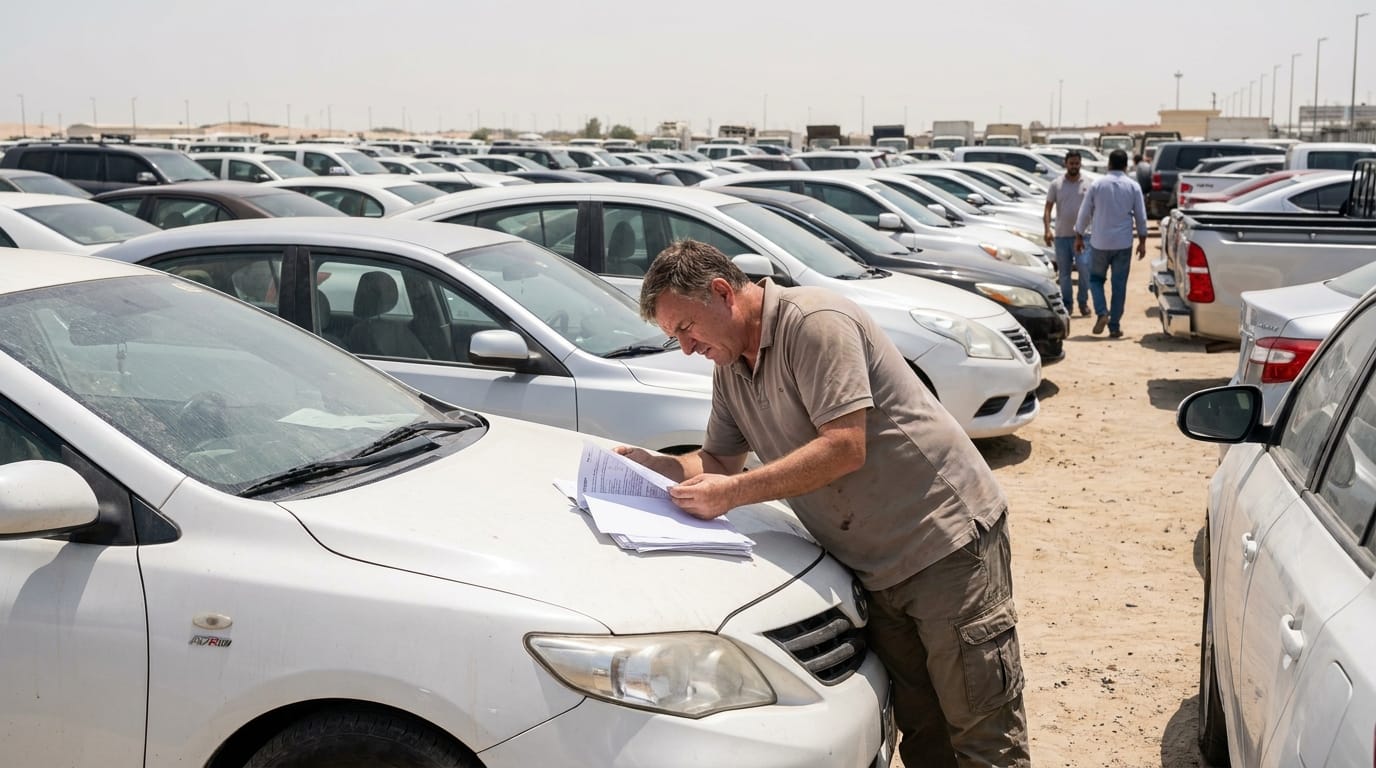
Financial scams targeting car buyers affect the monthly ownership cost calculation before ownership even begins. Understanding the most common traps helps buyers avoid inflated costs from the outset.
⚠ Highest-Risk Trap — Inflated Finance Package from Dealer: Some used car dealers in Dubai present an in-house finance package as a “special arrangement” that appears to require less documentation than bank financing. These packages frequently carry effective interest rates of 8–15% annually compared to 3.5–5% through UAE banks. On a AED 40,000 loan over 48 months, this difference amounts to AED 3,600–4,600 in additional interest paid. Always compare with at least one bank offer before accepting dealer financing. Verify the flat rate and request the full amortisation schedule in writing.
Odometer tampering directly inflates your future maintenance costs by presenting a higher-mileage vehicle as lower-mileage. This creates maintenance surprises within the first six to twelve months. Always verify mileage through an independent pre-purchase inspection and a vehicle history check. odometer fraud detection in UAE explains the verification methods available to buyers.
Undisclosed accident history affects both future repair costs and insurance premiums. A vehicle with significant prior damage may have been repaired to a visual standard but may carry structural or mechanical compromises that produce recurring expensive repairs. Request a full accident history check before purchase. The RTA vehicle information service provides registration and basic history data.
Deposit traps involve a seller requesting a cash deposit “to hold the vehicle” before the buyer has completed an inspection or financing approval. If the buyer later discovers a problem and withdraws, recovering this deposit through informal means is uncertain. Always condition any deposit on a successful independent inspection result and document the terms in writing.
Illustrative Field Scenarios: Workshop and Market Patterns
The following scenarios are based on recurring UAE market patterns and are not accounts of specific documented cases.
Example 1 — Indian Office Worker, Toyota Corolla, Al Quoz
Example scenario based on recurring UAE market patterns, not an actual documented case. An office worker earning approximately AED 9,500 per month purchased a 2019 Toyota Corolla for AED 44,000 through dealer financing. The monthly instalment was AED 870. After three months of ownership, total monthly costs were found to be approximately AED 2,700 — nearly AED 1,800 more than the loan payment alone. The primary surprises were Salik (AED 352/month for the Sheikh Zayed Road route), comprehensive insurance (AED 240/month, not included in the dealer’s “monthly cost” presentation), and a first service at an Al Quoz independent workshop (AED 380 for oil, filter, and brake inspection at 55,000 km). The car itself performed reliably. The budget gap came from incomplete pre-purchase cost planning.
Example 2 — Pakistani Family, Two Cars, Sharjah
Example scenario based on recurring UAE market patterns, not an actual documented case. A family with a combined household income of approximately AED 18,000 per month operated two vehicles — a Nissan Sunny (AED 28,000, cash) and a financed Toyota Fortuner (AED 105,000, AED 1,950/month loan). Total monthly car costs were estimated at approximately AED 5,800 — over 32 percent of household income. The Fortuner’s insurance (AED 490/month), fuel consumption (AED 780/month for 1,800 km), and the family’s Sharjah-to-Dubai Salik costs (AED 600/month combined) drove the total beyond comfortable limits. The family later downsized to a Toyota Corolla as the second car, reducing total monthly car costs by approximately AED 1,400.
Total Ownership Cost Table
This table provides a consolidated total monthly ownership cost estimate for five representative vehicle types, combining all cost categories.
| Vehicle | Purchase Price | Loan / Depreciation | Insurance | Fuel | Maintenance | Salik+Park | Other | Est. Monthly Total |
|---|---|---|---|---|---|---|---|---|
| Nissan Sunny 2020 (Cash) | AED 27,000 | AED 250 (dep.) | AED 155 | AED 320 | AED 95 | AED 130 | AED 100 | ≈ AED 1,050 |
| Toyota Corolla 2020 (Financed) | AED 47,000 | AED 900 | AED 220 | AED 380 | AED 140 | AED 300 | AED 150 | ≈ AED 2,090 |
| Toyota Camry 2019 (Financed) | AED 65,000 | AED 1,280 | AED 310 | AED 430 | AED 185 | AED 350 | AED 180 | ≈ AED 2,735 |
| Toyota RAV4 2020 (Financed) | AED 82,000 | AED 1,600 | AED 380 | AED 520 | AED 200 | AED 420 | AED 200 | ≈ AED 3,320 |
| BMW 520i 2019 (Financed) | AED 105,000 | AED 2,050 | AED 510 | AED 460 | AED 600 | AED 350 | AED 350 | ≈ AED 4,320 |
These figures represent market estimates at approximately 1,200 km per month. Actual costs will vary by individual driving patterns, insurance profile, maintenance history, and Salik/parking usage.
Monthly Cost Visualised
The diagram below illustrates the approximate cost distribution for a typical mid-range sedan (Toyota Corolla class, financed) at AED 10,000 salary level.
%%{init: {'theme': 'base', 'themeVariables': {'background': '#f8f9fa', 'textColor': '#1a1a1a', 'primaryColor': '#2c3e50', 'secondaryColor': '#c0392b', 'lineColor': '#1a1a1a'}}}%%
pie title Monthly Car Cost Distribution — Mid-Range Sedan
  "Loan Instalment" : 900
  "Fuel" : 380
  "Depreciation" : 420
  "Insurance" : 220
  "Salik + Parking" : 300
  "Maintenance" : 140
  "Tyres + Other" : 150
  "Emergency Reserve" : 150
The diagram below maps the monthly cost decision flow for expats at different salary levels.
%%{init: {'theme': 'base', 'themeVariables': {'background': '#f8f9fa', 'textColor': '#1a1a1a', 'primaryColor': '#2c3e50', 'secondaryColor': '#c0392b', 'lineColor': '#1a1a1a'}}}%%
flowchart TD
  classDef default fill:#000000,color:#ffffff,stroke:#000000;
  A[What is your monthly salary?] --> B{AED 3,000–5,000?}
  A --> C{AED 5,000–8,000?}
  A --> D{AED 8,000–12,000?}
  A --> E{AED 12,000+?}
  B --> F[Public transport recommended\nCash-only if buying]
  C --> G[Cash purchase only\nEconomy segment\nAED 15,000–28,000]
  D --> H[Finance viable\nCompact sedan\nAED 30,000–55,000]
  E --> I[Finance comfortable\nMidsize sedan or SUV\nFocus on depreciation]
Top 3 Financial Surprises Expats Don’t See Coming
These three costs consistently surprise new car owners in Dubai — not because they are hidden, but because they rarely appear in any pre-purchase conversation.
| Surprise Cost | Why It Catches Buyers Off Guard | Typical Monthly Impact | How to Plan for It |
|---|---|---|---|
| Depreciation | Never appears in a bank statement. Never mentioned by dealers. Yet often the largest single monthly cost of ownership. | AED 250 – 1,600+ depending on vehicle | Calculate (purchase price − expected resale) ÷ ownership months before buying |
| Salik Tolls | Buyers estimate casually — “maybe AED 100 a month.” Sharjah-to-Dubai commuters often discover it’s AED 450 to 700 monthly. | AED 0 – 700+ depending on route | Map your exact route on Google Maps, count every gate both directions, multiply by working days |
| Parking | Residential parking often appears “free” until the first renewal. Workplace paid zones in DIFC or Downtown are rarely budgeted upfront. | AED 0 – 800+ depending on location | Confirm parking arrangements with employer and building management before purchase |
💡 Quick Check: Before finalising any car purchase, calculate: Salik (both directions × 22 days) + parking (workplace + residential) + depreciation (monthly). These three alone often account for AED 700 to 1,500 per month that buyers do not factor into their budget at the showroom.
Ownership Cost by Emirate
Monthly car ownership costs vary meaningfully between emirates, primarily driven by toll structures, parking systems, and registration fee differences. The figures below are market estimates for a mid-range sedan (Toyota Corolla class) with average urban commuting usage.
| Cost Category | Dubai | Abu Dhabi | Sharjah | Ajman |
|---|---|---|---|---|
| Registration (annual, monthly allocation) | AED 45 – 75 | AED 35 – 65 | AED 30 – 55 | AED 25 – 45 |
| Toll system | Salik — AED 4 per gate | Darb — AED 4 per gate (peak); free off-peak on some routes | No toll gates | No toll gates |
| Typical monthly toll (commuter) | AED 150 – 500+ | AED 80 – 350+ | AED 0 | AED 0 |
| Paid parking (typical) | AED 50 – 400+ (city zones) | AED 50 – 300+ (city zones) | AED 0 – 100 (limited paid zones) | AED 0 – 50 (minimal) |
| Cross-emirate Salik (Sharjah to Dubai) | AED 300 – 650/month for regular commuters passing 2–3 gates each direction | |||
| Estimated Monthly Total Difference vs Dubai | Baseline | Similar — lower toll on some routes, comparable parking | AED 150 – 500 lower than Dubai (no Salik) | AED 200 – 600 lower than Dubai |
Sharjah and Ajman residents who commute daily into Dubai do not save on tolls — they pay Salik entering and exiting Dubai regardless of where their vehicle is registered. The emirate of registration affects registration fees and some insurance premiums, but not toll costs during Dubai commutes.
💡 Abu Dhabi Note: Abu Dhabi’s Darb toll system covers specific roads and bridges in Abu Dhabi city. If you live and work within Abu Dhabi, toll costs are typically lower than Dubai due to free off-peak access on certain corridors. Verify current Darb gate locations at the Abu Dhabi Integrated Transport Centre before mapping your commute budget. Always confirm registration fees directly with TAMM Abu Dhabi as fee structures may differ from Dubai.
Fuel Cost Sensitivity: What Happens When Petrol Prices Rise
UAE fuel prices are reviewed monthly and benchmarked to international oil markets. A 10 percent increase in fuel price directly translates to a 10 percent increase in monthly fuel spend. The table below shows how a price increase affects monthly ownership costs across different usage levels.
| Monthly Usage | Current Fuel Cost (Est.) | If Fuel +10% | Monthly Increase | Annual Increase |
|---|---|---|---|---|
| 500 km (light use) | AED 175 – 220 | AED 193 – 242 | AED 18 – 22 | AED 216 – 264 |
| 1,000 km (average commute) | AED 350 – 440 | AED 385 – 484 | AED 35 – 44 | AED 420 – 528 |
| 2,000 km (heavy commute) | AED 700 – 880 | AED 770 – 968 | AED 70 – 88 | AED 840 – 1,056 |
| 3,000+ km (delivery / daily) | AED 1,050 – 1,320 | AED 1,155 – 1,452 | AED 105 – 132 | AED 1,260 – 1,584 |
A 20 percent price increase doubles the monthly fuel impact shown above. For high-mileage drivers, a single significant price revision can add AED 200 to 250 per month to the total ownership cost with no other change in behaviour. Hybrid vehicles absorb fuel price increases at roughly half the rate of equivalent petrol models, which explains their growing appeal among daily commuters on fixed salaries.
Personal Monthly Cost Quick Calculator
Use this table to build your own monthly ownership cost estimate before purchasing. Fill in the figure that applies to your specific situation in each row.
| Cost Item | How to Find Your Number | Your Estimate (AED) |
|---|---|---|
| Loan instalment OR Depreciation (cash buyers) | Bank quote ÷ months; or (purchase price − expected resale) ÷ ownership months | ___________ |
| Comprehensive insurance | Get one quote from an insurer; divide annual premium by 12 | ___________ |
| Monthly fuel | Your estimated monthly km ÷ 100 × fuel economy (L/100km) × current price per litre | ___________ |
| Maintenance allocation | Estimated annual service cost ÷ 12 | ___________ |
| Tyre allocation | Cost of a set of 4 tyres ÷ expected months of tyre life (typically 36–48 months) | ___________ |
| Registration renewal allocation | Last annual registration cost ÷ 12 (typically AED 35–75/month for sedans) | ___________ |
| Salik tolls | Count your gates both directions × AED 4 × number of working days per month | ___________ |
| Parking (work + residential) | Confirm with employer and building; add both | ___________ |
| Car washing | Typical: AED 40–120 per month | ___________ |
| Emergency repair reserve | Minimum recommended: AED 150–300/month for used vehicles | ___________ |
| YOUR TOTAL MONTHLY COST | Sum of all rows above | ___________ |
| Your monthly salary | Your net take-home pay | ___________ |
| Car cost as % of salary | Total ÷ salary × 100 — should be under 20% | ___________ % |
💡 Quick Test: If your car cost percentage is above 25%, the vehicle is likely to create financial pressure within 6 to 12 months of ownership. Consider a lower-priced vehicle, a shorter loan term, or a cash purchase of a smaller model to bring the ratio below 20%.
The Bottom Line Decision Framework
| Your Situation | Recommended Approach |
|---|---|
| Salary under AED 5,000 | Public transport. If car is essential, cash-only purchase of a low-cost used economy car and third-party insurance. |
| Salary AED 5,000–7,000, UAE contract under 18 months | Cash purchase only. Economy segment. Minimise depreciation exposure. |
| Salary AED 7,000–10,000, stable contract | Finance a compact sedan in the AED 30,000–45,000 range. Comprehensive insurance. Budget 20–22% of income maximum. |
| Salary AED 10,000–15,000, 3+ year contract | Finance mid-range sedan or older compact SUV. Total monthly cost under AED 3,000. |
| Family, combined income AED 18,000+ | Two-car strategy: one cash economy + one financed midsize. Total under 25% of combined income. |
| Leaving UAE within 12 months | Monthly rental or cash purchase of highly liquid model (Toyota Yaris, Corolla). Avoid financing entirely. |
| Considering European luxury on moderate salary | Calculate full monthly cost including realistic maintenance before committing. Consider newer Japanese alternative instead. |
Data Sources & Methodology
The cost figures in this article are market estimates compiled from commonly observed ownership patterns in the UAE used car market. They are not official statistics published by any UAE government authority. No official nationwide study on average monthly car ownership costs has been published in the UAE as of the time of writing.
Fuel cost estimates are based on prevailing UAE retail fuel prices as announced by the fuel pricing committee. Insurance ranges are based on commonly quoted premiums for vehicles of the described types and values. Maintenance cost ranges reflect both agency and independent workshop pricing observed in Dubai and Sharjah. Depreciation estimates are based on commonly observed resale price differences for the listed models in the UAE used car market.
Official sources used for regulatory, registration, and fuel pricing information:
- RTA Dubai — Vehicles Portal
- Tasjeel — Vehicle Registration and Inspection
- TAMM Abu Dhabi — Government Services
- Salik UAE — Toll System and Recharge
- ADNOC — Monthly Fuel Prices
- UAE Insurance Authority — Consumer Information
- UAE Central Bank — Consumer Finance Regulations
⚠ Market Volatility Notice: All figures, price ranges, and cost estimates in this article are variable market averages subject to ongoing change. Fuel prices are reviewed monthly. Insurance premiums change annually. Parts costs fluctuate with supply and currency exchange rates. Vehicle depreciation rates shift with market demand. Readers should verify all current costs directly with relevant service providers before making financial decisions. This article is reviewed periodically but may not reflect the most recent market changes.
Frequently Asked Questions
For more on protecting your car budget from the point of purchase, hidden fees in used car purchases covers the transaction costs that reduce your available budget before ownership begins.
Disclaimer: Emirates Cars is a 100% independent platform. We do not own showrooms, nor are we affiliated with any used car dealerships or garages. Our sole mission is to protect expats from financial fraud in the automotive market.
