
Written By: Omar Al-Fayed, Senior Automotive Consultant | Fact-Checked By: Emirates Cars Editorial Team | Last Updated: June 2026 | Category: Finance & Legal
If you are self-employed in the UAE and you have tried to get a car financing arrangement, you already know the problem. You walk into a bank. You show your income. You have money coming in every month. But the answer is still no — or comes with conditions that make no practical sense. Understanding the UAE car loan self-employed requirements before you apply is the single most important step you can take.
This guide explains why that happens, which banks are generally considered more flexible based on observed market practices, what documents actually matter, and how to build a realistic financing plan as a freelancer, small business owner, or independent contractor in the UAE. Whether your income is between AED 5,000 and AED 25,000 per month, there are paths forward — but only if you go in prepared.
Approval rates for self-employed expats are notably lower than for salaried employees. In many documented cases, self-employed applicants are either declined outright or offered reduced loan amounts compared to salaried counterparts with similar income levels. Approval decisions vary by applicant profile and bank policies — and those policies change. This guide reflects general market observations as of mid-2026 and not any guarantee of outcome. Readers should confirm eligibility requirements with licensed UAE lenders and official institutions before submitting applications.
💡 Emirates Cars Editorial Note: This article is based on publicly available UAE banking information, industry-observed lending patterns, and documented expat experiences across UAE car financing markets including Dubai, Sharjah, Abu Dhabi, and Ajman. It is not affiliated with any bank, dealership, or financing institution. All bank-specific observations reflect general market patterns and may not reflect current individual bank policy.
Executive Summary: Can Self-Employed Expats Get Approved?
The short answer is yes — but the conditions are stricter than for salaried employees, and the process requires more preparation. Here is what the UAE car financing landscape looks like for self-employed applicants as of mid-2026. Note that all figures below are general market observations and individual outcomes will vary.
| Factor | Salaried Employee | Self-Employed Expat |
|---|---|---|
| Minimum monthly income | AED 3,000 – 5,000 | AED 7,000 – 10,000 (commonly observed) |
| Business/employment history required | 3 – 6 months | 12 – 24 months (commonly required) |
| Key document burden | Low (salary slip + bank statement) | High (trade licence, statements, VAT docs) |
| Approval speed | 2 – 5 working days | 5 – 15 working days |
| Down payment expectation | 10 – 20% | 20 – 30% (commonly observed) |
| Rate compared to salaried | Standard market rate | Often 0.5 – 1.5% higher in practice |
Applicant profiles that tend to have the strongest outcomes: business owners with 2+ years of operation, clean bank statements for at least 6 months, a down payment of 25% or more, and a low existing debt burden. Newly established freelancers with less than 12 months of business history typically face the most significant resistance.
Most frequently observed rejection reasons: inconsistent monthly deposits, high existing debt burden, new business operation under 12 months, missing or incomplete documentation, and vehicles outside the bank’s approved age range.
Understanding Self-Employed Status in UAE — How Banks See You
Banks in the UAE do not treat all self-employed people the same. The category matters — sometimes significantly.
Freelancers and Independent Contractors
If you hold a freelance permit from a free zone — Dubai Media City, twofour54, IFZA, or similar — you are technically self-employed. Banks see your income as variable and unverified without supporting statements. The absence of a fixed monthly salary is the first obstacle.
Sole Proprietors
A mainland sole proprietorship with a Dubai Department of Economy and Tourism (DET) trade licence generally gets better treatment than a freelance permit alone. You can show a business with a fixed registered address, which adds credibility to the application.
Free Zone License Holders
IFZA, RAKEZ, SHAMS, KIKLABB — each free zone licence carries different weight with different banks. Some UAE banks have longer relationships with specific free zones. Check with your specific free zone authority for recommended banking partners.
Mainland Business Owners
A mainland LLC with at least two years of operation, consistent bank deposits, and VAT registration (where applicable) typically presents the strongest self-employed profile. VAT registration with the UAE Federal Tax Authority alone signals a business generating above AED 375,000 annually — a meaningful credibility signal.
Commission-Based Earners
Real estate agents, insurance brokers, and other commission-based professionals often fall into a grey zone. If your employment contract shows a base salary plus commission, banks may count only the base. If you receive pure commission with no base, some banks treat you as self-employed. This distinction significantly affects approval odds.
⚠️ The Salary Transfer Condition: Many UAE banks quietly apply salary transfer as a condition of their personal or auto loans. For salaried employees, this is straightforward. For self-employed expats, there is no employer to transfer a salary — which means some bank products are not structured for you, regardless of income. Always ask specifically whether the loan requires salary transfer before spending time on the application.
Free Zone Licence vs Mainland Licence — General Bank Perception
| Licence Type | General Bank Perception | Documentation Advantage | Typical Approval Difficulty |
|---|---|---|---|
| Mainland DET Sole Proprietorship | Recognized, structured | Strong — registered address, MOA | Moderate |
| Mainland LLC (2+ partners) | Most credible profile | Strongest — audited accounts possible | Lower than most |
| Free Zone Licence (established zone) | Generally acceptable | Good — if supported by statements | Moderate |
| Freelance Permit Only | Variable, often scrutinized | Weaker — income harder to verify | Higher |
| Commission-Based (no base) | Often treated as self-employed | Weak without contract clarity | High |
Minimum Eligibility Requirements — The Baseline
Before deciding which bank to approach, every self-employed expat must meet baseline eligibility criteria. These are common across most UAE banks, though specifics vary and should be confirmed directly with each institution.
- Minimum age: 21 years (some banks require 25 for self-employed applicants)
- Valid UAE residency visa — typically with at least 6 months remaining
- Valid Emirates ID
- Valid UAE driving licence
- Active UAE bank account — typically for at least 3 – 6 months
- Minimum monthly income: commonly AED 7,000 – 10,000 for self-employed applicants
- Business activity: active, registered, and verifiable — not dormant
🚫 Residency Visa Warning: If your UAE residency visa is sponsored by your own company and is close to expiry, some banks will decline the application regardless of income. Renew your visa well before applying for vehicle financing. Banks want residency stability — an expiring visa signals uncertainty in a multi-year loan commitment. Check your visa status via the ICP (Federal Authority for Identity and Citizenship) portal before applying.
Which Banks Are Generally Considered More Flexible for Self-Employed Applicants?
This section provides an honest overview of how different UAE banks approach self-employed car loan applications based on commonly observed market patterns. Bank policies change, and approval decisions vary significantly by individual profile, branch, and time of application. Always verify current requirements directly with each bank before applying. The information below reflects general market observations only.
Larger Conventional Banks
The UAE’s larger conventional banks — including Emirates NBD, ADCB, FAB, and Mashreq — generally serve established self-employed profiles well. Most require a minimum of 2 years in business, audited or reviewed financial statements, and consistent bank statements. Existing account holders in good standing with these banks typically receive more thorough consideration. Income minimums observed for self-employed applicants generally start at AED 10,000 monthly at these institutions. These banks tend to be more accessible for higher-income profiles — typically AED 15,000+ per month — with longer business histories.
Banks with SME-Oriented Lending History
Some banks in the UAE have historically positioned themselves more actively toward the small business and self-employed community. Among these, one institution frequently cited by UAE expats for more practical assessment of non-standard employment profiles is RAKBANK, particularly for business owners with 12 months of history earning between AED 7,000 and AED 12,000 monthly. Processing times can be longer at these institutions, but observed rejection rates for self-employed profiles are generally lower than at some larger banks. Note that this observation reflects market patterns only — individual outcomes will vary.
Islamic Finance Institutions
Islamic banks offering Murabaha car finance — including Dubai Islamic Bank, ADIB, and Emirates Islamic — are frequently mentioned in the context of self-employed accessibility. Some Islamic banks have historically had more SME-oriented cultures that may translate to slightly more practical treatment of non-salaried applicants. Business owners with a trade licence and 12+ months of operation report reasonable outcomes at these institutions, particularly for used cars in the AED 30,000 – 80,000 range. Confirm current eligibility requirements directly with each institution.
Mid-Size and Specialized Banks
Banks such as Commercial Bank of Dubai, Al Masraf, Sharjah Islamic Bank, and Ajman Bank serve self-employed applicants across the emirates with somewhat different risk profiles. These may be worth approaching once larger institutions have been assessed. Finance companies and NBFCs also operate in the UAE auto finance space — often with higher rates but lower documentation barriers. These may be relevant for applicants who do not qualify through standard bank channels, but require careful scrutiny of total cost.
| Bank Category | General Self-Employed Flexibility | Typical Min. Business Age | Generally Observed Strength |
|---|---|---|---|
| SME-oriented banks (e.g. RAKBANK) | Higher than average | 12 months | Practical criteria for smaller businesses |
| Islamic finance banks (DIB, ADIB, EI) | Medium-High | 12 months | SME culture; Murabaha structure |
| Abu Dhabi-based major banks (ADCB) | Medium-High | 24 months | Relationship banking, established profiles |
| Large conventional banks (ENBD, FAB) | Medium | 24 months | Strong for higher income and longer history |
| Mid-size UAE banks (CBD, others) | Medium | 24 months | Dealership partnerships; established profiles |
💡 Important Reminder: The bank categories above reflect general market observations only. Approval decisions vary by individual applicant profile, bank policies, branch, and timing. A bank considered generally more flexible may still decline applications that do not meet its current criteria. Always verify requirements directly with the bank before applying, and consider consulting a licensed UAE financial advisor for guidance tailored to your specific situation.
Conventional vs Islamic Car Finance — What Self-Employed Expats Need to Know
Many expats in the UAE encounter Islamic car finance for the first time and find the terminology unfamiliar. Understanding the practical difference matters when choosing between conventional and Islamic products.
Conventional Car Loan Structure
Under a conventional loan, the bank lends you money to buy a car. You repay the principal plus interest over a fixed term. The rate is quoted as a flat rate or reducing balance rate — these produce very different effective costs, so always ask for the Annual Percentage Rate (APR) equivalent when comparing.
Islamic Car Finance — Murabaha
Under Murabaha, the bank purchases the car on your behalf and sells it to you at an agreed marked-up price payable in installments. There is no interest — instead, there is a profit margin built into the sale price. The practical monthly payment may be similar to a conventional loan, but the ownership and legal structure differ.
What Influences Rates — Without Quoting Fixed Numbers
Rather than quoting specific rates — which change with UAE Central Bank policy, EIBOR movements, and individual bank pricing decisions — it is more useful to understand what pushes rates higher or lower for self-employed applicants. Rates tend to rise when: business history is shorter, income is variable or seasonal, the vehicle is older, the down payment is lower, and existing debt is higher. Rates tend to be more competitive when: the applicant has 2+ years of business history, income is consistent and well-documented, the down payment exceeds 25%, and the AECB credit score is clean. Always obtain quotes from at least 2 – 3 banks and ask specifically for the reducing balance rate, not just the flat rate.
| Factor | Conventional Loan | Islamic Murabaha |
|---|---|---|
| Structure | Loan with interest | Bank buys, sells at markup |
| Rate terminology | Interest rate (APR) | Profit rate |
| Documentation burden | Standard | Standard — broadly similar |
| Early settlement | Early settlement fee applies | Rebate varies by bank |
| Self-employed flexibility | Varies by institution | Slightly more flexible in some cases observed |
Required Documents Checklist — Self-Employed Car Loan UAE
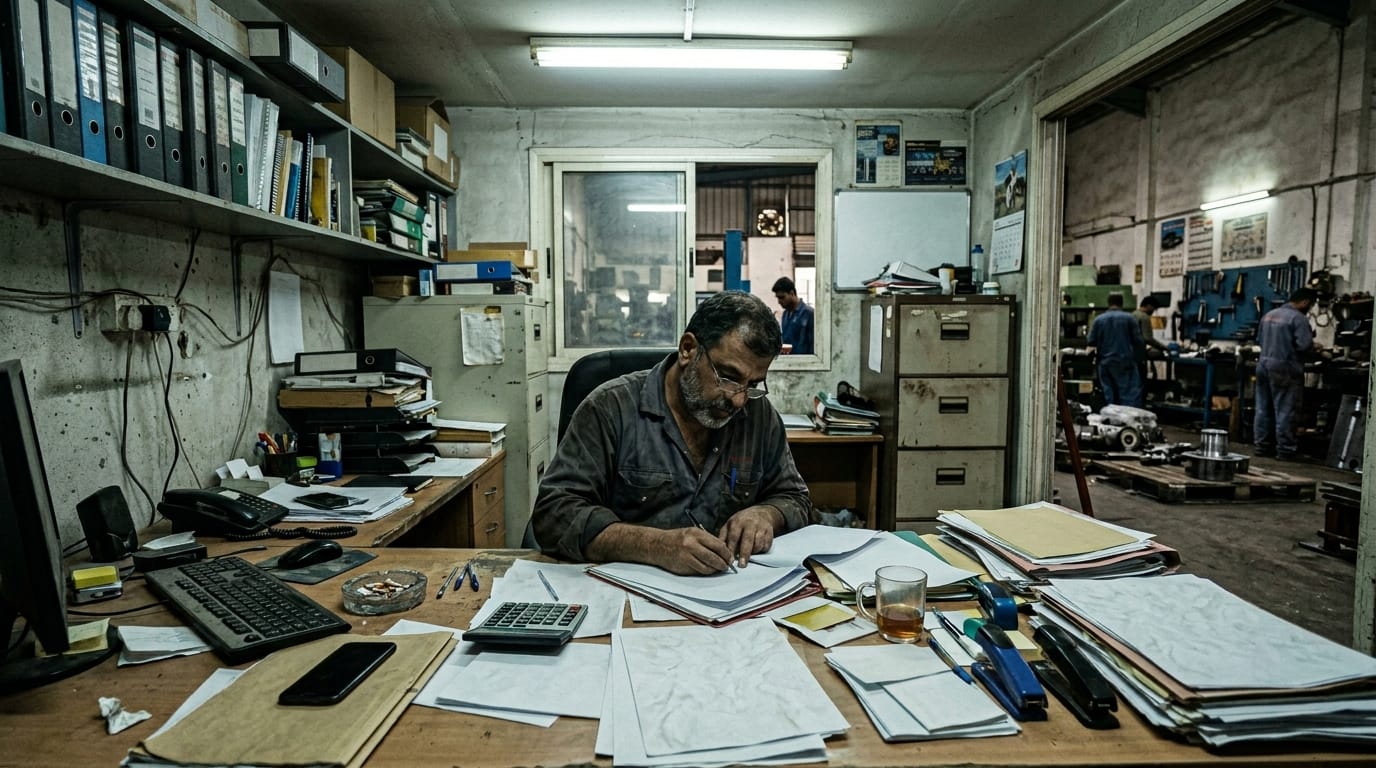
The document burden for self-employed applicants is meaningfully higher than for salaried employees. Prepare all of these before approaching any bank to avoid delays or early rejections. Individual bank requirements vary — confirm the full list with each institution before submitting.
| Document | Notes | Priority |
|---|---|---|
| Emirates ID (original + copy) | Must be valid | Essential |
| Passport (all pages copy) | Including UAE visa page | Essential |
| UAE residency visa copy | Min. 6 months remaining | Essential |
| Trade licence (original + copy) | Must be active, not expired | Essential |
| Bank statements — last 6 months | Original bank-stamped or certified digital | Essential |
| Bank statements — last 12 months | Strongly recommended for seasonal income | Strongly advised |
| VAT registration certificate | If registered with FTA — signals AED 375K+ revenue | High value |
| Memorandum of Association (LLC) | If applicable | Required for LLC |
| Office tenancy contract (Ejari) | Shows established business address | Recommended |
| Invoices / client contracts | Shows income source and continuity | Recommended |
| Audited financials or management accounts | 2 years preferred for higher loan amounts | High value |
| Existing loan statements | All active personal/business loans | Required |
| Credit card statements | All active cards — shows existing liabilities | Required |
| UAE driving licence | Required before loan disbursal by most banks | Essential |
| Vehicle quotation or proforma invoice | From dealer or seller | Required at approval stage |
Bank Statement Analysis — What Banks Look For
Your bank statements are the most important document in a self-employed car loan application. Banks analyze them systematically.
Income Consistency
Banks want to see regular deposits, ideally monthly. Deposits that vary between AED 3,000 one month and AED 25,000 the next often result in downward income averaging plus a risk adjustment. Consistent deposits tell a more convincing story than extreme fluctuations.
The 90-Day Clean Statement Rule
Many UAE banks apply a de facto 90-day review window as their first filter. Your most recent three months are scrutinized more closely than older months. If the last three months show irregular deposits, bounced payments, or overdrafts, an otherwise strong 12-month history may not compensate. Ensure the 90 days before you apply reflect your strongest period.
Business Expenses vs Personal Deposits
Banks distinguish between business revenue flowing through an account and personal income available for loan repayment. If your account shows AED 40,000 in monthly inflows but most goes back out to suppliers and costs, your net personal income available for repayment may be assessed much lower. Some banks require you to separate business and personal accounts — if you have not done this, start well before you apply.
Seasonal Income Fluctuations
If your business is seasonal — construction, tourism, events — your statements will show naturally low months. Present 12 months of statements rather than 6 to show the full cycle. A higher down payment often compensates for seasonal income patterns. You can review your financial position more clearly by mapping your average income across all 12 months before approaching any lender.
💡 Practical Tip: Before submitting your application, review your own bank statements as an underwriter would. Look for: months where deposits fell significantly below your average, any returned payments or bounced cheques, large unexplained outgoing transfers, and periods with minimal activity. Address what you can before applying.
Minimum Business History Requirements
Business age is one of the most commonly underestimated barriers for self-employed expat car loan applicants in the UAE.
| Business Age | Typical Bank Response | Recommended Action |
|---|---|---|
| Under 6 months | Almost always declined | Wait, build statements, save for higher down payment |
| 6 – 12 months | Most banks decline; SME-oriented banks may consider with strong profile | Maximize down payment to 30%+; apply to most flexible banks only |
| 12 – 24 months | Middle ground — several banks accessible with strong documentation | Focus on SME-oriented and Islamic finance institutions first |
| 24+ months | Most banks open to consideration; more competitive rates available | Shop across multiple banks for best terms |
| 5+ years with VAT registration | Strong profile — often treated closer to corporate borrower | Consider requesting a business relationship manager rather than retail application |
Credit Score and Approval Chances — Al Etihad Credit Bureau
The UAE’s credit bureau is Al Etihad Credit Bureau (AECB). Every bank checks your AECB score before processing a car loan application.
How to Check Your Own Score
You can check your own AECB credit report through the AECB website or app. A credit report can be obtained for a fee — verify the current amount on the official AECB portal before visiting. Checking your own score does not create a hard inquiry. Banks create hard inquiries when they check — and multiple hard inquiries in a short period can lower your score. Check your own score first, then approach banks selectively.
Common Score Mistakes Among Self-Employed Expats
Many self-employed expats issue post-dated cheques for rent or supplier payments. A returned cheque in the UAE is a serious legal and credit matter — it can result in both a criminal complaint and immediate credit score damage. If your business has faced any returned cheque situations, address them completely before applying for car financing. This guide is reviewed periodically as Dubai Police and UAE banking procedures evolve.
🚫 Hard Inquiry Warning: Do not apply to multiple banks simultaneously to test your chances. Each bank application creates a hard inquiry on your AECB file. Multiple hard inquiries within a short window signal credit-seeking behavior and can reduce your score enough to tip a borderline application into a rejection. Choose your target banks carefully, approach the most likely first, and wait for a response before applying elsewhere.
Existing Debt Impact — The 50% DBR Rule
UAE Central Bank regulations cap total debt burden ratio (DBR) at 50% of monthly income. This is the most commonly misunderstood rule in UAE consumer lending. Details are available via the UAE Central Bank official portal.
What DBR Means Practically
If your verifiable monthly income is AED 10,000, your total monthly loan and credit card obligations cannot exceed AED 5,000. Banks include: existing personal loan installments, existing vehicle loan installments, 5% of outstanding credit card limits (regardless of actual monthly usage), and the new car loan installment you are applying for.
Example: You earn AED 10,000/month. You have a personal loan costing AED 1,500/month. You have two credit cards with a combined limit of AED 30,000 — counted as AED 1,500/month at 5%. Your DBR is already at 30%. Your remaining capacity for a car loan installment is approximately AED 2,000/month. At a 4-year term, AED 2,000/month supports financing of approximately AED 70,000 – 80,000.
⚠️ DBR Check Before Applying: Add up: all monthly loan payments + 5% of all credit card limits + the estimated new car loan payment. If the total exceeds 50% of your provable monthly income, your application will likely be declined regardless of income level. Reduce existing debt or credit card limits before applying.
Used Car Financing vs New Car Financing for Self-Employed Expats
| Factor | New Car Financing | Used Car Financing |
|---|---|---|
| Approval difficulty | Moderate — banks value new collateral | Higher — depends on vehicle age |
| Rate compared to new | Often lower (manufacturer schemes) | Typically higher |
| Maximum loan term | Up to 60 months (5 years) | Often capped at 48 months (4 years) |
| Minimum down payment | 10 – 20% | 20 – 30% commonly for self-employed |
| Vehicle age restriction | N/A — new vehicle | Most banks: vehicle must not exceed 5 – 7 years old at end of loan term |
| Self-employed approval odds | Moderate | Moderate-Low for older vehicles |
Maximum Vehicle Age Rules for Used Car Loans
Most UAE banks apply an age rule to used vehicles they will finance. A common rule is that the vehicle cannot be more than 5 years old at application, or more than 7 – 10 years old at the end of the loan term. A 2019 vehicle applying for a 5-year loan in 2026 would be 12 years old at loan maturity — likely outside most banks’ criteria. For self-employed applicants, sticking to vehicles that are 3 years old or newer significantly improves financing accessibility. Learn about pre-purchase inspection options before committing to any vehicle.
Down Payment Expectations — Why Paying More Upfront Matters
For self-employed expats, the down payment is the single most powerful tool for improving approval odds. Banks use it to manage exposure — the more you pay upfront, the less risk they carry.
| Down Payment % | Effect on Approval Odds | Effect on Monthly Payment (AED 50,000 car, 4 years, illustrative only) |
|---|---|---|
| 10% (AED 5,000) | Low for self-employed | Approx. AED 1,100 – 1,300/month |
| 20% (AED 10,000) | Moderate baseline | Approx. AED 900 – 1,100/month |
| 30% (AED 15,000) | Meaningful improvement | Approx. AED 750 – 900/month |
| 40% (AED 20,000) | Strong signal to bank | Approx. AED 600 – 750/month |
| 50%+ (AED 25,000+) | Very strong — commonly triggers faster review | Approx. AED 500 – 600/month |
Note: Monthly payment figures are approximate illustrations only. Verify precise figures with each bank before committing.
Monthly Installment Planning by Income Level
Below are approximate financing scenarios for self-employed expats at different income levels. These are illustrative examples, not quotes. Actual figures depend on individual bank assessment, credit profile, and product rates at time of application.
| Monthly Income | Max DBR Capacity (50%) | Approximate Loan Capacity (4yr) | Recommended Vehicle Budget | Realistic Car Options |
|---|---|---|---|---|
| AED 5,000 | AED 2,500/month | AED 90,000 – 100,000 (zero existing debt) | AED 20,000 – 35,000 (with 30% down) | Toyota Yaris, Nissan Sunny (used) |
| AED 8,000 | AED 4,000/month | AED 140,000 – 160,000 (zero existing debt) | AED 35,000 – 55,000 (with 25% down) | Toyota Corolla, Honda City (used) |
| AED 10,000 | AED 5,000/month | AED 175,000 – 200,000 (zero existing debt) | AED 40,000 – 70,000 (with 25% down) | Corolla, Elantra, Sunny (newer) |
| AED 15,000 | AED 7,500/month | AED 260,000 – 290,000 (zero existing debt) | AED 60,000 – 100,000 (with 20% down) | Toyota Camry, Nissan Altima |
| AED 20,000+ | AED 10,000+/month | AED 350,000+ (zero existing debt) | AED 100,000 – 150,000 | Camry, Accord, entry SUVs |
Important note: All figures assume zero existing debt and full bank acceptance of stated income. Self-employed income accepted by banks is often assessed conservatively — effective approved income may be 70 – 80% of gross deposits after bank risk adjustments. If you are also managing ongoing ownership costs, factor these into your monthly budget before committing to any installment plan.
%%{init: {'theme': 'base', 'themeVariables': {'background': '#f8f9fa', 'textColor': '#1a1a1a', 'primaryColor': '#2c3e50', 'secondaryColor': '#c0392b', 'lineColor': '#1a1a1a'}}}%%
pie title Self-Employed Rejection Reasons — UAE Market Observations
    "Inconsistent Deposits" : 28
    "Business Under 12 Months" : 22
    "High DBR / Existing Debt" : 19
    "Missing Documents" : 15
    "Vehicle Age Policy" : 10
    "AECB Score Issues" : 6
Scam Prevention: Protecting Self-Employed Expats in UAE Car Financing
🚫 Most Dangerous Financing Trap for Expats: Informal “dealer financing” arrangements where a used car dealer claims to arrange a loan through an unverified third party, requiring you to sign documents in Arabic you cannot read, pay arrangement fees of AED 1,500 – 4,000 upfront, and transfer a deposit before any loan is formally approved. In several documented expat cases across Sharjah and Deira markets, the loan never materialized, the deposit was lost, and the dealer became unreachable. Never pay any arrangement fee to a private dealer for financing access. All legitimate UAE bank financing is arranged directly through licensed bank branches or verified dealer finance desks — never through informal intermediaries.
Common Financing Scam Patterns to Know
Self-employed expats are specifically targeted for certain financing fraud patterns. These include: fake bank approval letters sent via WhatsApp requesting upfront “processing fees”; overseas buyers offering to purchase your current vehicle with a forged bank transfer receipt before you hand over the keys; unlicensed brokers claiming to guarantee approval for a fixed AED fee; and social media advertisements offering car financing with “no documents required” — a phrase that signals an unlicensed and likely fraudulent operation.
Always verify that any bank or finance company you interact with holds a current UAE Central Bank licence. Licensed institutions are listed on the UAE Central Bank licensed institutions directory. If a financing offer sounds significantly better than what licensed banks are offering, it warrants immediate skepticism.
| Scam Type | Warning Signs | What to Do |
|---|---|---|
| Fake bank approval letter | Sent via WhatsApp, requests upfront fee | Verify directly with the bank branch by phone — never via the number provided in the document |
| Informal dealer financing | Arabic-only documents, upfront arrangement fees | Decline — apply directly to a licensed bank |
| Forged transfer receipt | Buyer “pays” for your car but transfer never clears | Confirm funds cleared in your account before releasing vehicle |
| Unlicensed broker guarantee | “Guaranteed approval, any profile, fixed fee” | Check Central Bank licence directory; walk away if not listed |
| No-document financing ads | Social media ads promising loans without paperwork | Report to UAE authorities — do not engage |
Real Case Studies: Workshop and Market Logs
The following scenarios are illustrative examples based on recurring patterns observed in UAE expat car financing experiences. These are representative scenarios based on common market patterns — not actual client cases. Names are fictional. Figures are approximate ranges reflecting real market conditions.
Case Study 1 — Vikram: Indian IT Freelancer, Dubai Media City
Vikram has held a Dubai Media City freelance permit for 18 months. Monthly income averages AED 12,000 but varies between AED 7,000 and AED 18,000 depending on project cycles. He has a clean AECB score, no existing loans, and one credit card with a AED 10,000 limit. He wants to finance a 2022 Toyota Corolla priced at AED 65,000.
What actually helped him: His 18-month permit history is slightly below the ideal 24 months, but his income level, clean credit, and vehicle choice are all positive signals. He approached an SME-oriented bank first with a 25% down payment (AED 16,250) and 6 months of statements showing the income range. His credit card limit reduced DBR capacity by AED 500/month — manageable. He had the Corolla independently inspected at an Al Quoz workshop (cost: AED 350) before finalizing the purchase. Outcome pattern: Approved with the right preparation and institution.
Case Study 2 — Muhammad: Pakistani Small Business Owner, Sharjah
Muhammad owns a mainland trade licence in Sharjah for 3 years. His trading business shows AED 25,000 in monthly deposits, but AED 18,000 goes back to suppliers. His personal drawings are approximately AED 7,000/month. He has no existing personal loans but carries two credit cards with combined limits of AED 40,000.
The core challenge: Banks assessed his personal income at approximately AED 7,000, not AED 25,000. His credit card limits consumed AED 2,000/month of DBR capacity, leaving approximately AED 1,500/month for a loan installment. He cancelled one unused credit card before applying — this freed up AED 1,000/month of DBR space. He selected a used Nissan Sunny from Abu Shagara market in Sharjah (AED 38,000) with a 30% down payment (AED 11,400). Total arranged financing: AED 26,600 over 4 years. Workshop inspection in Al Quoz confirmed solid mechanical condition. Outcome pattern: Approvable with adjusted vehicle choice and credit restructuring.
Case Study 3 — Maria: Filipino HR Consultant, Abu Dhabi
Maria has been working as an independent HR consultant in Abu Dhabi for 4 years on a free zone licence. Consistent monthly income of AED 15,000 and a solid AECB history built over 3 years. She wanted to finance a 2021 Nissan Altima at AED 58,000.
What worked in her favor: Four years of business history and consistent income made her one of the stronger self-employed profiles. She approached an Abu Dhabi-based bank with Islamic finance options, which she had banked with for 2 years. With 20% down (AED 11,600), her estimated installment for the remaining AED 46,400 over 4 years was approximately AED 1,100 – 1,300/month — comfortably within her DBR capacity. She reviewed her full annual car ownership calendar before signing, ensuring she had budgeted for insurance renewal and annual registration. Outcome pattern: Approved at competitive terms with established banking relationship.
Income Requirements by Applicant Type
| Applicant Type | Typical Bank Income Minimum | Income Stability Perception | Approval Difficulty |
|---|---|---|---|
| Freelancer (permit only) | AED 10,000+ | Variable — scrutinized | High |
| Sole Proprietor (mainland) | AED 7,000 – 10,000 | Moderate | Medium-High |
| LLC Business Owner | AED 10,000 – 15,000 | More credible | Medium |
| Commission-Based (pure, no base) | AED 10,000 average | Volatile — heavily scrutinized | High |
| Free Zone Licence Holder | AED 8,000 – 12,000 | Moderate | Medium |
| Startup Founder (under 1 year) | Often not eligible | Unproven | Very High |
| Consultant (established client contracts) | AED 8,000 – 10,000 | Moderate with contracts | Medium |
Self-Employed Buyer Persona Matrix
| Persona | Approval Likelihood | Core Strength | Core Weakness | Recommended Strategy |
|---|---|---|---|---|
| Freelancer (2yr+ permit, consistent income) | Medium | Established permit, clean statements | No trade licence, no business structure | SME-oriented or Islamic bank first; 25%+ down |
| Small Business Owner (mainland, 2yr+) | Medium-High | Trade licence, business history | Mixed personal/business bank use | Separate accounts; approach larger conventional bank via relationship manager |
| Startup Founder (under 12 months) | Low | High potential income | Unproven history, no statements | Wait 12 months; build AECB history first |
| Sales Consultant (pure commission) | Low-Medium | Potentially high income | Variable — no base salary | 12 months statements showing consistency; bank with existing relationship |
| Commission Earner (with base salary) | Medium | Base salary is verifiable | Commission varies | Apply as partially salaried; document base + commission separately |
| Delivery Fleet Operator | Medium (with 2yr history) | Revenue from platform (documented) | Vehicle depreciation costs reduce net income | Provide platform payment statements; SME-oriented bank |
Extended Case Studies — Ahmed and James
The following two scenarios complete the case study log. These are illustrative examples based on common market patterns — not actual client cases. Names are fictional and figures are approximate ranges.
Case Study 4 — Ahmed: Egyptian Startup Founder, Dubai
Ahmed launched a logistics startup 8 months ago with a mainland DET licence. His business is generating approximately AED 20,000/month in revenue, but after costs his personal income is approximately AED 8,000/month. His UAE bank account is 8 months old. He wanted to buy a van for the business and finance a personal car simultaneously.
What the market showed him: Ahmed’s 8-month business history is below the standard 12-month threshold. Most banks declined regardless of revenue. The simultaneous business vehicle and personal vehicle financing request compounded the risk perception. A workshop mechanic in Al Quoz he consulted advised him to hold off — the DBR math alone, with two simultaneous loan applications, pushed his burden well above 50% of assessed personal income. Recommended path: Wait 4 months to reach 12 months of business history. Focus the bank account on building a clean 12-month statement. Apply first for the business vehicle through a bank with SME lending orientation. Wait a further 3 – 6 months before the personal vehicle application. Outcome pattern: Premature application declined; well-timed application at 12 months with strong statements is approvable.
Case Study 5 — James: UK Contract Engineer, Dubai
James is a British contract engineer working through his own free zone company in DMCC. He has been in Dubai for 2.5 years, earns AED 35,000/month, and has no existing UAE loans. His AECB history is limited — he opened one credit card 18 months ago. He wanted to finance a 2023 Toyota Land Cruiser at AED 280,000.
What worked and what held him back: High income, very low debt, but limited UAE credit history and a high-value vehicle. UAE banks treat high-value vehicle financing more conservatively. With a 30% down payment (AED 84,000), the remaining AED 196,000 over 5 years would cost approximately AED 3,800 – 4,200/month — well within his DBR capacity. His primary challenge was limited AECB history. He was advised to spend 6 more months using his existing credit card consistently before applying, to build a richer AECB file. He also confirmed his DMCC licence was active and that his residency visa had over 12 months remaining via the ICP portal. Outcome pattern: Likely approvable at a large conventional bank with strong documentation, 25 – 30% down, and a targeted single application.
Ownership Cost Stress Test — What Changes Your Budget
Self-employed income is less predictable than a fixed salary. Before committing to a 4 – 5 year car loan, run through these scenarios mentally.
- If your income drops 30% for 3 months: Can you still cover loan installments, insurance, and fuel without drawing down your business capital? Most banks assess income conservatively — but they do not adjust your installment if business slows down.
- If insurance premium rises 20% at renewal: UAE comprehensive insurance rates have risen in recent years. Budget for renewal increases, not the same price as year one.
- If an unexpected repair costs AED 5,000 – 8,000: Transmissions, AC compressors, and suspension components are the most common major costs for used cars in UAE conditions. Al Quoz workshops typically quote these repairs in the AED 2,500 – 8,000 range depending on vehicle. Do you have a repair emergency fund separate from your monthly budget?
- If fuel prices rise: UAE fuel prices are reviewed monthly by ADNOC. A significant pricing adjustment directly affects your running costs — SUV buyers and high-mileage commuters feel this most acutely.
- If your visa requires renewal mid-loan: Budget for visa renewal costs (AED 3,000 – 6,000 range typically) separately from your car loan obligations. Some self-employed expats underestimate the timing overlap between visa costs and loan installments in the same month.
Common Reasons Applications Get Rejected
- Inconsistent monthly deposits — income varies too widely for the bank to average reliably
- Business under 12 months old — insufficient track record regardless of income level
- High debt burden ratio — existing loans and credit cards consume too much of the 50% DBR allowance
- Expired or expiring trade licence — banks will not lend against an inactive or lapsing business
- Returned cheques on record — even one returned cheque significantly damages an application
- No separation between business and personal accounts — makes income verification difficult
- Vehicle too old for financing criteria — selected vehicle does not meet the bank’s age policy
- AECB score too low — past missed payments or defaults in UAE banking system
- Incomplete application submitted — incomplete applications are commonly declined rather than held pending
How to Improve Your Approval Odds — Practical Strategies
Strategy 1: Build Your Banking History First
If your UAE bank account is less than 6 months old, delay your application. An account with 12 months of clear, consistent activity is meaningfully more persuasive than 3 months of identical income.
Strategy 2: Increase the Down Payment
Every 5% increase in down payment improves approval odds. If a 20% down payment gets you declined, a 30% down payment with the same income and documentation often crosses the threshold.
Strategy 3: Clear Existing Debt Before Applying
Pay down or close credit cards you do not regularly use. Even if the outstanding balance is zero, the credit limit counts against your DBR. Cancel cards you do not need before submitting your application.
Strategy 4: Get Your Business Formalized
A freelance permit alone is weaker than a mainland trade licence. A mainland licence is weaker than a mainland LLC with documented accounts. Each formalization step improves how banks perceive your income’s reliability.
Strategy 5: Apply After Your Best Months
Time your application so that your most recent 3 months of bank statements reflect your strongest income period. Banks weight recent statements heavily.
Strategy 6: Consider a Co-Applicant
Some UAE banks accept co-applicants or guarantors for car loans. A family member who is a salaried employee with a strong AECB score may significantly improve approval odds. Confirm this option is available before applying.
Strategy 7: Apply Through a Relationship Manager
Applications processed through a dedicated relationship manager often receive more thorough consideration than walk-in or online retail applications. If you bank with a specific institution, ask to speak with a business banking or SME relationship manager specifically.

Biggest Mistakes Self-Employed Expats Make in UAE Car Financing
- Applying too early — before 12 months of business history accumulates, creating declined applications that leave hard inquiries on the AECB file and damage future applications
- Applying to multiple banks simultaneously — generating hard inquiries that reduce credit scores and signal credit-seeking behavior to every bank that checks the file
- Confusing gross business revenue with personal income — presenting total business deposits as personal income when banks assess net personal drawings only
- Ignoring existing credit card limits in DBR calculations — carrying unused cards with high limits that consume significant DBR capacity even with zero balance
- Choosing a vehicle that is too old for financing criteria — targeting a 2015 or 2016 vehicle and discovering the bank’s age policy excludes it after multiple document submissions
- Accepting the first financing offer without comparison — rates and terms vary meaningfully across UAE banks; comparing 2 – 3 options typically produces a better outcome
- Underestimating total ownership costs — budgeting only for the loan installment but not insurance, registration, fuel, maintenance, and the emergency repair fund
- Skipping the pre-application AECB check — not reviewing the AECB report before applying and discovering unknown negative entries only through a bank rejection
- Mixing business and personal bank accounts — making it impossible for the bank to isolate personal income from business operating costs, typically resulting in a lower income assessment
Final Approval Checklist — Before You Submit Any Application
| Checklist Item | Status |
|---|---|
| AECB credit report checked — no unknown entries or surprises | □ Complete |
| All documents compiled: Emirates ID, passport, visa, trade licence, 6 – 12 months statements | □ Complete |
| Trade licence is active — not expired or in renewal process | □ Complete |
| Business and personal bank accounts are separated | □ Complete |
| Last 90 days of bank statements are clean — no returned payments or overdrafts | □ Complete |
| DBR calculated — new installment + existing debt stays under 50% of assessed income | □ Complete |
| Down payment funds prepared and accessible | □ Complete |
| Vehicle selected meets bank age criteria — ideally under 5 years old | □ Complete |
| Target banks shortlisted — no more than 2 – 3 at a time | □ Complete |
| Insurance cost estimated and included in monthly budget | □ Complete |
| First-year total ownership budget reviewed against expected monthly income | □ Complete |
| Unused credit cards identified for closure before application to free up DBR space | □ Complete |
What to Do If Your Application Is Rejected
A rejection from one UAE bank does not mean car financing is impossible. Different institutions have different risk appetites — a rejection from one is often an approval pathway at another if you diagnose the reason correctly.
- Ask for the rejection reason in writing. Banks are not always required to provide this, but many will if asked professionally.
- Wait 60 – 90 days before reapplying. Multiple applications in a short window damage your AECB score.
- Increase your down payment if DBR or risk was the stated issue.
- Choose a less expensive vehicle — a lower loan amount reduces the bank’s exposure and lowers the installment.
- Try a different category of institution — if a large conventional bank declined, try an SME-oriented or Islamic finance institution.
- Spend 6 months rebuilding your banking profile — maintain clean, consistent deposits and address any issues identified in the rejection.
Financing Through Dealerships — Advantages and Risks
UAE car dealerships for new vehicles often have in-house finance desks that work with multiple banks simultaneously. A dealership finance manager may submit your application to 3 – 5 banks at once. For self-employed applicants, this can be an advantage. The risk is that the dealership typically receives a commission from the bank for placing the loan — the rate you are offered may not be the most competitive available. Always ask what rate the bank itself would offer if you applied directly.
Balloon Payment Warning
Some dealership finance structures include balloon payments — large final payments due at the end of the loan term. These make the monthly installment appear attractively low while disguising a significant lump sum at the end. For self-employed expats whose income may be less predictable, balloon payment structures carry notable risk. Ask specifically: “Is there any final balloon payment in this structure?” before signing any document.
Best Cars for Self-Employed Expats by Income Level — UAE Market
Choosing the right vehicle matters as much as choosing the right approach. An expensive vehicle that pushes your DBR above the limit closes financing options. A practical vehicle that keeps payments manageable improves approval odds. Check our reliability-ranked guide for vehicles under AED 30,000 if you are working with a tighter budget.
| Monthly Income | Recommended Vehicle | Why It Works in UAE Context | Typical Used Price Range |
|---|---|---|---|
| AED 5,000 – 7,000 | Nissan Sunny, Toyota Yaris | Parts widely available across Al Quoz and Sharjah Industrial Area; low running costs; strong resale within segment | AED 20,000 – 35,000 |
| AED 7,000 – 10,000 | Toyota Corolla, Honda City | Highest parts availability in UAE; Toyota and Honda workshops in every major industrial area including Deira and Abu Shagara | AED 35,000 – 60,000 |
| AED 10,000 – 15,000 | Nissan Altima, Hyundai Elantra, Toyota Corolla (newer) | Competitive insurance costs; lower depreciation than European alternatives; parts stocked same-day in Al Quoz | AED 50,000 – 80,000 |
| AED 15,000 – 20,000 | Toyota Camry, Honda Accord, Nissan Altima (3.5L) | Strong resale value; widely serviced across Dubai and Sharjah without ordering delays | AED 70,000 – 110,000 |
| AED 20,000+ | Toyota Fortuner, Kia Sportage, Hyundai Tucson | UAE terrain and family transport needs; reasonable running costs vs European SUV alternatives | AED 90,000 – 150,000 |
First-Year Ownership Budget — What to Plan Beyond the Loan
| Cost Item | Estimated Annual Cost (AED) | Notes |
|---|---|---|
| Car loan installment (12 months) | Varies — see income table above | Your DBR-controlled budget |
| Comprehensive insurance (financed vehicle) | AED 3,500 – 6,000 | Mandatory for financed vehicles; rate varies by vehicle, driver age, no-claims history |
| RTA registration / Tasjeel renewal | AED 350 – 600 | Includes mandatory inspection fee; varies by vehicle type and emirate |
| Fuel (average 1,500 km/month) | AED 4,800 – 7,200 | Based on approximate ADNOC pricing; depends on vehicle fuel economy |
| Routine maintenance (oil, filters, tyres) | AED 1,500 – 3,500 | Japanese models serviced affordably across Al Quoz and Deira workshops |
| Salik / toll fees (Dubai users) | AED 1,200 – 3,600 | AED 100 – 300/month typical for regular Dubai commuters |
| Parking (if applicable) | AED 0 – 6,000 | Highly variable by location |
| Emergency repair fund (recommended) | AED 2,000 – 4,000 | Self-employed expats should maintain a buffer for unexpected repair costs |
| Total Annual Ownership Cost (Estimate) | AED 25,000 – 50,000+ | Excluding loan installments |
The Bottom Line Decision Framework
| If You Are… | Best Vehicle Choice | First Bank Approach | Key Action Before Applying |
|---|---|---|---|
| New expat, first year in UAE | Toyota Yaris / Nissan Sunny (cash if possible) | Wait — build banking history first | Open a UAE bank account now and build 12 months of activity |
| Freelancer, 12 – 18 months UAE history | Toyota Corolla / Honda City (used, under 5 years) | SME-oriented bank first (e.g. RAKBANK) or Islamic finance institution | Maximize down payment to 25 – 30%; compile 12 months statements |
| Sole proprietor, mainland, 2yr+ | Corolla, Altima, or Elantra | ADCB or large conventional bank with relationship manager | Separate accounts; provide VAT documents if registered |
| Commission-based earner (with base) | Nissan Sunny or Corolla | Bank where you have salary transfer; document base + commission separately | Get employment contract showing base salary in writing |
| Business owner, 5yr+, strong income | Toyota Camry or Nissan Altima 3.5L | Approach via relationship manager at your primary bank | Prepare 2 years audited accounts; request corporate-level assessment |
| High-income contractor (AED 20,000+) | Camry, Fortuner, or entry SUV | FAB or large conventional bank | Strong AECB history; 25% down; single targeted application only |
| Leaving UAE within 12 months | Toyota (highest resale) — cash purchase preferred | Avoid multi-year loan if departure is planned | Early settlement penalties on bank loans can eliminate resale profit |
Evidence-Based Verdict — Self-Employed Car Financing in UAE 2026
Self-employed expats can get car loans in the UAE. The gap between a salaried employee’s experience and a self-employed applicant’s experience is real but not insurmountable. Banks that have built products and processes around SME and self-employed clients generally have better practical outcomes for these profiles than standard retail lending windows at larger institutions.
The single most important factor is preparation. Self-employed applicants who arrive at a bank with 12+ months of clean bank statements, a clear separation between business and personal income, an active and valid trade licence, a strong AECB score, and a realistic vehicle choice within their DBR capacity typically get approved at workable rates. Those who arrive underprepared — with mixed accounts, inconsistent deposits, and unrealistic vehicle expectations — create the rejection statistics that make this market appear inaccessible to newcomers.
The UAE car financing market for self-employed expats is not generous — but it is functional. Approach it with patience, documentation, and realistic expectations, and a workable financing arrangement is achievable for the majority of self-employed expats with at least 12 months of established UAE business activity. For further context on managing your overall car budget, our 12-month ownership calendar is a practical reference.
✅ Practical Expat Accessibility Score — Editorial Assessment Only
This score reflects the general accessibility of UAE car financing for self-employed expats with 12 – 24 months of business history — not the optimal or worst-case profile. It is an editorial assessment tool only and does not constitute financial advice or a recommendation.
| Assessment Factor | Score |
|---|---|
| Accessibility for Established Profiles (2yr+) | 7 / 10 |
| Approval Flexibility vs Salaried Employees | 5 / 10 |
| Rate Competitiveness vs Salaried | 6 / 10 |
| Documentation Burden (lower = easier) | 4 / 10 |
| Risk Level for Applicant | 6 / 10 |
| Overall Expat Accessibility | 5.6 / 10 |
Score reflects typical experience for an expat with 12 – 24 months business history. Results vary significantly by profile, institution, and market conditions at time of application.
Data Sources and Methodology
This article draws on publicly available information from UAE banking institutions, general market patterns observed across UAE expat car financing cases, and the following official sources. All figures and observations reflect market conditions as of mid-2026 and are subject to change.
Data Sources Used
- UAE Central Bank — Consumer Finance Regulations
- Al Etihad Credit Bureau (AECB) — Credit Reports and Scoring
- Dubai Department of Economy and Tourism — Trade Licence Information
- UAE Federal Tax Authority — VAT Registration Thresholds
- ICP — Federal Authority for Identity and Citizenship (Visa Status)
- RTA Dubai — Vehicle Registration and Testing
- ADNOC Distribution — UAE Fuel Price Reference
💡 Market Volatility Notice: All figures, rates, income thresholds, and cost estimates mentioned in this article are general market averages based on mid-2026 observations. UAE bank lending criteria, interest and profit rates, down payment requirements, and vehicle age policies are subject to continuous change based on Central Bank guidance, individual bank policy decisions, and broader market conditions. Readers must verify all current figures and eligibility requirements directly with licensed UAE banks and official government institutions before submitting any financing application. Emirates Car accepts no responsibility for decisions made based on information that may have changed after publication.
⚠ Financial & Legal Disclaimer: The information provided in this article is for educational purposes only. Regulations, lending criteria, and insurance terms in the UAE may change over time. Readers should verify information with licensed UAE professionals or official government portals before making financial or legal decisions.
Frequently Asked Questions
Disclaimer
Emirates Car is a 100% independent platform. We do not own showrooms, nor are we affiliated with any used car dealerships or garages. Our sole mission is to protect expats from financial fraud in the automotive market.
