Last Updated: Aug 2026 | By Omar Al-Fayed, Senior Automotive Consultant | Fact-Checked By: Emirates Cars Editorial Team | Category: Buying & Selling
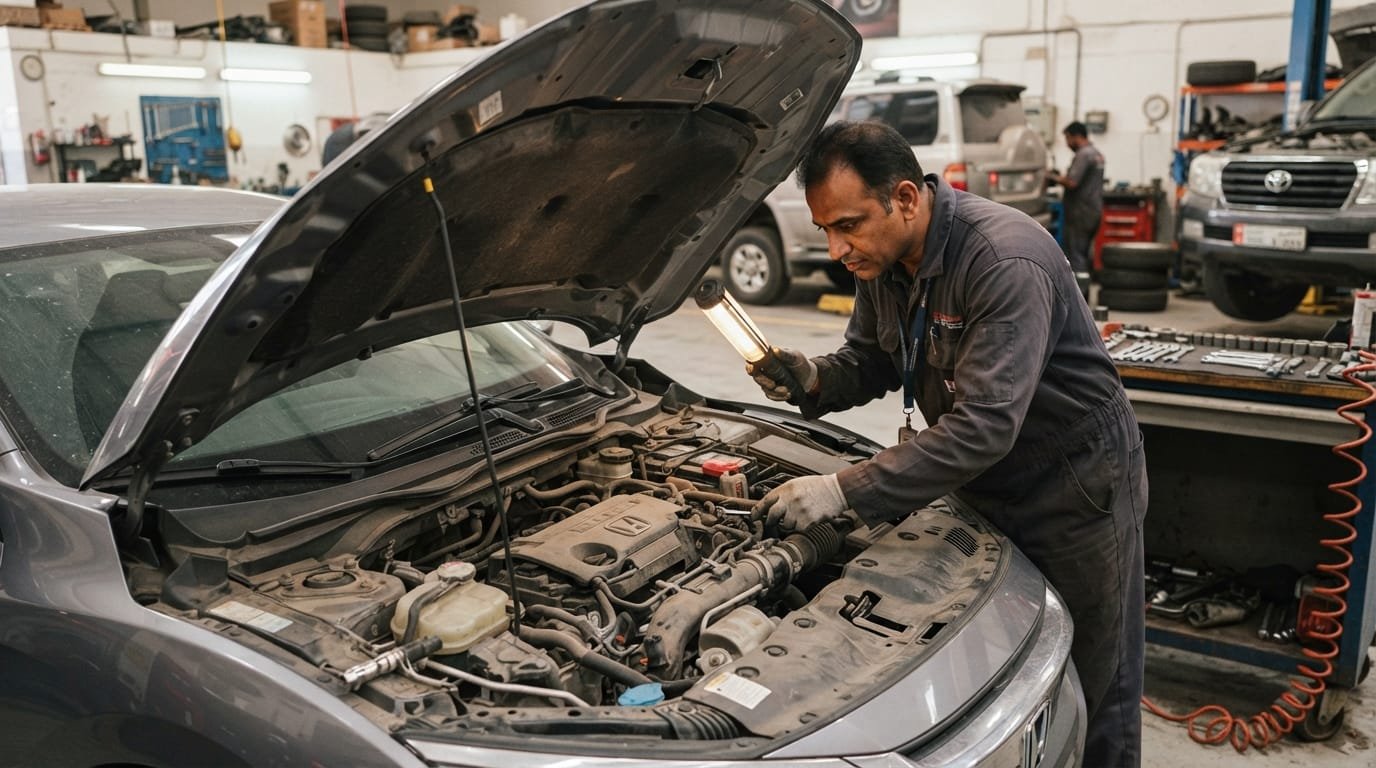
The used honda civic problems uae buyers ask about most are CVT shudder, AC compressor or condenser issues, and documented oil-dilution concerns on certain 1.5-turbo models. A professional pre-purchase inspection in Dubai can start at around AED 300, with more comprehensive packages costing more. That cost is small next to the AED 35,000–170,000 a used Civic can cost depending on generation, mileage and specification. Skipping that inspection is the single most expensive mistake a buyer makes.
The Honda Civic Problems That Matter Most Before Buying
Three checks decide whether a used Civic is worth pursuing: the transmission, the air conditioning, and the paperwork. Everything else on this list is secondary to those three.
Normal wear looks like light brake dust, minor tyre feathering, or a slightly notchy manual shift when cold. Red flags look different: a CVT that hesitates before engaging, AC that blows warm within minutes of driving off, or a service book with unexplained gaps. The first category is negotiable. The second should pause the purchase until a mechanic checks it.
Common Problems by Honda Civic Generation
UAE listings mix four generations, and the relevant faults are not identical across them. Match the car in front of you to its generation before applying any of the points below.
| Generation | Years / Engine | Points to check |
|---|---|---|
| 8th gen | ~2006–2011, 1.8L R18 | Age-related suspension bushings, AC compressor wear, electrical connectors |
| 9th gen | 2012–2015, 1.8L / Earth Dreams | Some UAE-market 2014–2015 Civics use a CVT in place of the earlier 5-speed automatic; verify which transmission the specific car has |
| 10th gen | 2016–2021, available in the UAE with 1.6L, 2.0L and 1.5L Turbo engines | Certain 2016–2018 1.5T units had documented oil-dilution concerns; CVT and AC condenser condition should be checked regardless of engine |
| 11th gen | 2022–present | Fewer reported faults so far; still confirm CVT fluid history and AC performance; check which engine the specific car uses |
Some higher-mileage Civics may develop CVT shudder, hesitation or delayed engagement, particularly when transmission maintenance has been neglected. This is most often reported on 9th and 10th generation cars. It is a pattern reported by owners and independent technicians, not a confirmed defect rate for every unit at a fixed mileage — treat it as a reason to test drive carefully, not as proof the specific car you’re viewing has the fault.
Air Conditioning, Cooling and Heat-Related Problems
AC performance is the fastest way to filter a listing in UAE heat. Certain 2016–2021 Civics had documented AC condenser-leak issues in some markets; this has not been established as a UAE-specific failure pattern, so test the system on every car regardless of history. Test for at least ten minutes, not thirty seconds.
- Test: Run the AC on max cold for 10+ minutes while stationary, then again during the test drive at highway speed.
- Symptom: Warm air after strong initial cooling suggests a refrigerant leak or failing compressor.
- Walk-away trigger: Visible refrigerant staining around the condenser, or a compressor that cycles on and off rapidly.
Engine, CVT and Transmission Warning Signs

Certain 2016–2018 Civics with the 1.5T engine had documented oil-dilution concerns, where unburned fuel mixes into the engine oil, particularly in cars driven mostly on short trips in cold conditions. Check the oil level and smell the dipstick; a strong fuel odor or an oil level above the “full” mark is worth flagging to a mechanic before purchase.
During the test drive, accelerate firmly from a stop and hold speed on a ramp or incline. A CVT in poor condition will hesitate, drone unusually loudly, or surge instead of delivering a smooth, linear power delivery. Any illuminated transmission or check-engine light on the dash is a stop-the-test moment, not a negotiating point. If the car has an active recall or service campaign, this is VIN-specific — check the VIN against Honda’s records rather than assuming it applies to every Civic of that year.
Suspension, Steering, Brakes and Electrical Problems
Most of what shows up here is ordinary wear rather than a design fault, but UAE roads and heat accelerate some of it.
- Suspension: Knocking over speed bumps usually means worn bushings or drop links — inexpensive but worth a price adjustment.
- Brakes: Vibration through the steering wheel under braking points to warped rotors, common after stop-and-go Dubai/Sharjah commuting.
- Steering: Some early 9th-generation Civics had intermittent electric power steering warning lights; a persistent EPS warning during your test drive is a decline-the-deal signal, not a wait-and-see one.
- Electrical: Some owners have reported infotainment freezing or rebooting on 10th-generation cars; test the system thoroughly before buying.
Service History, Accident Damage and Imported-Car Red Flags
UAE listings include GCC-spec, American-spec, Canadian-spec and Japanese-spec Civics side by side. Import origin alone does not make a car unreliable, but it changes what you need to verify — parts availability, climate-control calibration, and prior registration history outside the GCC. For the full comparison, see GCC spec vs non-GCC spec.
A missing or inconsistent service book matters more on a Civic with a CVT than on one with a conventional automatic, since CVT fluid intervals are stricter. Ask specifically for CVT fluid change records, not just general service stamps.
Structural accident repair — not a cosmetic bumper respray — is the most consequential imported-car risk. Mismatched panel gaps, overspray inside the engine bay, or a VIN that doesn’t match the registration card are reasons to stop, not negotiate. Confirm accident history through a paid vehicle history check before agreeing a price — see checking accident history.
Used Honda Civic Pre-Purchase Decision Checklist
| Category | What to check |
|---|---|
| Documents | VIN matches registration, full service book, no outstanding finance |
| Engine bay | Oil level and smell (dilution check), coolant condition, no leaks |
| Transmission | CVT fluid records, smooth acceleration on test drive, no hesitation |
| Cooling | AC cold within 2–3 minutes and sustained for 10+ minutes |
| Suspension/brakes | No knocking over bumps, no vibration under braking |
| Electronics | Infotainment stable, no unexplained warning lights |
| Body/paint | Panel gaps even, no overspray, matching paint code |
| Professional check | Independent PPI booked before payment, not after |
For the full generic version of this checklist across any make, see used car inspection guide and test drive checklist.
Decision Scenario: Dubai-Sharjah Daily Commuter
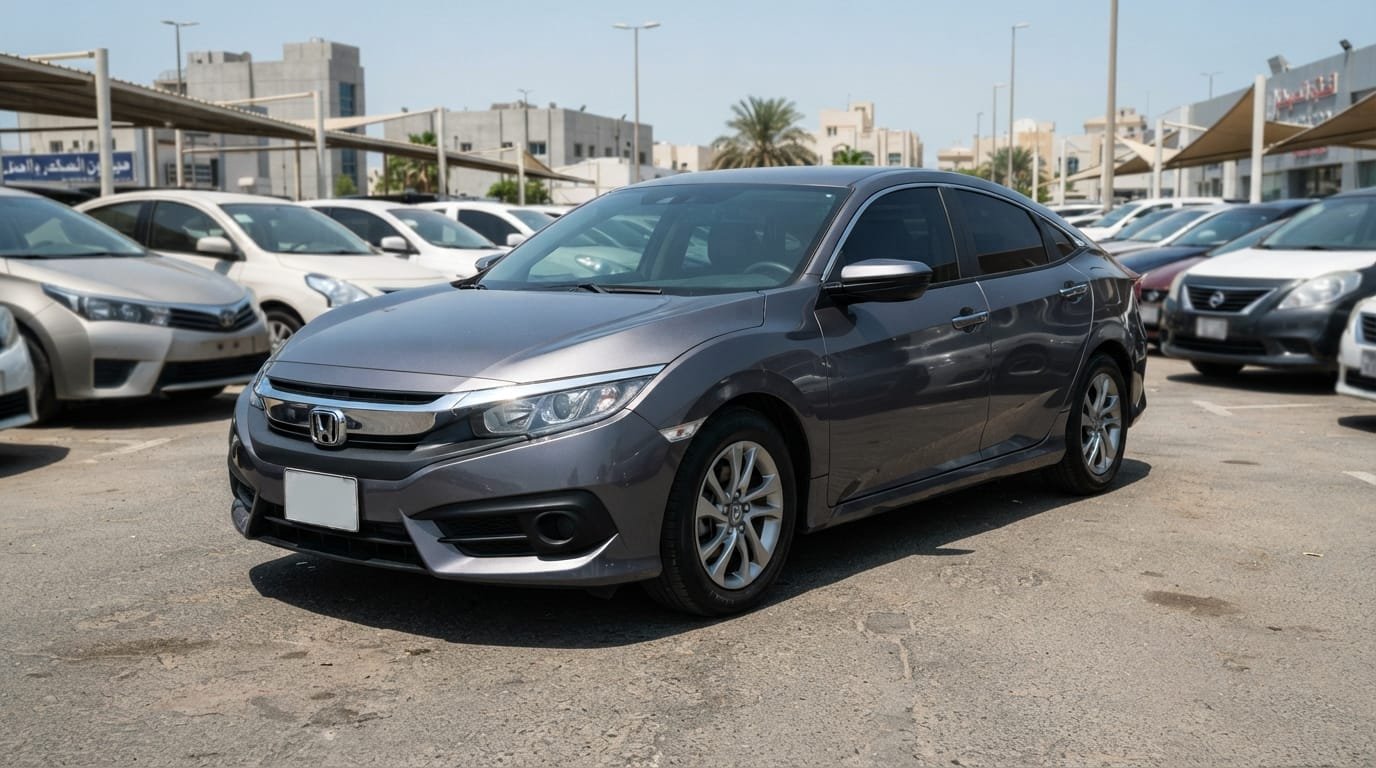
- If This Sounds Like You: You drive 60–100 km daily between Sharjah and Dubai and want low running cost with reasonable comfort.
- The Decision: Choosing between a higher-mileage 10th-gen Civic with full CVT service history versus a lower-mileage example with gaps in its records.
- Recommended Action: Prioritize documented CVT fluid changes over a lower odometer reading.
- Why: For a high-mileage Civic, documented CVT maintenance is more important than choosing the car with the lower odometer reading alone.
Decision Scenario: First-Time Expat Buyer on a Fixed Budget
- If This Sounds Like You: You’re new to the UAE, unfamiliar with local dealer practices, and buying your first car here.
- The Decision: Choosing between a cheaper non-GCC import with an unclear history versus a slightly pricier GCC-spec car with a clean paper trail.
- Recommended Action: Pay the premium for verifiable history rather than chase the lowest advertised price.
- Why: If you are unfamiliar with the UAE used-car market, insist on independent history checks and a pre-purchase inspection. See dealer red flags.
Buyer Profile to Recommendation
| Buyer profile | Recommendation |
|---|---|
| Daily long-distance commuter | 10th or 11th gen with documented CVT service; avoid unknown-history high-mileage units |
| Budget-conscious first car | If you prefer a conventional automatic, verify the specific 9th-gen car’s transmission before buying rather than assuming every 2012–2015 Civic has the same gearbox |
| New expat, unfamiliar with market | Prefer a Civic with verifiable UAE/GCC history unless an imported car has equally clear history and passes an independent inspection |
| Enthusiast / manual preference | 10th or 11th gen Si; check clutch judder and flywheel condition specifically |
When You Should Walk Away From a Used Honda Civic
- Transmission or check-engine warning lights active during the test drive.
- AC that cools initially, then fails to sustain cold air within ten minutes.
- Seller cannot produce a service book or explain multi-year gaps in records.
- VIN on the dashboard, engine bay and registration card don’t match.
- Panel gaps, overspray, or mismatched paint suggesting undisclosed structural repair — see fake service history warning signs.
- Pressure to skip or delay an independent pre-purchase inspection.
Emirates Cars Editorial Methodology
This guide combines official UAE government information with manufacturer documentation and current UAE market observations. used honda civic problems uae
Official references used where applicable:
FAQs: used honda civic problems uae
Further reading on this topic includes negotiating used car price, Dubai pre-purchase inspection guide, and trusted Al Quoz mechanics for booking an independent check.
Disclaimer: Emirates Cars is a 100% independent platform. This article reflects UAE market observations and owner-reported patterns; individual vehicle condition varies and should always be confirmed with a qualified inspector before purchase.
