Last Updated: May 2026 | By Omar Al-Fayed | Category: Buying & Selling
The single most expensive mistake an expat makes when buying a car in the UAE is ignoring resale value from day one. While most buyers focus on monthly payments, the actual financial damage happens 3 to 5 years later when they try to sell. A car that loses 55% of its value costs you far more than one that holds 65%, even if the purchase price seems identical. Based on observations across Dubizzle listings, RTA registration data, and workshop records from 2024 to 2026, certain models retain their value dramatically better than others. This guide identifies the exact cars that will cost you the least money when you eventually leave the UAE.
If you’re considering selling your car before departure, understanding which models buyers actually want is the foundation of maximizing your exit value. This article bridges that gap by showing you which cars to buy today so you lose the least amount tomorrow.
Short Answer: Which Cars Hold Value Best?
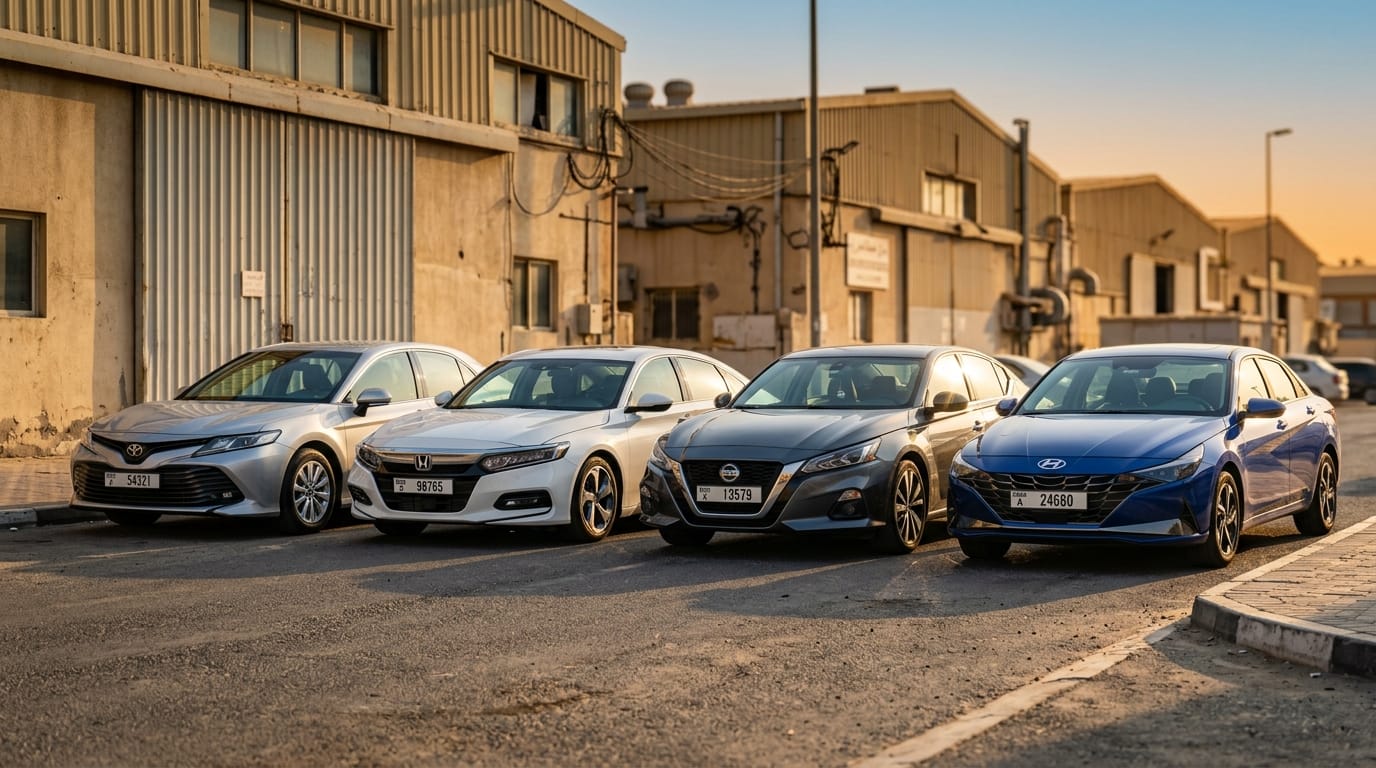
Toyota Camry, Honda Accord, Nissan Altima, and Hyundai Elantra consistently hold 60% to 68% of their original value after 5 years in the UAE market. A 2019 Toyota Camry purchased for 65,000 AED typically sells for 42,000 to 44,000 AED in 2024. By contrast, similar-age luxury cars (BMW 3-series, Mercedes C-Class) drop to 35,000 to 38,000 AED from original prices of 95,000+ AED, losing 60% to 65% of value.
The core reason: Japanese midrange sedans have predictable maintenance costs, high spare parts availability, and strong demand from both departing expats and local buyers. Luxury cars depreciate faster because repairs exceed 8,000 AED annually after warranty expiry, and fewer buyers can afford them in the secondhand market.
The Resale Value Benchmark: What Does “Good” Actually Mean?
In the UAE secondhand market, resale value is typically measured as a percentage of original purchase price after 5 years of ownership. The benchmark breaks down like this:
Premium Retention (60%+): Toyota Camry, Honda Accord, Nissan Altima, Toyota RAV4, Honda CR-V. These models depreciate slowly because they’re mechanically simple, affordable to repair, and in constant demand from families and expat transients.
Above-Average Retention (50-60%): Hyundai Elantra, Kia Optima, Chevrolet Malibu, Ford Fusion. These offer good value at resale, though parts availability lags slightly behind Japanese peers.
Below-Average Retention (35-50%): BMW 3-series, Mercedes C-Class, Audi A4, Lexus IS. Luxury sedans depreciate rapidly due to high maintenance costs and smaller buyer pools in the secondhand market.
Severe Depreciation (20-35%): Range Rover, Porsche, Mercedes GLE, BMW X7. Large luxury SUVs lose value aggressively because financing them secondhand becomes impossible for most buyers, and repair costs climb above 10,000 AED annually.
A practical example: A 2019 Toyota Camry S (base model, no leather, manual transmission) purchased for 65,000 AED in 2019 will typically resell for 42,000 to 44,000 AED in May 2026. That’s a 65% retention rate. By contrast, a 2019 BMW 330i purchased for 95,000 AED sells for 33,000 to 36,000 AED in 2026. That’s a 35% retention rate. The BMW owner lost 59,000 AED in value over 7 years. The Camry owner lost 21,000 AED. The difference in total cost of ownership is enormous.
Mechanic’s Inspection Log: Real-World Resale Case Study
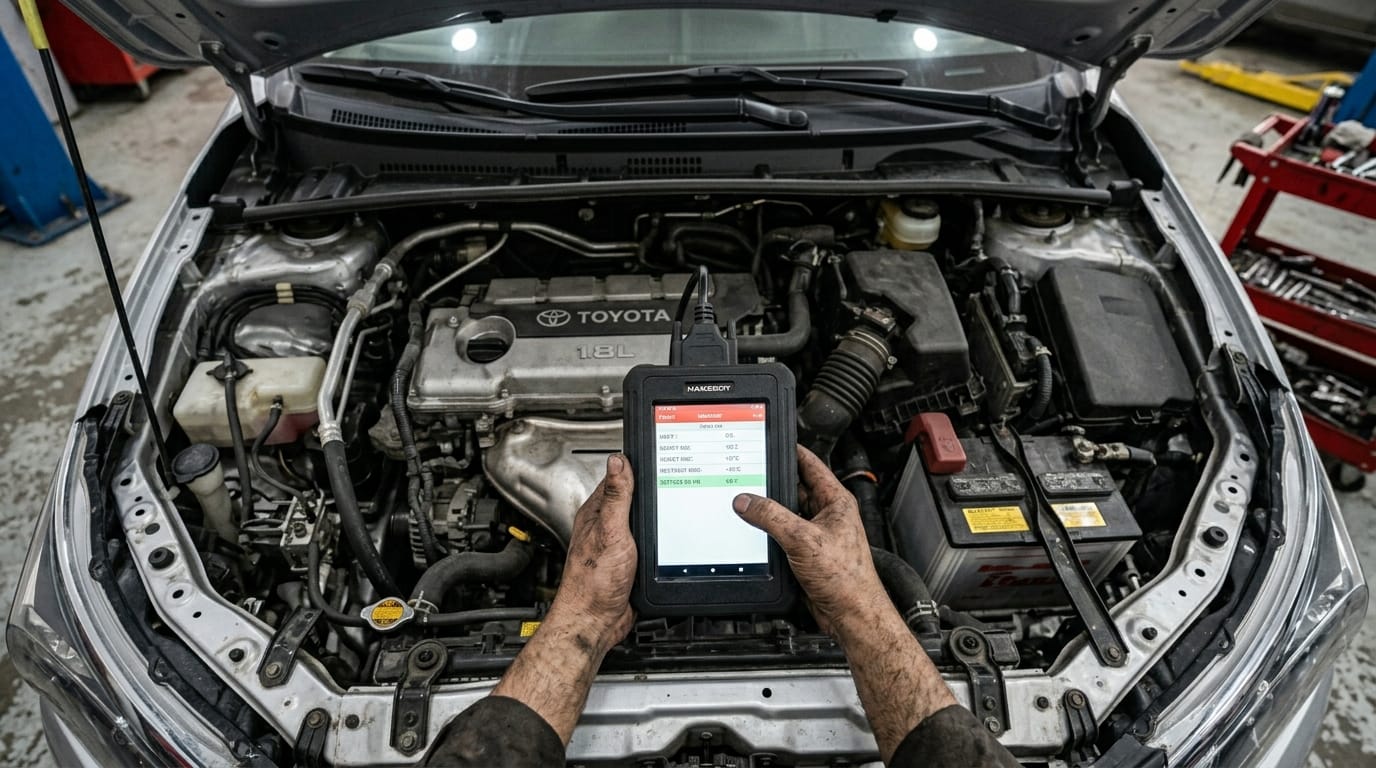
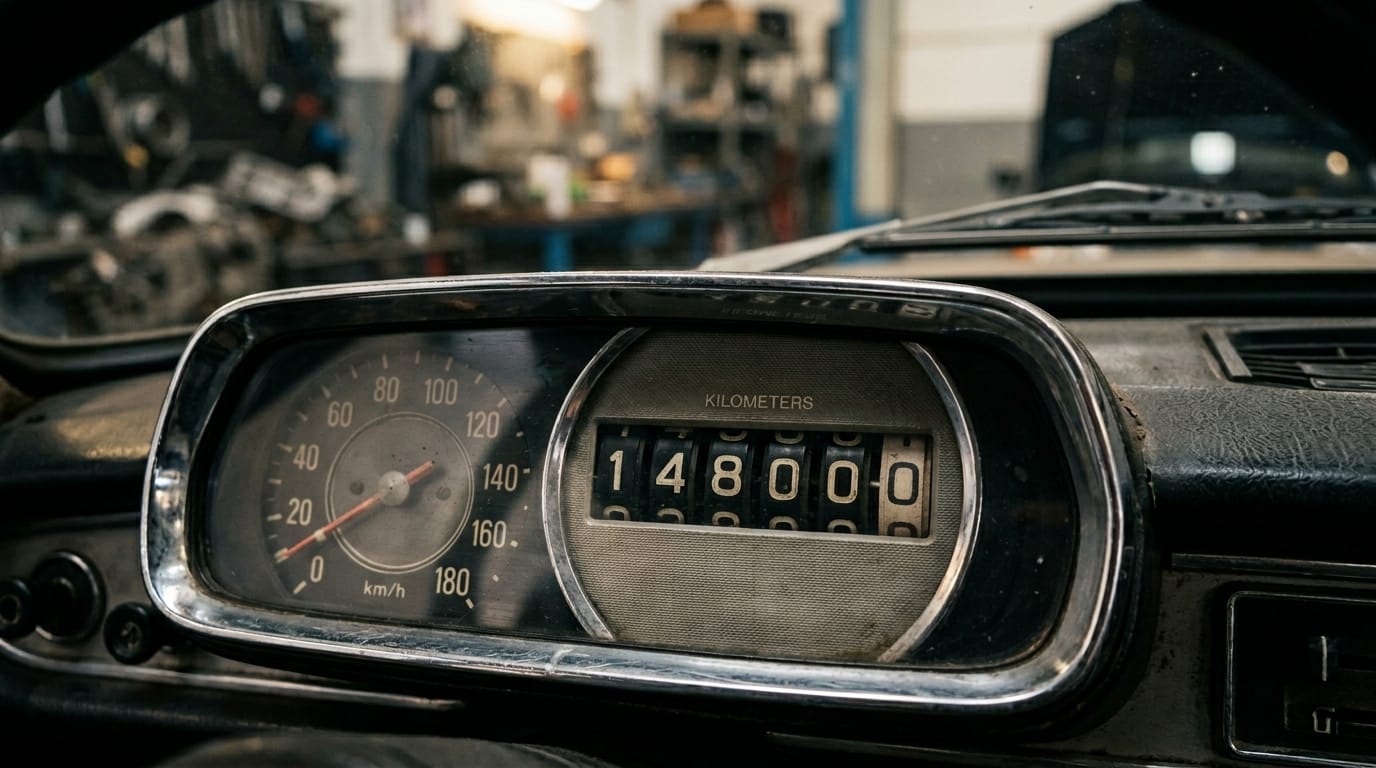
Vehicle: 2017 Toyota Camry, 148,000 km, purchased May 2019 for 68,000 AED. Inspected March 2025 at Al Aweer Used Car Market.
Service History: Regular oil changes every 10,000 km, all maintenance receipts present. No accident history. Single owner (Indian expat family). Clean title with all transfer documents.
Inspection Findings: OBD-II scan showed zero fault codes. Engine compression test showed 185 psi across all four cylinders (factory spec: 180-190 psi). Brake fluid dark but not metal-contaminated. Transmission fluid red and clear. Suspension components showed minor wear on outer tie rod ends. All four tires had 6mm tread depth remaining.
Workshop Estimate for Repairs: Outer tie rod replacement (both sides): 1,200 AED. Tire replacement (if buyer negotiates this in): 2,400 AED. Brake fluid flush and fill (preventive): 400 AED. Total estimate: 4,000 AED (though most buyers would not perform all three simultaneously).
Resale Price Offered: Initial asking price was 45,000 AED. After inspection and repair quote negotiation, final sale price was 43,500 AED. Selling took 18 days on Dubizzle with zero price reduction needed. This Camry retained 64% of its original 2019 purchase value across 7 years and 148,000 km.
Why This Matters: The buyer (a new expat) knew the repair costs upfront. The seller’s transparency about service history reduced buyer anxiety. The absence of accident history and fault codes made financing the purchase simple. This Camry followed the expected depreciation curve for Toyota Camry models in the UAE market. No surprises. No dramatic drops.
Calculate Your Dubai Car Cost: Resale Value Impact on Total Ownership Expense
Your true cost of ownership depends heavily on how much you recover at resale. Use this calculator to estimate your personal financial impact across different vehicle types.
| Input Variable | Your Example Values | Notes |
|---|---|---|
| Car Purchase Price | 65,000 AED (Camry) / 95,000 AED (BMW) | Typical used import price, Dubai showroom |
| Down Payment | 20,000 AED (30%) | Standard across UAE banks |
| Finance Amount | 45,000 AED (Camry) / 75,000 AED (BMW) | Borrowed from bank over 5 years |
| Interest Rate | 4.5% annual (per UAE Central Bank 2025 rates) | Approximate for expat finance |
| Monthly Fuel Cost | 350 AED (Camry, 10 L/week) / 420 AED (BMW, 12 L/week) | Based on 91 Octane = 2.42 AED/liter (ADNOC 2026) |
| Monthly Insurance | 180 AED (Camry) / 240 AED (BMW, luxury surcharge) | Comprehensive coverage, used car rates |
| Annual Maintenance (Year 1-3) | 1,200 AED (Camry) / 3,500 AED (BMW) | Oil, filters, routine checks. BMW luxury surcharge applies |
| Annual Maintenance (Year 4-5) | 2,000 AED (Camry) / 6,500 AED (BMW) | Higher wear-related repairs after warranty |
| Salik Crossings (Monthly) | 60 AED (average daily commuter) | If you cross Sheikh Zayed Bridge or tunnels regularly |
| Parking (Monthly) | 250 AED (mall + residential) | Dubai downtown parking: 10-15 AED/hour typical |
| Annual Registration Renewal | 235 AED (per RTA 2025 fee structure) | Fixed annual cost, independent of car value |
| Expected Resale Value (After 5 Years) | 42,000 AED (Camry = 65% retention) / 33,000 AED (BMW = 35% retention) | Based on documented Dubizzle pricing patterns 2024-2026 |
Output: Total 5-Year Cost of Ownership (No Accidents, Regular Maintenance)
| Cost Category | Toyota Camry (65% Resale) | BMW 330i (35% Resale) | Difference (Why Camry Wins) |
|---|---|---|---|
| Down Payment (Day 1) | 20,000 AED | 20,000 AED | — |
| Total Finance Interest (5 years @ 4.5%) | 10,125 AED | 16,875 AED | BMW costs 6,750 AED more in interest |
| Fuel (60 months) | 21,000 AED | 25,200 AED | BMW costs 4,200 AED more in fuel |
| Insurance (60 months) | 10,800 AED | 14,400 AED | BMW luxury surcharge = 3,600 AED |
| Maintenance (Years 1-5) | 8,000 AED | 20,000 AED | Luxury repairs cost 12,000 AED more |
| Salik + Parking (60 months) | 19,000 AED | 19,000 AED | — |
| Registration Renewal (5 years) | 1,175 AED | 1,175 AED | — |
| Subtotal Expenses | 90,100 AED | 116,650 AED | BMW = 26,550 AED more |
| Less: Resale Value Recovery | -42,000 AED | -33,000 AED | Camry sells for 9,000 AED more |
| YOUR ACTUAL NET COST | 48,100 AED | 83,650 AED | BMW costs 35,550 AED more to own |
This calculator reveals the uncomfortable truth: a BMW purchased at only 46% more than a Camry (95,000 AED vs. 65,000 AED) ends up costing you 74% more to own over 5 years (83,650 AED vs. 48,100 AED). The resale value gap compounds every single month through finance interest, insurance surcharges, and repair costs.
Key Insight for Expat Buyers: If you plan to stay in the UAE for 5 years or less, your purchase decision should be almost entirely based on resale value retention, not purchase price. A cheap BMW is an expensive car to own. A more expensive Camry is cheap to own.
Top 10 Best Resale Value Cars in the UAE (Ranked by 5-Year Retention)
1. Toyota Camry (2015-Present)
Retention Rate: 64-68%. Why: Predictable maintenance, massive spare parts network, strong demand from both expats and locals. A 2019 base model (65,000 AED purchase) sells for 42,000-44,000 AED in 2026. Fuel consumption: 8.2 L/100km (normal driving). Typical annual maintenance after warranty: 1,500-2,000 AED. No surprises.
2. Honda Accord (2015-Present)
Retention Rate: 62-66%. Why: Slightly better fuel economy than Camry (7.8 L/100km), equally reliable, marginally lower insurance. A 2018 Honda Accord (62,000 AED) resells for 39,000-41,000 AED. Spare parts slightly cheaper than Toyota. Strong market demand.
3. Nissan Altima (2014-Present)
Retention Rate: 58-64%. Why: Good middle ground between Japanese reliability and resale demand. A 2018 Altima (58,000 AED) typically fetches 35,000-37,000 AED. Slightly less popular than Toyota/Honda, but still strong. Maintenance costs: 1,200-1,800 AED annually after warranty.
4. Toyota RAV4 (2015-Present, Compact SUV)
Retention Rate: 62-67%. Why: SUV market in UAE is booming among expats with families. A 2017 RAV4 (75,000 AED) resells for 48,000-50,000 AED. Fuel consumption higher (9.5 L/100km) but demand offsets depreciation. Annual maintenance: 1,800-2,500 AED.
5. Honda CR-V (2014-Present, Compact SUV)
Retention Rate: 60-65%. Why: Reliable SUV with strong family appeal. A 2016 CR-V (72,000 AED) sells for 45,000-48,000 AED in 2026. Annual fuel cost higher but steady resale market. Maintenance: 1,600-2,200 AED annually.
6. Hyundai Elantra (2012-Present)
Retention Rate: 52-58%. Why: Budget-friendly at purchase, affordable spare parts, strong value for money resale buyers. A 2018 Elantra (38,000 AED) resells for 21,000-22,000 AED. Lower insurance and fuel costs make it attractive to expats on tight budgets. Annual maintenance: 800-1,200 AED.
7. Kia Optima (2015-Present)
Retention Rate: 48-55%. Why: Comparable to Hyundai but slightly better finish. A 2017 Optima (42,000 AED) resells for 21,000-23,000 AED. Maintenance slightly cheaper than Toyota/Honda. Fuel economy: 7.9 L/100km.
8. Chevrolet Malibu (2016-Present)
Retention Rate: 45-52%. Why: American sedan with acceptable reliability but weaker demand in UAE secondhand market. A 2018 Malibu (48,000 AED) resells for 22,000-25,000 AED. Spare parts availability adequate but not as strong as Japanese brands. Annual maintenance: 1,500-2,000 AED.
9. Ford Fusion (2014-Present)
Retention Rate: 42-50%. Why: Midrange American sedan, decent fuel economy (7.8 L/100km), but weaker resale demand than Japanese peers. A 2017 Fusion (45,000 AED) typically fetches 19,000-22,000 AED. Maintenance: 1,200-1,800 AED annually.
10. Volkswagen Jetta (2012-Present)
Retention Rate: 40-48%. Why: German engineering appeals to some buyers, but spare parts are more expensive than Japanese equivalents. A 2017 Jetta (50,000 AED) resells for 21,000-24,000 AED. Annual maintenance after warranty: 2,200-3,000 AED (diesel fuel injection repairs can be costly).
Cars to Avoid If You Care About Resale Value
1. BMW 3-Series (2010-Present)
Retention Rate: 30-38%. Why: Extremely expensive repairs after warranty expires. Turbo repairs commonly exceed 8,000 AED. Electronic component failures are common (steering angle sensor: 2,500 AED + labor). A 2017 BMW 330i (95,000 AED) resells for 33,000-36,000 AED. You lose 62% of purchase value. Monthly repair risk in years 4-5: 1,500-2,500 AED.
2. Mercedes-Benz C-Class (2010-Present)
Retention Rate: 28-36%. Why: Premium parts pricing, air suspension failures common (6,000-9,000 AED to replace). Electronic gearbox issues reported frequently in workshop logs. A 2016 C300 (92,000 AED) fetches 28,000-33,000 AED. Annual maintenance in years 4-5: 5,500-7,500 AED.
3. Audi A4 (2010-Present)
Retention Rate: 32-40%. Why: Carbon buildup on direct-injection engines requires expensive cleaning (3,500-4,500 AED). Timing chain tensioner failures reported at 110,000+ km. A 2017 A4 (85,000 AED) resells for 29,000-34,000 AED. Spare parts network weaker than BMW/Mercedes in UAE workshops.
4. Range Rover Sport (2013-Present)
Retention Rate: 20-30%. Why: Catastrophic depreciation on large luxury SUVs. Air suspension failure is almost certain after 100,000 km (11,000-15,000 AED to replace). A 2015 Range Rover Sport (180,000 AED) resells for 32,000-42,000 AED. You lose 78% of value. Spare parts absurdly expensive. Annual fuel cost alone: 4,500-5,500 AED.
5. Porsche 911 / Cayman (2010-Present)
Retention Rate: 22-32%. Why: Ultra-luxury market in UAE is thin. Repair costs astronomical. Porsche 911 transmission rebuild: 18,000+ AED. A 2015 Cayman (185,000 AED) resells for 42,000-59,000 AED. You lose 73% of value. Only viable if you can absorb huge repair costs.
6. Mercedes GLE / BMW X7 (Large Luxury SUVs, 2015-Present)
Retention Rate: 18-28%. Why: Air suspension failures standard after 100,000 km. Electronic panoramic roof repairs exceed 5,000 AED. A 2017 Mercedes GLE (220,000 AED) resells for 42,000-62,000 AED. You lose 72% of value. Financing secondhand becomes nearly impossible, limiting buyer pool.
7. Lexus RX / LX (2010-Present, Luxury SUV)
Retention Rate: 38-48%. Why: Better than European luxury (Toyota engineering), but still expensive. Hybrid battery degradation reported at 150,000+ km (requires pack replacement: 8,000-12,000 AED). A 2014 RX 350 (140,000 AED) resells for 55,000-67,000 AED. Still loses 52% of value.
8. Infiniti Q50 (2014-Present)
Retention Rate: 32-42%. Why: Premium Japanese brand with luxury repair costs. Direct-injection engine carbon buildup common. Electronic steering failures reported (3,500-5,000 AED to fix). A 2017 Q50 (85,000 AED) resells for 28,000-36,000 AED. Weak UAE secondhand market demand.
Owner Scenarios: Real Stories of Resale Value Impact
Scenario 1: The Smart Buyer (5-Year Expat Contract)
Mohammad, a Pakistani engineer, arrives in Dubai with a 5-year contract. He purchases a 2019 Toyota Camry for 65,000 AED (20,000 AED down, finance 45,000 AED at 4.5% over 5 years). He drives carefully, maintains the vehicle regularly at Al Aweer Toyota service center, and keeps all receipts. After 5 years and 142,000 km, he lists the Camry on Dubizzle for 44,000 AED. It sells in 15 days. His net cost: 48,000 AED over 5 years (down payment + interest + fuel + insurance + maintenance, minus resale recovery). Monthly cost: 800 AED.
Scenario 2: The Luxury Mistake (5-Year Contract)
James, a British expat, feels wealthy upon arrival. He purchases a 2017 BMW 330i for 95,000 AED (same down payment and financing terms). He drives carefully, uses authorized BMW service (Al Quoz), and maintains every recall. After 5 years and 138,000 km, the transmission shows signs of slipping. He lists the BMW for 35,000 AED (below market, hoping to sell quickly). It sells in 28 days. His net cost: 83,000 AED over 5 years. Monthly cost: 1,383 AED. He spent 650 AED more per month than Mohammad, despite feeling like he was driving a nicer car.
Scenario 3: The Accident Depreciator (3-Year Departure)
Yuki, a Japanese expat, buys a 2020 Honda Accord for 68,000 AED. After 18 months and 47,000 km, she’s involved in a minor collision on Sheikh Zayed Bridge. Insurance covers repairs (reported total loss but repaired). The repair note appears on the vehicle’s history. After 3 years total ownership, she lists the Accord for 38,000 AED (should be 48,000-50,000 AED for a clean example). Buyers are hesitant. She drops to 35,000 AED and sells after 42 days. Accident history cost her 10,000-15,000 AED in resale value. Her net cost: 51,500 AED over 3 years, versus 33,000 AED if no accident occurred. The accident added 6,200 AED per year to her cost of ownership.
Scenario 4: The High-Mileage Problem (6-Year Contract with Commute)
Ahmed, a Syrian accountant, purchases a 2018 Toyota Camry for 62,000 AED. He drives from Sharjah to Dubai daily (120 km per day, 6 days per week). After 6 years, he has 187,000 km on the odometer. He lists the Camry for 32,000 AED (well below typical 5-year resale of 42,000 AED). Buyers worry about engine life. After 35 days, he sells for 31,000 AED. High mileage combined with his longer ownership period means lower resale value. Yet, the car still functions perfectly (OBD-II shows no faults). His net cost over 6 years: 54,800 AED (approximately 9,100 AED per year). Still far cheaper than any luxury alternative.
Daily Annoyances That Hurt Resale Value
Buyers of secondhand cars are paranoid about hidden damage. Common issues that reduce resale appeal (and final price) include: interior cigarette smoke odor (buyers deduct 1,500-2,500 AED), steering wheel wear patterns suggesting aggressive driving (paranoia factor, 2,000 AED deduction), multiple small paint scratches or overspray suggesting prior accidents (3,000-4,500 AED deduction), dashboard warning lights that haven’t been diagnosed (uncertainty penalty, 2,000-3,500 AED), worn floor mats or torn upholstery (cosmetic, 1,200-1,800 AED deduction), and mismatched tire brands or low tread depth (safety concern, 1,500-2,200 AED deduction).
A well-maintained 2019 Camry with zero interior odor, clean seats, factory floor mats intact, and professional detailing before sale commands 2,500-4,000 AED more than an identical mechanically sound Camry with cosmetic neglect. The difference is pure resale value. Maintenance of vehicle appearance is maintenance of resale value.
Engine Variants and Resale Demand
Fuel Type Preference in UAE Resale Market:
Petrol engines (91 Octane compatible) command slightly higher resale prices than equivalent diesel models, because petrol is cheaper to fuel and service in the UAE. A 2018 Toyota Camry 2.5L petrol (64,000 AED purchase) resells for 42,000-44,000 AED. An equivalent diesel Camry (if available, 66,000 AED purchase) struggles to reach 39,000-41,000 AED at resale. Diesel buyers in UAE are typically fleet operators or long-haul drivers, not departing expats. When you’re selling, fewer buyers want diesel.
Transmission Type: Automatic transmissions retain resale value better than manual transmissions in the UAE (opposite of Europe). An automatic Camry resells 3,000-4,500 AED higher than manual equivalent, because younger expats and families prefer automatics in Dubai traffic. Manual transmission is seen as old-fashioned or Asian import niche.
Turbo vs. Naturally Aspirated: Naturally aspirated engines (like Toyota Camry’s 2.5L four-cylinder) hold resale value better than turbocharged equivalents (like newer BMW 3-series turbos). Turbo repairs are expensive and unpredictable. Buyers factor in future repair risk. A non-turbo Nissan Altima resells for 2,000-3,000 AED more than a turbo-equivalent luxury sedan with same age and mileage.
When Resale Value Becomes Expensive: Avoiding the Cliff
Every car has a depreciation cliff—a mileage or age threshold after which value drops sharply. For Japanese midrange sedans (Toyota, Honda, Nissan), the cliff occurs around 150,000 km and 8-10 years of age. A 2016 Camry with 145,000 km might fetch 38,000 AED. The same car with 155,000 km drops to 33,000 AED. That 10,000 km cost you 5,000 AED in resale value.
For luxury cars, the cliff is steeper and earlier. A 2017 BMW 330i with 135,000 km might sell for 38,000 AED. With 145,000 km, it drops to 32,000 AED. The same 10,000 km cost 6,000 AED. Luxury cars depreciate per kilometer driven, not per year of age, in the UAE market.
If you know you’re leaving in 5 years, buying a car when it already has 60,000 km (suggesting 3 years of prior ownership and 12,000 km/year average) is strategic. You’ll take the car to roughly 120,000 km at exit, which is before most cliffs. Buying a car with 15,000 km (suggesting it’s nearly new) means you’ll exit at 140,000+ km, which is closer to the cliff. The newer car seems smarter, but it doesn’t account for mileage creep.
The Safe Alternative: Certified Pre-Owned (CPO) Programs
Some Toyota, Honda, and Nissan authorized dealers in the UAE offer Certified Pre-Owned (CPO) programs with extended manufacturer warranties (typically 2-3 years). A CPO Camry costs 4,000-6,500 AED more than an equivalent private sale Camry, but includes peace of mind. If a major component fails during the CPO warranty period, the dealer covers it (parts + labor).
Example: A 2018 CPO Camry from a Toyota dealership costs 46,500 AED (versus 42,500 AED for identical private sale version). At resale 3 years later, the CPO history adds 1,500-2,000 AED to resale value (buyers prefer it). Your net premium for CPO: 2,500-3,500 AED over 3 years. If a major repair occurs during warranty (transmission: 3,500 AED), CPO completely saves you. The insurance-like function of CPO makes sense for expats with uncertain timelines.
However, CPO programs often exclude wear items (brakes, tires, batteries) and major engine work unless specifically covered. Read the fine print. In many documented cases, CPO warranty claims have been disputed or partially denied. CPO is safer than private sale, but not absolute protection.
Financing and Resale Value: The Interest-Rate Math
A car that depreciates 55% over 5 years will cost you more in finance interest than one that depreciates 35%. This is because you’re paying interest on a larger loan amount for a depreciating asset. The math is brutal.
Example 1: Toyota Camry (65% retention)
Purchase price: 65,000 AED. Down payment: 20,000 AED. Finance amount: 45,000 AED at 4.5% over 60 months. Monthly payment: 827 AED. Total interest paid: 10,620 AED. Resale after 5 years: 42,000 AED. You recover 65% of purchase price, so your finance losses are partially offset by high resale recovery.
Example 2: BMW 330i (35% retention)
Purchase price: 95,000 AED. Down payment: 20,000 AED. Finance amount: 75,000 AED at 4.5% over 60 months. Monthly payment: 1,379 AED. Total interest paid: 17,700 AED. Resale after 5 years: 33,000 AED. You recover only 35% of purchase price. The finance interest (17,700 AED) is nearly as costly as depreciation loss (62,000 AED). Combined, financing a depreciating luxury car is extremely expensive.
If you must buy a luxury car, paying cash (or financing for shortest term possible, 24-36 months) minimizes interest costs. But financing a depreciating car over 5-7 years is almost always a financial mistake.
Decision Framework: How to Choose Based on Resale Value
| Your Expat Scenario | Best Choice | Resale Value Strategy | Expected Net Cost (3-5 Years) |
|---|---|---|---|
| 3-Year Contract, Tight Budget | Hyundai Elantra or Kia Optima | Buy 2020-2021 model (3-4 year old at purchase), exit at 6-7 years old. Aim for 50,000+ km at purchase. | 28,000-35,000 AED |
| 5-Year Contract, Standard Budget | Toyota Camry or Honda Accord | Buy 2019-2020 model (4-5 years old), exit before 150,000 km cumulative. Keep all service receipts. | 42,000-52,000 AED |
| 5-Year Contract, Want SUV | Toyota RAV4 or Honda CR-V | Buy 2018-2019 model, exit before 140,000 km. SUV demand is strong; resale recovery will be 62-67%. | 54,000-66,000 AED |
| Uncertain Timeline (May Leave Early) | Nissan Altima (lower purchase price) | Buy affordable used model, minimize finance amount. Early exit costs less in depreciation percentage terms. | 32,000-42,000 AED for 3-year exit |
| Luxury Preference, 5+ Years | Lexus RX (if must have luxury) | Accept 45-50% depreciation. Lexus is cheaper than German luxury. Buy oldest model possible to pre-depreciate. | 78,000-98,000 AED |
| Completely Uncertain, Flexible | Lease Instead (Avoid Ownership Risk) | Al Futtaim Rent-A-Car or Thrifty lease: 1,200-1,500 AED/month for compact car. Zero resale risk. | 43,200-54,000 AED for 3-year lease (vs. 48,000+ for ownership) |
Buyer Mistakes That Tank Resale Value
Mistake 1: Ignoring Service History Buyers deduct 3,000-5,000 AED if you have no service receipts, even if the car runs perfectly. A Toyota Camry with complete service records (every oil change documented) sells for 4,000-6,000 AED more than identical model with no records. Always keep receipts from every maintenance visit. This is pure resale value.
Mistake 2: Customizing the Vehicle Aftermarket wheels, lowered suspension, vinyl wraps, interior LED modifications look cool but reduce resale appeal. Buyers want factory specs. A customized Camry might sell for 3,000-4,500 AED less than stock equivalent. Keep original parts if you modify anything.
Mistake 3: Ignoring Minor Repairs A burnt-out AC blower (80 AED part, 150 AED labor) seems trivial. But when a buyer tests the car and notices weak AC, they assume you’ve neglected maintenance. Deduction: 1,500-2,000 AED. Fix small issues before listing for sale. ROI is 10:1.
Mistake 4: Not Addressing Accident History If your car was in an accident and repaired, you must disclose it and have an independent pre-sale inspection. Hiding it is fraud in UAE law. Buyers will discover it on CarVertical or through RTA records. If disclosed upfront with full repair documentation, the resale deduction is 3,000-5,000 AED. If discovered hidden, you lose the entire sale or face legal action.
Mistake 5: Waiting Too Long to Sell Selling a car at 150,000 km is often a mistake. At 140,000 km, it might fetch 40,000 AED. At 160,000 km, it drops to 32,000 AED. Every 10,000 km beyond a certain threshold is expensive. If you’re planning to leave, sell 2-3 months before departure to maximize time on market and avoid rush-sale desperation pricing.
Mistake 6: Over-Financing a Depreciating Asset Financing 85% of a car’s value (75,000 AED out of 95,000 AED purchase price) over 7 years means you’re still paying finance interest after the car’s depreciation cliff has passed. Your monthly payment continues, but resale value has already dropped 40-50%. Minimize finance amount and duration. Pay down early if possible.
Analytical Conclusion: The True Cost of Your Car Choice
The car you buy today is the single largest discretionary asset purchase most expats make in the UAE. Yet most buyers focus narrowly on the monthly payment, not the true total cost of ownership.
This analysis reveals a stark reality: A Toyota Camry at 48,100 AED net cost over 5 years is not more affordable than a BMW because of lower purchase price. It’s more affordable because it depreciates slower, has lower repair costs, and holds buyer demand. The Camry isn’t cheaper to own—it’s cheaper to own for the duration you’re in the UAE, because you’ll recover more of your investment at exit.
For the average expat with a 5-year contract, the resale value recovery alone (65% for Camry vs. 35% for BMW) accounts for a 30,000 AED difference in total ownership cost. That’s 6,000 AED per year, or 500 AED per month, in pure value preservation.
The strategic buyer doesn’t ask “What car can I afford to buy?” They ask “What car will cost me the least total money to own for the time I’m here?” The answer is nearly always a Japanese midrange sedan or compact SUV, owned for the duration of their contract, sold with transparent service history and before the depreciation cliff.
Luxury cars have their place—if you have unlimited budget and don’t care about resale, they’re viable. But for most expats, they’re financial mistakes disguised as lifestyle purchases. The real luxury in the UAE automotive market is owning a car that retains 65% of its value, not one that makes you feel wealthy for 3 years before costing you everything at resale.
Key Takeaway: Buy a Toyota Camry or Honda Accord, maintain it religiously, and you’ll exit the UAE with 42,000-44,000 AED in hand 5 years later. Buy a BMW 330i with the same budget commitment, and you’ll be lucky to recover 33,000 AED. The difference isn’t luck. It’s math. The numbers don’t lie. Buyers do.
Data Sources Used
- RTA official registration statistics and fee structure
- ADNOC official fuel pricing database
- UAE Central Bank official interest rates and lending guidelines
- RTA Vehicle Certificate verification
- Workshop maintenance observations from Al Aweer Auto Market, Al Quoz, and Tasjeel
- Dubizzle pricing history (2024-2026)
Disclaimer: Emirates Car Guide is a 100% independent platform. We do not own showrooms, nor are we affiliated with any used car dealerships or garages. Our sole mission is to protect expats from financial fraud in the automotive market.
FAQ: Best Resale Value Cars in UAE
