
Last Updated: July 2026 | By Omar Al-Fayed, Senior Automotive Consultant | Fact-Checked By: Emirates Cars Editorial Team | Category: Driving Rules & Fines
If your car has been impounded in the UAE, the recovery process is structured and manageable — provided you know exactly which authority holds the vehicle, which documents to bring, and which fees are genuinely official. In most cases, drivers recover their vehicles within one to three working days once fines are settled and documents are in order. Fees vary by emirate and offence type, but the release process across Dubai, Abu Dhabi, and Sharjah follows a broadly similar pattern.
This guide covers the exact steps, authority contacts, required documents, and common mistakes that cause unnecessary delays. For a broader picture of how traffic violations work in the UAE, the UAE traffic fines guide provides full context on fine categories and payment channels.
⚠ Legal Disclaimer: The information provided in this article is for educational purposes only. UAE legal procedures, court fees, traffic laws, and judicial mandates may change over time. Readers should verify current requirements with a licensed UAE legal consultant or official government portals before taking formal legal action. This guide is reviewed periodically as Dubai Courts and police procedures evolve.
Why Cars Get Impounded in the UAE
Vehicle impoundment in the UAE is a direct consequence of specific traffic or legal violations. It is not a general deterrent applied arbitrarily. The most frequently documented reasons include:
- Serious traffic violations such as reckless driving, street racing, or driving under the influence
- Driving with an expired or suspended licence
- Driving an unregistered vehicle or one with expired registration
- Vehicles involved in serious accidents pending investigation
- Operating a vehicle without valid UAE insurance
- Illegal parking in designated towing zones in Dubai and Abu Dhabi
- Outstanding court judgements or travel ban orders linked to the vehicle
- Vehicles used in connection with criminal investigations
Impoundment periods and release conditions vary depending on which category the violation falls under. Traffic-related impoundments typically have defined periods, while investigation-related holds may continue until the case is resolved.
Which Authority Impounded Your Vehicle?
flowchart TD
    A[Impound Authority by Emirate] --> B[Dubai]
    A --> C[Abu Dhabi]
    A --> D[Sharjah]
    A --> E[Federal / Court Order]
    B --> F[Dubai Police / RTA Towing]
    C --> G[Abu Dhabi Police]
    D --> H[Sharjah Police]
    E --> I[Ministry of Interior MOI]
    classDef default fill:#000000,color:#ffffff,stroke:#000000;
Before taking any action, identify the authority responsible. This determines where you pay, where you collect, and which documents are accepted. In the UAE, impoundment authority depends on the emirate and the nature of the offence.
| Emirate / Scenario | Responsible Authority | Primary Contact |
|---|---|---|
| Dubai — traffic violation | Dubai Police | dubai.gov.ae / 901 |
| Dubai — parking / towing | RTA Dubai | rta.ae / 800 9090 |
| Abu Dhabi — traffic violation | Abu Dhabi Police | adpolice.gov.ae / 800 2626 |
| Sharjah — traffic violation | Sharjah Police | sharjahpolice.gov.ae / 065-631111 |
| Other emirates | Respective Emirate Police | Contact local police station |
| Federal offence / court order | MOI (Ministry of Interior) | moi.gov.ae / 800 4673 |
If you are unsure which authority holds the vehicle, the MOI unified platform is typically the best starting point for a cross-emirate status check.
How to Check Your Vehicle Impound Status
Before visiting any authority in person, verify the impoundment status through official digital channels. This avoids wasted trips and gives you the exact outstanding amount before you arrive.
MOI Smart App and Portal
The Ministry of Interior portal allows UAE residents to check vehicle violation status and impoundment records across all emirates. Log in using UAE Pass or Emirates ID number and vehicle plate details.
Dubai Police App
The Dubai Police website and official app provide an impound status check under “Traffic Services.” Enter your plate number and emirate of registration.
Abu Dhabi Police TAMM Portal
Abu Dhabi residents can check vehicle status through the TAMM Abu Dhabi portal. Search “vehicle impound” in the services directory and enter your plate and Emirates ID.
RTA Dubai (Parking and Towing)
For Dubai towing cases, the RTA portal has a dedicated “My Vehicle” section. Filter by “towed vehicles” and enter your plate number to find location and outstanding charges.
EVG (Emirates Vehicle Gate)
The Emirates Vehicle Gate provides a cross-authority lookup that links vehicle records across traffic, registration, and insurance databases. Useful when the impounding authority is not immediately clear.
Immediate Steps After Your Car Is Impounded
The first actions you take directly affect how quickly and cheaply you recover the vehicle. Follow this sequence without skipping steps.
| Step | Action | Why It Matters |
|---|---|---|
| 1 | Confirm the impoundment through an official portal | Avoids confusion between towing, theft, and impoundment |
| 2 | Identify the responsible authority and impound yard location | Going to the wrong location wastes time and may add storage days |
| 3 | Check all outstanding fines linked to the vehicle | Some release processes require all fines cleared, not only the triggering one |
| 4 | Gather all required documents before visiting | Incomplete documents cause same-day rejection and additional storage fees |
| 5 | Pay outstanding fines through official channels only | Payment through unofficial intermediaries does not register in the system |
| 6 | Visit the designated release facility with proof of payment | Collection is only possible after system confirmation of payment |
Storage fees accumulate per day at most facilities. The earlier you begin this process, the lower your total cost. Understanding how UAE traffic fines accumulate helps you estimate the full outstanding amount before you visit.
Documents You Need Before Recovering Your Car
Arriving with incomplete documents is one of the most common reasons expats face same-day rejection at impound facilities. Prepare every item on this list before leaving home.
| Document | Notes |
|---|---|
| Emirates ID (original) | Mandatory in all emirates. Photocopies not accepted at most facilities. |
| UAE Driving Licence (original) | Required to confirm you are legally permitted to drive the vehicle away. |
| Vehicle Registration (Mulkiya — original) | Confirms ownership. If expired, renewal may be required before release. |
| Valid Insurance Certificate | Required in most emirates, especially if the vehicle was impounded for uninsured driving. |
| Fine Payment Receipt | Digital or printed confirmation of cleared violations. |
| Authorization Letter (if applicable) | Required when a person other than the registered owner collects the vehicle. Must be notarised in some cases. |
If your Mulkiya is expired, some impound facilities will allow release pending same-day renewal. Verify with the specific authority before visiting.

Exact Recovery Process Step by Step
The recovery process follows a consistent structure across most UAE authorities, though specific steps may vary slightly by emirate. The following sequence applies to the majority of traffic-related impoundments.
Step 1 — Confirm Status Online
Use MOI, Dubai Police, or Abu Dhabi Police portal to confirm impoundment, identify the yard, and view outstanding fines.
Step 2 — Pay All Outstanding Fines
Pay through the official authority app, portal, or designated payment kiosk. Keep your payment reference number. In most cases, the system updates within a few hours, though some emirates process immediately.
Step 3 — Visit the Traffic Department or Designated Release Office
In Dubai: Dubai Police Traffic Department or the specific impound yard listed in your status check. In Abu Dhabi: Abu Dhabi Police Traffic and Patrols Directorate. In Sharjah: Sharjah Traffic Department.
Step 4 — Submit Documents at the Counter
Present Emirates ID, driving licence, Mulkiya, insurance certificate, and fine payment proof. A case officer reviews the record and confirms release eligibility.
Step 5 — Pay Release and Storage Fees
Official release fees and daily storage charges are paid at this stage. Amounts vary by emirate, offence category, and number of days held. Ask for an itemised receipt before paying.
Step 6 — Collect Vehicle at the Designated Yard
After administrative clearance, you receive a release permit. Proceed to the specified impound yard, present the permit, and collect the vehicle. Inspect the vehicle visually before leaving the yard and note any exterior condition changes.
Where Do You Collect an Impounded Vehicle?
Impound yard locations differ by emirate and sometimes by offence type. Knowing the correct collection point in advance prevents unnecessary delays.
| Emirate | Common Impound Yard Areas | Confirmation Source |
|---|---|---|
| Dubai | Nad Al Sheba, Al Qusais, Jebel Ali (varies by case) | Dubai Police app — “My Vehicles” section |
| Abu Dhabi | Mussafah and Al Ain Road facilities | TAMM portal or call 800 2626 |
| Sharjah | Industrial Area and Al Rahmaniya zones | Sharjah Police Traffic Department |
| RTA Towing (Dubai) | Designated RTA contractor yards | RTA portal — “Towed Vehicles” |
Never travel to an impound yard without first confirming the exact address through the official portal. Multiple facilities operate within each emirate, and directing yourself to the wrong one adds both time and cost.
Official Fees You May Need to Pay
Fee structures in the UAE are set by each emirate’s traffic authority and are updated periodically. The following represents commonly observed fee categories, presented as ranges rather than fixed figures, since exact amounts vary by offence and emirate.
⚠ Fee Disclaimer: Official fee amounts are subject to change. Verify the current applicable fee at the time of your visit through the official authority portal or customer service counter. Do not rely solely on figures found online, including this guide.
| Fee Category | Typical Range (AED) | Notes |
|---|---|---|
| Traffic fine (triggering violation) | 400 – 50,000+ | Depends on violation category. Reckless driving and DUI carry much higher fines. |
| Impound release administrative fee | Generally 200 – 500 | Varies by emirate and authority. |
| Daily storage charges | Typically 30 – 100 per day | Accumulate from first day. Some authorities apply charges differently for weekends. |
| Towing fee (RTA / private contractor) | Generally 250 – 600 | Applies when the vehicle was towed rather than driven to the yard. |
| Document verification / processing | Typically 50 – 150 | Not applied in all cases. Confirm at the counter. |
Request an itemised breakdown before making any payment. Paying a lump sum without a breakdown makes disputing incorrect charges much harder afterward.
How to Avoid Paying More Than Necessary
Several common situations cause expats to pay more than the official minimum. Avoiding them requires knowing the system before you arrive.
- Delay increases storage costs. Every additional day the vehicle sits in the yard adds to your bill. Begin the recovery process on the same day you confirm the impoundment.
- Pay only through official channels. Some drivers use intermediaries who claim to expedite the process. These services are unofficial, add an unnecessary layer of cost, and do not guarantee faster processing.
- Do not pay fines at the yard. Pay fines online or at an official kiosk before visiting. On-site payment at some yards takes longer to process and may delay same-day release.
- Request itemised receipts at every stage. Storage fees, release fees, and fine amounts are separate line items. Verify each before paying.
- Check whether your insurance covers towing fees. Comprehensive insurance policies in the UAE sometimes include towing reimbursement. Review your policy or call your insurer before paying the towing charge out of pocket. The difference between comprehensive and third-party insurance affects which costs your policy will cover.
How Long Does Vehicle Impound Last?
Impound duration depends on the type of offence and whether all conditions for release have been met. The following reflects commonly documented periods.
| Offence Category | Typical Impound Duration |
|---|---|
| Serious traffic violations (reckless driving, racing) | 30 to 60 days in many documented cases; varies by ruling |
| DUI (driving under influence) | Often 60 days or more, subject to court outcome |
| Driving with suspended/expired licence | Until licence status is resolved and fines are cleared |
| Unregistered or uninsured vehicle | Until registration or insurance is renewed and fines are cleared |
| Illegal parking / towing | No fixed minimum — release possible after same-day payment |
| Criminal investigation hold | Until case is concluded — no fixed timeline |
The impound period for serious violations is set by the traffic authority or court and cannot be shortened by paying fines early. The vehicle is held for the full mandated period regardless of when payment is made.
Can Someone Else Collect Your Vehicle?
Yes, in most cases another person may collect the vehicle on behalf of the registered owner, subject to specific conditions.
What Is Typically Required
- An authorization letter from the registered owner, signed and preferably notarised
- The authorizing owner’s Emirates ID copy
- The collecting person’s original Emirates ID and valid UAE driving licence
- All other standard documents (Mulkiya, insurance, fine payment receipt)
Some authorities in Abu Dhabi require the authorization to be attested through a Notary Public or a typing centre. Verify requirements with the specific authority before sending a representative to avoid a wasted trip.
What Happens If You Do Not Collect Your Vehicle?
Leaving a vehicle uncollected at an impound yard has documented consequences across UAE emirates.
- Daily storage fees continue to accumulate, often exceeding the original fine amount over time
- After a defined period, the authority may escalate the case through administrative channels
- In some cases, vehicles abandoned for extended periods may be auctioned through official channels after the required legal notice period
- Outstanding charges may be linked to the owner’s record and affect future vehicle registration
If you intend to leave the UAE and the vehicle is impounded, address the situation before departure. Unresolved impound cases and linked fines may create complications with future UAE entry or visa applications. The guide on what happens to your car when you leave the UAE covers this scenario in full.
Company Cars and Fleet Vehicles
When an impounded vehicle is registered under a company rather than an individual, the recovery process involves additional steps.
- The company’s authorized representative must handle the recovery, not the individual driver
- A company authorization letter on official letterhead is typically required, signed by a company director or PRO
- The company’s trade licence copy may be requested at the counter
- All fines linked to the vehicle must be settled through a company account or designated payment channel
Companies with large fleets should designate a PRO or fleet manager with authority to manage impound recoveries. Having documents prepared in advance significantly reduces delays.
Rental Cars That Become Impounded
If a rental vehicle is impounded during your rental period, responsibilities are divided between the rental company and the driver.
Driver Responsibility
- Notifying the rental company immediately upon learning of the impoundment
- Paying fines directly linked to the driver’s violation
- Covering costs that fall within the rental agreement’s liability clauses
Rental Company Responsibility
- Managing the physical vehicle recovery process with the authority
- Paying any registration or fleet-level administrative fees
- Providing required company documents to the authority
Review your rental agreement’s terms on traffic violations and impoundment before signing. Some rental agreements hold the driver liable for all costs including storage fees, regardless of whether the company handles the administrative process.
Can You Appeal an Impound Decision?
In certain situations, an appeal against the impoundment may be possible. Outcomes vary significantly depending on the nature of the offence and the evidence available.
- Appeals for parking-related towing are typically handled by the RTA or the relevant municipality
- Traffic offence appeals in Dubai go through the Dubai Police Traffic Appeals Committee
- Abu Dhabi residents may appeal through Abu Dhabi Police Traffic and Patrols Directorate
- Court-ordered holds generally require a legal representative to address the underlying case before the impoundment is lifted
🚫 Important: Appealing a fine does not automatically suspend the impoundment or stop storage fees from accumulating. Storage costs continue during the appeal process. Weigh the potential outcome of an appeal against the ongoing daily cost before deciding to appeal.
Buyers who need broader context on contesting official decisions can review the guide to contesting traffic fines in Dubai.
Common Problems During Vehicle Recovery
These are the situations most frequently reported by expats that cause delays beyond the standard one-to-three-day recovery timeline.
<td<>Confirm yard address through MOI or the relevant authority app before travelling
| Problem | Cause | Practical Solution |
|---|---|---|
| Wrong impound yard location | Assuming location without checking official portal | |
| Missing documents on arrival | Forgetting Mulkiya, insurance, or authorization letter | Use the document checklist in this guide; prepare everything before leaving home |
| Fines not yet reflected in system | Online payment takes time to update in traffic database | Pay fines at least a few hours before visiting, or use in-person kiosk payment which may update faster |
| Expired Mulkiya discovered at counter | Registration lapsed without driver’s knowledge | Some facilities allow same-day renewal before release; ask the officer before leaving the counter |
| Incorrect outstanding fine amount | System error or linked fines from a different plate or period | Request a detailed breakdown from the officer and ask for correction through official channels if discrepancy is found |
| Court-linked hold not released after fine payment | Impoundment tied to active legal case rather than traffic fines | Contact the court or seek legal advice; fine payment alone does not lift court-ordered holds |
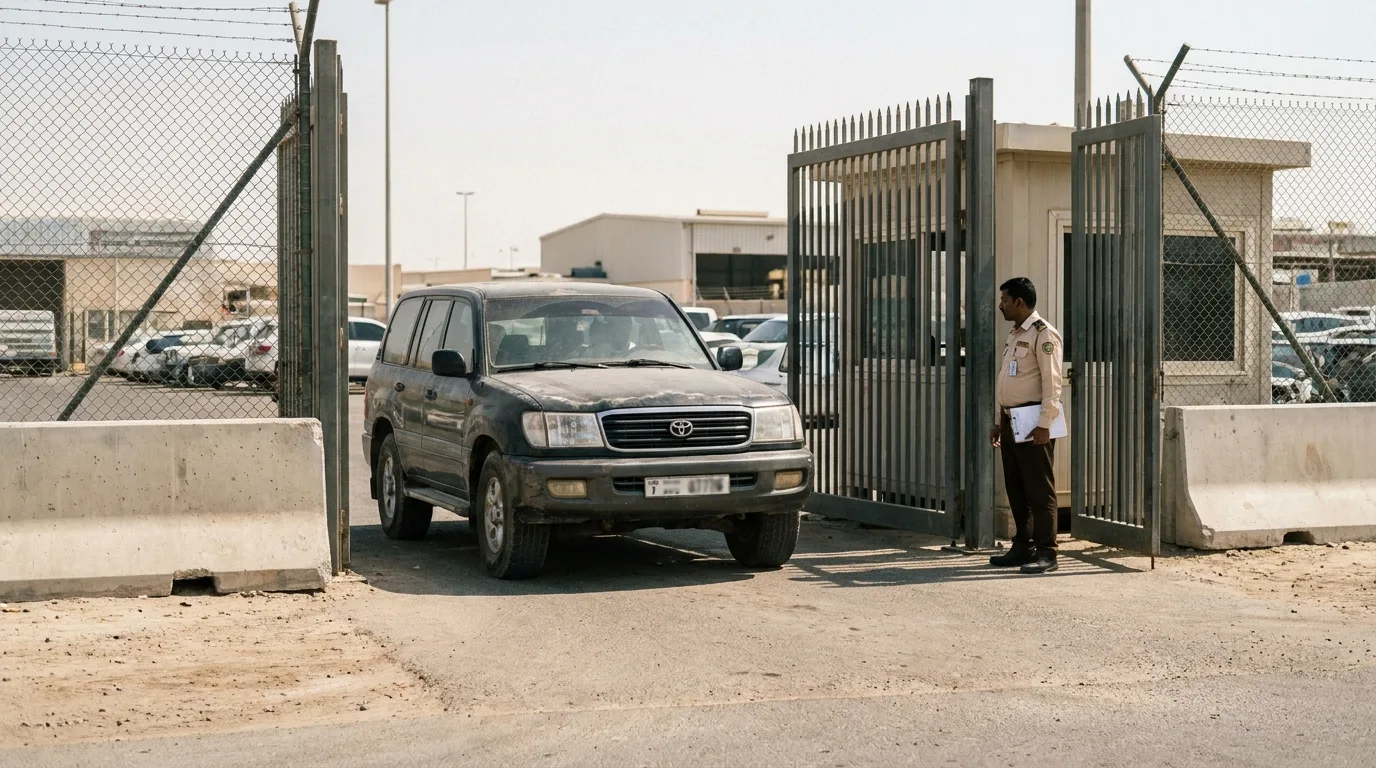
Scam Prevention: Unofficial Intermediaries and Recovery Agents
🚫 Most Dangerous Trap for Expats: Unofficial “vehicle recovery agents” sometimes approach drivers outside police stations or impound facilities, offering to process the release faster for a cash fee. These individuals are not government-authorised. Paying them does not guarantee faster processing and does not register as an official payment. You may lose the cash and still need to complete the official process independently.
The legitimate vehicle recovery process in the UAE does not require third-party intermediaries at any stage. Every step — from fine payment to vehicle release — can be completed directly with the relevant authority, either online, through their official app, or at the counter.
If you are approached by anyone outside official premises offering to speed up your release for cash, decline and proceed through official channels only. If you feel pressured, report the interaction to the relevant police station.
Illustrative Field Scenarios: Workshop and Market Patterns
Example scenarios based on recurring UAE market patterns, not actual documented cases.
Scenario A — Indian Expat, Dubai, Parking Tow
A driver from Chennai working in Dubai’s media sector returned to a commercial street in Deira to find his car missing. He had parked in a loading zone without noticing the tow-zone sign. Using the RTA towed vehicles tracker, he identified the vehicle within 20 minutes. After paying the parking fine online (approximately 200 to 400 AED) and a towing release fee (approximately 250 to 500 AED range), he collected the vehicle from an RTA contractor yard the same afternoon. Total time from discovery to collection was under four hours because all documents were in order.
Scenario B — Pakistani Engineer, Abu Dhabi, Expired Registration
A driver in Abu Dhabi was stopped at a routine checkpoint and found to be driving with a Mulkiya that had lapsed three weeks earlier. The vehicle was impounded. He visited the Abu Dhabi Police Traffic Department the following morning, paid the relevant fine (figures vary; expect the AED range for registration-related violations), renewed the registration at a Tasjeel-equivalent centre the same day, and returned with the updated Mulkiya to complete the release. The vehicle was held for approximately one working day due to the registration gap rather than any mandatory impound period.
Scenario C — British Expat, Sharjah, Reckless Driving Classification
A driver in Sharjah was classified under a reckless driving violation following a reported incident on a major road. The vehicle was held for a mandated period (typically 30 days in such classifications, subject to the authority’s ruling). Fine payment did not shorten the mandatory hold. Once the period concluded, the driver visited the Sharjah Traffic Department with Emirates ID, licence, Mulkiya, insurance, and fine clearance receipt, paid accumulated storage fees (roughly 30 to 100 AED per day, depending on the yard), and collected the vehicle. He had used public transport during the hold period and noted that knowing the release date in advance made planning significantly easier.
Practical Recovery Timeline
flowchart TD
    A[Vehicle Impounded] --> B[Check Status Online MOI / Dubai Police / TAMM]
    B --> C[Identify Impound Yard and Outstanding Fines]
    C --> D[Pay All Fines Online or at Official Kiosk]
    D --> E[Gather Documents ID + Licence + Mulkiya + Insurance]
    E --> F[Visit Traffic Department or Release Office]
    F --> G[Pay Release and Storage Fees at Counter]
    G --> H[Receive Release Permit]
    H --> I[Collect Vehicle at Impound Yard]
    I --> J[Inspect Vehicle Before Leaving Yard]
    classDef default fill:#000000,color:#ffffff,stroke:#000000;
Mistakes Expats Should Avoid
These are the most commonly reported errors that add cost and delay to an already straightforward process.
- Visiting the wrong authority first. Going to a police station that does not manage the relevant impound yard sends you through an unnecessary loop. Confirm the authority online before travelling.
- Assuming fine payment releases the vehicle immediately. For violations with mandatory impound periods, the vehicle is held regardless of when fines are paid. Understand the type of violation before expecting immediate release.
- Paying unofficial intermediaries. As covered above, this does not accelerate the process and creates additional financial risk.
- Not requesting a detailed fee breakdown. Paying a lump sum without a receipt makes disputing incorrect charges difficult later.
- Leaving the country without resolving the impoundment. Fines and holds linked to an unresolved impound can create complications with re-entry. Resolve the situation before any scheduled departure. If you are selling a vehicle with outstanding issues, reviewing the process for selling your car before leaving the UAE is advisable.
Decision Framework: What To Do Based on Your Situation
| Your Situation | Recommended Action |
|---|---|
| Towing or parking-related impoundment | Check RTA towed vehicles tracker, pay fine and release fee online, collect same day |
| Traffic violation with mandatory 30+ day hold | Pay fines immediately to stop additional fine accumulation, but accept the mandatory hold period; plan alternate transport |
| Expired registration or insurance discovered at checkpoint | Renew registration or insurance first, then complete the recovery process |
| Company or fleet vehicle impounded | Involve the company PRO immediately; prepare company authorization letter and trade licence copy |
| Rental car impounded | Notify rental company immediately; clarify your financial liability under the rental agreement before paying anything |
| Court-ordered hold | Seek legal advice before making any payments; fine payment alone will not resolve a court-linked impoundment |
| Leaving UAE soon with vehicle still impounded | Resolve the impoundment before departure; consider authorized representative recovery or legal advice |
Data Sources and Methodology
The information in this article is drawn from the following official UAE government portals and documented market observations. Fee figures are presented as estimated ranges rather than fixed amounts, as these are updated periodically by each emirate’s traffic authority.
- Ministry of Interior (MOI) — moi.gov.ae
- Dubai Police — dubaipolice.gov.ae
- Abu Dhabi Government Services (TAMM) — tamm.abudhabi
- Sharjah Police — sharjahpolice.gov.ae
- Roads and Transport Authority Dubai (RTA) — rta.ae
- Emirates Vehicle Gate (EVG) — evg.gov.ae
ℹ Market Volatility Notice: All fee ranges, fine amounts, and procedural steps described in this article reflect conditions as of the last editorial review in July 2026. UAE traffic authority fees, impound periods, and release procedures are subject to change. Verify all current figures and steps directly through the relevant official authority portal before taking action.
Frequently Asked Questions
Final Summary
Recovering an impounded vehicle in the UAE is a structured process that most expats can complete without external assistance in one to three working days. The steps are consistent: confirm status online, identify the correct authority and yard, pay all outstanding fines through official channels, gather the required documents, visit the traffic department, pay the release and storage fees, and collect the vehicle.
The most common causes of unnecessary cost and delay are visiting the wrong location, arriving with incomplete documents, expecting immediate release during a mandatory impound period, and paying unofficial intermediaries. Avoiding these errors is straightforward once you understand how the system works.
If your situation involves a court-linked hold, a company vehicle, or an impoundment you believe is incorrect, seek appropriate legal or official guidance before making any payments. Understanding legal liability following UAE road incidents provides useful context for situations where your impoundment is connected to an accident or formal dispute.
For expats planning their vehicle ownership strategy across the full residency period, the UAE expat car ownership annual calendar covers every administrative checkpoint from registration renewal to insurance review in one structured reference.
Disclaimer: Emirates Cars is a 100% independent platform. We do not own showrooms, nor are we affiliated with any used car dealerships or garages. Our sole mission is to protect expats from financial loss in the UAE automotive market.
