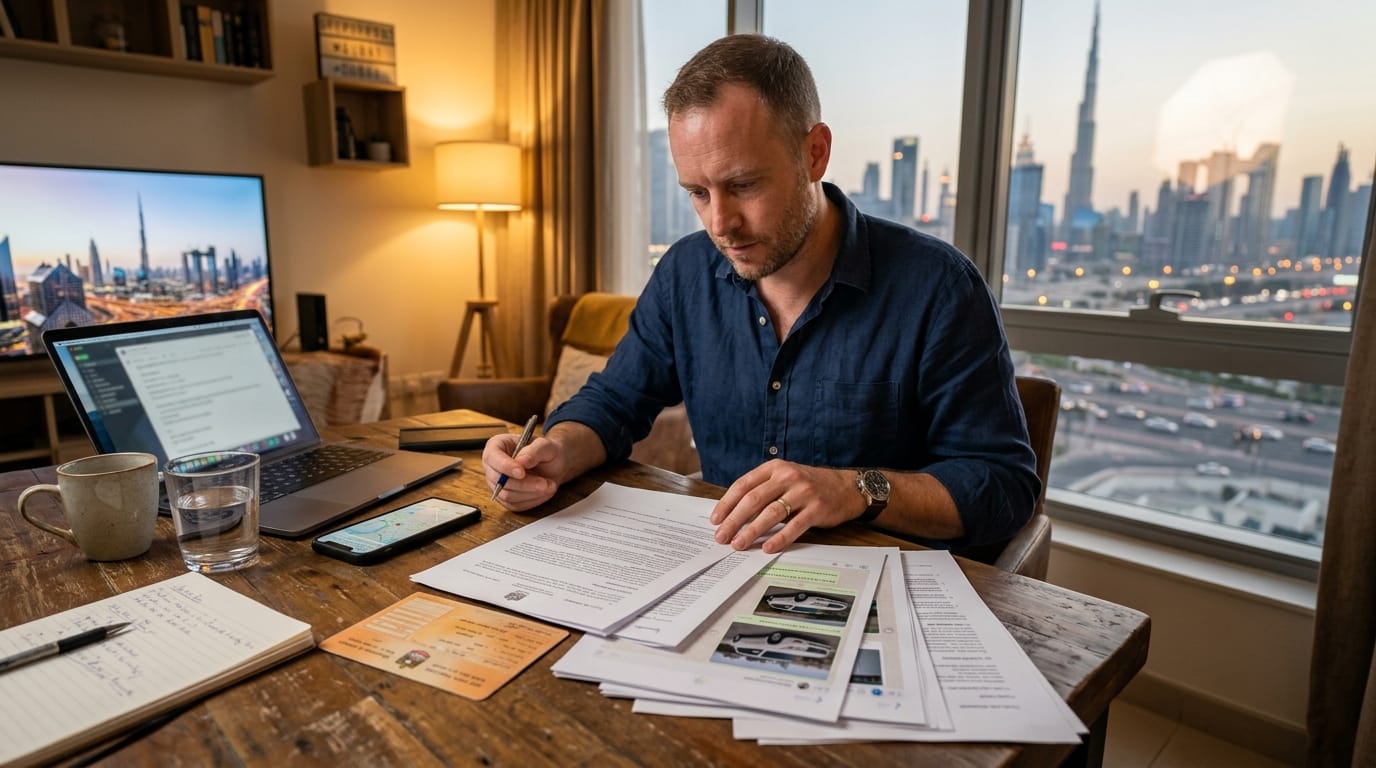
Written By: Omar Al-Fayed, Senior Automotive Consultant | Fact-Checked By: Emirates Cars Editorial Team | Last Updated: June 2026 | Category: Finance & Legal
Every week, expats across Dubai discover problems with used cars they recently purchased — hidden accident damage, tampered odometers, mechanical faults the seller never disclosed. Many of them lose money quietly because they do not know a practical legal option exists. Dubai’s Small Claims Court provides a structured, relatively accessible path to resolve car disputes without hiring an expensive lawyer for every step. Before considering it, though, you need to understand exactly what it can and cannot do. Consumer protection cases follow a different path and are sometimes faster for certain dispute types — this guide covers both and explains when to use which.
⚠ Legal Disclaimer: The information provided in this article is for educational purposes only. UAE legal procedures, court fees, traffic laws, and judicial mandates may change over time. Readers should verify current requirements with a licensed UAE legal consultant or official government portals before taking formal legal action. This guide is reviewed periodically as Dubai Courts and police procedures evolve.
What Is the Small Claims Court in Dubai?
Dubai Courts operates a dedicated division designed to resolve relatively straightforward civil disputes without requiring full legal proceedings. This division is commonly referred to as the Small Claims and Rental Disputes Centre, though the broader Dubai Courts system handles smaller civil claims through streamlined procedures that reduce cost and waiting time compared to standard civil court tracks.
The purpose is practical: allow individuals and small businesses to seek compensation for financial losses without spending more on legal fees than the claim is worth. Proceedings are simplified. Paperwork requirements are lower than in regular civil courts. Judges move cases along faster. In many cases, no lawyer is required at all.
The court was created specifically because the standard civil court process in the UAE — which can take well over a year and costs significantly more — was simply not suitable for everyday disputes involving amounts in the range of a few thousand to a few tens of thousands of dirhams.
Who typically uses it
Residents — both UAE nationals and expatriates — who have a clear financial dispute with another individual or a business. Landlord-tenant disputes are the most common use. Car and vehicle disputes represent another significant category. Service disputes, deposits, and contractor issues also appear regularly.
Can Car Disputes Be Filed in Small Claims Court?
Yes, in many cases. If your dispute involves a vehicle transaction or service that resulted in a quantifiable financial loss, and the amount is within the court’s jurisdictional limits, you may be able to file. The key word is “quantifiable” — you need to demonstrate a specific financial harm, not just dissatisfaction.
The dispute must also involve a party that can be served with court documents in Dubai. If the seller has already left the UAE, enforcement becomes difficult, though the filing itself may still be possible. Sellers leaving the UAE create a specific set of complications covered separately.
Car Disputes Commonly Handled Through Small Claims Court
Misrepresented vehicle condition
A seller describes the car as accident-free. You later discover undisclosed structural damage. If you can document this gap between what was claimed and what you received, this is a viable claim category. Independent inspection reports and the original advertisement are key evidence.
Hidden accident or flood history
Flood-damaged vehicles and cars with undisclosed collision histories are among the most common complaints from expats in Dubai’s used car market. Flood damage cases often involve repair costs that were never disclosed. If the seller actively concealed this, you have stronger grounds than if it was simply not mentioned.
Failure to transfer ownership
You paid for a car. The seller delayed or refused to complete the official transfer through RTA ownership transfer. You are now paying insurance and facing registration issues on a car that is still legally under the seller’s name.
Deposit disputes
You paid a deposit to hold a vehicle. The dealer then sold it to someone else or refused to refund the deposit when the sale did not proceed as agreed.
Repair disputes
A workshop charged for work that was not done, or work they performed made the problem worse. You have receipts, but the car still has the same fault.
Warranty disputes
A dealer offered a short warranty. A covered component failed within the warranty period. The dealer is refusing to honour the warranty claim.
Breach of written contract
The sale agreement specified certain conditions — delivery date, included accessories, agreed price — which the dealer failed to meet.
Vehicle delivery disputes
You paid in full. The dealer has not delivered the car within the agreed timeframe and is not providing a clear explanation.
Car rental disputes
A rental company is charging you for damage you did not cause, or is withholding a deposit based on disputed claims.
Lease disputes
An early termination fee was applied incorrectly, or the lessor is claiming charges that were not clearly specified in the lease agreement.
Cases That Usually Do Not Belong in Small Claims Court
Not every car dispute is suitable for this route. Understanding the limitations before you file saves time and filing fees.
Claims above the court’s jurisdictional financial ceiling need to go through the regular civil courts. Claims involving criminal elements — such as deliberate fraud where you want the seller arrested — belong with Dubai Police, not a civil court. Disputes where the other party has no known address or has left the UAE become extremely difficult to pursue. Complex insurance coverage disputes often require a specialist court track or arbitration rather than small claims procedures.
If your dispute involves injuries from a road accident, that is handled through Dubai Police and potentially criminal courts, not a civil small claims process. Road accident procedures for expats follow a completely different path.
Small Claims Court vs Consumer Protection Complaint
| Factor | Small Claims Court | DED Consumer Protection |
|---|---|---|
| Purpose | Civil judgment and financial compensation | Mediation and business compliance |
| Binding outcome | Yes — judge issues a legal judgment | Mediation only — no binding ruling |
| Speed | Typically 6 to 16 weeks | Often faster — weeks to a few months |
| Cost | Filing fee required | Generally free to file |
| Best for | Clear financial losses with documentation | Disputes involving licensed businesses where mediation may work |
| Enforcement | Court can enforce judgment against assets | No direct enforcement authority |
A practical approach: file a Consumer Protection complaint first if the dealer is a licensed business. If mediation fails or the amount is significant, move to small claims. The complaint record can also support your court case as evidence of prior dispute attempts.
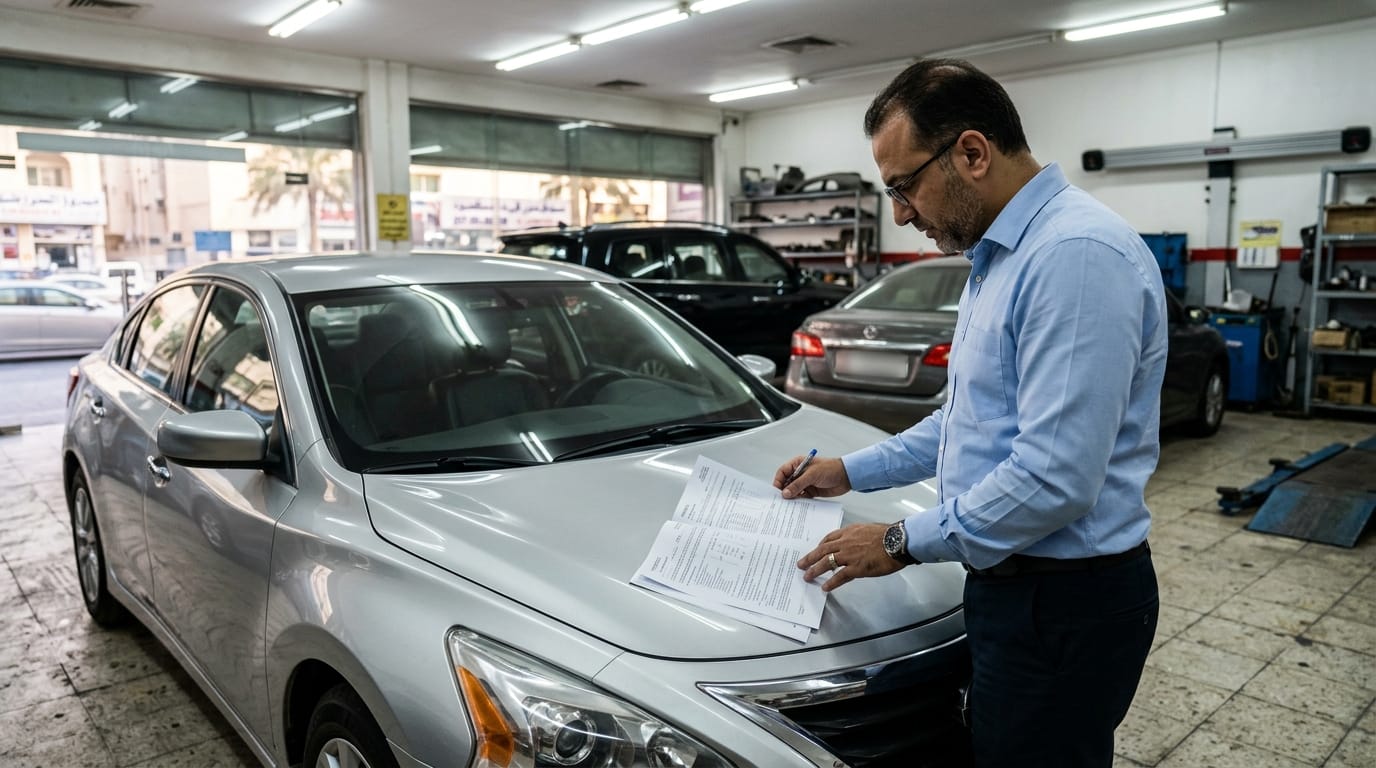
Small Claims Court vs Regular Civil Court
| Factor | Small Claims Track | Regular Civil Court |
|---|---|---|
| Filing cost | Lower — generally a percentage of claim value | Higher court fees |
| Complexity | Streamlined procedures | Full legal process |
| Timeline | Months | Often one year or more |
| Lawyer requirement | Not mandatory for individuals | Usually necessary for complex cases |
| Appeal options | Limited | Full appeal structure available |
Before Filing a Case
Courts in Dubai — and courts generally — look more favourably on plaintiffs who made reasonable efforts to resolve the matter before escalating. This is not just a procedural preference. It can affect how the judge views your case. Going straight to court without any documented attempt at resolution can weaken your position, even when your underlying claim is strong.
Document everything before you file. Not just evidence of the problem — document your attempts to resolve it. Send a formal written demand via WhatsApp or email stating clearly what happened, what you are asking for, and giving a reasonable deadline for response. Keep screenshots of everything.
Step 1: Gather Evidence
Your evidence package is the most important thing you will bring to this process. Judges work from documents. If you cannot show it, it is very difficult to prove it.
What to collect
The sale contract or agreement — even a simple written note or a WhatsApp conversation confirming price and condition counts. A formal contract is stronger.
The original advertisement — screenshot the Dubizzle listing, Facebook post, or showroom page immediately. Sellers delete listings after disputes arise. Dubizzle and Facebook Marketplace listings can disappear within hours of a dispute starting.
Payment records — bank transfer receipts, cheque copies, cash deposit slips. If you paid cash with no record, you have a significant problem. This is why payment records matter.
WhatsApp and SMS conversations — screenshots of every conversation with the seller before, during, and after the sale. Include conversations where the seller made specific claims about the car’s condition, history, or any promises made.
Pre-purchase inspection report — if you had an independent inspection done, this document is extremely valuable. Pre-purchase inspection guides explain what these reports should cover and which services to use.
Post-purchase workshop reports — invoices from mechanics who diagnosed problems after the sale. These link the mechanical fault to a specific time and cost.
Photos and videos — taken as close to the time of purchase as possible. Date-stamped photos of visible damage or defects carry significant weight.
VIN check results — a vehicle history check showing accident records, ownership history, or odometer discrepancies. Checking a car’s accident history using RTA and Carfax-type services provides a documented record.
Seller’s Emirates ID copy — you should have this from the sale process. Without it, identifying and serving the defendant becomes complicated.
Mulkiya (registration card) copy — shows the vehicle’s official history and registration details.
Step 2: Try Direct Resolution
Before filing anything, send the seller a clear written message. State what the problem is. State what you want — repair cost reimbursement, partial refund, full refund — and give them a specific deadline of seven to fourteen days to respond.
Keep this message professional and factual. Avoid threats, insults, or emotional language. A calm, documented demand is more useful in court than an angry message thread.
If the seller responds and you reach any agreement, document that agreement in writing immediately. If they ignore you or refuse, that ignored message becomes part of your evidence.
Step 3: File a Consumer Protection Complaint (If Applicable)
If the seller is a licensed dealership or business, a complaint to the Department of Economy and Tourism (DET, formerly DED) Consumer Protection section may resolve the matter faster than court proceedings. The official filing channel is through the Dubai SME / DET portal or the Consumer Rights section at det.gov.ae.
This step is optional but useful for two reasons. First, it may resolve the dispute through mediation without the cost of court. Second, it creates an official record of the dispute, which supports your court case if mediation fails.
This step does not apply to private individual sellers — only to registered businesses. Private seller disputes go directly to the court process.
Step 4: Determine Whether the Claim Qualifies
Before filing, verify that your case meets the court’s requirements. The claim must be a civil financial dispute. The amount must fall within the court’s jurisdictional limit for the simplified track — check the current limit with Dubai Courts directly at dc.gov.ae, as financial thresholds are subject to change.
The defendant must be locatable in the UAE and able to be formally served. If you only have a phone number and no address, you need to gather more identifying information before you can file effectively.
How to File a Small Claims Court Case in Dubai
Dubai Courts provides multiple filing methods to accommodate working residents. You do not need to take a day off work necessarily, though some steps may require an in-person visit.
Filing Methods Available
Online through Dubai Courts portal
The primary filing channel is the Dubai Courts online portal at dc.gov.ae. You create an account, select the appropriate case type, and upload your documents. Payment of court fees is done online. This method is available around the clock and does not require a physical visit to initiate the case.
Dubai Courts Customer Happiness Centre
If you prefer in-person assistance, you can visit the Dubai Courts main building in Umm Hurair. Staff at the service counters can guide you through the filing process. This is particularly useful if your case is complex or if you are unsure which exact case type to select.
Through a licensed legal consultant
If you choose to hire a legal consultant, they can file on your behalf. This adds cost but reduces administrative burden, particularly useful if the case involves significant documentation or if Arabic language requirements create difficulties.
Information Required During Filing
When submitting your case, you will need to provide complete details about yourself (full name, Emirates ID number, contact details, address), complete details about the defendant (name, Emirates ID or trade licence number, address), a clear description of the dispute and what happened, the specific amount you are claiming and how you calculated it, and a list of all supporting documents you are submitting.
Be precise about the amount. Vague claims for “all my losses” are harder to process than a specific number with a clear breakdown — AED 12,400 in repair costs documented by three workshop invoices, for example.
Documents Required
| Document | Why It Matters |
|---|---|
| Emirates ID copy (yours) | Identifies you as the plaintiff |
| Defendant’s Emirates ID or trade licence | Required for court notification |
| Sale agreement or contract | Establishes what was agreed |
| Payment proof (transfer receipt, cheque) | Proves money changed hands |
| Original advertisement screenshot | Documents what was claimed about the car |
| Vehicle inspection report | Establishes the car’s actual condition |
| Workshop repair invoices | Quantifies financial loss |
| WhatsApp / email records | Documents seller’s representations |
| VIN / Mulkiya copy | Vehicle identity and official history |
| Photos or videos | Visual evidence of defects |
| DED complaint reference (if filed) | Shows prior resolution attempt |
Court Fees and Filing Costs
Dubai Courts calculates filing fees based on a percentage of the claimed amount. The exact percentage structure may change, so always verify current fees on the Dubai Courts official website or at their service counters before filing.
As a general guide, fees for smaller civil claims typically range between a few hundred and a few thousand dirhams depending on the claim value. There may also be notification fees for serving the defendant. If you win, court fees are commonly awarded against the losing party as part of the judgment, though outcomes vary significantly based on available documentation and how the transaction was conducted.
Budget for the possibility that fees are not recovered if the case does not go entirely in your favour. Buyers may have legal remedies depending on evidence and the specific circumstances of the sale.
Do Expats Need a Lawyer?
For the simplified small claims track, individuals can represent themselves. This is one of the main practical advantages of this route over regular civil court, where cases become complex enough that not having legal representation puts you at a significant disadvantage.
That said, a legal consultant for a single session to review your case and documents before filing can be worth the cost — typically ranging from 500 to 1,500 AED depending on the consultant and scope of review. They can identify weaknesses in your evidence and advise whether your claim is likely to succeed before you spend money filing.
If the case involves a claim above 50,000 AED or involves significant legal complexity, professional representation becomes more advisable. Legal liability structures in UAE can be nuanced, and larger financial stakes justify the cost of professional guidance.
Language Requirements
Arabic is the official language of Dubai Courts. All formal court documents, judgments, and official correspondence are in Arabic. However, the courts are accustomed to dealing with expatriate litigants, and English documents are widely used in submissions.
For critical documents — particularly a sale contract or WhatsApp conversation that forms the core of your claim — you may need certified Arabic translation. The Dubai Courts can advise on whether translation is required for your specific case at the time of filing.
You do not need to speak Arabic to attend hearings as an individual. Interpretation assistance is available through the court system, though having an Arabic-speaking person with you at hearings can help significantly with understanding proceedings in real time.
What Happens After Filing?
Once your case is accepted and fees are paid, the court assigns a case number. The defendant is formally notified — served with documents outlining the claim against them. A first hearing date is set, usually several weeks after filing.
Between filing and the first hearing, maintain all your documents in organised form. Do not delete any WhatsApp conversations or emails. If you discover additional evidence relevant to your case during this period, note it for inclusion.
Notification of the Defendant
Dubai Courts sends formal notification to the defendant through official channels. If the defendant is a registered business, notification goes to their registered address. If they are an individual, notification goes to their known UAE address.
If the defendant cannot be located or has left the UAE, this creates significant procedural complications. The court may attempt multiple notification methods, but if service cannot be completed, your case may be delayed or require additional steps to proceed.
Mediation and Settlement Stage
In many cases, before the matter reaches a judge for a full hearing, the parties are directed to attempt mediation. Dubai Courts has a mediation centre that handles this stage. A trained mediator helps both parties communicate and explore whether a settlement is possible.
Mediation is not binding — neither party is forced to accept any settlement. But reaching an agreement at this stage is often beneficial for both sides. It is faster, avoids further legal costs, and gives both parties more control over the outcome than a judge’s ruling does.
If mediation fails or one party refuses to participate, the case proceeds to a formal hearing before a judge.
Hearing Process Explained
At the hearing, the judge reviews the submitted documents and hears brief statements from both parties. In small claims proceedings, hearings are typically shorter and less formal than regular civil court appearances.
Bring all original documents that you submitted as copies during filing. Bring them organised and in order. Be prepared to explain your claim clearly and concisely — what happened, what you lost, and what evidence supports this.
If the defendant makes counter-claims or raises arguments you did not anticipate, stay factual. Refer to your documents. Emotional responses do not help your case; documented facts do.
The judge may request additional documents or expert opinions — for example, an independent technical assessment of the vehicle. This can add time to the process but is sometimes necessary when disputes involve technical mechanical claims.
How Long Do Small Claims Cases Take?
Small Claims Court Processing Timeline
Cases involving technical expert reports, missing defendants, or multiple hearings can extend to six months or longer. These are realistic expectations, not guarantees, as each case moves at its own pace through the system.
What Happens If the Dealer Does Not Attend?
If the defendant was properly notified and does not appear at the hearing, the judge may proceed to issue a default judgment in your favour based on the evidence you have presented. This is not automatic — the judge still reviews whether your claim and evidence are sufficient to warrant a ruling.
A default judgment carries the same legal weight as a contested judgment. However, if the defendant later shows they had a legitimate reason for not attending, they may be able to have the judgment reconsidered. This is why serving the defendant properly is important — it closes off procedural challenges later.
What Happens If You Win?
A judgment in your favour entitles you to the compensation amount the judge awards. The judgment may also include an order for the defendant to pay court fees. The judge’s ruling specifies what is owed and typically sets a deadline for payment.
If the defendant pays voluntarily after the judgment, the matter is resolved. If they refuse to pay, enforcement proceedings can be initiated. Dubai Courts has enforcement mechanisms including wage garnishment (particularly relevant if the defendant is employed by a UAE company), asset freezing, and restrictions on the defendant’s ability to travel. Enforcement adds time and some additional cost, but the legal system does provide these mechanisms.
What Happens If You Lose?
If the judgment goes against you, you do not receive compensation and may be ordered to pay some or all of the defendant’s legal costs if they had representation. You have the option to appeal within the permitted appeal window.
Losing a small claims case does not prevent you from pursuing alternative paths in every situation — but it does create a legal record that complicates repeated filings on the same underlying matter. This is why case preparation before filing matters significantly.
Can Either Party Appeal?
Yes. Both parties typically have the right to appeal a small claims judgment within a specified period — generally around 30 days from the date of the ruling. Appeals go to a higher court division. The appeal process takes additional time and cost, and the higher court reviews whether the original judgment was procedurally and legally correct, not simply whether you disagree with the outcome.
Appeals on small claims cases tend to be less common because the cost and time of appealing often exceeds the value of the original claim. A legal consultant can advise whether an appeal has reasonable merit in your specific situation.
Realistic Compensation Expats May Recover
What you can realistically expect to recover depends heavily on what you can document. Courts award based on proven financial loss, not on how frustrated you are.
Documented repair costs directly traceable to undisclosed pre-existing faults have the strongest claim to recovery. The difference in market value between what was described and what was delivered is another recoverable category. Court filing fees are commonly included in successful judgments. Legal consultant costs may be partly recoverable.
What is typically not recoverable: speculative losses, time spent dealing with the problem, stress or inconvenience, and losses that cannot be directly connected to the seller’s specific misrepresentation through documented evidence.
Real Case Studies: Workshop and Market Logs
Case 1 — Indian expat, hidden engine fault, Al Quoz
A software engineer from Mumbai purchased a 2016 Toyota Corolla for approximately 28,000 AED from a small showroom in Al Qusais. The seller described the car as having “full service history” and no major mechanical issues. Within six weeks of purchase, the car required a CVT transmission service that had clearly been overdue based on the fluid condition — the Al Quoz workshop that inspected it estimated the issue pre-dated the sale by at least 12,000 km. Total repair cost: approximately 4,200 AED.
He had screenshots of the seller’s WhatsApp claims about the service history and a pre-purchase inspection report that had flagged transmission fluid discolouration. He filed with Dubai Courts. After mediation, the seller agreed to a partial settlement of 2,800 AED rather than face a full hearing. The process took approximately nine weeks from filing to settlement.

Case 2 — Filipino expat, deposit not returned, Dubai
A nurse working in Dubai paid a 3,000 AED holding deposit on a 2018 Nissan Sunny through a Deira dealership. The dealer then sold the car to another buyer before she could complete the paperwork. The dealer refused to return the deposit, claiming she had delayed the process.
She had the deposit receipt and a WhatsApp conversation in which the dealer had explicitly confirmed she had until the following Saturday to complete the transfer. She filed a DED complaint first. The dealer settled and returned 2,500 AED during the DED mediation stage, avoiding court entirely. Filing the complaint took less than an hour online. Resolution came within three weeks.
Case 3 — British expat, workshop damage, Sharjah Industrial Area
A project manager from Manchester sent his 2015 BMW 320i to a Sharjah workshop for an AC repair. When he collected the car, a new scratch was present on the passenger door that had not been there on drop-off. The workshop denied responsibility. He had photos taken on his phone immediately before dropping the car and immediately after collection — timestamps intact.
He filed a small claims case against the workshop. The workshop’s own reception photo log, which they were required to provide during the case, did not show the damage present at drop-off. The judge ruled in his favour. Compensation awarded: approximately 1,800 AED (respray cost based on a single independent bodywork estimate he had obtained). Court fees were added to the judgment against the workshop. Total process: approximately 11 weeks.
Scam Warning: Fake Legal Services Targeting Expats
🚨 High-risk scam pattern: After posting about a car dispute in expat Facebook groups or forums, some people receive unsolicited messages from individuals claiming to be “court agents”, “legal fixers”, or “case consultants” who can “guarantee” a fast resolution for an upfront fee. These are not legitimate services. Dubai Courts does not use unofficial agents. No one can guarantee a court outcome. Any person asking for upfront cash to “process” your case or claiming to have insider access to court decisions is operating a fraud.
If you want legal assistance, use only licensed legal consultants or advocates registered with the Dubai Legal Affairs Department. You can verify licence status through the Department of Justice portal. Any legitimate legal professional will provide clear documentation of their credentials and a written engagement agreement before taking any payment.
Be particularly cautious of services advertised through social media and messaging apps. The automotive dispute space in Dubai attracts opportunists who target expats who are already financially stressed from a bad purchase.
Small Claims Court vs Insurance Claim: A Critical Distinction
Many expats confuse these two paths. They are completely separate.
| Path | Against Who | What You Need | When to Use |
|---|---|---|---|
| Insurance claim | Your insurance company | Policy document + damage proof | Vehicle damage covered by your policy |
| Small claims court | Seller / dealer / workshop | Evidence of their breach or misrepresentation | Seller deceived you or caused financial harm |
If a seller misrepresented a car’s flood history, that is a civil dispute against the seller — not an insurance claim. If your car was damaged in an accident after you bought it legitimately, that is an insurance matter. Insurance coverage for flood damage has specific conditions that are separate from any legal claim against the person who sold you a flood-damaged vehicle.
Mistakes That Cause Expats to Lose Cases
Paying cash with no documentation
If you cannot prove you paid, you cannot prove a transaction occurred. Courts need evidence that money changed hands. Bank transfers leave a clear record. Cash payments leave nothing unless you obtained a signed receipt at the time.
Deleting communications with the seller
A surprising number of buyers delete WhatsApp conversations after a dispute becomes heated, assuming they will not need them. Screenshot and save everything from the moment a problem emerges.
Not getting an independent inspection report before buying
If you have no pre-purchase inspection, proving that a fault pre-dates the sale becomes significantly harder. The seller can argue you drove it carelessly and caused the problem yourself.
Waiting too long to take action
The longer you wait after discovering a problem, the harder it becomes to prove the condition at the time of sale. Cars accumulate new wear. Sellers become harder to locate. Evidence degrades.
Making verbal agreements only
If the seller promised to fix something before the sale, or agreed to a price adjustment, or offered a warranty — and none of it is in writing — proving it in court is extremely difficult.
Threatening the seller before documenting evidence
Sending angry messages threatening legal action before you have gathered your evidence is counterproductive. It puts the seller on alert to prepare their defence before you are ready.
Filing without verifying the seller’s address
If the defendant cannot be formally served at a verifiable address, your case may stall at the notification stage. Confirm you have a real, locatable address for the seller before filing.
Evidence Checklist
| Item | Format | Status |
|---|---|---|
| Sale contract or written agreement | Original document or screenshot | ☐ Collected |
| Original advertisement | Screenshot with visible date | ☐ Collected |
| Payment proof | Bank transfer receipt or signed cash receipt | ☐ Collected |
| All WhatsApp / SMS with seller | Screenshots — full conversation threads | ☐ Collected |
| Pre-purchase inspection report | Workshop report with date and stamp | ☐ Collected |
| Post-purchase repair invoices | All receipts from relevant workshops | ☐ Collected |
| Photos of defects | Date-stamped photos or videos | ☐ Collected |
| VIN history check results | Printed or PDF report | ☐ Collected |
| Seller’s Emirates ID copy | As provided during the sale | ☐ Collected |
| Mulkiya (registration card) copy | Official document | ☐ Collected |
| DED complaint reference number | If filed — confirmation message or email | ☐ Collected |
The Bottom Line Decision Framework
When Small Claims Court Is the Best Option
This route works best when you have a clear, documented financial loss; a specific identifiable defendant who is still in the UAE; a claim amount that is meaningful but not large enough to justify a full civil court process; and evidence that connects the loss directly to the seller’s actions or misrepresentations.
Used car disputes with hidden mechanical faults, misrepresented condition, or failed ownership transfers are among the most common and viable case types for this route. Tampered odometers and fake service records — when you can document them — are particularly strong cases because they demonstrate deliberate misrepresentation rather than just a matter of opinion about the car’s condition.
When Other Solutions May Be Better
If the amount is small — under 2,000 AED — the filing fees and time investment may not be worth it. DED mediation costs nothing and may resolve it faster.
If you have very little documentation, consider whether your case is strong enough before spending money on filing. A frank assessment from a legal consultant for a single session can prevent an expensive filing on a case that is unlikely to succeed.
If the seller is a reputable dealership with a complaint department, sometimes a formal written escalation to their management — with a clear statement that you will be filing a court case and a DED complaint — produces a faster resolution than the court process itself.
Quick Filing Checklist
| Step | Action | Done? |
|---|---|---|
| 1 | Collect all evidence (see Evidence Checklist above) | ☐ |
| 2 | Send formal written demand to seller with 7–14 day deadline | ☐ |
| 3 | File DED complaint if seller is a licensed business | ☐ |
| 4 | Verify defendant’s current UAE address | ☐ |
| 5 | Calculate exact claim amount with full breakdown | ☐ |
| 6 | Check current filing fees at dc.gov.ae | ☐ |
| 7 | Submit case online at dc.gov.ae or visit Dubai Courts | ☐ |
| 8 | Keep all documents organised for hearing | ☐ |
| 9 | Attend mediation session if scheduled | ☐ |
| 10 | Attend hearing with original documents and organised copies | ☐ |
Alternative Dispute Resolution Options Before Court
Before initiating a formal lawsuit in the Small Claims Court, exploring alternative dispute resolution (ADR) pathways is highly advisable. These methods can resolve conflicts faster, save administrative costs, and demonstrate to a judge that you acted reasonably before escalating the matter legally.
1. Direct Negotiation
The first and simplest step is direct, evidence-backed negotiation with the seller or workshop. Presenting an organized file containing your inspection reports, technical diagnoses, and precise repair estimates in a calm, professional manner often encourages businesses to settle privately to preserve their reputation and avoid legal friction.
2. Mediation
If direct communication stalls, formal mediation offers a structured environment to reach a compromise. In Dubai, bodies like the Dubai Courts Amicable Settlement Centre or independent sector-specific mediators assist both parties in reviewing facts and finding a mutually acceptable financial middle ground without a binding judicial trial.
3. DED Complaint
For disputes involving licensed dealerships, showrooms, or commercial workshops, filing a formal complaint with the Department of Economy and Tourism (DET/DED) Consumer Protection division is an incredibly effective administrative tool. The authority acts as an official mediator, and businesses frequently cooperate to safeguard their trade licenses.
4. Legal Notice
A formal Legal Notice drafted by a licensed UAE legal consultant and served through the Dubai Courts Notary Public serves as the final pre-litigation warning. It officially outlines your intent to sue, specifies the exact financial claim, and provides a strict legal deadline (typically 7 to 14 days) for compliance.
When to Transition to Court
You should officially move your case to the Small Claims Court track under the following specific conditions:
- The 7-to-14 day deadline specified in your formal Legal Notice has expired with no response or a definitive refusal from the counterparty.
- DED/DET mediation concludes with an official failure to reach a settlement, or the seller completely ignores the authority’s mediation sessions.
- The dispute is with a private individual seller, meaning consumer protection authorities hold no regulatory jurisdiction over the matter, leaving civil litigation as your primary recourse.
Data Sources & Methodology
The procedural information in this guide is drawn from publicly available Dubai Courts resources, UAE legal practice documentation, and observations from documented expat cases in the UAE automotive market. Case study figures are based on a range of reported outcomes from Al Quoz workshops, Deira dealerships, and Sharjah market transactions, presented as representative scenarios rather than statistically verified averages.
Official government sources consulted include:
- Dubai Courts — dc.gov.ae
- Department of Economy and Tourism (Consumer Protection) — det.gov.ae
- Dubai Police — dubaipolice.gov.ae
- Roads and Transport Authority — rta.ae
- TAMM Abu Dhabi Government Services — tamm.abudhabi
ℹ Market Volatility Notice: Court fees, jurisdictional limits, and procedural requirements in Dubai Courts are subject to periodic revision. Filing fee percentages and claim value thresholds mentioned in this guide are approximate and based on information available at the time of writing. Always verify current fees and requirements directly with Dubai Courts at dc.gov.ae before initiating any legal action. Outcomes vary significantly based on available documentation and how the transaction was conducted.
Frequently Asked Questions
Q: Can I file a small claims case against a private individual who sold me a car, not just a dealer?
Q: How much does it cost to file a small claims case in Dubai?
Q: Do I need to translate my WhatsApp evidence into Arabic?
Q: What if the seller says the car was sold “as is” with no warranty?
Q: Can I claim the cost of a pre-purchase inspection I had done after the sale revealed problems?
Q: How long do I have to file a case after discovering the problem?
Q: If I win, what happens if the other party still refuses to pay?
Final Verdict
Dubai’s Small Claims Court is a genuinely practical option for expats with documented car disputes in the right financial range. It is not a guaranteed win and it is not free — but it is significantly more accessible and faster than the regular civil court route, and it gives individual buyers a real mechanism to seek compensation from sellers who misrepresented vehicle condition.
The expats who use this route most effectively are those who gathered evidence before the dispute escalated, documented their communication with sellers from the start, and approached the process as an organised documentation exercise rather than an emotional confrontation.
If your claim is below 2,000 AED, start with a DED complaint. If your claim is substantial, well-documented, and involves a seller still operating in the UAE, small claims court is often the right next step after mediation fails. The complete used car buying guide for Dubai expats covers how to reduce the risk of ending up in this situation in the first place.
For anyone who has already purchased and discovered problems: start documenting now, send a formal written demand, and consult a legal professional for a one-session assessment before spending money on filing. That single session is typically the best investment you can make in a car dispute.
Disclaimer: Emirates Cars is a 100% independent platform. We do not own showrooms, nor are we affiliated with any used car dealerships or garages. Our sole mission is to protect expats from financial fraud in the automotive market.
