Last Updated: Aug 2026 | By Omar Al-Fayed, Senior Automotive Consultant | Fact-Checked By: Emirates Cars Editorial Team | Category: Finance & Legal
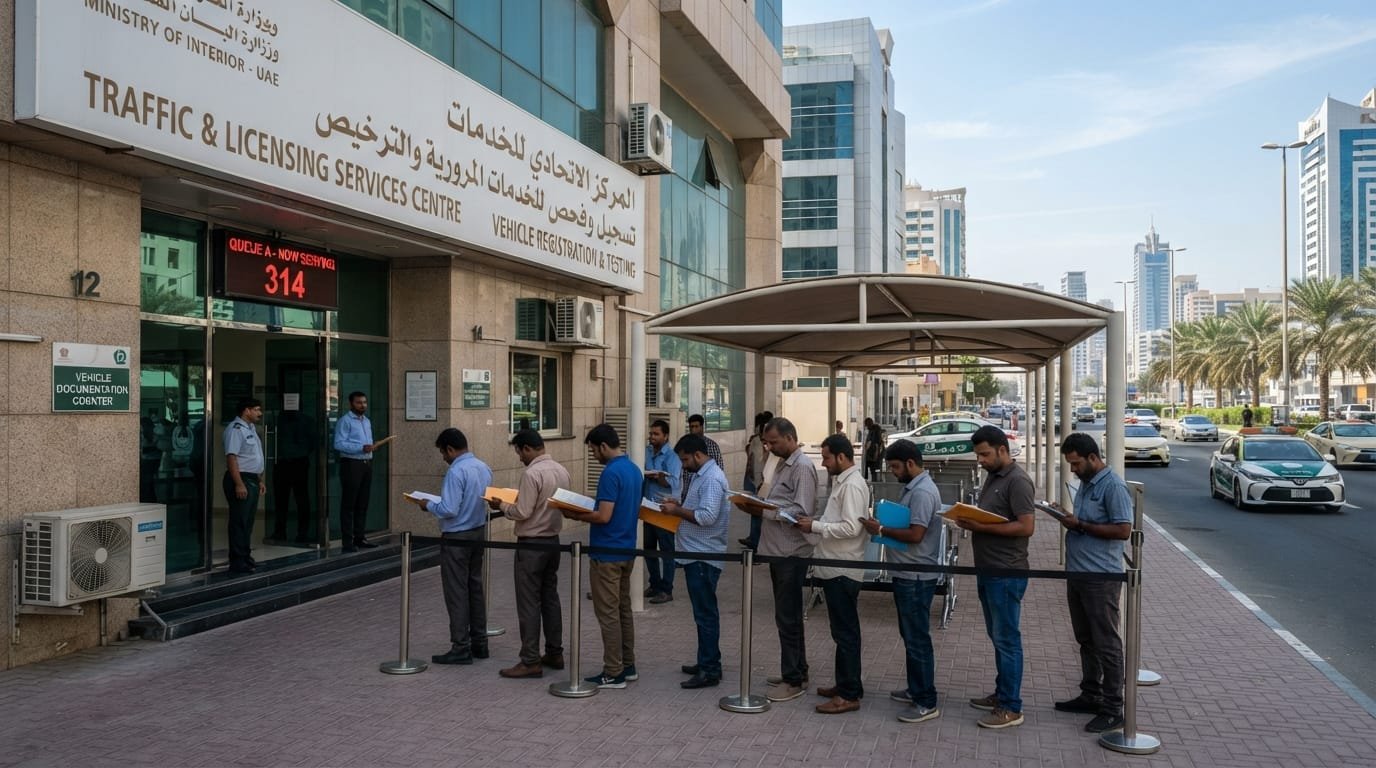
A used car ownership transfer uae requires both buyer and seller to be present at the relevant traffic authority, with cleared fines, valid insurance in the buyer’s name, and a passing inspection certificate for vehicles older than three years. The government transfer fee for a light vehicle starts at AED 350, with an additional AED 20 Knowledge and Innovation fee in Dubai. The full transaction — from verified documents to receiving the new Mulkiya — can be completed the same day if every requirement is met in advance.
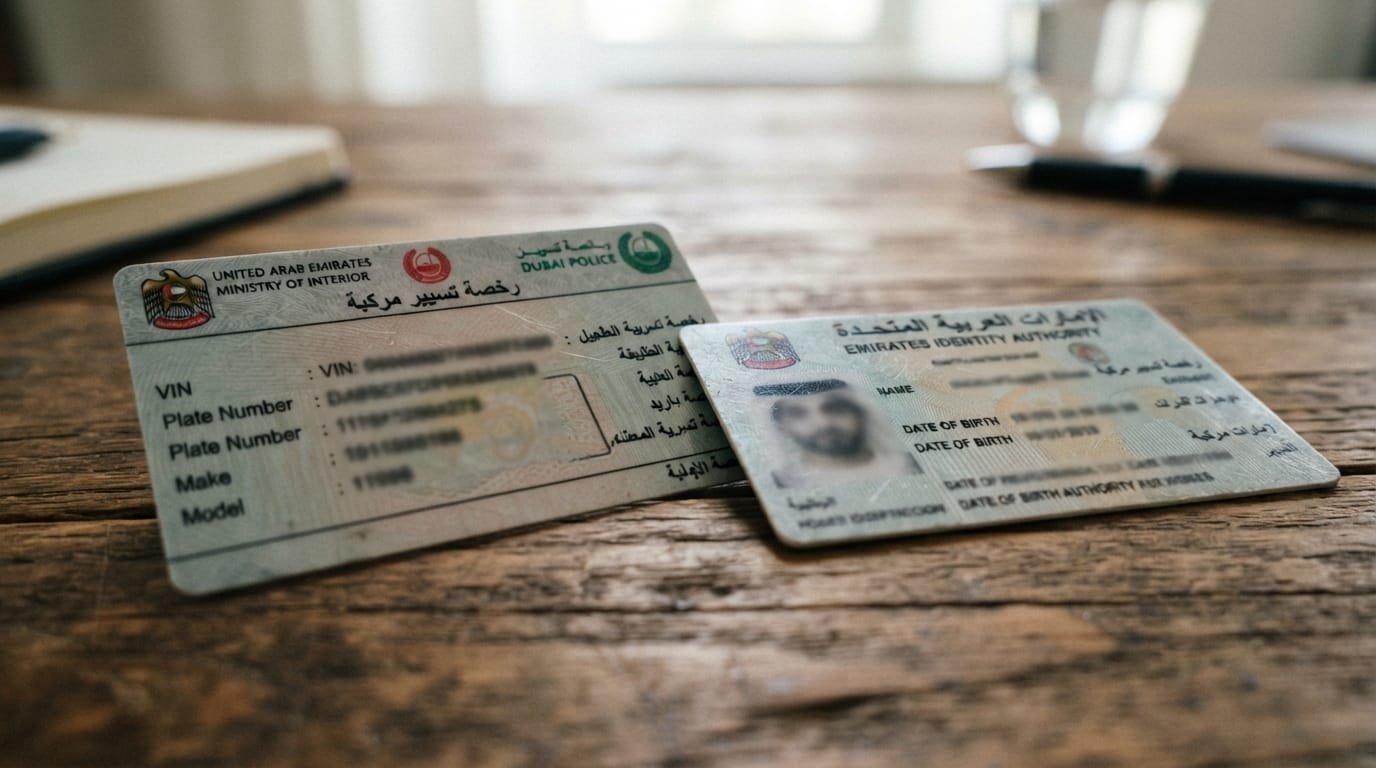
The Mulkiya is the official UAE vehicle registration card. It confirms legal ownership and must be reissued in the buyer’s name before the car is legally theirs. Until that happens, all fines, Salik charges, and legal exposure remain with the seller.
How Used Car Ownership Transfer Works in the UAE
The transfer process follows the same core sequence across all seven emirates, but the authority responsible, the fees, and the online/offline options differ by emirate. Never assume Dubai’s RTA procedures apply universally.
- Buyer and seller confirm the vehicle, Mulkiya details, and chassis number match.
- Seller clears all outstanding traffic fines — this is a hard stop in every emirate.
- If the vehicle is older than three years, a passing inspection certificate is obtained.
- Buyer arranges valid motor insurance in their own name before the transfer appointment.
- Both parties attend the authorised transfer channel (or the seller provides a notarised Power of Attorney).
- Transfer application is submitted, applicable fees are paid.
- New Mulkiya is issued in the buyer’s name — ownership is legally complete.
Documents Needed to Transfer Used Car Ownership
| Document | Who Provides It | Required |
|---|---|---|
| Emirates ID (original) | Both buyer and seller | Always |
| Mulkiya / Vehicle Registration Card (original) | Seller | Always |
| Valid motor insurance certificate (in buyer’s name) | Buyer | Always |
| Passing vehicle inspection certificate | Seller or buyer (arranged jointly) | Vehicles older than 3 years |
| Passport copy + UAE residence visa copy | Both parties | Required in most emirates for expats |
| Mortgage release letter / Bank NOC | Seller’s financing bank | Only if vehicle is financed |
| Notarised Power of Attorney (POA) | Absent party | Only if one party cannot attend in person |
| Trade license + company letter + authorised signatory’s Emirates ID | Company seller or buyer | Only if vehicle is company-owned |
| Court inheritance certificate + death certificate | Heirs of deceased owner | Only for inherited vehicles |
Most private transfers between two individual residents in the same emirate require only the first five items in the table above. Do not treat the special-case documents as standard requirements.
Step-by-Step Used Car Ownership Transfer Process
Step 1: Verify the Vehicle and Clear Fines (Seller)
The seller checks for outstanding traffic fines through the Dubai Police app, RTA app, or TAMM portal (Abu Dhabi) and settles them before the appointment. The buyer independently verifies the same fines using the chassis number — do not rely solely on the seller’s confirmation. Check the vehicle accident history at this stage using the official Carfax UAE or Emirates Vehicle Gate before committing.
Step 2: Arrange Insurance (Buyer)
The buyer must hold a valid motor insurance policy in their name before the transfer is processed — most insurers issue provisional cover using the chassis number on the same day. Without active insurance in the buyer’s name, the traffic authority will not issue the new Mulkiya. Review used car insurance options for UAE expats to compare rates before your appointment.
Step 3: Complete the Vehicle Inspection (Where Required)
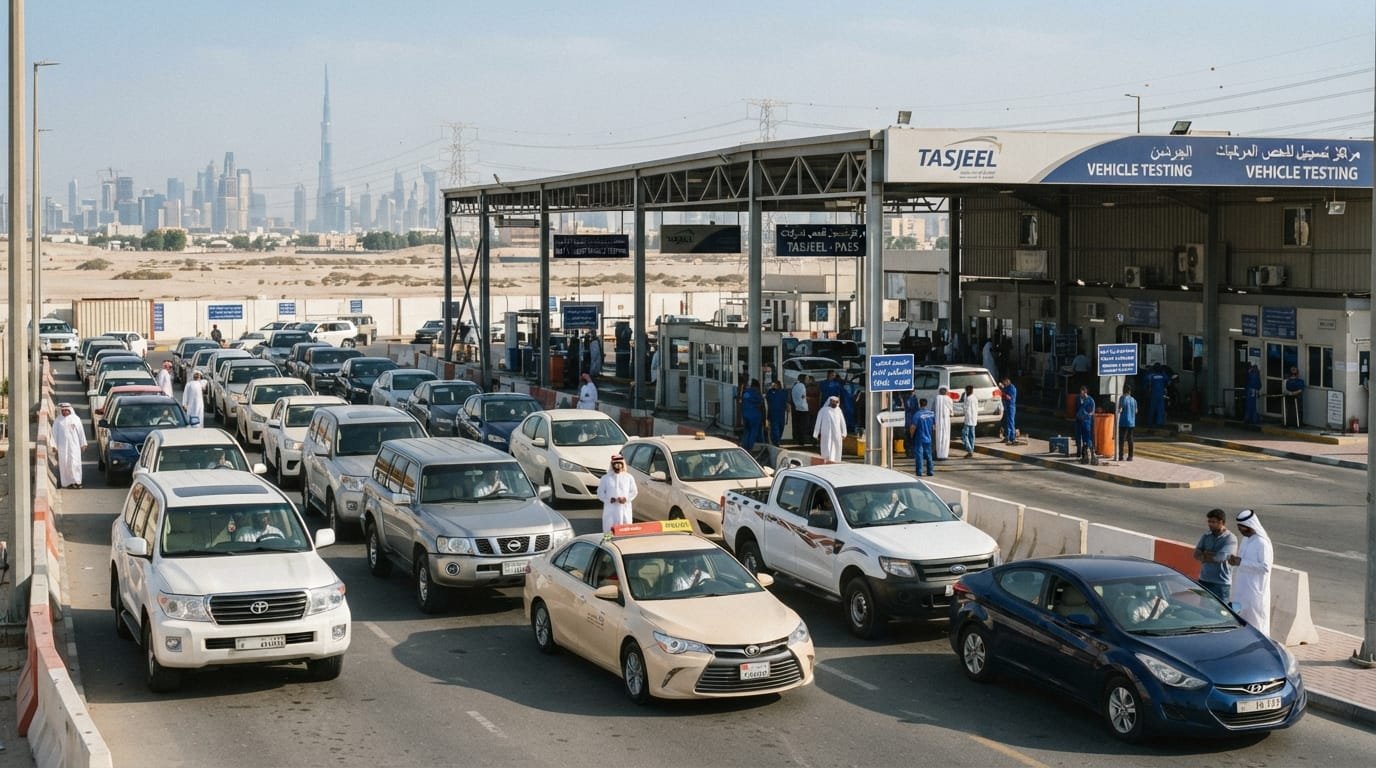
Any vehicle registered for more than three years requires a passing RTA inspection certificate issued within the last 30 days (Dubai). In Dubai, inspections are done at RTA-licensed Tasjeel or Al Mutakamela centres. In Abu Dhabi, ADNOC-affiliated inspection centres are used. In Sharjah, the Traffic Department manages its own approved centres. The inspection must be booked in advance. For a full walkthrough of what inspectors check, see how to pass the UAE car inspection.
Step 4: Attend the Transfer Appointment
Both buyer and seller attend their respective emirate’s authorised transfer channel. In Dubai: RTA Customer Happiness Centres (Al Barsha, Deira, Umm Ramool, Al Manara), Tasjeel centres, or online via the Dubai Drive app with UAE Pass. In Abu Dhabi: TAMM portal or Muroor centres. In Sharjah: TAMM app or Sharjah Traffic Department. If the seller cannot attend, they must provide a notarised Power of Attorney — a document giving a named individual the legal authority to act on their behalf. The POA must be notarised by a UAE Notary Public or, if the seller is outside the UAE, attested by the UAE Embassy in their country.
Step 5: Submit, Pay, and Receive the New Mulkiya
The transfer application is submitted by both parties. Fees are paid at the counter or online. The buyer receives the new Mulkiya in their name the same day. In Dubai, the buyer then has 14 days from submission to collect plates and complete all remaining licensing steps — this deadline catches many first-time buyers out. The seller receives a confirmation that the vehicle has been removed from their record.
flowchart TD
    A[Buyer & Seller Agree on Sale] --> B[Seller Clears All Traffic Fines]
    B --> C{Vehicle older than 3 years?}
    C -- Yes --> D[Book & Complete Vehicle Inspection]
    C -- No --> E[Buyer Arranges Insurance in Own Name]
    D --> E
    E --> F{Car Financed / Mortgaged?}
    F -- Yes --> G[Seller Settles Loan & Gets Bank NOC/Mortgage Release]
    F -- No --> H[Both Attend Transfer Authority or Use POA if Absent]
    G --> H
    H --> I[Submit Application & Pay Transfer Fees]
    I --> J[New Mulkiya Issued in Buyer's Name]
    J --> K[Seller Receives Confirmation - Vehicle Off Their Record]

    classDef default fill:#000000,color:#ffffff,stroke:#000000,font-size:16px,padding:14px;
What the Buyer Should Check Before Paying the Seller
Paying before verifying puts you at risk of owning a car you cannot legally transfer the same day. These checks take under 30 minutes and prevent the most common transfer failures.
| Check | How to Do It | Risk If Skipped |
|---|---|---|
| Seller’s name matches Mulkiya | Compare Emirates ID with Mulkiya in person | You may be buying from someone who does not legally own the car |
| Chassis number matches Mulkiya | Check VIN plate on dashboard and engine bay against the card | Cloned plates or mismatched records block the transfer |
| Outstanding traffic fines | RTA app, Dubai Police app, or Emirates Vehicle Gate | Transfer blocked until all fines are cleared — at seller’s cost |
| Finance / mortgage status | Mulkiya shows bank name if mortgaged; verify via Emirates Vehicle Gate | Transfer cannot proceed until mortgage is released |
| Registration expiry | Check Mulkiya expiry date | Expired registration adds renewal fees and delays |
| Inspection certificate validity | Ask seller to show certificate (Dubai: issued within last 30 days) | Expired certificate means rebooking and additional fee |
These checks are separate from a mechanical pre-purchase inspection. For the full physical check before you hand over money, use the used car test drive checklist and review how to inspect a used car in Dubai before your appointment.
Can You Transfer a Financed or Mortgaged Used Car?
When a car is bought using a bank loan in the UAE, the bank holds a registered mortgage on the vehicle. The Mulkiya will display the bank’s name as the lienholder. The RTA and equivalent authorities in all emirates will not process an ownership transfer while an active mortgage is recorded — regardless of whether the seller has been making loan payments.
Situation 1: Loan Fully Paid, Mortgage Still Recorded
Paying off the final loan instalment does not automatically release the mortgage from the Mulkiya. The seller must separately request a mortgage release from the bank. The bank then sends an electronic NOC (eNOC) directly to the RTA or relevant traffic authority system. There is no physical certificate and no RTA fee for the release itself. Allow 2–5 working days for the bank to process and transmit the release.
Situation 2: Active Loan — Seller Must Settle First
The outstanding balance must be cleared before the transfer can proceed. The safest method is for the buyer to issue a manager’s cheque payable directly to the seller’s financing bank for the outstanding amount, with any remaining balance going to the seller by separate transfer. This creates a verifiable paper trail and eliminates the risk of the seller receiving funds and not clearing the loan. After settlement, the bank issues the eNOC (typically 1–3 business days), and the standard transfer process proceeds. For the full process, see used car with a bank loan UAE.
Situation 3: Loan Takeover (Bank Approval Required)
Some UAE banks allow the buyer to assume the seller’s remaining loan, subject to a new credit assessment. This is bank-specific and not a standard process — the buyer must apply through the seller’s original financing bank, not choose this independently. Avoid informal arrangements where the buyer continues paying the seller’s loan without formal bank approval; the registered borrower remains legally responsible regardless of any private agreement.
Used Car Ownership Transfer Between Emirates
When the buyer wants to register the vehicle in a different emirate from where it is currently registered, the process involves two stages: de-registration in the original emirate and new registration in the buyer’s emirate. This is not just a name change on the existing Mulkiya.
| Situation | What Happens | Practical Action |
|---|---|---|
| Buyer and seller in the same emirate | Standard transfer at local authority | Follow standard process above |
| Vehicle registered in Dubai, buyer wants to register in Abu Dhabi | Dubai RTA cancels registration and issues a Transfer Certificate; Abu Dhabi TAMM/Muroor registers it fresh | Obtain RTA Transfer Certificate from Dubai first; then register in Abu Dhabi |
| Vehicle registered in Sharjah, buyer moving to Dubai | Sharjah Traffic cancels the plate; Dubai RTA opens a new file and issues new plates | Settle all Sharjah fines first; Sharjah plates do not transfer to Dubai |
| Buyer and seller in different emirates, vehicle stays in original emirate | Transfer of ownership only, no re-registration required | Both parties attend the authority of the emirate where the car is registered |
A number plate issued in one emirate generally cannot be transferred to another. Budget for new plate fees if you are moving the registration. For the complete re-registration procedure, see how to transfer a car in Dubai as an expat.
How Much Does Used Car Ownership Transfer Cost in the UAE?
Costs vary by emirate, vehicle type, age, and which services you use. The table below shows government-set fees for a standard private light vehicle. Optional service centre or typing centre charges are separate.
| Fee Item | Dubai (RTA) | Abu Dhabi (TAMM/Muroor) | Sharjah |
|---|---|---|---|
| Ownership transfer fee (light vehicle) | AED 350 | AED 350–400 | AED 300 (online) / varies in-person |
| Knowledge & Innovation fee | AED 20 | AED 10–20 | Varies |
| Vehicle inspection (cars >3 years) | AED 170 | AED 170 | Varies by centre |
| New number plates (if required) | AED 35+ | AED 35 | Varies |
| Mortgage release fee | No RTA fee | No authority fee | No authority fee |
| Insurance (market, not government) | AED 1,200–3,000+ depending on vehicle value and cover type | ||
Typical minimum out-of-pocket for a Dubai private transfer (vehicle under 3 years, no mortgage, no new plates): AED 370 in government fees. Add AED 170 if inspection is required, making AED 540. Insurance is mandatory but priced separately by the market. For a detailed breakdown of what owning a car in Dubai costs monthly, see monthly cost of owning a car in Dubai.
Decision Scenario: Budget Buyer, Sharjah-Registered Car
- If This Sounds Like You: You found a used car listed in Sharjah for AED 18,000–22,000, the seller lives in Dubai, and you want to register it in Dubai after purchase.
- The Decision: Whether to transfer ownership in Sharjah first and re-register in Dubai, or complete both steps in one visit.
- Recommended Action: Both buyer and seller attend the Sharjah Traffic Department to complete the ownership transfer in Sharjah’s name first, then proceed to an RTA Dubai centre for re-registration.
- Why: You cannot skip the Sharjah transfer step. The car is registered in Sharjah — that authority must process the ownership change and issue a Transfer Certificate before Dubai RTA will accept the re-registration. Attempting to go directly to Dubai adds a return trip and delay.
Decision Scenario: Expat Buying a Financed Car From a Leaving Resident
- If This Sounds Like You: The seller is leaving the UAE within two to four weeks, the car still has an active bank loan, and the seller is pressuring you to pay quickly.
- The Decision: Whether to proceed under time pressure or wait for the mortgage release before paying.
- Recommended Action: Issue a manager’s cheque directly to the seller’s financing bank for the outstanding loan amount only. Pay the remaining balance to the seller only after the bank confirms the eNOC has been sent to the RTA system.
- Why: Once a seller leaves the UAE, chasing a refund for a car you cannot transfer becomes a legal process, not a phone call. The manager’s cheque route protects you with a verifiable paper trail regardless of the seller’s departure timeline. See selling a car before leaving UAE for the seller’s side of this situation.
Decision Framework: Which Transfer Route Is Right for You?
| Your Situation | Transfer Route | Key Requirement |
|---|---|---|
| Private sale, same emirate, no finance, car under 3 years | Online (Dubai Drive app / TAMM) or walk-in — same day | Emirates ID, Mulkiya, buyer’s insurance |
| Private sale, same emirate, no finance, car over 3 years | Book inspection first, then walk-in or online | Passing inspection certificate (within 30 days) |
| Car has active bank mortgage | Bank settlement → eNOC → standard transfer | Manager’s cheque to bank; allow 2–5 working days for eNOC |
| Seller cannot attend in person | Notarised POA required; buyer attends alone with POA | POA notarised in UAE or attested by UAE Embassy abroad |
| Car registered in different emirate from buyer | Transfer in original emirate → Transfer Certificate → re-register in buyer’s emirate | Clear all fines in original emirate first; budget for new plates |
| Company-owned vehicle | Walk-in with trade license, notarised POA, authorised signatory’s Emirates ID | Company stamp and authorisation letter required |
Total Cost Table: Used Car Ownership Transfer UAE
| Cost Item | Amount (AED) | Applies To |
|---|---|---|
| Ownership transfer fee (Dubai, light vehicle) | 350 | All private transfers in Dubai |
| Knowledge & Innovation fee (Dubai) | 20 | All Dubai transactions |
| Vehicle inspection fee | 170 | Vehicles older than 3 years |
| New number plates (if required) | 35+ | Inter-emirate re-registration or plate change |
| Motor insurance (buyer, market rate) | 1,200–3,000+ | All buyers — mandatory before transfer |
| Mortgage release (bank eNOC) | 0 (no government fee) | Financed vehicles only |
| Typing / service centre fee (optional) | 30–100 | If using a typing centre for paperwork assistance |
| Grand Total — Minimum (no inspection, no new plates) | AED 370 + insurance | Dubai, private, light vehicle, car under 3 years |
| Grand Total — Standard (with inspection) | AED 540 + insurance | Dubai, private, light vehicle, car over 3 years |
For a broader picture of what car ownership costs year-round — including Salik, parking, and maintenance — see the real cost of owning a car in Dubai.
Problems That Can Stop a Used Car Ownership Transfer
| Problem | Why It Blocks the Transfer | Practical Next Action |
|---|---|---|
| Outstanding traffic fines | Hard stop in all emirates — system will not proceed | Seller pays all fines via RTA app, Dubai Police app, or TAMM before appointment |
| Active bank mortgage on Mulkiya | RTA cannot transfer while lien is recorded | Seller settles loan; bank sends eNOC to traffic authority (2–5 working days) |
| Failed or expired inspection certificate | Transfer authority requires a passing certificate within 30 days (Dubai) | Rebook inspection at approved centre; allow half a day |
| Buyer has no valid insurance | Mulkiya cannot be reissued without active cover in buyer’s name | Buyer arranges same-day provisional cover using chassis number before appointment |
| Name on Mulkiya does not match seller’s Emirates ID | Ownership cannot be confirmed — authority will reject the application | Seller must update their records at the relevant authority before the transfer can proceed |
| Chassis number mismatch | Cloned plates or administrative error — the car’s identity is unverified | Do not proceed with the purchase until the discrepancy is officially resolved |
| Expired vehicle registration | Transfer requires valid registration; expired Mulkiya adds renewal step and fees | Seller renews registration before the transfer appointment |
| Missing or invalid POA | Transfer centre will not accept an absent party without properly notarised documentation | POA must be notarised by a UAE Notary Public or UAE-Embassy-attested if signed abroad |
For a complete breakdown of red flags that indicate a dealer or seller is not operating honestly, see red flags from used car dealers in Dubai and how to verify fake car documents in UAE.
Used Car Ownership Transfer Checklist for UAE Expats
✅ Before Payment
- Seller’s Emirates ID matches name on Mulkiya
- Chassis number on vehicle matches Mulkiya exactly
- Outstanding traffic fines checked independently (RTA app / Dubai Police app / TAMM)
- Mortgage / finance status verified on Mulkiya and Emirates Vehicle Gate
- Vehicle registration expiry date confirmed
- Inspection certificate checked (valid within last 30 days if car is over 3 years old)
- Accident history checked via official portal
✅ Before the Transfer Appointment
- Motor insurance arranged in buyer’s name (provisional cover using chassis number accepted)
- All required documents gathered (Emirates IDs, Mulkiya, insurance certificate, inspection certificate)
- Bank eNOC confirmed in RTA system if car is financed (do not rely on seller’s verbal confirmation)
- POA notarised if one party cannot attend
- Correct transfer authority confirmed for the emirate where the car is registered
- Transfer fees prepared (minimum AED 370 Dubai; add AED 170 if inspection required)
✅ After the Transfer
- New Mulkiya received with buyer’s name correctly printed
- Vehicle registration details (chassis number, plate number) verified on new Mulkiya
- Insurance policy updated to reflect new Mulkiya details
- Plates collected if new plates were issued (Dubai: within 14-day deadline)
- Seller confirms vehicle is no longer in their name via their respective authority app
Frequently Asked Questions
This guide combines official UAE government information with current market observations and verified procedural data from emirate-level traffic authorities.
Official references used where applicable:
Disclaimer: Emirates Cars is a 100% independent platform. We are not affiliated with any dealership, bank, insurance provider, or government authority. All information is provided for educational purposes only and reflects conditions as of August 2026. UAE regulations, fees, and procedures may change. Always verify current requirements directly with the relevant emirate’s traffic authority before completing a vehicle ownership transfer.
